
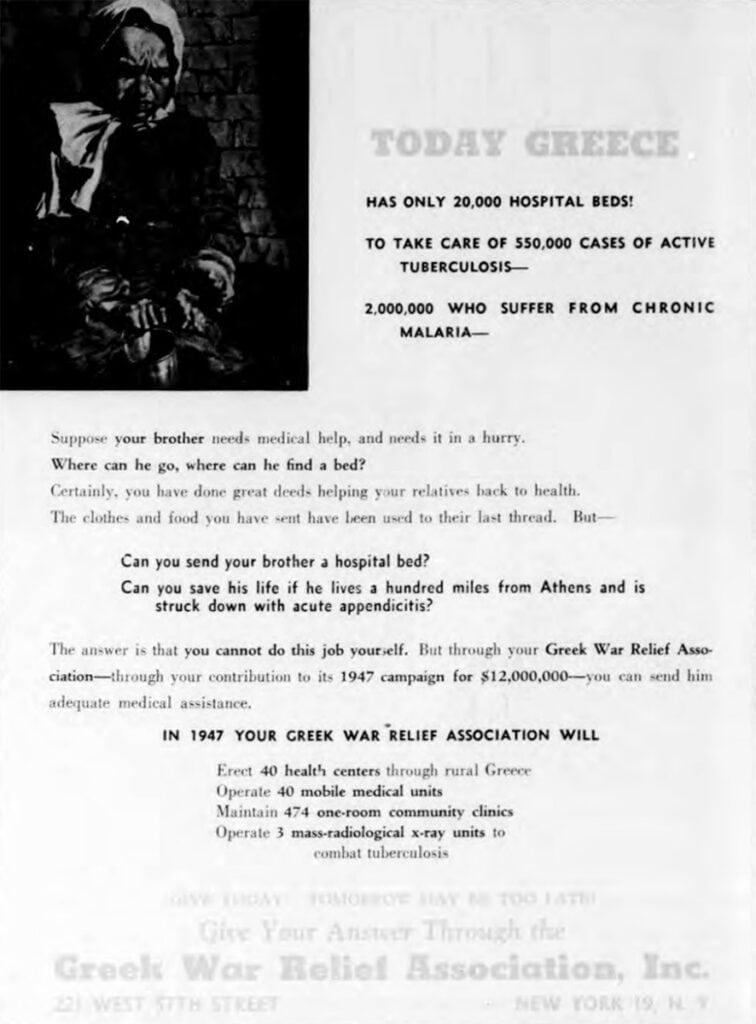
As AHEPA rallied Greek-Americans in 1947, its own magazine captured the urgency of the time. “Can you send your brother a hospital bed? Can you save his life if he lives a hundred miles from Athens and is struck down with acute appendicitis?” asked The Ahepan, appealing for medical relief. The message was stark, and it reflected the desperate conditions in postwar Greece.
Four years later, in 1951, the AHEPA University General Hospital opened its doors, with full operations beginning in 1953. Built in partnership with the Medical School of Aristotle University, it became one of Greece’s largest teaching hospitals and a lifeline for Macedonia and Thrace.
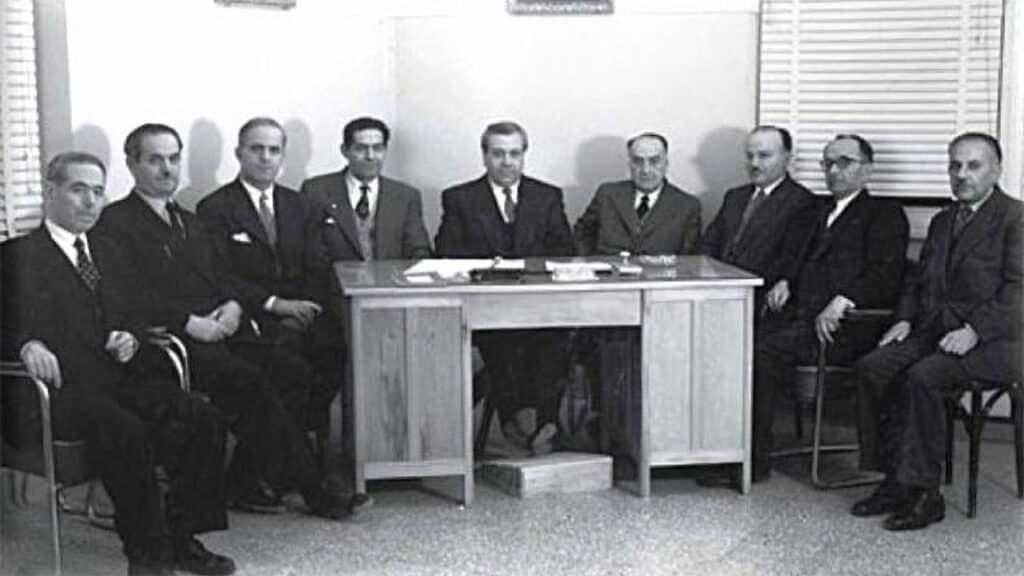
That same year, in parish halls and banquet rooms across America, AHEPA members passed the hat. In Philadelphia and beyond, Greek-Americans pledged donations to answer the call. Within weeks they had raised more than $170,000, the equivalent of over $2 million today. Their goal was ambitious: to create a university hospital in Thessaloniki that could serve northern Greece and train future doctors.
In the aftermath of World War II, Greece was a country in ruins. Cities had been bombed, villages burned, and thousands left homeless. As soon as the war ended, the country was plunged into a civil conflict between government forces and Communist insurgents. By 1947, Greece faced shortages of food, medicine, and basic infrastructure, while political violence tore communities apart.
In that environment, the decision to establish a teaching hospital in Thessaloniki carried both practical and symbolic weight. It addressed an urgent medical need in northern Greece, and at the same time it became a sign of resilience and diaspora solidarity. For Greek-Americans who had built new lives in cities like Philadelphia, the hospital was a way to help rebuild the homeland during one of its darkest hours.
AHEPA’s own appeals from 1947 made that desperation clear. One issue of The Ahepan asked, “Can you send your brother a hospital bed? Can you save his life if he lives a hundred miles from Athens and is struck down with acute appendicitis? … But through your Greek War Relief Association—through your contribution to its 1947 campaign for £12,000,000—you can send him adequate medical assistance.”
Even before those appeals, AHEPA had already launched its campaign on a national stage. In January 1946, the effort was formally announced at a high-profile event in Atlanta that drew both Greek-American leaders and U.S. officials. Attorney General Tom Clark, representing President Truman, praised the drive as part of America’s broader support for Greece in the early years of the Truman Doctrine. That moment placed AHEPA’s campaign not only in the heart of the diaspora community but also on the stage of international politics.
Statistics published in the same issue made the scale of the crisis painfully clear:
“HAS ONLY 20,000 HOSPITAL BEDS! To take care of 550,000 cases of active tuberculosis… 2,000,000 who suffer from chronic malaria. Where can he go, where can he find a bed?”
— The Ahepan, 1947
AHEPA’s work did not end with construction. In the 1950s, the organization partnered with the Swedish branch of Save the Children (Rädda Barnen) to expand pediatric services. Their support financed a 100-bed children’s pavilion, which opened in 1958 as the university’s pediatric clinic.
Over the decades, AHEPA’s Hospital Committee continued to respond to Greece’s changing healthcare needs. In the 1970s and 80s, that meant funding advanced diagnostic equipment. In more recent years, it has included mobilizing resources for crisis relief, from wildfire victims to pandemic patients.
From the start, AHEPA understood that fundraising alone was not enough. Its Hospital Committee coordinated donations with Greek health authorities, tracked contributions carefully, and issued reports to its chapters. In postwar Greece, where foreign aid was often met with skepticism, this transparency helped the project win trust and keep its focus on medical needs rather than politics. That foundation of trust allowed the hospital project to endure.
Decades later, the support remained tangible. In 2013, working with International Orthodox Christian Charities, AHEPA helped ship more than $650,000 worth of medical supplies to Greece. During the COVID-19 crisis, donations of critical care equipment flowed in from AHEPA chapters across the United States. In 2022, specialized pediatric oncology equipment, including monitors and a vein detector worth more than €10,000, was donated to strengthen cancer care for children.
For the people of Thessaloniki and northern Greece, the hospital is more than a symbol. It is where families bring their children for care, where university students learn to practice medicine, and where specialists treat complex cases from across the region. With 680 beds, it remains one of the largest teaching hospitals in the country.
AHEPA Hospital Timeline
(Key milestones in the hospital’s growth)
- 1947 – AHEPA votes to fund a new teaching hospital in Thessaloniki
- 1951 – Hospital opens; full operations begin in 1953
- 1958 – Pediatric pavilion inaugurated with Save the Children support
- 1967 – Expansion raises bed capacity to 500
- 1980s–90s – Advanced diagnostic and surgical units added
- Today – Nearly 700 beds, serving all of northern Greece
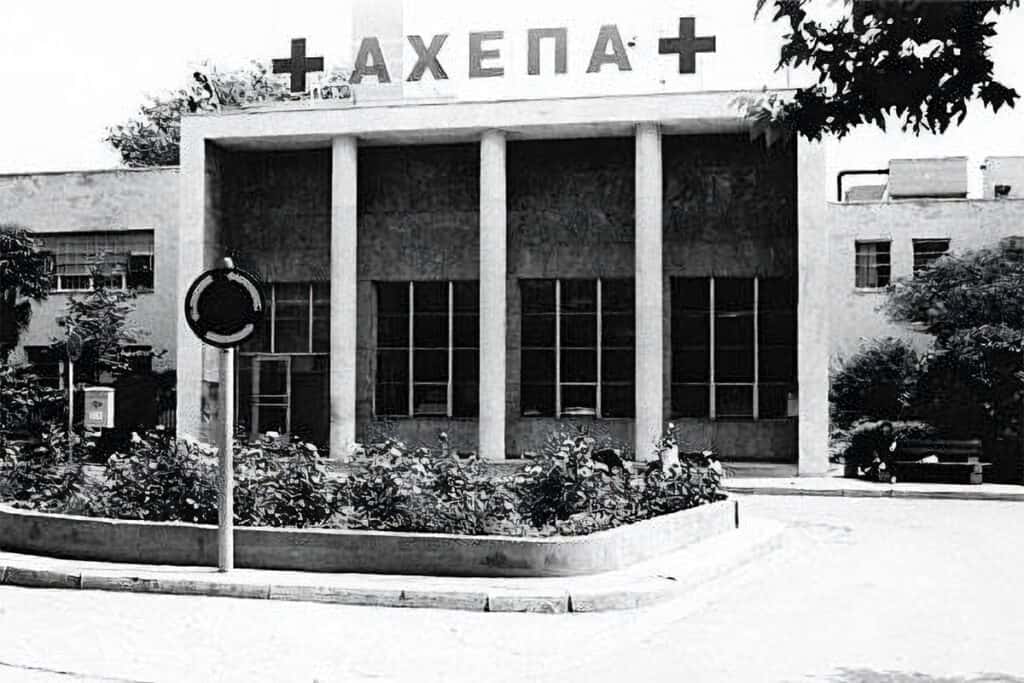
The hospital’s name itself, AHEPA University General Hospital, has also given the organization recognition in Greece. Many locals may never have heard of AHEPA’s history in America, but they know the name from the hospital where their relatives were treated or where they studied as medical students. In this way, the building became both a healthcare lifeline and a lasting reminder of what the diaspora accomplished for Greece.
Local AHEPA chapters, including those in Philadelphia, Chester, and Wilmington, have remained strong supporters of the hospital. During national fundraising drives, they contributed funds, sent medical supplies, and organized benefit events. As recently as the COVID-19 pandemic, members from our region joined chapters across the country to help secure ICU beds, ventilators, and monitors for the hospital.
For the Greek-American community here, those efforts were never just about raising money. They were about building something that would last. Today, the AHEPA University General Hospital in Thessaloniki is a 680-bed institution, a regional center for advanced medicine, and a place where future doctors continue their training.
For AHEPA, the hospital is more than a building. It is a symbol of what the Greek-American community can accomplish when it comes together. From Philadelphia banquets in 1947 to shipments of medical supplies during the pandemic, the hospital reflects what diaspora philanthropy can achieve. It is rooted in heritage, sustained by service, and dedicated to the well-being of the Greek people.
The project has also endured in memory. Greek-American media such as The National Herald still cite the hospital as one of AHEPA’s landmark accomplishments, reminding readers that the name AHEPA is known across Greece not only as a fraternal order but as the institution that built a hospital still serving millions.
Editor’s Note: Philadelphia chapters were among those that contributed to AHEPA’s national fundraising and relief campaigns for the Thessaloniki hospital. While broad participation is well documented, detailed records of individual local events remain limited.
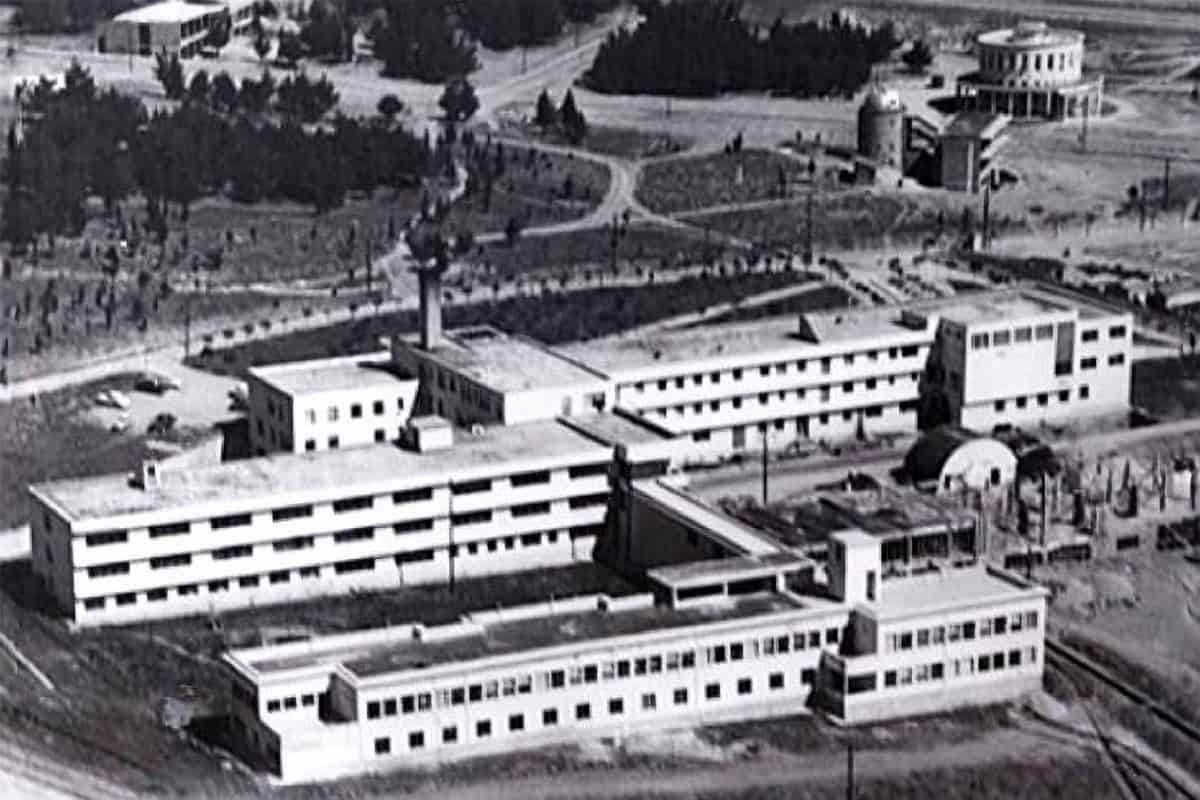
Featured image: The AHEPA Hospital in Thessaloniki in 1951, the year it officially opened its doors. Built with diaspora support, it quickly became a cornerstone of healthcare in northern Greece.