
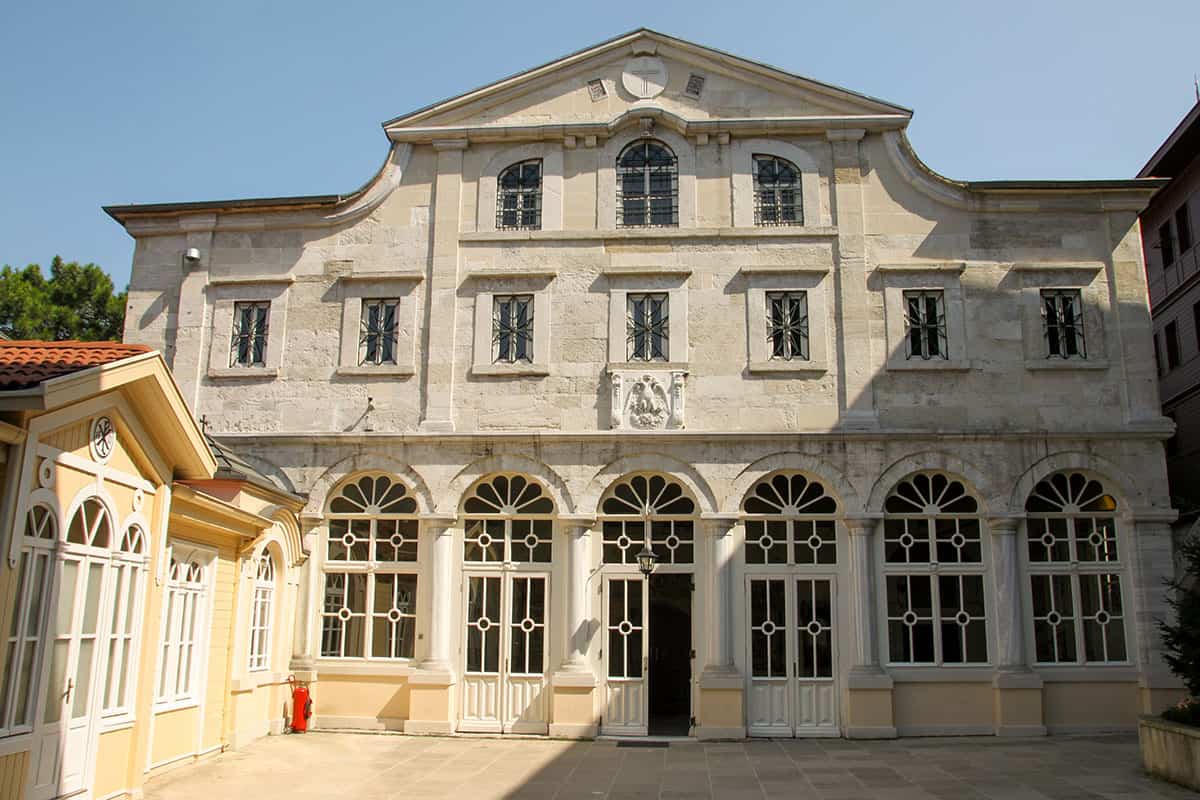
Sixty years ago, on the Sunday of Orthodoxy in March 1966, Archbishop Iakovos invested 30 lay leaders at the request of Ecumenical Patriarch Athenagoras. That moment marked the founding of the Order of Saint Andrew, known today as the Archons of the Ecumenical Patriarchate in the United States.
What began as a small group of devoted Orthodox Christians has grown into one of the most influential lay organizations in the life of the Church.
For many in the Greek-American community, the Archons are not always visible. They do not operate at the parish level, and their work rarely makes headlines. But over the decades, their role has been steady and deliberate.
They advocate. They fund. They show up where it matters.
The mission of the Archons has remained consistent: to support and defend the Ecumenical Patriarchate, particularly in matters of religious freedom.
That work has taken many forms.
In the United States, Archons have helped advance resolutions in nearly every state legislature supporting the rights of the Patriarchate. Internationally, they have maintained a presence at forums such as the OSCE Human Dimension Conference, raising awareness about issues like the continued closure of the Halki Theological School.
They have also convened major conferences in cities such as Washington, Berlin, and Athens, bringing together policymakers, diplomats, and Church leaders. These gatherings have helped position the Ecumenical Patriarchate not only as a religious institution, but as a voice in broader conversations about human rights and religious liberty.
Financially, their impact is significant. Over the past two decades, contributions tied to Archon initiatives have reached into the tens of millions, supporting both advocacy efforts and long-term institutional stability.
In recent years, the Archons have also turned their attention inward, asking what continuity looks like.
Programs like the Archon Sprouts initiative and the Pilgrimage of Discovery are aimed at younger Orthodox Americans, offering a first direct connection to Constantinople and to the historical center of the faith.
At the same time, the establishment of National Archons Sunday across the Greek Orthodox Archdiocese of America signals a broader effort to make their work more visible at the parish level.
For many, this reflects a shift. The Archons are no longer only a quiet presence behind the scenes. They are becoming part of a wider conversation about the future of the Church in America and who will carry that responsibility forward.
For Greek Americans, the idea of “defending the faith” can sound abstract.
In practice, it is not.
It is about whether the Ecumenical Patriarchate can operate freely in Istanbul. It is about whether the Halki Theological School, closed since 1971, will ever reopen. It is about whether a centuries-old institution can continue to train clergy, maintain its properties, and function without political pressure.
These are not distant concerns. They shape the future of Orthodoxy everywhere, including in the United States.
For Greek-American communities like those in the Philadelphia region, the connection to the Patriarchate can often feel symbolic. The work of the Archons operates just beyond that, translating concern into advocacy, access, and, at times, influence.
That may not always be visible on a Sunday morning. But it is part of the same structure that sustains the Church across generations and across borders.
Sixty years after their founding, the Archons remain a steady, if often unseen, presence behind that effort.
Their work does not replace parish life. It does not define the faith. But it unfolds in the space where the future of the Patriarchate is negotiated, protected, and, at times, tested.
That is where their role continues to matter.