
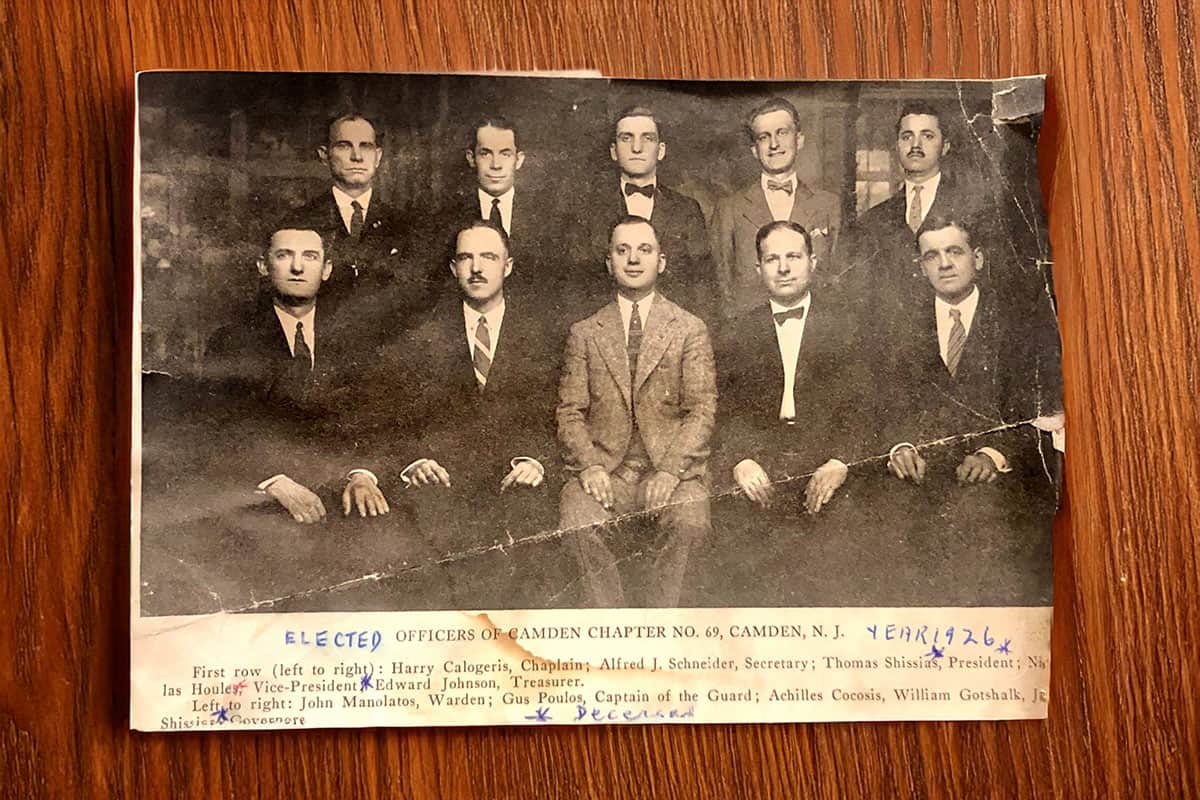
It is only a black and white photograph on a wooden table. Ten men in suits, arranged in two rows, staring straight into the lens. Camden, New Jersey, 1926. At first glance, it could be mistaken for a generic lodge portrait, the kind found in attics and archives. But for the Greek immigrants of South Jersey, this image was something larger. It captured a moment when a fragile community decided it would organize itself, demand respect, and build for the future.
The men are the elected officers of AHEPA Chapter No. 69, one of the oldest in the nation. The Order of AHEPA itself had been founded only four years earlier, in 1922 in Atlanta, Georgia. Its purpose was urgent: to help Greeks assimilate, protect one another from discrimination, and show that they could be both proud Americans and proud Hellenes.
The 1920s were not kind to immigrants. The Ku Klux Klan was on the march, restrictive immigration laws had just been passed, and Greeks were often seen as outsiders. AHEPA adopted the rituals and structures of American fraternal orders, but infused them with Hellenic values of education, philanthropy, civic duty, and family.
Camden in the 1920s
Camden was then an industrial powerhouse. Campbell’s Soup was expanding its headquarters, RCA Victor was emerging as a national giant, and the shipyards on the Delaware River employed thousands. Greeks came to Camden as they did to Philadelphia, Chester, and Wilmington, working as shoeshiners, fruit sellers, and restaurateurs. By the mid-1920s, enough families had clustered in South Jersey to imagine something permanent.
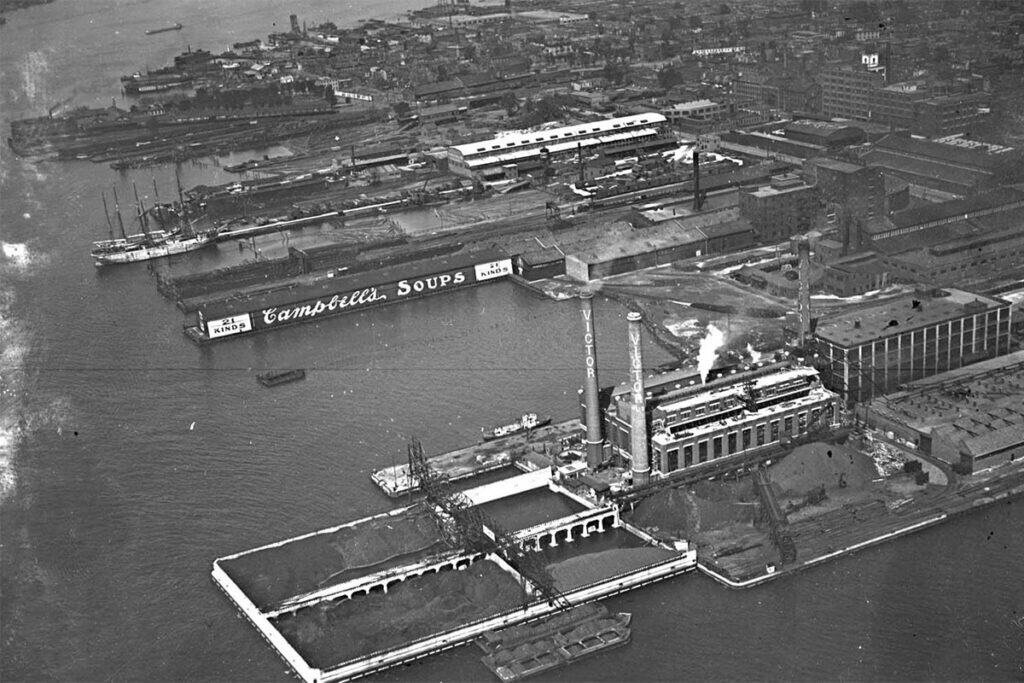
Thirty-six men came together on June 4, 1925, for the installation of AHEPA Chapter 69 in Camden. The chapter received its formal charter on July 30, 1925, placing it among the earliest AHEPA lodges established in New Jersey. They did not yet have a church. They did not yet have a community center. What they had was AHEPA. Meetings were held at the Camden Commercial School, a rented space that the chapter would later purchase. They also organized the city’s first Greek afternoon school, making sure that children learned the language and faith of their parents even as they adapted to America.
The Men in the Photograph
The officers elected in 1926 tell us who carried this work in the early years. The names, preserved by the Greek American Heritage Society of Philadelphia, read like a map of immigrant Camden:
- Thomas Shissias, President – He represented Camden at AHEPA’s 1925 Supreme Convention in Chicago, linking the chapter directly to the national organization just a year after its founding.
- Nicholas Houles, Vice President – His family later ran restaurants and markets along Federal Street, part of Camden’s Greek commercial corridor.
- Alfred J. Schneider, Secretary – Likely a non Greek ally in Camden’s civic or legal circles, a reminder that AHEPA chapters often welcomed local supporters of Hellenism.
- Edward Johnson, Treasurer – A common American name, suggesting that even in its earliest years, AHEPA in Camden was not closed to its neighbors.
- Harry (Aristotle) Calogeris, Chaplain – A restaurateur who ran the New Jersey Restaurant at 230 Federal Street. He lived long enough to be remembered as a founder of St. Thomas Greek Orthodox Church in Cherry Hill.
- John Manolatos, Warden – From a Camden family whose next generation included Spiro George Manolatos, born in 1924 and later buried with honors at Arlington National Cemetery.
- Gus Poulos, Captain of the Guard – Likely Gustavus C. Poulos, an immigrant who settled in South Jersey and whose family remained active in the community for decades.
- Achilles Cocosis, Governor – An immigrant from Macedonia, his daughters Zoe and Dawn were born in Camden in the late 1920s. He later lived in Broomall, Pennsylvania.
- William Gotshalk, Governor – A Camden attorney who appears in state appellate records in the 1950s and whose office building hosted meetings of civic and religious organizations.
- James Shissias, Governor – A second member of the Shissias family, proof that the chapter’s leadership was often built on family networks of trust and service.
Some of these lives can be traced clearly through restaurants, families, and records. Others remain more elusive. Their names survive in captions and directories, but their full stories are still waiting to be pieced together. This is a reminder of how much immigrant history is still hidden in family archives and memories.
A Call to the Community
Do you recognize a face, or does a family name sound familiar? Many of the surnames in this photo, like Shissias, Calogeris, Manolatos, Cocosis, and Houles, are still part of South Jersey and Philadelphia life today. If you have stories, photographs, or documents connected to these men or to AHEPA’s early years in Camden, share them with the Greek American Heritage Society of Philadelphia or with Cosmos Philly. Every fragment helps build the fuller picture of how Greek America grew in South Jersey.
From Camden to the Nation
Within just a few years, Camden Chapter 69 was visible far beyond South Jersey. Delegates traveled to national conventions. In 1928, the chapter hosted its third annual grand ball at the Walt Whitman Hotel, one of the city’s grandest new buildings. Coverage appeared in the social pages, placing Greek Americans in the public eye not as outsiders, but as citizens who hosted civic events, raised scholarship funds, and supported relief drives.
This mattered. In a decade when Greeks were still sometimes barred from certain jobs and neighborhoods, AHEPA officers wore suits, gave speeches, and posed for photographs that claimed a place at the American table.
Continuity and Legacy
The Camden chapter did not fade away as the community moved outward to the suburbs. It endured. Long before St. Thomas parish was founded in Cherry Hill in the 1970s, AHEPA had already been the bridge. It provided scholarships, organized dances, and gave young people a reason to gather.
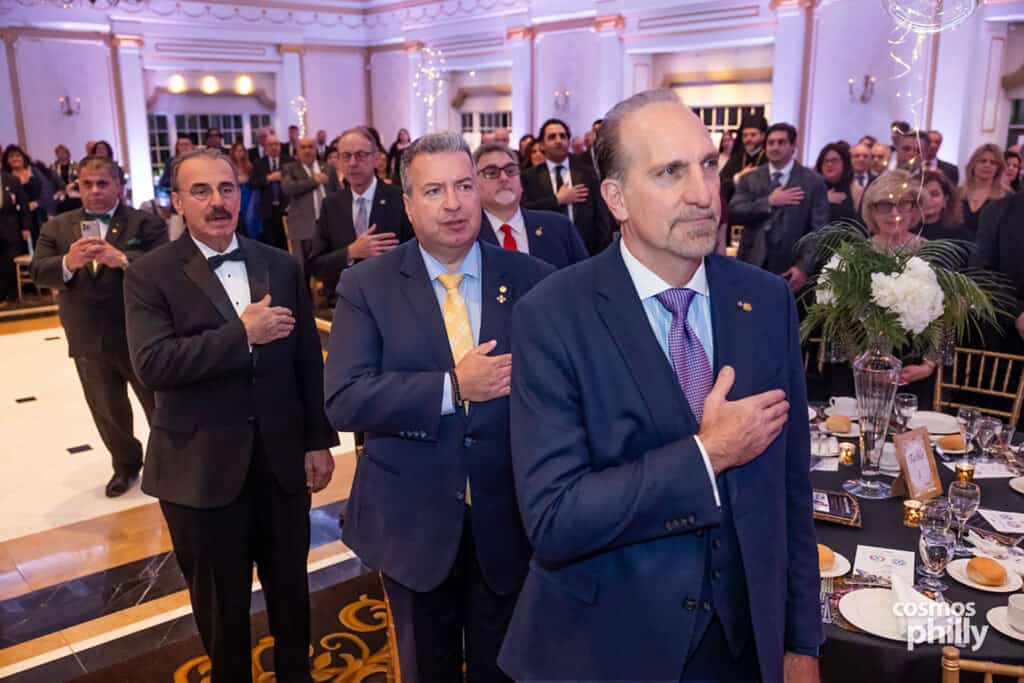
When Camden Chapter 69 marked its 100th anniversary with a black tie gala at Adelphia in Deptford in February 2025, leaders emphasized that the chapter was founded decades before there was a permanent parish in South Jersey. It was AHEPA that first created structure, continuity, and a sense of belonging. For nearly half a century, the chapter stood as the primary institution of Greek life in the area.