
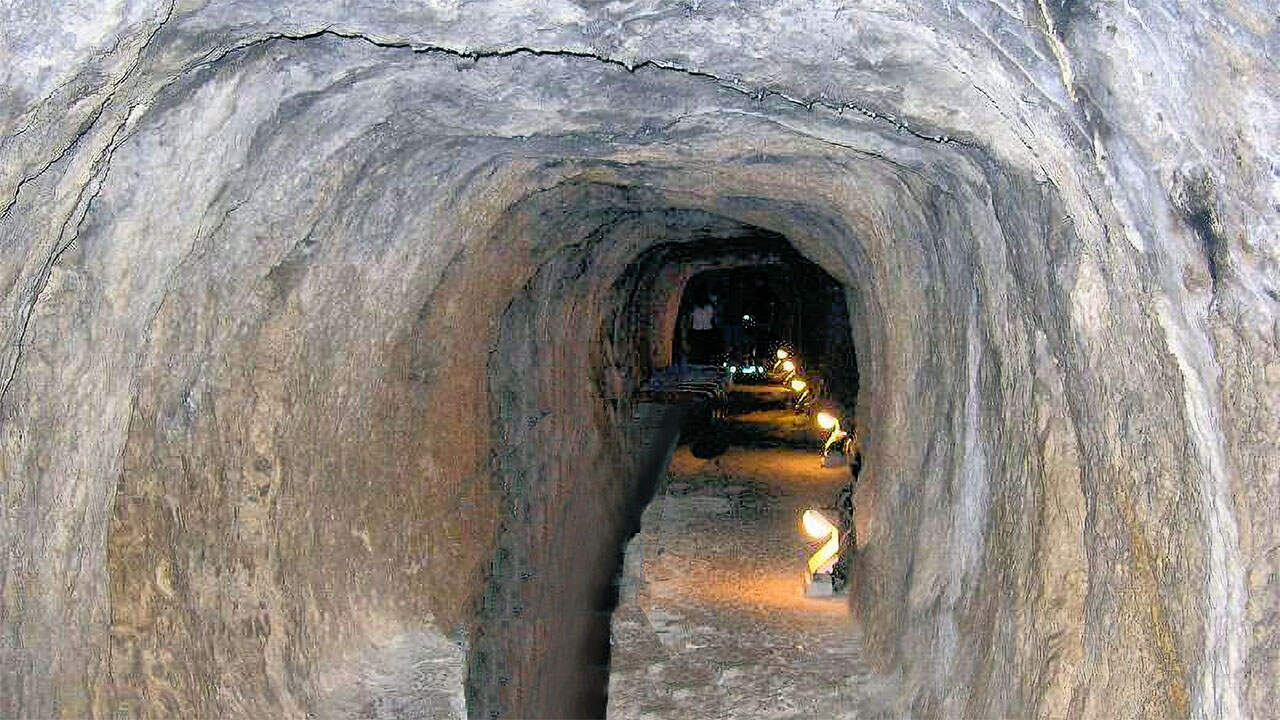
Several decades before the Persians first invaded Greece, and almost a century before the Athenians built the Parthenon, an extraordinary feat of engineering was taking shape beneath the mountains of Samos. This was no ordinary construction project. It was an audacious attempt to bore straight through solid limestone using only hammers and chisels. The survival of an entire city depended on it.
On the island of Samos, separated from the Persian mainland by just over a mile of sea at the Mycale Strait, prosperity under the tyrant Polycrates, who ruled from around 540 to 522 BCE, had created a pressing problem. The ancient capital city, on the site where modern Pythagoreio now stands, had outgrown its wells and cisterns. Its population needed more water than local sources could provide.
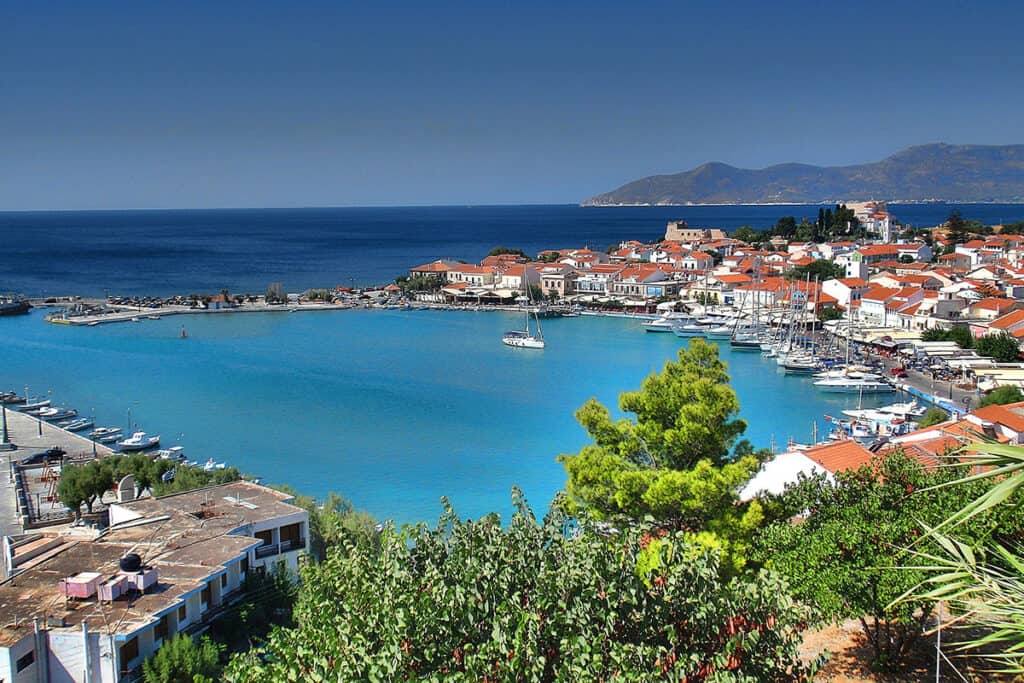
North of the city lay the abundant spring of Agiades. The bulk of Mount Kastro, known in antiquity as Mount Ampelos, stood directly between the spring and the city. A surface canal around the mountain would have been easier to construct. It also would have left the supply dangerously exposed in times of siege. Polycrates chose a bolder solution. He ordered a tunnel straight through the mountain so that the water supply could remain hidden from enemies. For this challenge, he turned to Eupalinos of Megara, an engineer whose name would become legendary.
A Revolutionary Approach
Eupalinos calculated that a single crew digging through more than a kilometer of rock would need decades. Instead, he proposed something attempted only once before in Jerusalem’s Siloam Tunnel. Excavation would begin at both ends at once. Two teams, working blindly toward one another, would meet in the middle and cut the construction time in half.
Herodotus, writing a century later, described the tunnel as eight feet high and eight feet wide. Modern surveys show the main corridor measures about 1.80 meters by 1.80 meters. That size was still large enough for two men to work side by side.
Crews of masons and slaves advanced slowly in the suffocating dark. Their oil lamps filled the air with smoke as they cut into the limestone. Progress was measured in centimeters each day, and the sound of chisels striking stone echoed endlessly down the passage.
The tunnel extended for 1,036 meters, an astonishing distance for ancient engineers with no explosives or steel tools. The two headings eventually met with a deviation measured in modern surveys between 12 and 60 centimeters. Whether in alignment or elevation, the error remained less than a single step. This achievement continues to impress engineers today.
Among those alive at the time was Pythagoras, the Samian philosopher and mathematician. He would have been in his twenties during the project and may have been aware of the bold undertaking. There is no evidence that he took part directly. Yet the surveying and geometric reasoning required for the tunnel anticipate the mathematical tradition later associated with his school. The coincidence of place and time adds a fascinating layer to the story of Samos as a center of both engineering and intellectual innovation.
Engineering Challenges
Eupalinos relied on surveying methods far ahead of his time. He ran a baseline across the mountain summit and aligned his north and south approaches to it. His crews maintained their orientation with frequent sighting lines back toward the entrances.
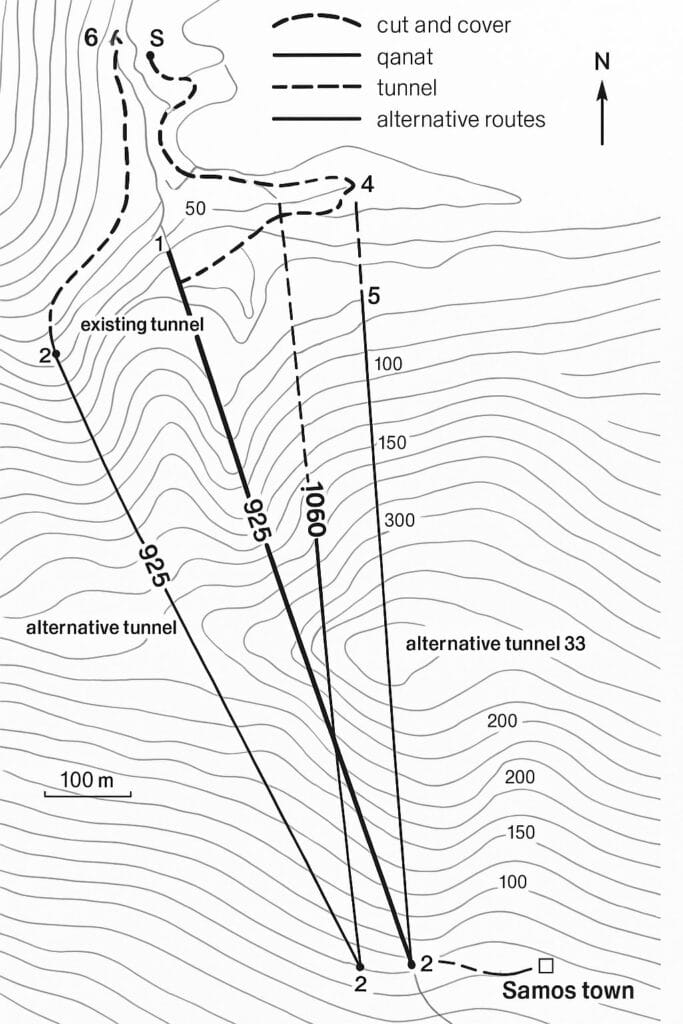
When they struck difficult rock, he shifted the northern team off course at precise angles and later redirected them to the original line. These adjustments can still be seen in the tunnel’s bends, visible marks of decision-making preserved in stone.
As the tunnel neared completion, nature created an unexpected problem. During the long years of construction, the water level of the spring had fallen. By the time the crews broke through, the flow ran several meters below the tunnel floor.
Eupalinos did not abandon the work. Instead, he designed a second water channel carved beneath the main corridor. This narrow trench, about sixty centimeters wide, descended gradually from about four meters deep at the spring to nearly nine meters at the city outlet. Clay pipes were set into the trench to keep the gradient steady. A worker inside this lower channel would have been almost completely confined, laboring in near darkness. Above him, the main tunnel served as access and protection.
The aqueduct was also secure against sabotage. Unlike a canal or surface pipeline, it could not be easily discovered or cut during a siege. For Polycrates, this was as important as the water itself. Samos was wealthy and strategically positioned. Its survival depended on denying enemies the chance to choke the city’s supply.
Life Around the Project
Though the names of the workers are lost, the human effort behind the tunnel was immense. Camps must have formed around both entrances. Slaves and laborers hauled basket after basket of rubble from the darkness. Overseers kept accounts and measured progress. Guards ensured the site was secure.
The mountain would have rung with the steady rhythm of chisels and hammers, the soundtrack of one of antiquity’s greatest experiments in engineering. Eupalinos himself must have moved constantly between tasks. He would have checked alignments, refined calculations, and encouraged the teams.
His reputation as a master builder would rest on this single project. His success made him one of the few engineers of antiquity remembered by name. To Polycrates, the tunnel was more than infrastructure. It was a symbol of power, proof that under his rule, Samos could achieve what no other Greek city had attempted.
Legacy
The Eupalinian aqueduct supplied water for more than a thousand years, continuing into Byzantine times before silting up in the seventh century CE. Herodotus placed it among the three greatest works of the Greeks, alongside the great harbor mole of Samos and the temple of Hera. Its concealed design gave security in war, and later, the passage even served as a refuge during unrest.
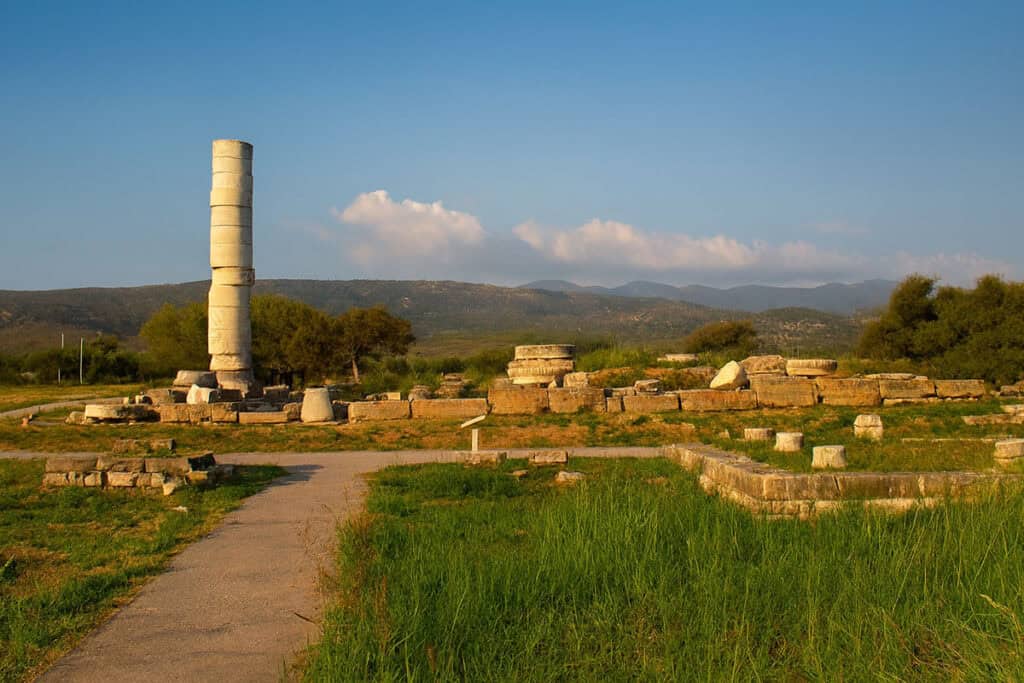
Rediscovery in modern times confirmed what the ancient accounts had preserved. Nineteenth-century travelers heard rumors of an underground channel. They were astonished when excavations revealed a tunnel exactly as Herodotus described. Today, visitors can see the seam where the two teams met, a jagged reminder of their convergence after nearly a decade of digging. Modern engineers still marvel at its accuracy.
In 1992, UNESCO recognized the tunnel as part of the Pythagoreion and Heraion of Samos World Heritage Site. In 2017, the American Society of Civil Engineers named it an International Historic Civil Engineering Landmark. These honors underline the project’s continuing significance.
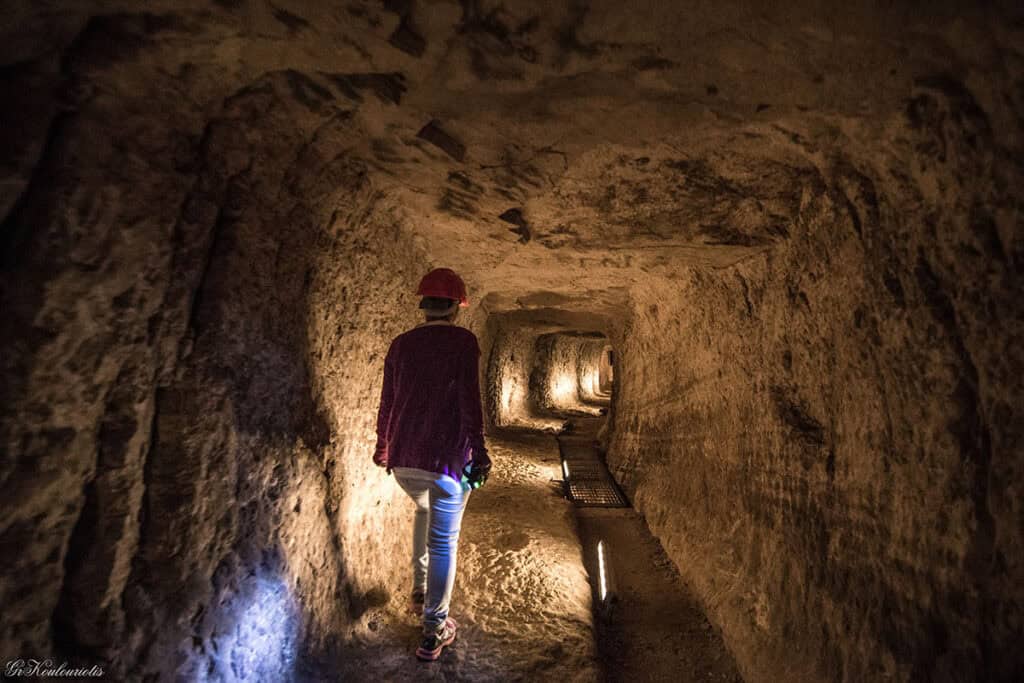
The tunnel today is open to those willing to walk its length. The air inside is cool, the stone walls bear the marks of chisels, and each footstep echoes in the silence. To stand there is to sense the scale of time and the persistence of human determination. The Eupalinos Tunnel remains a monument to ingenuity and courage. It shows how, even with the simplest of tools, people could imagine and build with astonishing vision.
Featured image: Inside the Eupalinos Tunnel on Samos, a 6th-century BCE aqueduct carved through solid rock.