

On December 16, 1803, the mountain stronghold of Souli fell to Ali Pasha, ending more than two centuries of independence and giving Greece one of its most enduring legends of resistance.
Souli lies in the mountains of Epirus in northwestern Greece, a remote region that shaped a community known for its stubborn independence and extraordinary fighting spirit.
The Fall of Souli was not just a military defeat. It was the final act in a 250 year struggle between a small highland confederacy and a powerful Ottoman ruler. What happened in those final days became one of the defining stories carried into the Greek Revolution of 1821.
Timeline of the Fall of Souli (1789 to 1803)
- 1788 – Ali Pasha becomes ruler of the Pashalik of Yanina and identifies Souli as the main obstacle to his authority.
- 1789 – First campaign against Souli. Ali Pasha is defeated with heavy losses.
- 1792 – Second campaign. The Souliotes again repel Ali Pasha’s larger force. Lambros Tzavelas is mortally wounded.
- 1799 – Ali Pasha seizes Lakka Souli, tightening his control over the surrounding region.
- 1800 – The Botsaris clan withdraws from Souli after negotiating with Ali Pasha. This significantly reduces Souli’s military strength.
- 1800 to 1803 – Ali Pasha surrounds Souli with fortified towers, beginning a long siege based on isolation, starvation, and psychological pressure.
- 1802 – French ships deliver supplies through Parga, but support stops in 1803 due to shifting European alliances.
- September 3, 1803 – Pilios Gousis allows Ottoman soldiers into his fortified home because his son is a hostage. This breach opens the way into the inner settlements.
- December 7, 1803 – Final defensive positions at Kiafa and Kougi fall as supplies and ammunition run out.
- December 12, 1803 – Souliote leaders sign a capitulation treaty granting safe passage out of Souli.
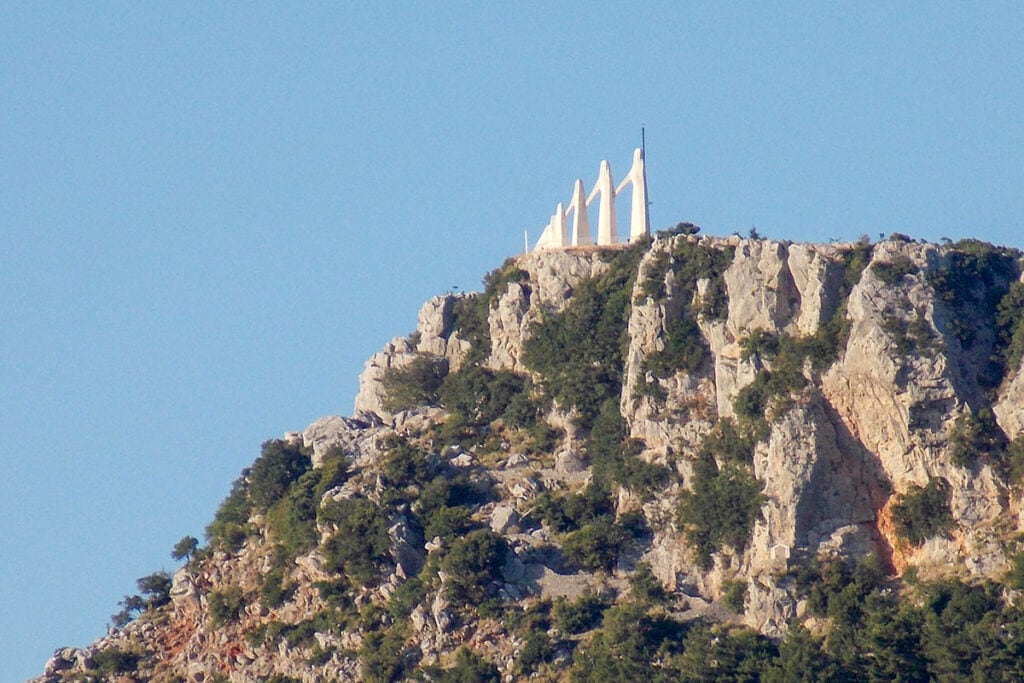
- December 16, 1803 – As the Souliotes evacuate, tragedy strikes at Zalongo, where between 20 and 60 women choose death over captivity.
A Mountain People Who Refused to Bow
The Souliotes were an Orthodox Christian, Albanian-speaking community who settled in the mountains during the 16th century. Though many Souliotes spoke an Albanian dialect, they lived fully within the Greek Orthodox world and saw themselves as part of the broader Greek community, a fact reflected in their alliances, their leaders, and the role they later played in the Greek Revolution. Their homeland was a natural fortress of cliffs and narrow passes, with villages spread across rugged terrain. They often cooperated in war but also maintained clan rivalries, a local dynamic that Ali Pasha would later exploit with considerable skill.

Ali Pasha himself was a rising regional strongman whose power spread across Epirus and western Greece. Known for his ambition and ruthlessness, he aimed to build a semi-independent domain within the Ottoman Empire. Souli was the one place he could not bring under control, and its autonomy challenged the authority he sought to enforce throughout the region.
By the late 1700s, about 12,000 people lived in a confederation of clans governed by a council of elders near the Church of Saint George. Souli’s resistance attracted attention from European powers, which at times provided arms and saw the Souliotes as a counterweight to Ottoman influence in the region.
From these peaks, they earned a reputation across Europe as warriors who could not be subdued. When Ali Pasha of Yanina rose to power in 1788, Souli was the one place he could not control. He viewed Souli as the last independent stronghold in his domain and believed that its defeat was essential to consolidating his authority in Epirus. His first two campaigns, in 1789 and 1792, ended in heavy losses. Even armies of several thousand men could not break the Souliotes’ mountain defenses.
But the politics inside Souli were changing. In 1800, the powerful Botsaris clan accepted an offer from Ali Pasha and withdrew from Souli. Their departure weakened the confederacy at the worst possible time.
The Siege Tightens
Ali Pasha returned with a more methodical plan. Instead of launching direct assaults, he tightened a noose around Souli by building fortified towers to cut off routes for food and ammunition.
For a time, secret lines through Parga and nearby towns kept Souli alive. But by 1803, the geopolitical landscape shifted. Britain realigned its alliances during the Napoleonic Wars, and European weapon shipments to Souli stopped. Ammunition dwindled. Food ran short. The defenders’ most valuable asset, their ability to fight, was slipping away.
By this stage, Ali Pasha had shifted from failed military assaults to a more ruthless strategy that relied on psychological pressure, corruption, and the taking of hostages to break Souli from within.
Then came the turning point. In September 1803, Pilios Gousis, a Souliote chieftain desperate to save his hostage son, allowed Ottoman soldiers into his home in exchange for a promised ransom. Gousis’s house occupied a key defensive position, and once the Ottomans entered, they were able to penetrate the inner settlement for the first time, making its defense impossible. That breach led directly to the fall of Souli’s central stronghold.
The Final Stand
With their supplies almost gone, the remaining Souliotes gathered in the courtyard of Saint George’s Church and swore an oath to face the end together. Their leading figures included Fotos Tzavellas, Dimos Drakos, Tousas Zervas, and others remembered in the histories of this era.
Even in their final week, they continued to win tactical victories. But by early December, they were exhausted, surrounded, and nearly out of ammunition. Their last defenses at Kiafa and Kougi fell on December 7, 1803.
After the fall of Kougi, Ottoman deputies entered the fortified monastery of Saint Paraskevi, where the Souliotes stored their remaining gunpowder. According to tradition, Monk Samuel refused to surrender the ammunition. Rather than allow Ali Pasha to seize it, he ignited the gunpowder stores, killing himself and many approaching soldiers. One Ottoman account described the blast as a “terrifying burst that shook the mountain and sent smoke rising like a pillar.” Whether Samuel or another defender lit the fuse, the message was unmistakable. Even in defeat, the Souliotes would not give their weapons to the enemy.
With no hope of relief, Souli’s leaders agreed to negotiate. On December 12, 1803, they signed a capitulation treaty which promised safe passage with their families, weapons, and possessions. For the Souliotes, it was the only honorable exit from an unwinnable siege. Ali Pasha, however, intended to use the moment to strike a final blow.
Zalongo: A Tragic Choice
What followed may be Souli’s most tragic moment.
As the Souliotes evacuated their homes under the treaty terms, tragedy struck one of the groups fleeing through the mountains near Preveza. A band of Ottoman Albanian soldiers overtook dozens of Souliote women and children near the cliffs of Zalongo.
With no escape and knowing what awaited them in captivity, the women made a collective decision that would echo through Greek history. According to the testimony of Ottoman officer Suleiman Aga, who witnessed the scene, the women held hands and began a rhythmic dance, singing as they moved toward the cliff’s edge. One by one, they threw their children into the abyss and followed after them.
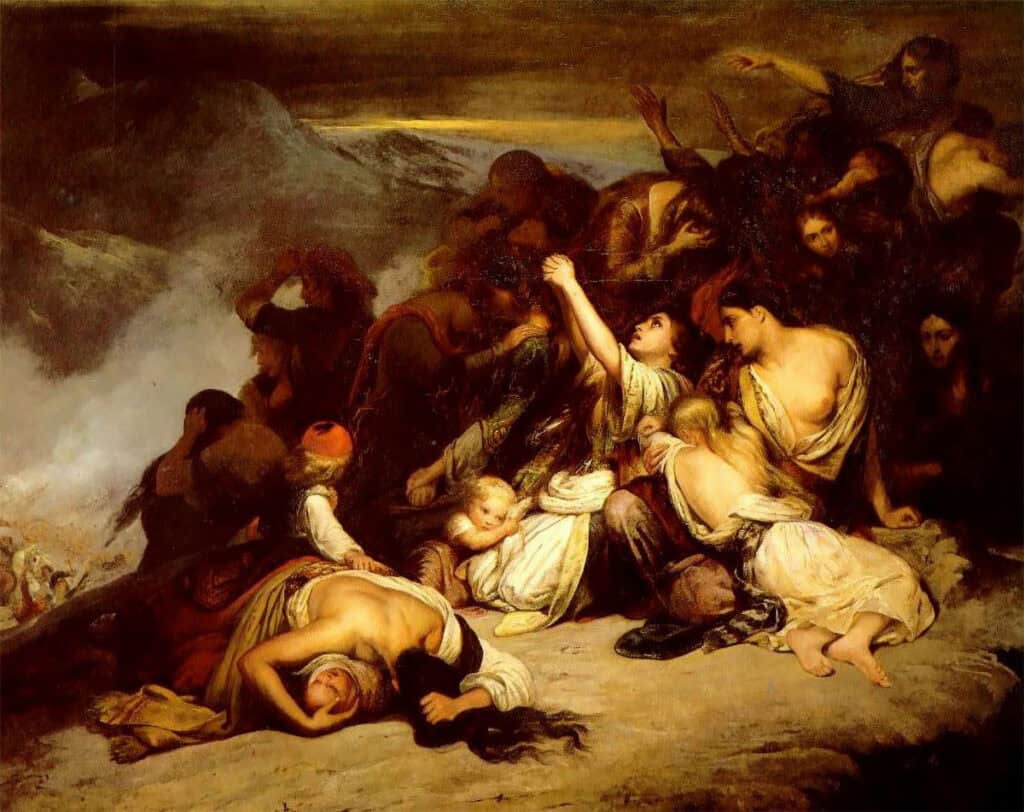
Sources differ widely on the exact number, with accounts describing between 20 and 60 women, and several sources placing the figure closer to 60 participants, many of them carrying infants. Their final cry was said to echo through the ravine.
Exile and the Road to Revolution
The survivors fled to Parga and the Ionian Islands. Many entered foreign military service under Russian and later French command, earning respect for their discipline and skill. Among those who escaped into exile and would help shape Greece’s future was Markos Botsaris, born in 1790 in Souli and only thirteen years old when his homeland fell. Two decades later, he would become one of the great heroes of the Greek War of Independence, linking the Souliote story directly to the fight for a free Greek state.
Souliote families would go on to shape the early Greek army and political leadership, carrying their martial traditions into the new nation. Their legacy left a deep imprint on the character of the young Greek state. Ali Pasha himself would later rebel against the Ottoman sultan and be killed in 1822, a turning point that helped open the way for the Greek Revolution.
The spirit shaped in Souli, the refusal to submit even when outnumbered and surrounded, became one of the moral foundations of the revolution that followed. Souli fell, but its spirit did not. Souli’s story remains part of Greek memory everywhere its descendants live today.