
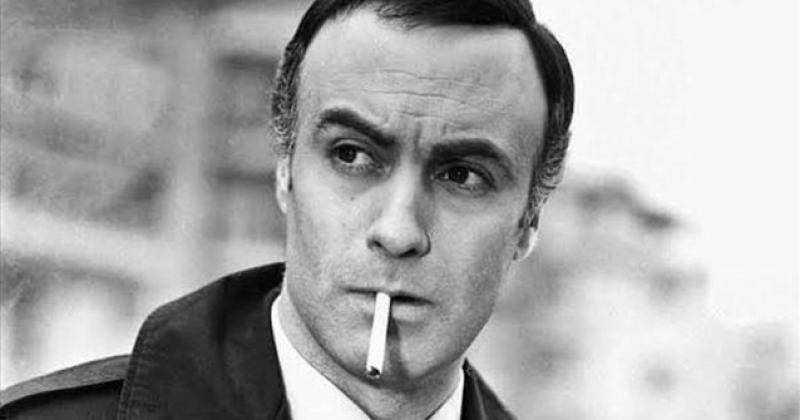
Athens – Andreas Barkoulis, one of the brightest stars of Greek cinema’s golden age, passed away today at Agia Olga hospital in Athens. He was 80 years old and had been hospitalized with heart and respiratory complications.
Born on August 4, 1936, in Piraeus, Barkoulis rose from modest beginnings to become the face of an entire cinematic generation. He studied acting at the “Kostis Mihailides” drama school and made his stage debut in 1956. Within just a few years, he was a household name.
By the late 1950s and early 60s, his fame had exploded. He wasn’t just popular — he was idolized. So much so that a catchphrase emerged just for him: “Eh koritsia, o Barkoulis!” (“Hey girls, it’s Barkoulis!”) It became part of everyday Greek language, shouted in theaters and whispered among fans.
Over his film career, Barkoulis appeared in more than 100 productions, with some sources counting as many as 110. He often played the romantic lead, though his talent stretched beyond charm. His screen presence was both graceful and grounded, able to convey vulnerability beneath a polished exterior.
Among his most well-known roles:
- Mimikos and Mary (1958) – a box-office success that paired him with Aliki Vougiouklaki in a story of doomed love
- An Italian Woman in Greece (1958) and A Holiday in Aegina (1958) – both cemented his popularity early on
- The Bait (To Dilo, 1964) – another collaboration with Vougiouklaki, capturing postwar anxieties through melodrama
- Jenny, Jenny (1965) – with Jenny Karezi, blending comedy and social critique
- A Crazy, Crazy 40-Year-Old Woman (1970) – opposite Rena Vlachopoulou, showing his comedic range
- The Victim’s Logic (1990) – one of his last notable screen appearances
In the 1970s, Barkoulis moved to the United States and briefly pursued a singing career, though he never abandoned acting. He returned to Greece in the late 1970s, most sources cite 1978, and mainly focused on theater. His performances became more introspective, influenced by age and experience.
Off-screen, Barkoulis lived a full life marked by multiple marriages and fatherhood. Though he stepped out of the film spotlight in later years, he remained beloved by generations who remembered him as a symbol of elegance, romance, and classic Greek cinema.
His passing closes a chapter not just in film history, but in cultural memory. For many, the words “Eh koritsia, o Barkoulis!” will forever echo with the glamour, optimism, and drama of mid-20th century Greece.