

Ten years ago, the idea of Greece building its own satellites might have sounded far-fetched. Even today, many would be surprised to learn that the work is already underway. But it is. In a facility just outside Athens, Greek engineers are designing and assembling actual components for Earth observation satellites. These aren’t prototypes or display models. They’re part of a national constellation that will begin launching at the end of 2025.
This isn’t a symbolic project or a short-term political gesture. It’s part of a broader plan to establish long-term technical capacity in the country. And the people involved are building something that might actually last.
The most visible part of this shift is a facility in Neo Psychiko, where the Finnish company ICEYE has set up operations. Known for its compact radar satellites, ICEYE has already started producing components in Greece. Around 15 percent of each satellite is now built locally, and the company plans to begin full satellite assembly here by 2026. That would make Greece one of only two countries in Europe where ICEYE builds complete systems.
This marks a real change, especially for a country that has historically relied on others for advanced technology. Greece is beginning to build some of that capability at home, not only assembling hardware, but also training people and laying the groundwork for something more sustainable.
The satellite project itself is part of the Greek National Microsatellite Program, a multi-year initiative supported by the EU’s Recovery and Resilience Fund. It brings together a mix of international companies and local institutions, with the goal of creating a working space ecosystem rather than isolated infrastructure.
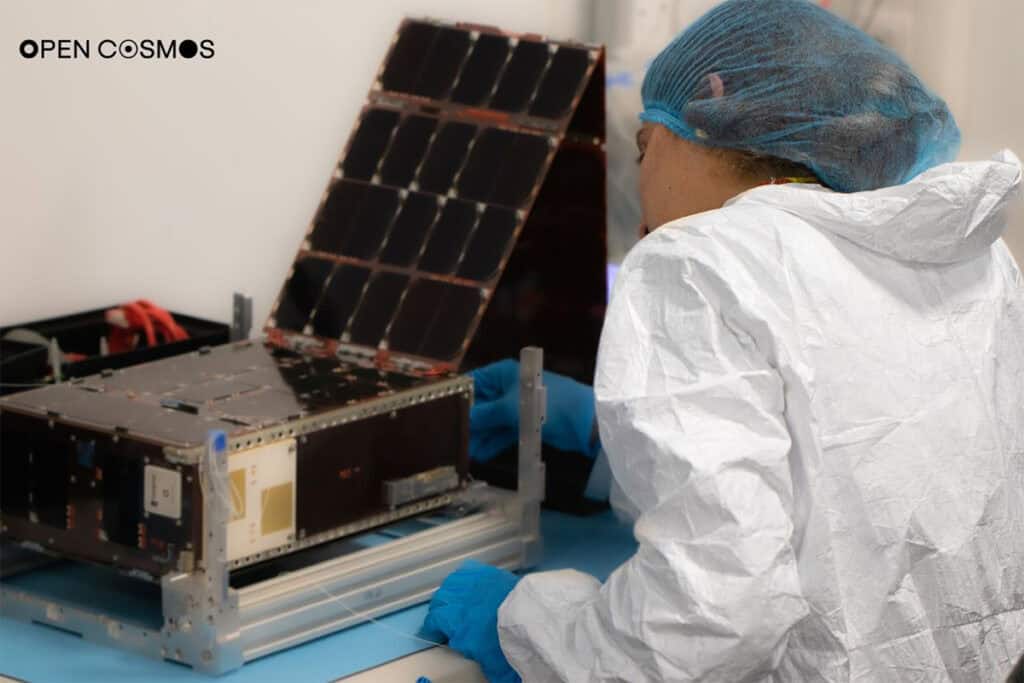
That includes two radar satellites from ICEYE for maritime monitoring and disaster response, thermal imaging satellites from the German company OroraTech for wildfire detection, and seven optical satellites from Open Cosmos, with production support from its Greek subsidiary, Open Cosmos Aegean. These will be used for agriculture, land use, and environmental monitoring. Planetek Hellas is also building a new €17 million government data hub to manage and analyze all of the imagery these satellites will generate.
These satellites aren’t meant to impress. They’re built to do very specific, very practical things.
They’ll support firefighting, coastal security, agricultural planning, and environmental management. The tools are complex, but the goals are clear: protect people, manage land and water more effectively, and help the country respond to emergencies faster and better.
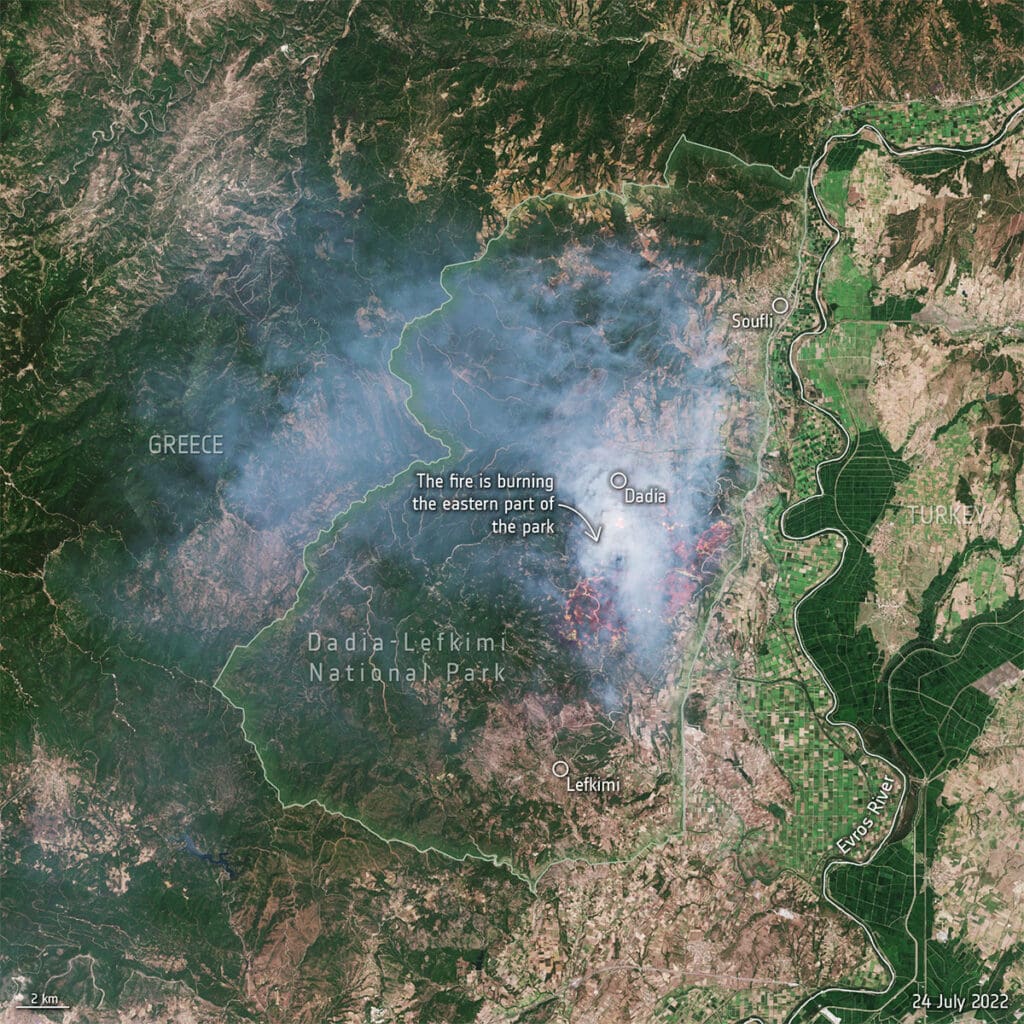
This kind of data is exactly what the thermal and radar satellites in Greece’s new constellation will provide. With higher resolution and more frequent passes, authorities will be able to detect risks earlier, monitor damage in real-time, and make informed decisions based on up-to-date information from above.
What sets this effort apart is that it’s not just about buying services from abroad. The real focus is on transferring knowledge and keeping it here. Greek engineers are working closely with international teams, learning the systems behind the satellites, and applying that knowledge in local settings. Public agencies and universities are involved, too, which means the experience isn’t limited to a few specialists—it’s spreading.
And there’s another change happening quietly alongside all of this.
Some of the engineers working on the program aren’t new hires. They’re people who left Greece years ago during the crisis. They built careers in Germany, Finland, the UK, and the US, working on projects that weren’t available to them back home.
Now, some are coming back. Not because they had to, but because there’s finally something here worth coming back for. The space program is still growing, but it offers real work, solid teams, and long-term potential. That alone makes it different from a lot of what’s come before.
The first radar satellites are scheduled to launch at the end of 2025. The remaining launches will follow through 2026. When the full system is deployed, Greece will have an independent Earth observation constellation of 13 commercial satellites, with additional university-built CubeSats expanding the broader program to 15.
But what may prove even more valuable is everything that’s being built around it: the skills, the partnerships, the infrastructure, and the quiet confidence that comes from being able to build something complex and make it work.
Progress like this doesn’t happen all at once. It takes years of careful effort, the kind that rarely gets much attention outside the people directly involved. Still, when you see something this concrete take shape, you realize how much is possible when short-term thinking gets put aside.
The satellites are important, but they’re not the whole story.
The real story is what’s happening on the ground. People are returning. Industries are forming. A country is beginning to believe in its own technical future and acting on that belief.
It’s early, but it’s real. And if Greece stays focused, it doesn’t have to be temporary.
Contains modified Copernicus Sentinel data (2022), processed by ESA.
Open Cosmos image used with company attribution.
ICEYE satellite render courtesy of ICEYE.