
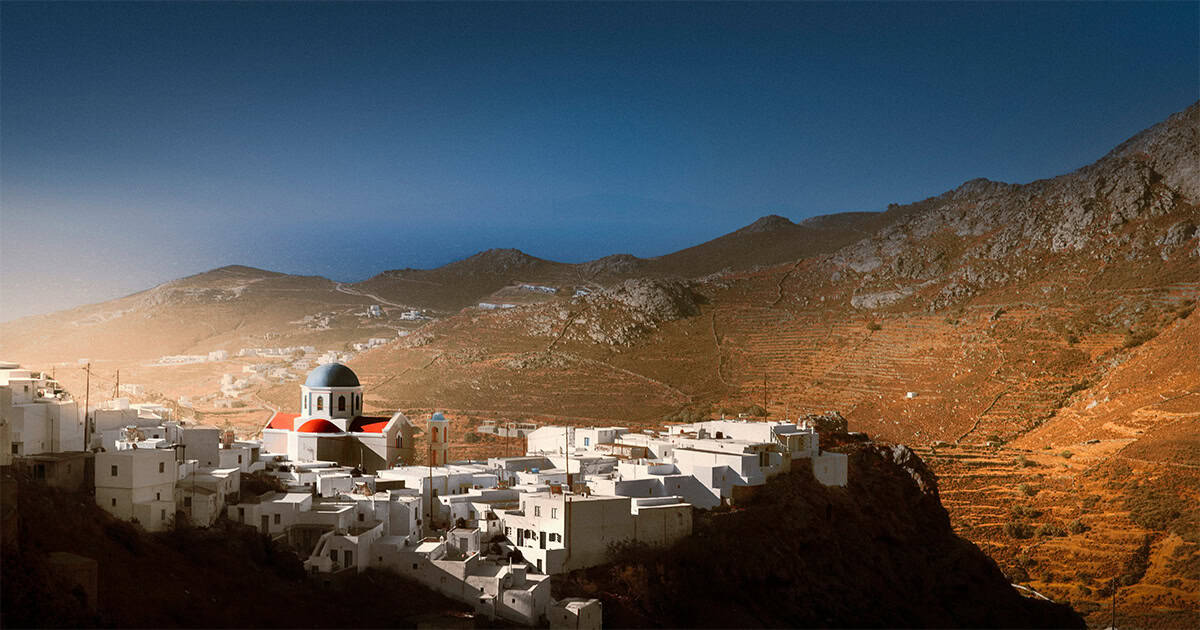
Greece hasn’t changed.
It remains one of the safest destinations in the Mediterranean. The U.S. State Department still rates it at Level 1, the lowest risk category, with the same everyday cautions you would expect anywhere in Europe. On the ground, there is no visible disruption.
And yet, something has shifted.
You can hear it in conversations. Not fear, exactly. Not even doubt. Just hesitation. A pause before booking. A second thought where there used to be none.
For years, Greece was an easy decision. You went in the summer. You booked when you could. You figured out the details later. That certainty is starting to fade, not because Greece has become less safe, but because the world around it has changed, quickly and dramatically.
Since late February, the war between the United States, Israel, and Iran has reshaped the wider region. Flights have been disrupted, shipping routes affected, and energy markets have reacted almost immediately.
The effects are not evenly distributed.
In places closer to the conflict, the reaction has been immediate. In Cyprus, reporting described cancellations rising sharply in the immediate aftermath of the escalation, in some cases approaching near-total levels before stabilizing, with a noticeable drop in early-season bookings. Greece, by contrast, has remained relatively stable, and in some cases has even benefited from travelers redirecting away from more exposed destinations, even as demand from parts of the region itself has weakened.
That is where the picture becomes more complicated.
Greece is not seeing a collapse in demand. In some markets, it is gaining from the shift. But at the same time, travelers who would have booked without hesitation a year ago are now taking more time, looking more closely, and weighing their options. The overall picture is not decline, but friction.
Travel decisions are rarely based on precise geography. For many people, the eastern Mediterranean feels like a single space, and when instability enters that space, even at a distance, it changes how the entire region is perceived. Greece may be outside the conflict zone, but it is not outside that perception.
At the same time, the cost of getting there has changed in ways that are impossible to ignore.
Jet fuel prices have more than doubled in a matter of weeks, and airlines have moved quickly to pass that on. Some European carriers have begun adding surcharges of around €50 on long-haul economy routes, with higher increases across premium cabins and peak travel periods. What used to be a manageable summer fare is, in many cases, noticeably higher from one search to the next.
That is where hesitation becomes visible.
Trips that once felt automatic now require more planning. Travelers are booking earlier to avoid further increases, shifting to May or September, or comparing destinations more carefully, even when Greece remains the likely choice.
The destination hasn’t changed. The decision has.
For the Greek diaspora, that shift lands differently. Travel to Greece is not just a vacation. It’s a return, tied to family, obligation, and continuity. But even here, the same questions are starting to surface, about timing, cost, and whether this summer feels different from the last.
And in some ways, it does.
Not because Greece itself has changed, but because the conditions around it have. The contrast is becoming clearer. In a region where perception is shifting quickly, Greece stands out as stable, even as travelers approach it with more caution than before.
Which leads to a familiar reality. Greece is not losing its appeal. But it is no longer taken for granted.
People are still going. They are just thinking about it more than they used to.
And this summer, that difference may be the story.