
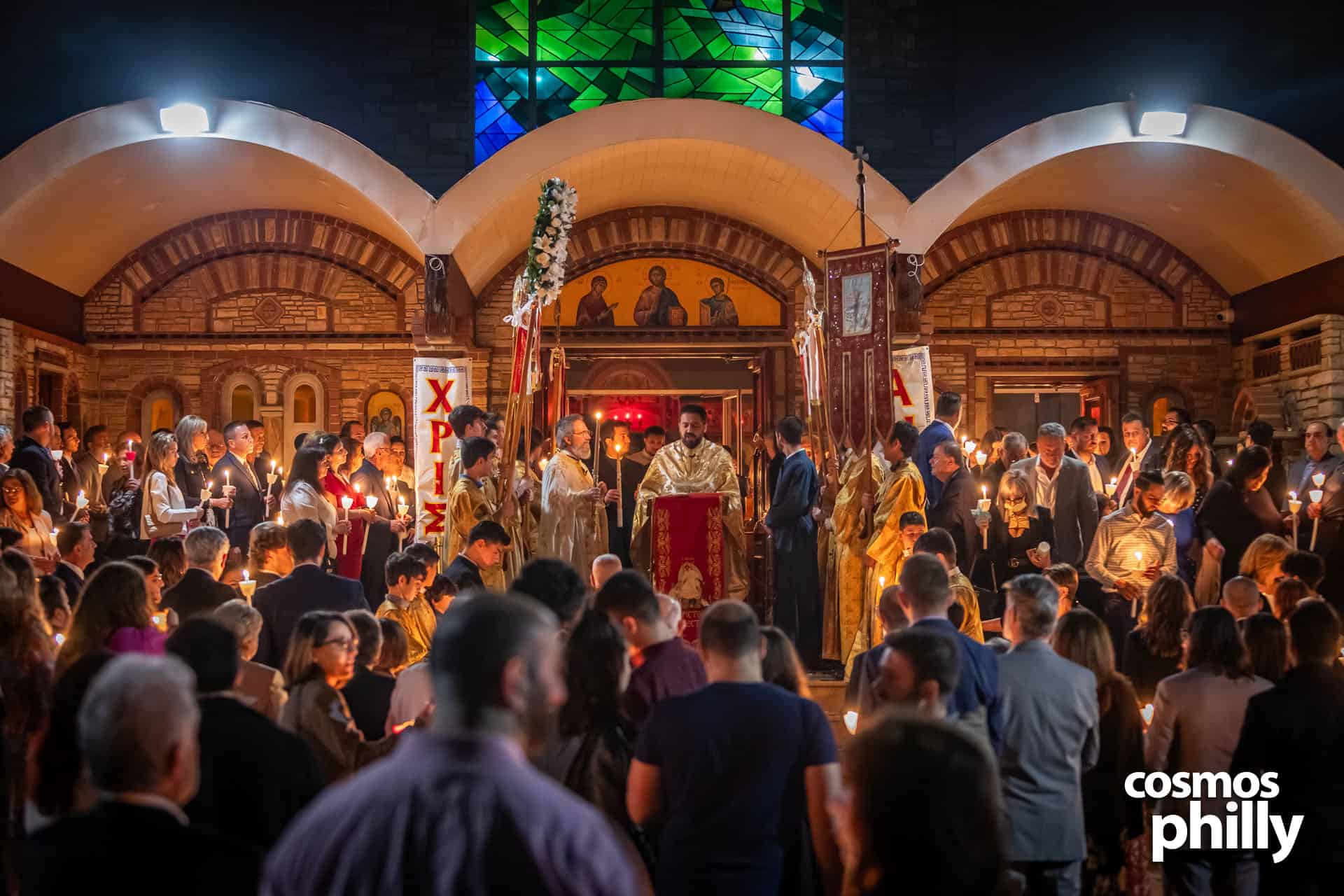
Greek Orthodox Easter in 2026 falls on Sunday, April 12, one week later than Western Easter, which will be celebrated on April 5.
For Orthodox Christians, Easter, known as Pascha (Πάσχα), is the most important celebration of the year. Churches fill with candlelight at midnight, families gather around long tables after weeks of fasting, and the familiar greeting “Christ is risen” (Χριστός Ανέστη) echoes from church courtyards to family kitchens.
Across Greece and throughout the Greek diaspora, from Athens and Thessaloniki to Melbourne, Toronto, New York, and Philadelphia, the celebration blends deep religious meaning with traditions centered on family, food, and community.
In Philadelphia, those same days unfold across parishes rather than in one place, with services moving from evening to evening throughout Holy Week. In recent years, that has meant a visible presence across the region, as clergy and faithful follow a shared rhythm from Palm Sunday through the Resurrection.
Quick Guide: Greek Orthodox Easter 2026
- Orthodox Easter Sunday (Κυριακή του Πάσχα): April 12, 2026
- Western Easter: April 5, 2026
- Good Friday (Μεγάλη Παρασκευή): April 10
- Holy Saturday (Μεγάλο Σάββατο): April 11
- Easter Monday (Δευτέρα του Πάσχα): April 13
For many in the Greek-American community, these dates are not just markers on a calendar. They shape a full week of movement between churches, from the Bridegroom services early in the week to the Good Friday procession and the midnight Resurrection.
Greek Orthodox Easter centers on the midnight Resurrection service (Ακολουθία της Ανάστασης). Worshippers light candles, greet one another with “Christ is risen” (Χριστός Ανέστη), and break the long Lenten fast with traditional foods such as magiritsa (μαγειρίτσα), red eggs, and roast lamb.
Holy Week, known in Greek as Μεγάλη Εβδομάδα (Great Week), runs from April 6 through April 12.
In Greece, Easter Monday is also a public holiday, and celebrations often continue into the following day.
Why Orthodox Easter Often Falls Later
Orthodox and Western churches often celebrate Easter on different dates because they use slightly different calendar systems and calculations.
Western churches adopted the Gregorian calendar reform introduced by Pope Gregory XIII in 1582, which corrected the gradual drift of the spring equinox in the older Julian calendar.
Most Orthodox churches, however, continue calculating Easter according to the Julian calendar for liturgical purposes. The difference between the two calendars is currently 13 days, which affects how the spring equinox and the following full moon are determined.
Easter itself is set as the first Sunday after the first full moon following the spring equinox. Orthodox tradition also maintains the ancient practice that Easter should occur after the Jewish Passover, reflecting the biblical timeline of Christ’s Passion.
Because the Orthodox calculation uses the Julian calendar while the West uses the Gregorian system, the dates frequently diverge. Some years the celebrations coincide, but in many years, including 2026, Orthodox Easter falls one or more weeks later.
For a deeper look at how this difference developed and why it continues to matter in everyday life, read our explainer on why Catholic and Orthodox Easter fall on different dates.
The Meaning of Pascha
The word Pascha (Πάσχα) shares its roots with Passover, meaning “to pass over.”
In Orthodox theology, the Resurrection is the central event of the Christian faith. The Paschal hymn sung throughout Easter proclaims:
Χριστός ανέστη εκ νεκρών,
θανάτω θάνατον πατήσας,
και τοις εν τοις μνήμασι
ζωήν χαρισάμενος.
Christ is risen from the dead,
trampling down death by death,
and to those in the tombs
granting life.
This hymn is sung repeatedly throughout the Paschal season, which lasts forty days until the Feast of the Ascension.
Holy Week
Holy Week marks the final days of Christ’s earthly life and gradually moves from sorrow toward celebration.
Palm Sunday (Κυριακή των Βαΐων)
Holy Week begins with Palm Sunday, which commemorates Christ’s entry into Jerusalem. According to the Gospel accounts, crowds welcomed Him by placing palm branches and garments along the road.
In Orthodox churches, worshippers receive βάγια, palm or laurel branches, during the Divine Liturgy. The day carries both a festive and reflective tone. It celebrates Christ’s triumphal entry while also marking the beginning of the final week leading to the Passion and Resurrection.
Unlike most days during Lent, fish is traditionally permitted on Palm Sunday, making it one of the few moments of relaxation in the otherwise strict fasting period.
Bridegroom Services
Evening services early in Holy Week emphasize spiritual vigilance and repentance. These services are known as the Bridegroom Services, called Ακολουθία του Νυμφίου in Greek.
One of the most famous hymns of the Orthodox tradition, the Hymn of Kassiani (Τροπάριο της Κασσιανής), is sung on Holy Tuesday evening.
Holy Wednesday (Μεγάλη Τετάρτη)
Holy Wednesday recalls the repentance of the sinful woman who anointed Christ with myrrh shortly before the Passion.
In many Orthodox parishes, the Holy Unction service (Ευχέλαιο) is celebrated that evening. Clergy anoints the faithful with blessed oil as prayers are offered for the healing of body and soul, preparing worshippers spiritually for the events of the Passion.
Holy Thursday (Μεγάλη Πέμπτη)
The morning liturgy commemorates the Last Supper (Μυστικός Δείπνος), when Christ instituted the Eucharist with His disciples.
Later that evening, the Service of the Twelve Gospels (Ακολουθία των Δώδεκα Ευαγγελίων) recounts the arrest, trial, and crucifixion of Christ through twelve Gospel readings. During the service, a cross is placed in the center of the church as worshippers listen to the Passion narrative.
Good Friday (Μεγάλη Παρασκευή)
Good Friday is the most solemn day of Holy Week.
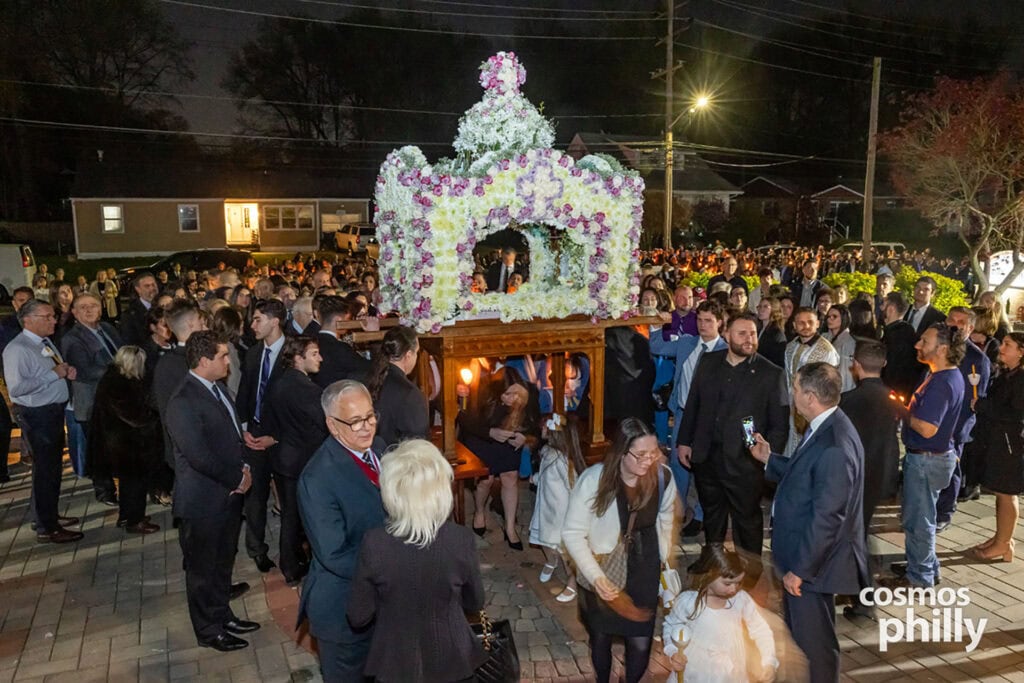
The Epitaphios (Επιτάφιος), an embroidered icon representing Christ in the tomb, is placed in a flower-covered bier. In the evening, it is carried slowly through the streets in a candlelit procession while mournful hymns are sung.
One of the central hymns begins:
Η ζωή εν τάφω κατετέθης, Χριστέ
Life in the tomb was laid, O Christ.
In many towns and neighborhoods, the quiet chanting and flickering candles fill the night air as people follow the bier through the streets.
In local parishes, that same procession moves through surrounding streets, drawing not only regular parishioners but also neighbors who step outside to watch as the Epitaphios passes.
Holy Saturday (Μεγάλο Σάββατο)
Holy Saturday begins quietly, but anticipation builds as the church prepares for the Resurrection.
The Midnight Resurrection Service
Just before midnight on Holy Saturday, churches grow dark.
The lights are extinguished, leaving worshippers holding candles. From the altar, the priest lights a single flame and chants:
«Δεύτε λάβετε φως εκ του ανεσπέρου φωτός»
Come receive the light from the unwaning Light.
The flame spreads from candle to candle until the entire churchyard glows.
At midnight the priest proclaims:
«Χριστός Ανέστη»
The congregation responds:
«Αληθώς Ανέστη»
Church bells ring, and fireworks often burst in the sky. The Paschal hymn echoes through the night.
For many people, this moment when darkness suddenly becomes light is the emotional center of Greek Easter.
Joining the Greeting
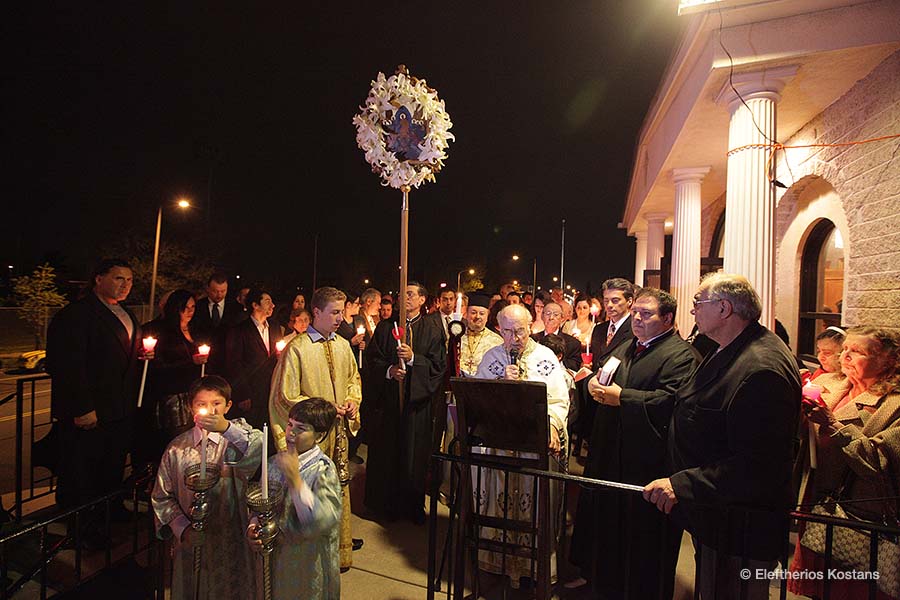
After midnight on Easter, the greeting “Christ is risen” (Χριστός Ανέστη) and the reply “Truly He is risen” (Αληθώς Ανέστη) are exchanged everywhere, in church courtyards, at family tables, and between neighbors and friends.
The greeting continues throughout the forty days of the Paschal season until the Feast of the Ascension (Ανάληψη).
Visitors attending a Greek Orthodox Easter service can easily join by repeating the greeting and sharing the candlelight. The one practice non Orthodox visitors generally refrain from is receiving Holy Communion (Θεία Κοινωνία).
Bringing the Holy Light Home
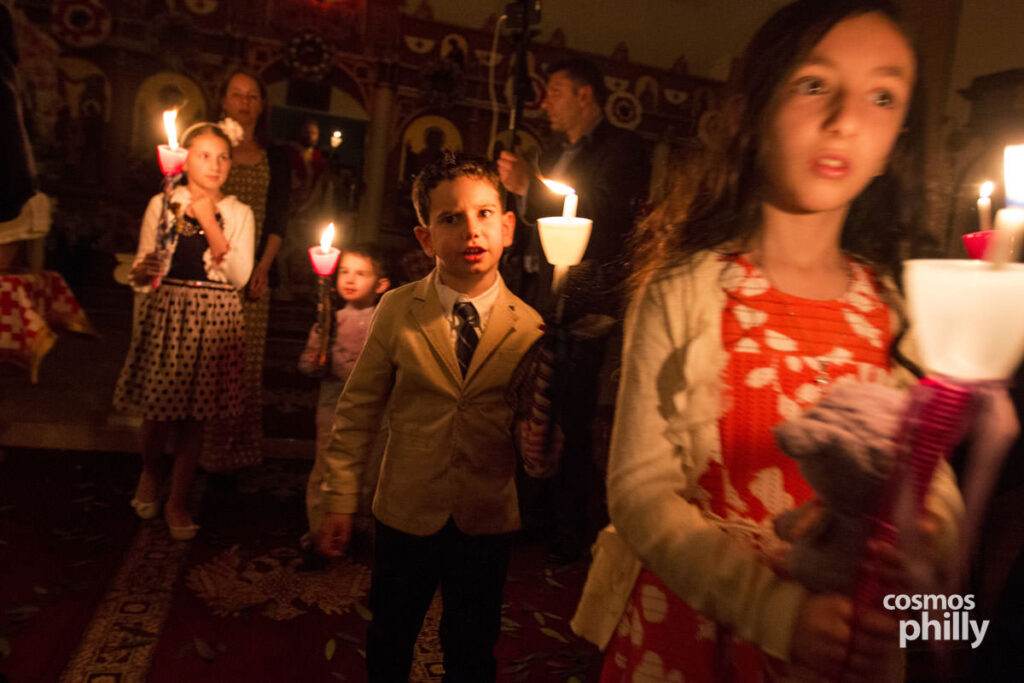
After the service, many people carefully carry the candle flame home.
It is common to mark a small cross above the doorway with the candle’s soot, symbolically blessing the household. The flame may also be used to light the family’s icon lamp.
Easter Foods and Traditions
Food plays a central role in Greek Easter celebrations, marking the end of the long Lenten fast.
After the midnight service, families traditionally eat magiritsa (μαγειρίτσα), a soup made with lamb offal, herbs, scallions, and egg lemon sauce known as avgolemono.
Eggs dyed red, known as kokkina avga (κόκκινα αυγά), symbolize the blood of Christ and the promise of new life. Families crack eggs together in a game called tsougrisma (τσούγκρισμα) while exchanging the Easter greeting.
Another hallmark of the Easter table is tsoureki (τσουρέκι), the sweet braided bread traditionally baked during Holy Week. Flavored with aromatic spices such as mahlepi and mastic, tsoureki has a distinctive fragrance strongly associated with the Easter season.
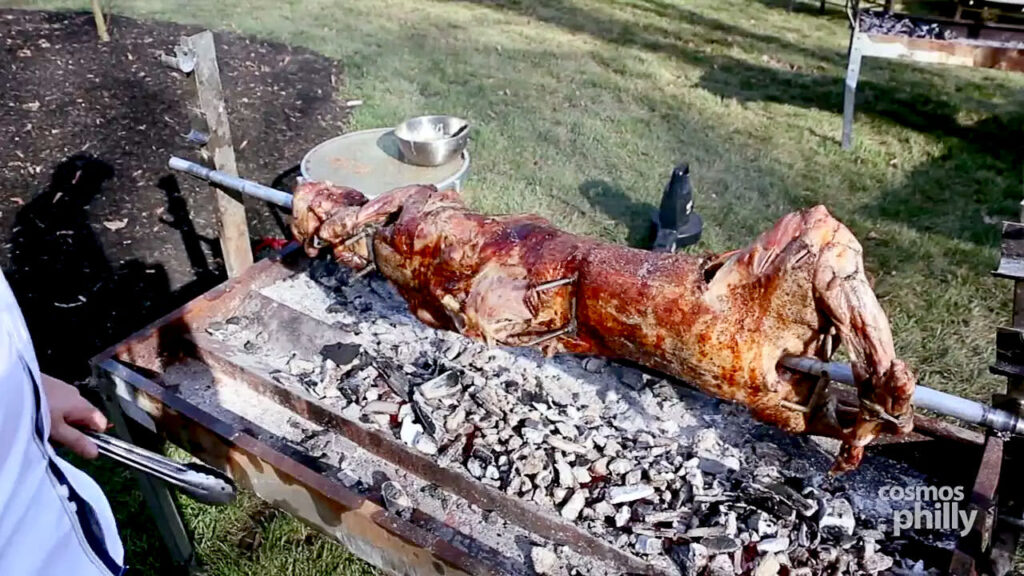
The main celebration takes place on Easter Sunday, Κυριακή του Πάσχα. Families gather outdoors to roast lamb on a spit, known in Greek as αρνί στη σούβλα. Another traditional dish is kokoretsi (κοκορέτσι), a seasoned roll of lamb offal roasted slowly over the fire.
Easter in the Greek Diaspora
Greek Orthodox Easter traditions travel wherever Greek communities have settled.
In cities such as Melbourne, Toronto, New York, and Philadelphia, midnight Resurrection services remain the centerpiece of the celebration. Greek Orthodox churches fill with families carrying candles, and the familiar exchange of «Χριστός Ανέστη – Αληθώς Ανέστη» echoes in parish courtyards just as it does in Greece.
In the Philadelphia area, large crowds gather each year at historic parishes such as St. George Greek Orthodox Cathedral in Philadelphia and St. Demetrios Greek Orthodox Church in Upper Darby. After the midnight proclamation of the Resurrection, families return home to share magiritsa and begin the Easter celebration.
For many Greek Americans, the rhythms of Holy Week remain one of the most visible ways of maintaining a connection to heritage across generations.
A Celebration of Faith and Community
Greek Orthodox Easter remains the central celebration of the church year.
For believers, it proclaims the central message of Christianity. Christ’s Resurrection defeats death and opens the path to eternal life.
At the same time, Easter continues to serve as one of the strongest expressions of shared Greek culture. From candlelit churchyards to family tables filled with food, the celebration brings together traditions passed down for generations.
Across Greece and in Greek communities around the world, the greeting echoes long into the night.
Χριστός Ανέστη.
Continue Reading