
In recent years, fasting has found a new audience. It shows up in articles about “resetting the body,” in diet plans built around restriction, in the language of detox and discipline. What is presented as something newly discovered is, for Greeks, something familiar.
Fasting during Lent is not an experiment. It is a rhythm.
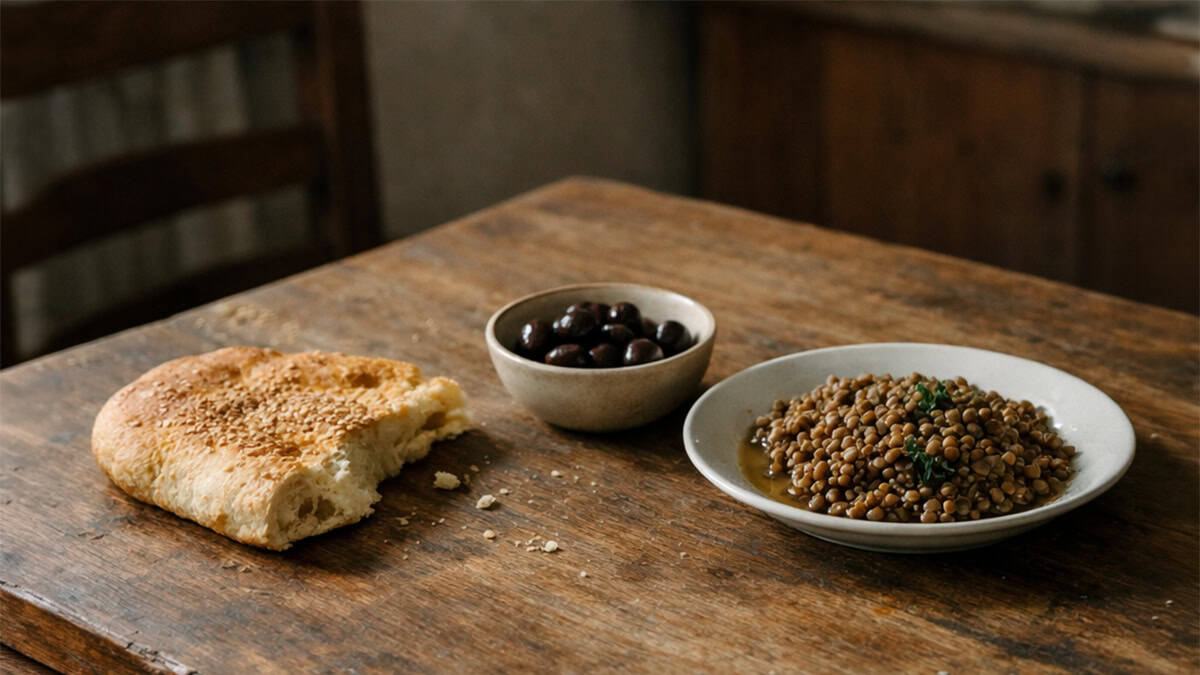
For about six weeks leading up to Easter, many Greeks adjust what and how they eat. Meat is set aside. Dairy, eggs, and often oil are limited or avoided depending on the day. Meals become simpler. Beans, lentils, vegetables, bread, olives. Food that fills without drawing attention to itself.
There is nothing dramatic about it when it is part of everyday life. It happens quietly. A table changes. A kitchen adjusts. The point is not to reinvent anything.
Outside Greece, this pattern is often described in practical terms. It is measured, compared, translated into benefits. Cholesterol, blood sugar, balance. Those things may be true. But they are not the reason the practice exists.
That structure comes first. Midweek, the table can feel different. A Wednesday or Friday meal without oil, a plate of lentils or boiled greens, bread, olives. No substitutions, no attempt to recreate what is missing. Just a quieter version of the same table. After a while, that repetition settles in. The days start to feel different from each other.
Fasting creates a kind of order in the weeks before Easter, not through rules alone, but through familiarity. Fewer choices, made in advance. What remains isn’t improvised. It’s already known.
In monasteries, that structure is followed more strictly, but the idea is the same. Meals are prepared to sustain the day, not to define it. Simple dishes, often the same ones repeated, served without variation or emphasis. Food stays in the background, supporting a larger rhythm of work and prayer. In quieter ways, the same pattern holds outside those settings.
For Greeks who grew up with it, this is not something that needed explaining. It is remembered. A certain kind of table. Specific days that felt different from others. Meals that looked plain but didn’t feel empty. The absence of certain foods carried its own kind of meaning.
That memory doesn’t always carry over unchanged. In the diaspora, fasting is often partial. Some keep the full fast only during Holy Week. Others avoid meat but not dairy, or observe certain days and not others. The structure loosens, but it does not disappear. It shows up in small decisions: what gets cooked on a Friday, what stays off the table before Easter, what is remembered even if it is not fully kept.
The practice changes, but the outline is still easy to recognize.
Seen from the outside, it can look like discipline. From the inside, it feels closer to continuity.
What is being described now as a method or a trend was never designed that way. It was built into a calendar, repeated over time, and passed along without needing to be reintroduced each year.
Lent, for Greeks, is not something to try. It is something that comes back.