
As farmers respond to a livestock disease outbreak, Cyprus’ long-standing division is once again shaping how a shared crisis unfolds.
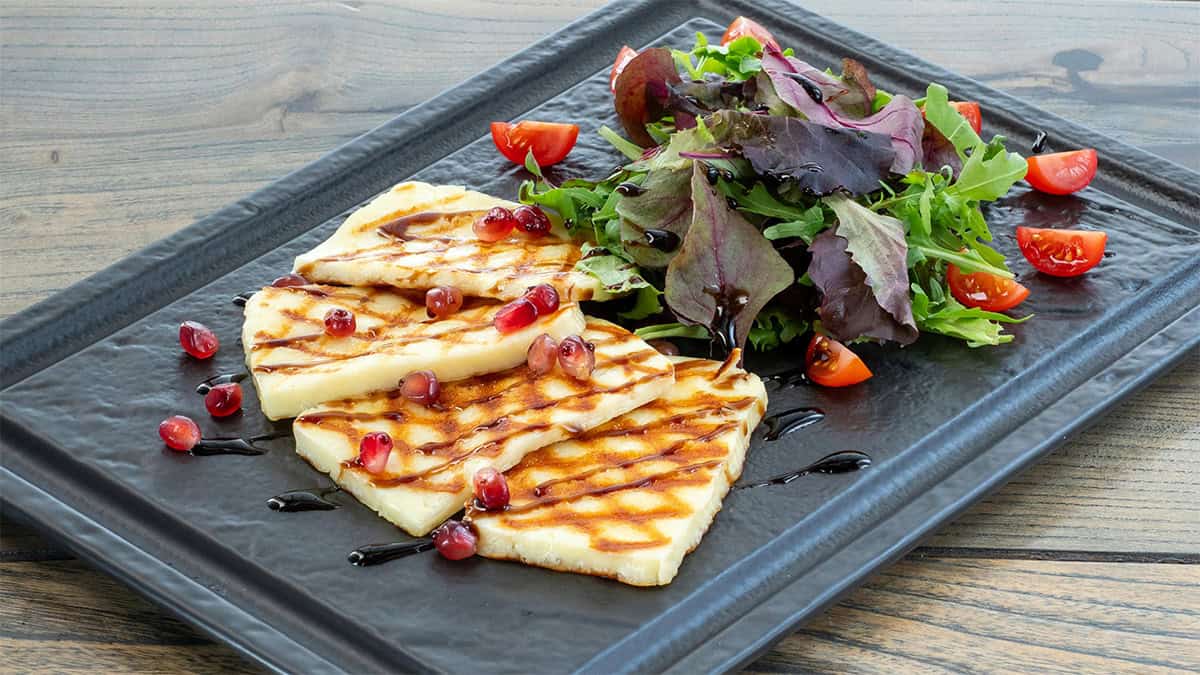
Halloumi has long been one of Cyprus’ most recognizable exports, a cheese tied as much to the island’s identity as to its economy. Now, an outbreak of foot-and-mouth disease is putting that production at risk, forcing farmers into difficult decisions and exposing a familiar reality. On a divided island, even a shared crisis does not play out in the same way.
Since February, the disease has spread across the internationally recognized Republic of Cyprus, affecting dozens of livestock units and leading to the culling of tens of thousands of animals, according to veterinary authorities. The first cases were reported earlier in the Turkish-controlled north, raising early concerns about containment across the island. Some veterinary experts have also pointed to delays in detection, suggesting the virus may have been circulating for up to two weeks before being identified, allowing it to spread largely unchecked in its early stages.
The virus has been identified as the SAT1 strain, considered exotic to the region and more difficult to contain among livestock with little prior exposure.
The response has followed two different paths. In the south, authorities are applying European Union protocols that require the culling of entire herds once infection is detected. Farmers have pushed back, particularly when animals without symptoms are destroyed, arguing that the measures are both financially devastating and difficult to justify.
In the north, where EU rules do not apply, officials have leaned more heavily on vaccination. For some farmers, that approach avoids the immediate loss of entire herds. But it comes with its own uncertainty. Vaccination can slow the spread, but it does not eliminate the disease in the same way, leaving open the possibility that infections persist and return. There are also concerns about long-term trade limitations and how the outbreak will be managed if cases continue to rise.
Vaccination efforts there have been supported in part by doses supplied through the European Union. In a rare moment of cross-line cooperation, Turkish Cypriot authorities also transferred some of those vaccines to the south, underscoring how the response has at times moved more fluidly than the politics surrounding it.
The difference is immediate. Farmers in the south face the certainty of loss. Farmers in the north face the uncertainty of what comes next.
The virus, however, moves without regard for either approach.
“We are a single yard,” one agricultural representative said, describing the challenge of containing a disease across a landscape that is politically divided but environmentally shared. Air, land, and animals move freely. Policies do not.
Turkish Cypriot leader Tufan Erhurman echoed that reality, saying the island could not respond with “one approach in the north and another in the south,” and calling for coordinated action.
And when those policies diverge, the consequences begin to extend beyond the farm itself.
Halloumi is one of Cyprus’ most important export products, generating more than €200 million in the first half of 2025 alone. Its protected status within the European Union also comes with strict production rules, including requirements around the proportion of sheep and goat milk used. For producers already struggling to meet demand within those limits, any reduction in livestock makes those constraints harder to meet. If large numbers of animals are lost, the impact will reach production lines quickly.
Cyprus also risks losing its disease-free status, a designation that affects international trade and could have longer-term consequences for the industry.
Efforts to coordinate a unified approach have remained limited. While officials on both sides have pointed to the need for cooperation, each has also questioned the effectiveness of the other’s approach. The result is a fragmented strategy against a problem that demands coordination.
That tension is now visible on the ground. Farmers in the Republic of Cyprus have staged protests in recent weeks, including a demonstration outside the presidential palace where a coffin was used as a symbol of what they see as the destruction of their livelihoods.
“We demand an end to the slaughter of healthy and asymptomatic animals,” breeders wrote in a letter to the government, calling the measures “an economic and ethical crime.”
Others argue the opposite. Christos Papapetrou, president of the Pan-Agricultural Union of Cyprus, has called for stricter enforcement across the entire island, warning that uneven measures risk prolonging the outbreak. “Once Cyprus is cleared and new vaccinated animals arrive, the virus will still be present and we’ll become infected again from the north,” he said.
The European Union has remained firm in its position that culling is necessary to contain the disease within its member state. At the same time, its most visible support to the Turkish-controlled north has come in the form of vaccines, including hundreds of thousands of doses sent earlier this year. The difference reflects a practical reality: EU rules apply in the south, while in the north the response has relied on vaccination as the primary tool.
In practice, that divide produces uneven outcomes. Some farmers absorb immediate, irreversible losses. Others continue with their herds intact, but with the risk stretching forward. The difference is not just in policy, but in time. One response is immediate and final. The other prolongs the risk.
Cyprus is one place, but it does not always function as one. And in moments like this, that divide shows itself not in headlines or negotiations, but in how a single outbreak is lived, managed, and carried forward on either side of the same island.