

There is a moment in the new Netflix film Lefter: The Story of the Ordinarius that cuts straight through the screen. After a national match in Athens, where the home crowd hurls insults because he played for Turkey, Lefter Küçükandonyadis says quietly:
“In my country they call me Greek seed. Here, Turkish seed.”
For anyone whose family came from Constantinople, the Princes’ Islands, or Asia Minor, that sentence feels painfully familiar. Identity, for those communities, was never a simple flag. It was something lived between places, shaped by history, carried quietly, and sometimes scarred in public.
The film, directed by Can Ulkay and grounded in Erdem Kaynarca’s restrained performance, revisits his life with respect: part biography, part reflection on what it meant to grow up Greek in the early Turkish Republic. More than a decade after Lefter’s passing, his name is being rediscovered by a global audience. For Fenerbahçe supporters, he was always a legend. For Greeks of the old City, he was simply Lefteris. For diaspora readers, his story lives at the intersection of loyalty, memory, and survival.
From a Fisherman’s House on Prinkipos
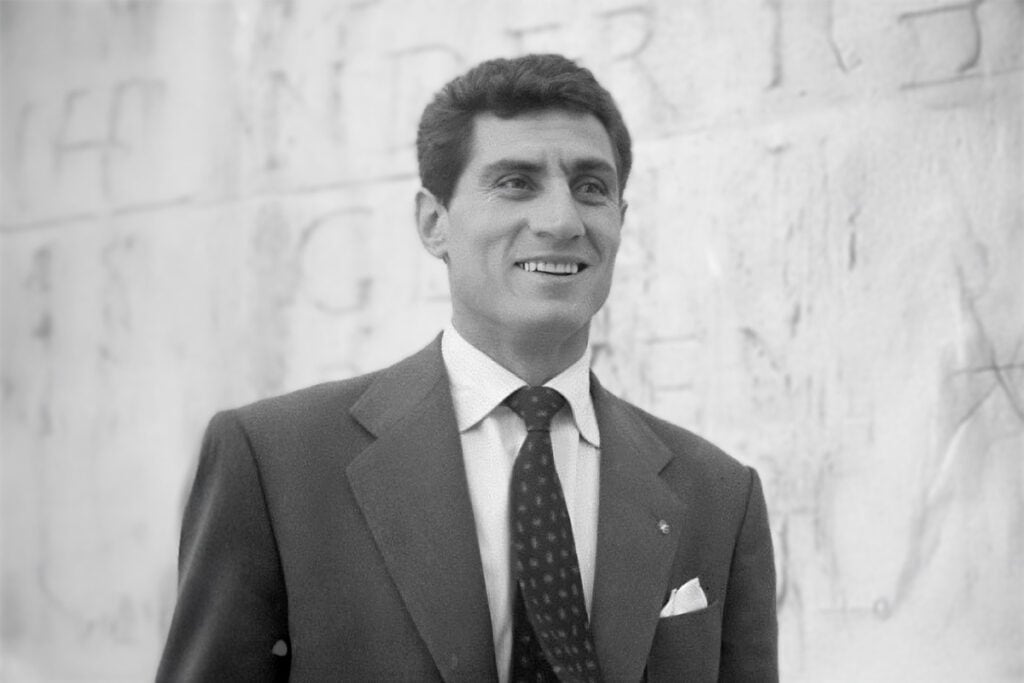
Lefteris Antoniadis was born on December 22 on Prinkipos (Büyükada), though even his birth year is debated. Most Turkish sources, including the inscription on his statue in Kadıköy and the Daily Sabah profile, list 1925, while several Greek and international databases record 1924.
His parents, Christofis and Argyro, were Greek Orthodox migrants from Ottoman Albania. His father was a fisherman, his mother a tailor, and Lefter was one of eleven children in a crowded, hardworking home.
The population exchange between Greece and Turkey had recently emptied most of Asia Minor of its Greek communities. A smaller Greek population remained in Constantinople and on the islands, officially protected but increasingly vulnerable. From this world, quiet neighborhoods, wooden houses, and long ferry rides came a small, determined boy who dribbled everything that rolled.
Because of his size, neighbors called him “Küçük,” the little one. When he obtained Turkish papers, this nickname fused with his surname, becoming Küçükandonyadis.
He joined Taksim SK in 1938 as a youth player, and Istanbul’s neighborhood leagues quickly realized what they had on their hands.
Fenerbahçe’s “Professor of Football”
After two seasons with Taksim SK and military service during World War Two, Lefter transferred to Fenerbahçe in 1947. It was a turning point. Supporters embraced the Greek kid from Prinkipos with extraordinary affection, soon calling him “Ordinaryüs,” a title usually reserved for distinguished professors. It was their way of saying he played with a mind sharper than the rest.
His numbers remain remarkable:
- 423 goals in 615 games for Fenerbahçe
- multiple Istanbul league championships
- three national titles after the creation of the Turkish Super League
- top scorer of Turkey twice and of the old Istanbul league multiple times
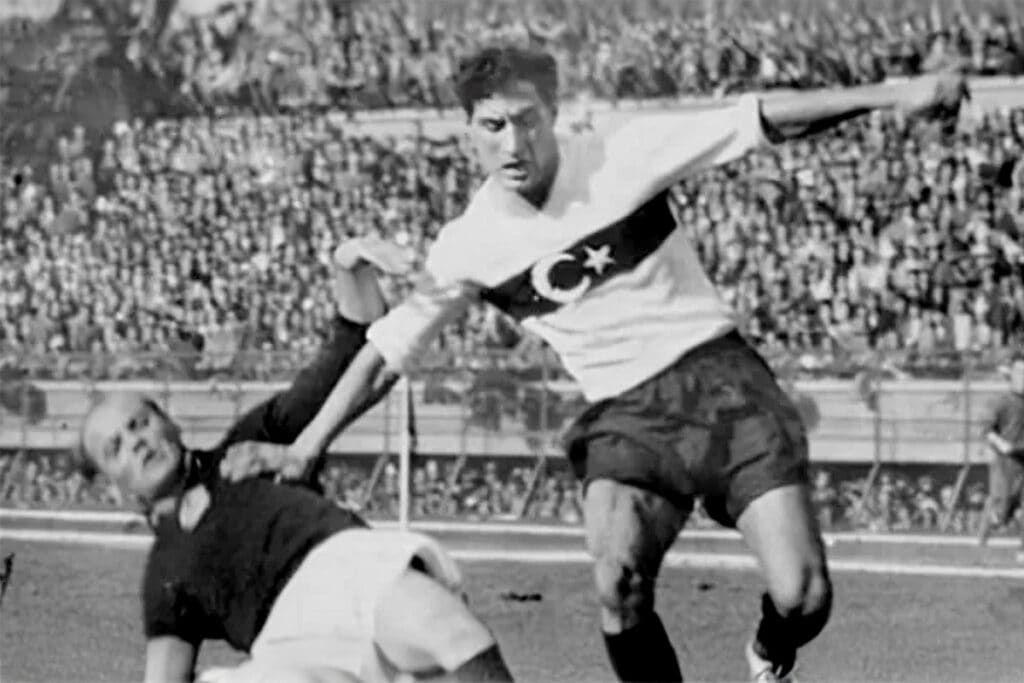
For the national team, he earned 46 caps between 1948 and 1963, scored 21 goals, captained the side, and featured in the 1954 World Cup. He held Turkey’s all-time scoring record for decades and was the first player awarded the Federation’s Golden Honor Medal for reaching fifty international matches.
He also played abroad for Fiorentina and Nice at a time when few Turkish-based players were transferring to Europe.
His longtime teammate Can Bartu, one of the great names of Turkish football, once described him this way: “He was a team on his own. When he played well, no opponent could stop him. He would put the ball wherever he wanted. His free kicks and penalties were unstoppable. He would mock his rival.” Bartu later added, “Without a doubt, Lefter is the greatest footballer Turkey has ever produced.”
Fenerbahçe supporters still chant: “Give it to Lefter and he will write it in the book.” He was calm under pressure, clinical in front of goal, and impossibly difficult to dispossess. His name even appears in the club’s anthem.
Coaches and players still speak of him as one of the figures who helped shape the modern Turkish game through intelligence, control and precision.
Yet admiration did not shield him from the contradictions he carried. When asked whether he liked Lefter, Prime Minister İsmet İnönü once said: “I like Lefter, but I do not like Lefters.” The message was clear. Lefter’s talent was celebrated, but his community was not.
Wealth Tax, War, and the Pogrom of September 1955
The Netflix film does not gloss over the world he grew up in. Lefter rose to prominence during a period when Turkey’s non-Muslim minorities faced profound challenges.
In the 1940s, the Wealth Tax targeted Armenians, Greeks and Jews with impossible levies. Those unable to pay were sent to labor camps in Eastern Anatolia. Lefter’s father had so little that he was spared, but relatives and friends were not. Their departure hollowed out the island community and taught Lefter, at a young age, how fragile life could be.
A far greater blow came in September 1955. After false reports that Atatürk’s childhood home in Thessaloniki had been bombed, mobs attacked Greek, Armenian, and Jewish homes, businesses, and churches across Istanbul and the Princes’ Islands. Thousands of properties were ransacked or destroyed.
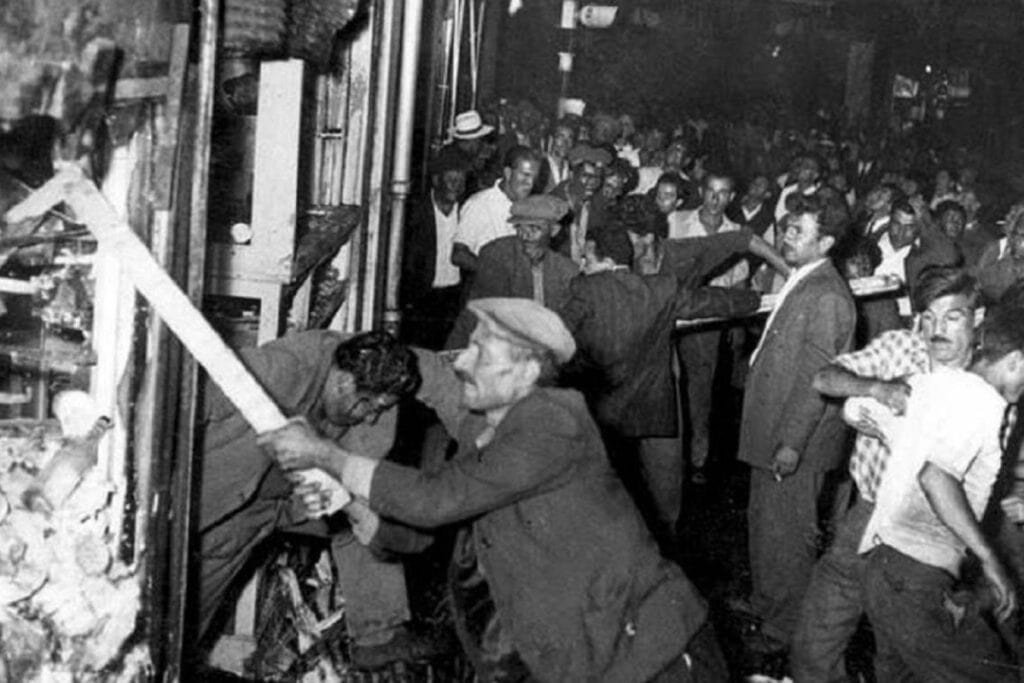
For readers who want a deeper look at that night, see Cosmos Philly’s historical feature “Today in History: September 6, 1955 – The Night Constantinople Turned Against Its Greeks.”
Lefter’s home on Prinkipos was stoned and splashed with paint. He hid his wife and daughters behind a locked door as voices he recognized shouted outside. Two weeks earlier, some of those same voices had lifted him on their shoulders after a goal.
According to accounts repeated in later interviews and fan recollections, supporters from Kadıköy crossed to the island by boat to protect his house. Whether literal or symbolic, the story reflects the complicated loyalty between Istanbul fans and their players, even across communal lines.
The incident stayed with him. In later years, he would simply say, “I cried for days.”
Between Prinkipos and the City
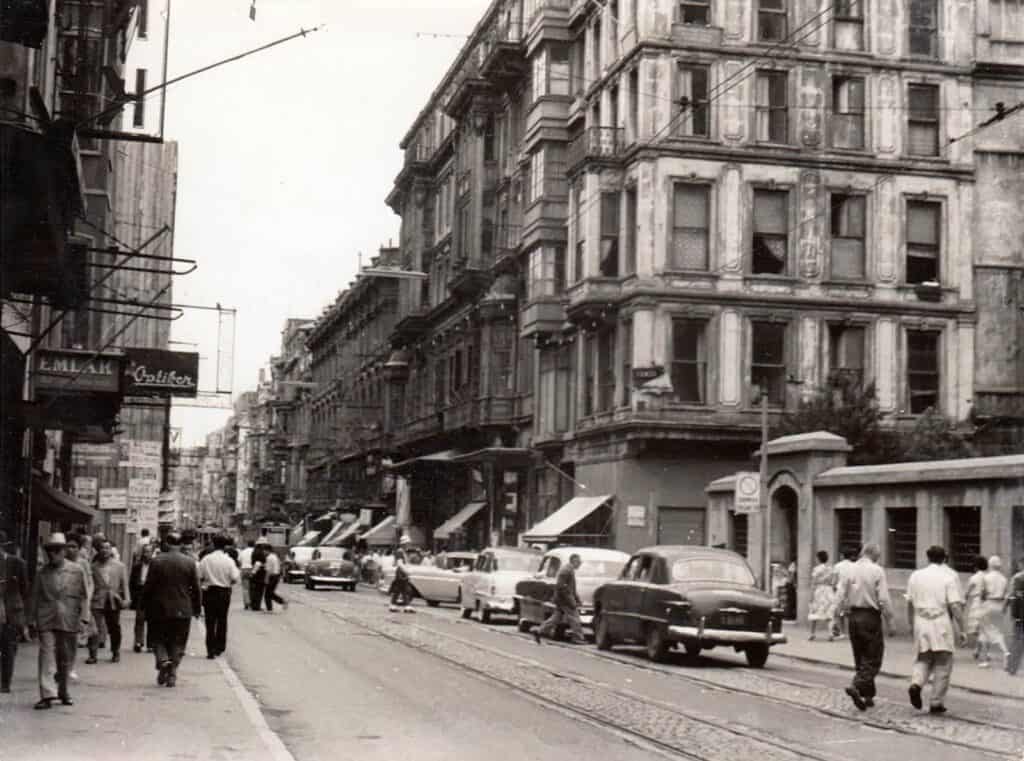
Those events were not isolated moments. They unfolded against a broader pattern of pressure that dramatically reduced the Greek presence in Constantinople over the following decade. Expulsions during the Cyprus crisis and the general climate of tension reduced the community from more than 100,000 people in the mid-1950s to around 30,000.
Lefter, a Turkish citizen, stayed. He moved between Istanbul and Athens, between two languages and two football worlds. In 1964, he briefly joined AEK Athens, scoring twice in one league match before injury forced him to retire.
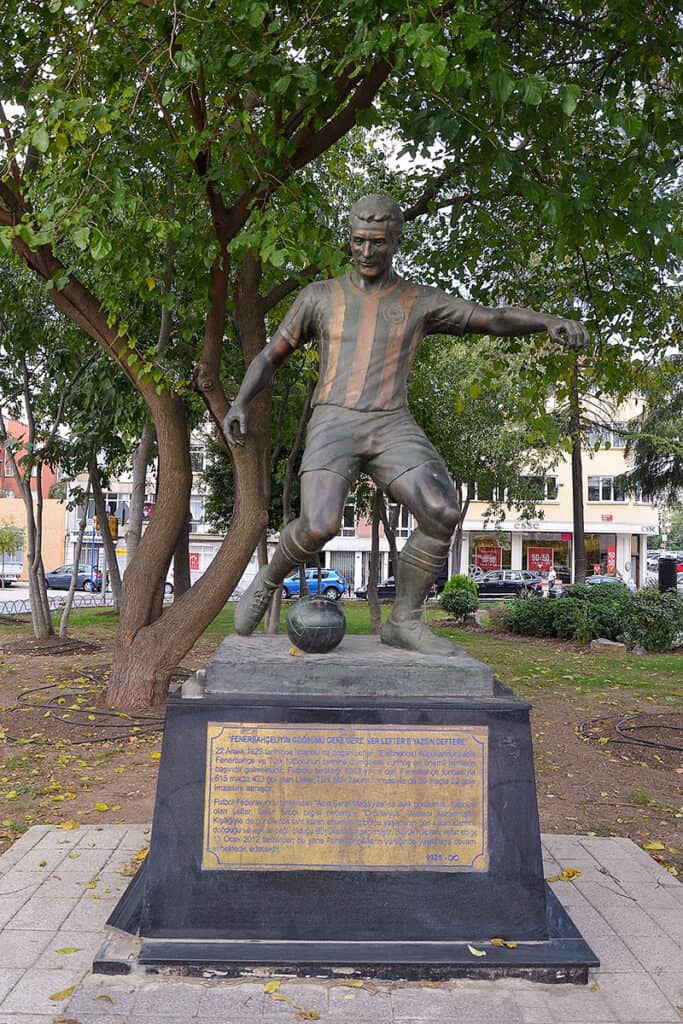
He spent the later years coaching in Turkey, Greece, and South Africa and writing as a football commentator. In 2009, Fenerbahçe unveiled a statue in his honor near their stadium in Kadıköy. Streets on Prinkipos and in Istanbul carry his name.
He died in 2012 at age 87 and was buried in the Greek Orthodox cemetery of his island. His coffin was wrapped in the Turkish flag and the Fenerbahçe flag, a final symbol of the dual life he lived. In 2018–19, the Turkish league was officially named the Lefter Küçükandonyadis Season.
Greek readers know that even the word “Istanbul” comes from Greek. “Is tin Poli,” to the City, became Istanbul over the centuries. But for Greeks, Constantinople has always been more than a city. It is memory, trauma, beauty and longing passed from grandparents to grandchildren, often in whispers.
Lefter’s life unfolded in that landscape. Born on Prinkipos, raised in the Rum culture of the City, celebrated in a Turkish stadium and remembered on both sides of the sea, he stands as someone who bridged histories that rarely speak to each other. Greek accounts of his life tend to emphasize this dual existence: not only the goals and championships, but also the deeper tension of a Greek athlete representing Turkey while his community endured discrimination and, later, the violence of 1955.
The Netflix film captures this without overstating it. It shows what it meant to rise to stardom in a country that did not always embrace your community and to carve out a place for yourself through the game you loved.
And it reminds us that identity is often carried not in flags or slogans, but in the way someone moves through the world. In Lefter’s case, it was the way a small boy from Prinkipos kept his head up, took the ball and played with grace.
Watch the trailer for the Netflix film Lefter: The Story of the Ordinarius