
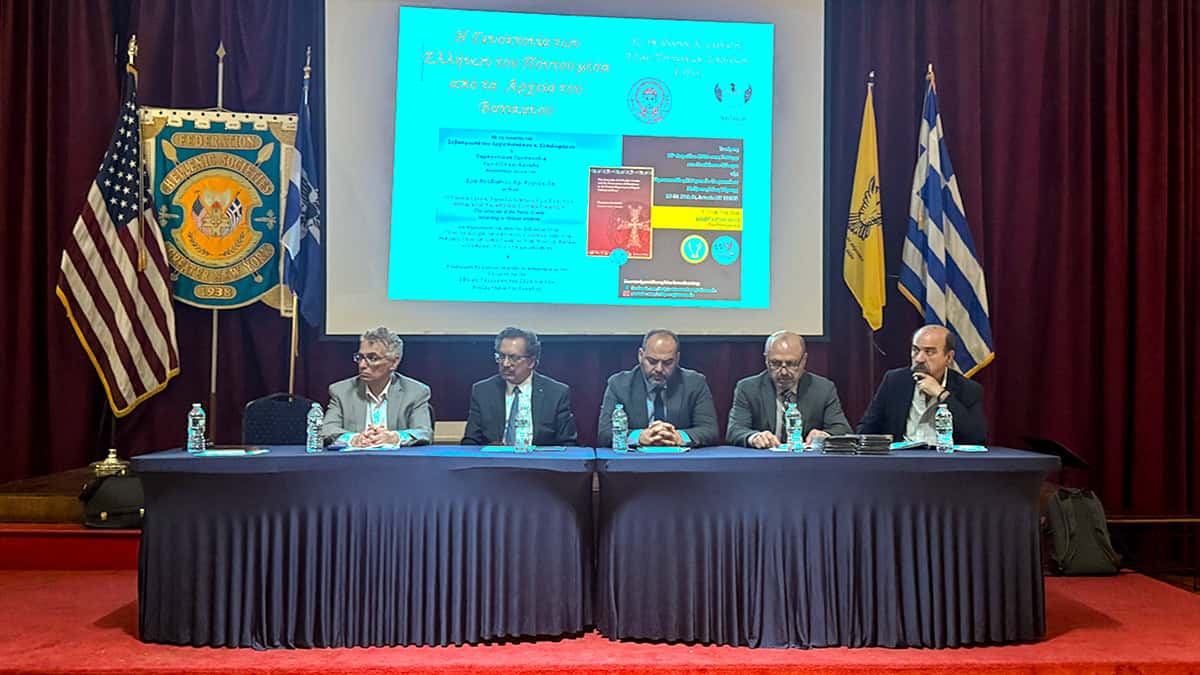
A panel discussion in New York this week examined the historical record of the Pontic Greek Genocide through evidence preserved in the Vatican archives.
Titled “The Genocide of the Pontic Greeks According to Vatican Archives,” the event was held on April 16 at the Stathakion Cultural Center, bringing together scholars, community leaders, and members of the public.
The discussion focused on the systematic persecution and destruction of Christian populations in the late Ottoman period, between 1913 and 1923. Alongside the experience of Pontic Greeks, the panel also addressed the broader context affecting Asia Minor Greeks and Armenians, drawing on eyewitness accounts and correspondence recorded by Catholic missionaries operating in Anatolia and the Black Sea region, many of which documented deportations, forced marches, and attacks on civilian populations.
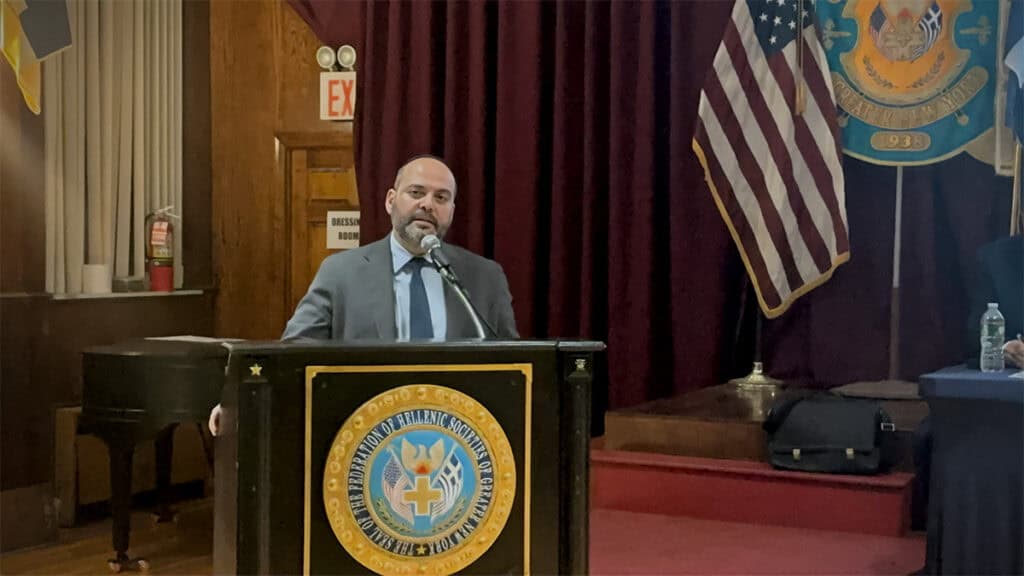
Theodosios Ar. Kyriakidis presented research based on Vatican archival material, including reports from missionaries that described mass displacement and killings across different regions of the Ottoman Empire. These records, written by foreign observers at the time, form part of an external body of documentation that continues to inform debates over historical recognition.
Louis Katsos focused on the role of public engagement, arguing for closer links between academic research and broader international awareness. Haralambos V. Vasiliadis approached the subject from a systems perspective, framing the events as coordinated processes, emphasizing patterns of organization and execution rather than isolated incidents.
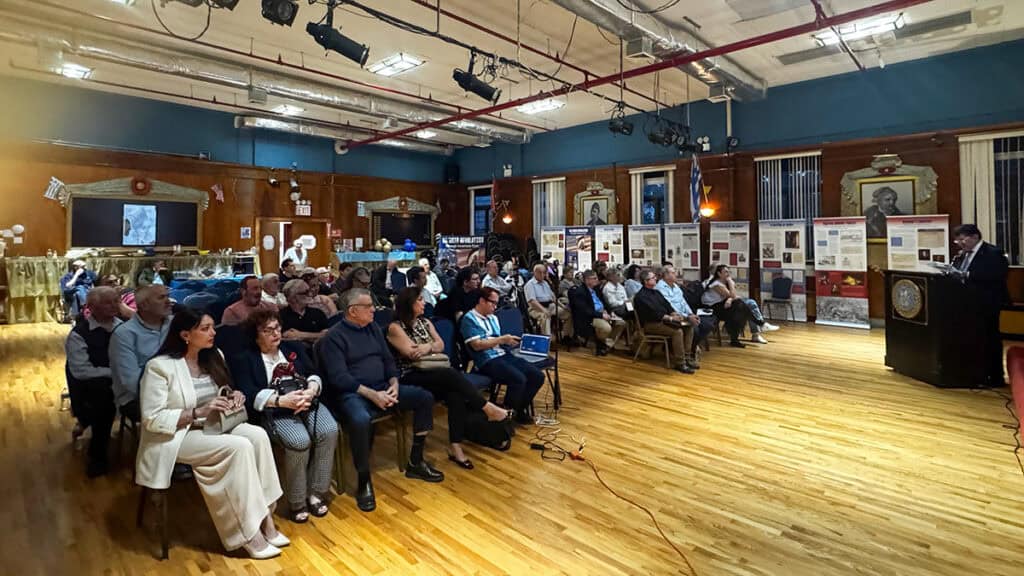
Additional context was provided through the English translation of Kyriakidis’ research, prepared by Nikos G. Nikoloudis, which has helped bring these archival findings to a wider audience.
Speakers emphasized that Vatican records remain among the most significant independent sources for this period, offering documentation from outside official state channels.
The event was organized as part of ongoing programming by the East Mediterranean Business Culture Alliance, reflecting continued efforts within the Greek-American community to preserve the historical record and encourage informed public discussion.
Related coverage