
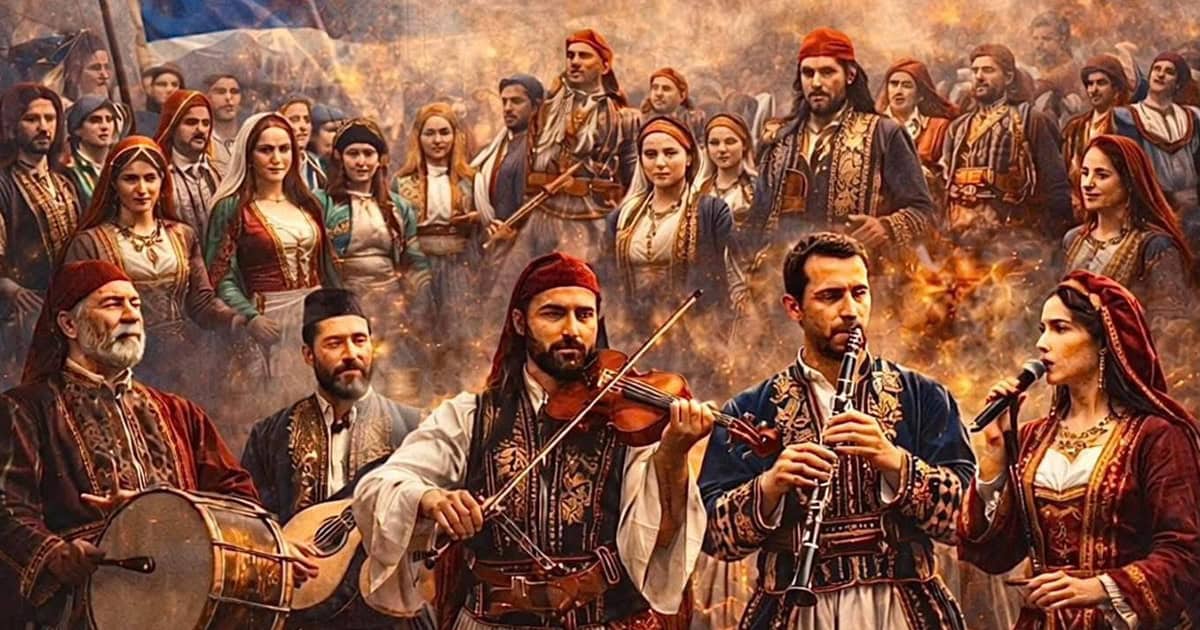
A cultural event in New York this April is moving away from ceremony toward something more immersive, inviting the community to experience the atmosphere of 1821.
“The Spirit of 1821: Music, Costume, and the Living Legacy of the Greek Revolution” will take place on Tuesday, April 14, at 7 p.m. at the Stathakion Cultural Center, 22-51 29th St, Long Island City. Organized by the Federation of Hellenic Societies of Greater New York, the evening is part of the broader lead-up to the city’s annual Greek Independence Day Parade on Fifth Avenue.
The event centers on sound and presence. Musicians will perform traditional repertoire tied to the period, including klephtika, the songs associated with resistance fighters, and nisotika from the islands. They will appear in traditional dress, placing the music within its original visual and cultural setting.
Alongside the performances, a range of regional costumes will be presented, reflecting the diversity of dress across the Greek world during and after the revolution. The contrast between mainland and island styles, from heavier warrior garments to more intricate textiles, is itself part of the historical narrative.
Organizers are also asking attendees to take part in a more direct way. Anyone who owns traditional Greek clothing is encouraged to wear it, turning the gathering into something shared rather than observed. The idea is simple: history is not only remembered, but carried.
“1821 was not only a military and political struggle, but a profound expression of faith, identity, dignity, and continuity,” said the Chairman of the Federation of Hellenic Societies. “This gathering is a rare opportunity to experience history not as something distant, but as something felt, heard, and seen.”
Admission is free, with donations accepted to support cultural and educational initiatives.
The event comes less than two weeks before the Greek Independence Day parades in New York and Philadelphia, both scheduled for April 26, 2026, among the largest public expressions of Hellenic identity in the diaspora each year.
For many, the connection between the two is clear. One unfolds in music and memory indoors. The other moves through the city in public view.
Please confirm event details with the organizers before attending, as dates, times, locations, and registration information may change.