
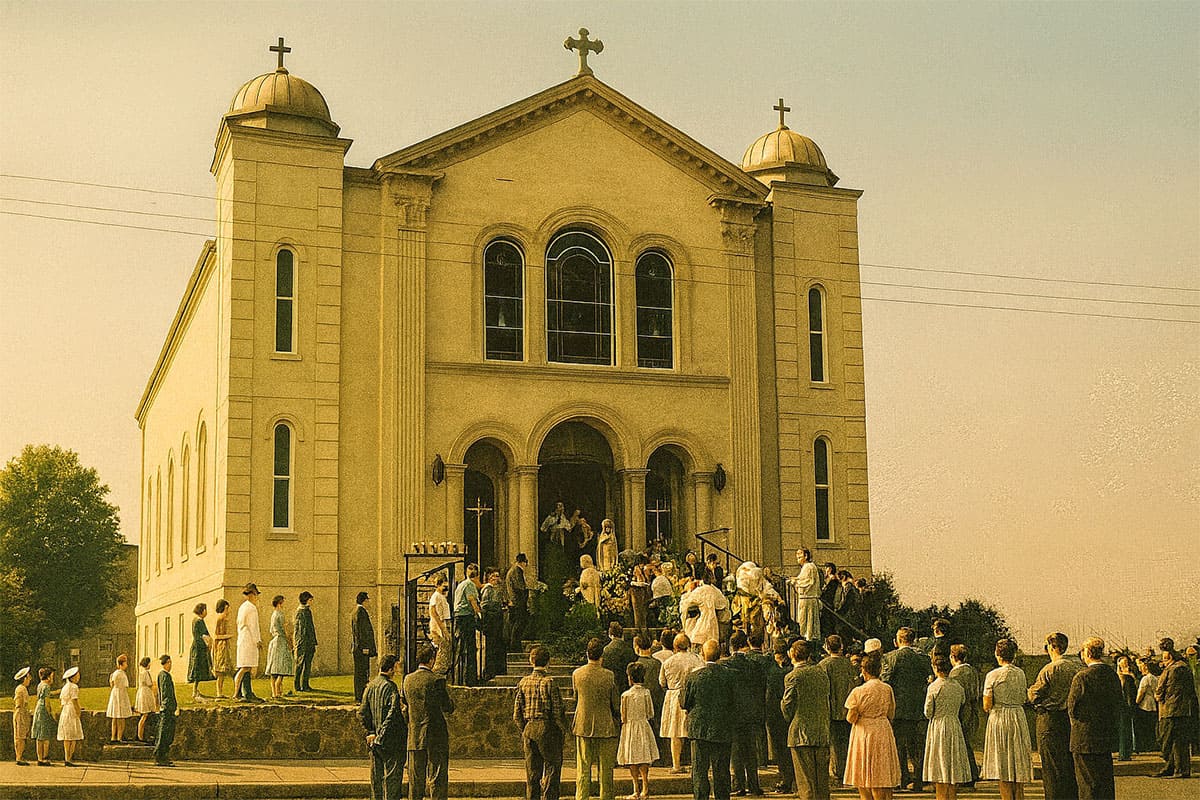
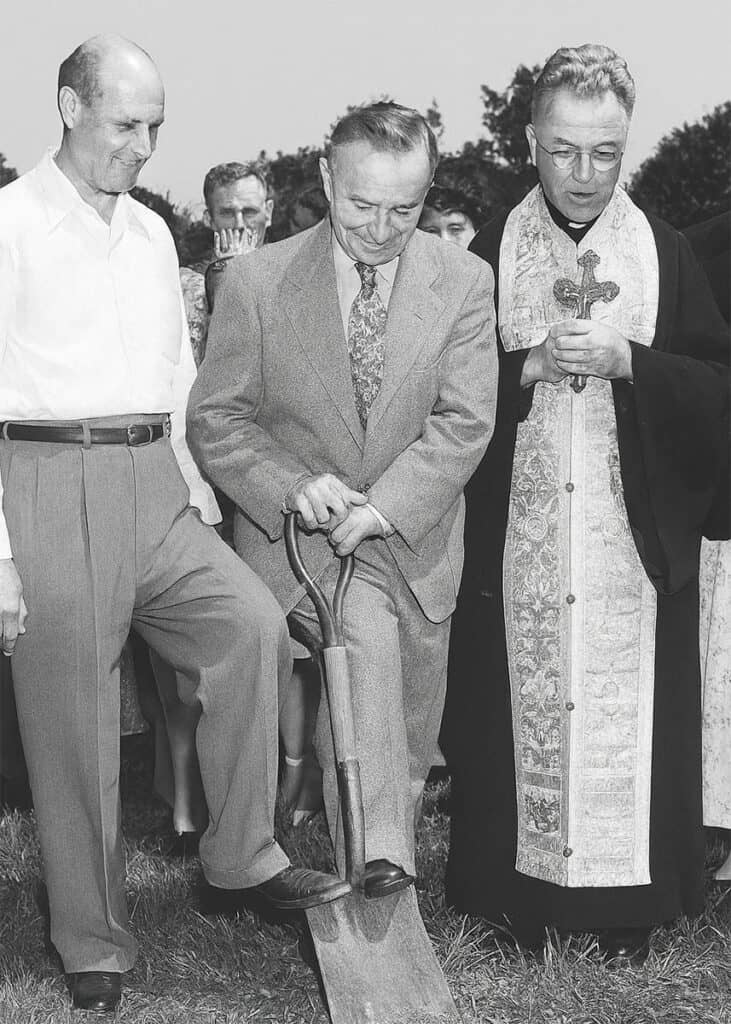
On a Monday afternoon in May 1949, the Greek Orthodox faithful of Chester, Pennsylvania, gathered at the corner of 7th and Kerlin Streets for a moment they had dreamed of for decades. At 2:30 p.m., Rev. Michael Sophocles dipped fresh basil into holy water and blessed the ground in the ancient tradition of the church. As parish leaders and parishioners turned the first shovels of earth, they were not only breaking ground for a building. They were declaring, in stone and faith, that their community had taken root in America.
Why Chester?
The story of St. George Greek Orthodox Church cannot be told without Chester itself. In the early 20th century, the city was an industrial powerhouse on the Delaware River. Baldwin Locomotive Works built the engines that drove the nation’s railroads. Sun Oil operated massive refineries along the waterfront. Sun Shipbuilding, at its peak during World War II, employed more than 35,000 workers and was one of the largest shipyards in the world. Textile and manufacturing plants filled the skyline with smoke.
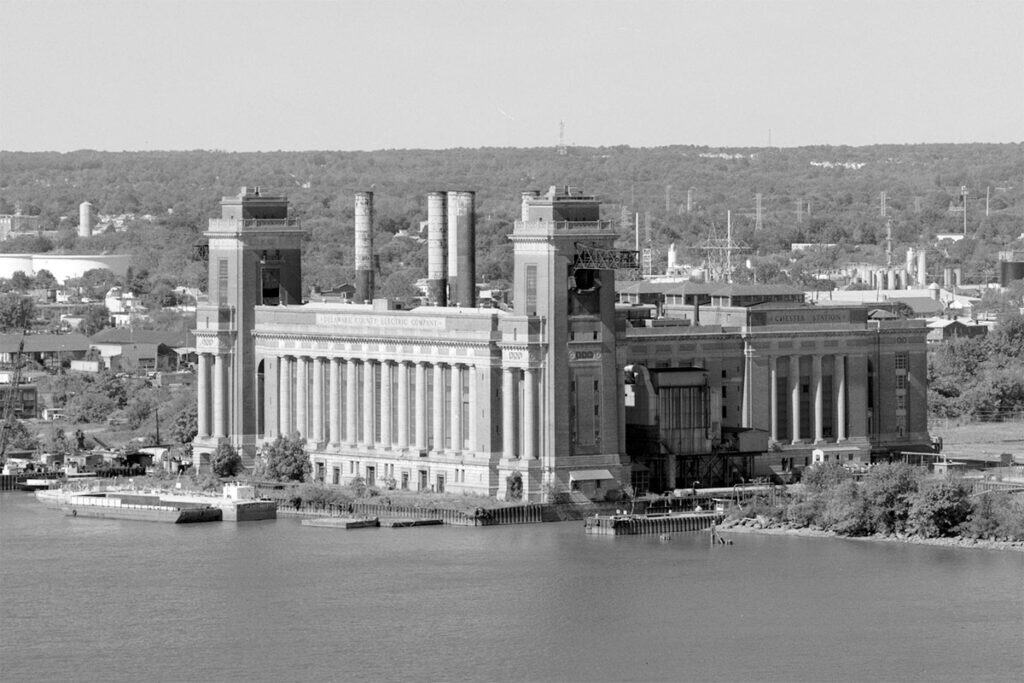
In 1950, Chester was a city of 66,039 people, its economy tied to railroads, oil, and heavy industry. Greeks were drawn by these jobs. Many worked the heaviest shifts in the shipyards, mills, and factories, while others opened small businesses and restaurants that served the city’s growing population. After work, men gathered in kafeneia, coffee houses where they read Greek newspapers, debated politics, and kept alive the dream of building a church that would carry their language and faith into the next generation.
Early Struggles: 1915–1943
The first attempt to organize a parish came in 1915, making Chester’s Greeks the earliest Orthodox community in Delaware County. That effort faded by 1920, but in 1926 another wave of organizing brought new hope, only to stall during the Great Depression.
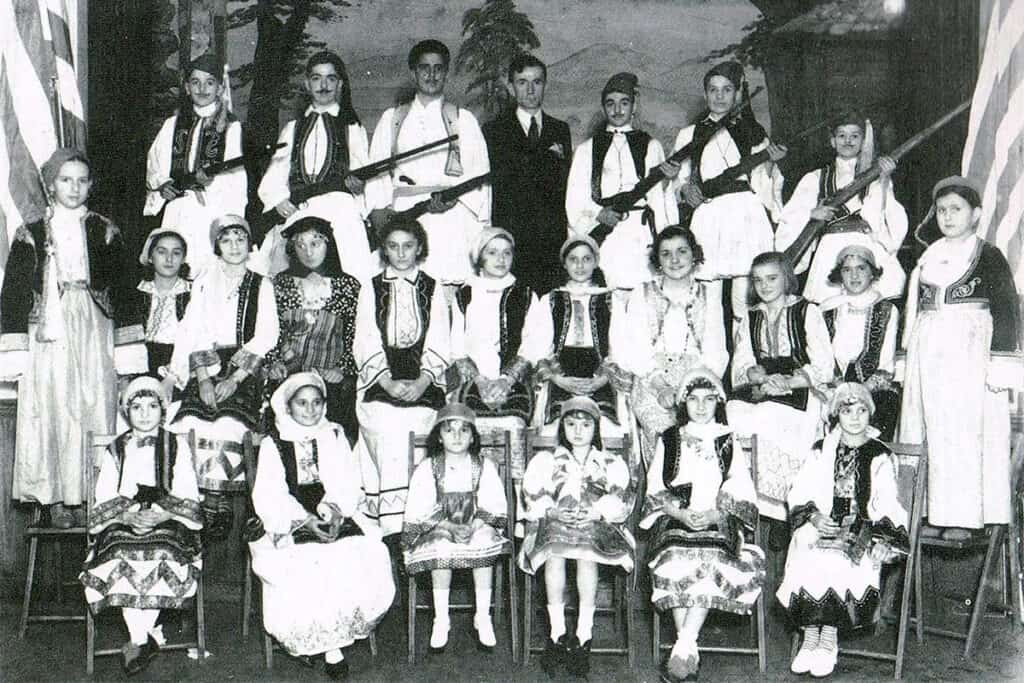
By the late 1930s, women’s and lay groups kept the idea alive. The Athena Sisterhood, later formalized as the Philoptochos Ai Miroforoi, hosted bake sales and dinners to raise funds. A small Greek School and Sunday School gave children lessons in language and catechism. By 1937, the parish fund held 3,700 dollars. By 1942, despite the hardships of war, it had grown to 16,000 dollars, enough to purchase a stone house and carriage house on West 7th Street.
On May 4, 1943, fifteen charter members signed incorporation papers at the Delaware County Courthouse. The community finally had legal recognition.
The First Priests
The parish’s first official priest was Father Demetrios Ouzounyanis, who served from 1943 until his untimely death in 1944. He helped guide the young community through its earliest years.
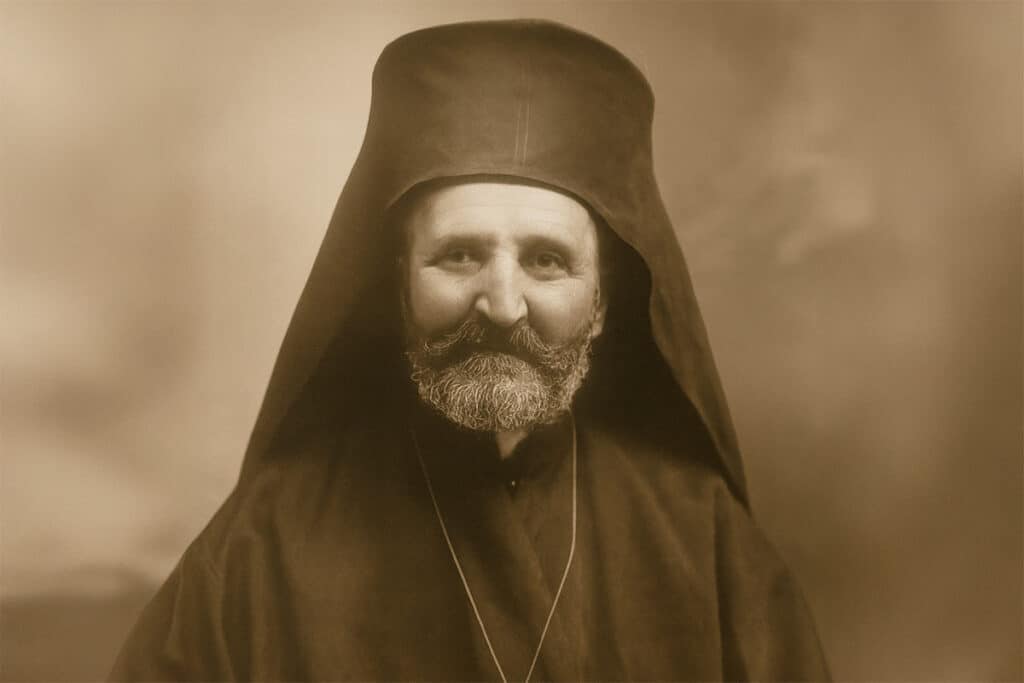
On August 14, 1944, Rev. Michael S. Sophocles arrived in Chester. Educated and deeply committed, he remained until 1960 and led the parish through its most important period. Under his guidance, Greek School expanded, Sunday School flourished, and younger members stepped into leadership. For many, Father Sophocles was not only their priest but the steady hand who turned a scattered group of immigrants into a true parish family.
A Name, a Stone, and a Dream
The new church was dedicated to St. George. Its godfather, Andrew Verikas, sometimes recorded as Varikis, chose the name in memory of his brother George, who had died in World War I. For the parish, the dedication bound faith to sacrifice.
One of the most moving elements of the project was the cornerstone, a block of Pentelic marble from Mount Penteli near Athens, the same marble used for the Parthenon. The gift came through Professor A. Dascalakis of the University of Athens, brother of parishioner Mrs. Kapourelos. Parish histories record that the cornerstone was laid in October 1949. For families who had left Greece only a generation earlier, it was more than stone. It was a direct link to their heritage, set into Pennsylvania soil.
The press in May 1949 reported that a marble cornerstone was being shipped from the quarries of Mount Penteli as a gift of the University of Athens, arranged through Professor Dascalakis. For parishioners, the news confirmed that their modest Pennsylvania church would carry a piece of the same marble that built the Parthenon, tying their immigrant story to the monuments of Greece itself.
Construction and Sacrifice
The church was designed by K. A. Kalfas, a New York architect of Greek descent known for ecclesiastical work. Plans called for a single-nave basilica measuring 86 by 40 feet, with seating for 300. Construction was awarded to John Mercandante and Son.
It was a joint act of immigrant craft: Greek plans, Italian builders, American steel, and stone. The cost was 192,000 dollars, about 2.6 million in today’s terms. For working families who gave week after week, it was an immense sacrifice. Parish attorney Anthony Kapourelos donated his legal services, while his brother George, president of the Church Association, credited younger members for keeping the dream alive.
The officers were George Kapourelos, president; Peter Pahides, vice president; Alex Demopoulos, treasurer; Angelo J. Contores, secretary; and Paul Zabetis, assistant secretary. Building committee members included Bill Stolis, Sam Savopoulos, William Pahliss, George Kazvelas, John Sitrankis, Stefan Pahides, Nick Gouvelis, Louis Sitares, Peter Polidoris, and Nick Beldesos. These were men who met at night after long factory shifts, studying blueprints and planning fundraisers. Their names live on in parish history because the project could not have happened without them.
Dedication and Parish Life
By May 1950, the church was completed and consecrated. For more than two decades, St. George’s at 7th and Kerlin was the spiritual center of Chester’s Greek community. Baptisms, weddings, funerals, and Independence Day celebrations filled its calendar. The church was where Greek was still spoken, where Byzantine hymns rose on Sundays, and where immigrant traditions met American life.
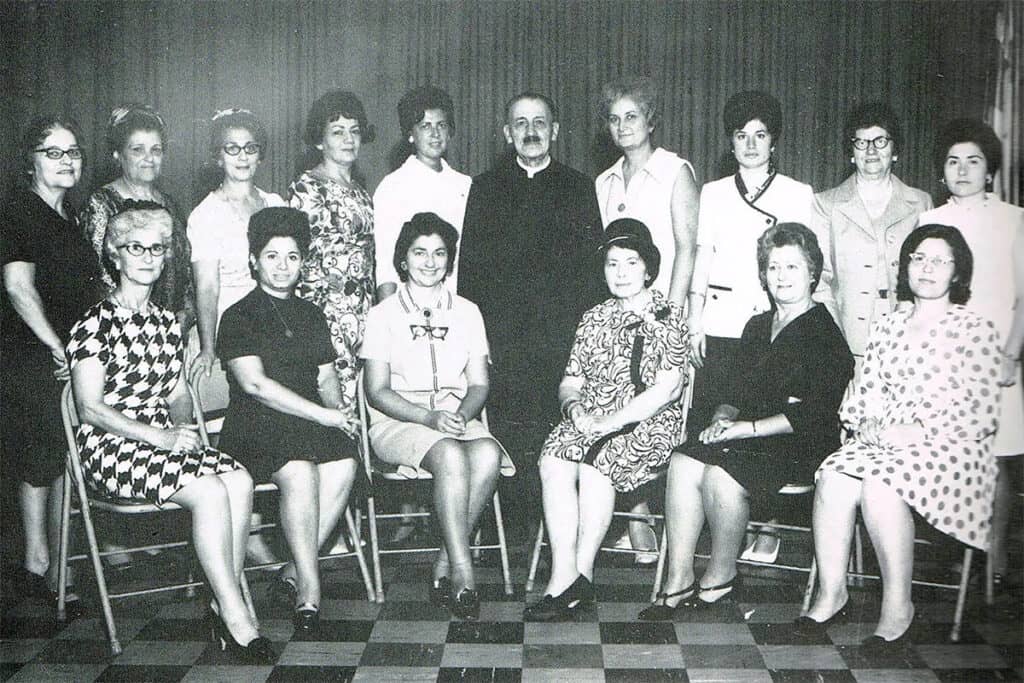
It was also the place where the parish’s earlier efforts finally took root. The Greek School and Sunday School, which had begun in borrowed spaces, now had a permanent home. The Philoptochos Ai Miroforoi organized events and fundraisers in the parish hall, while feast days and Independence Day celebrations brought families together. What had once been scattered efforts now unfolded under one roof, giving the community a true center of gravity.
By the 1950s, St. George had also become a stage for stories that reached beyond Delaware County, linking a small parish to names the wider world would one day recognize.
Famous Footnotes
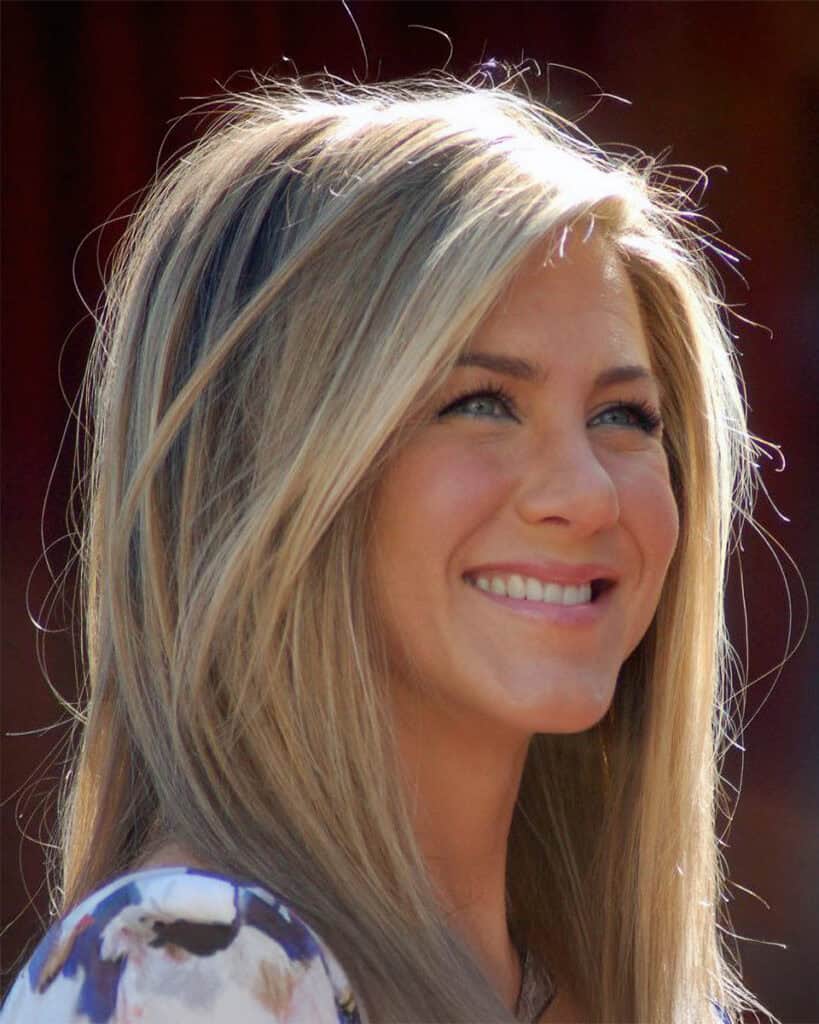
Actress Jennifer Aniston’s family has ties to Chester through the Rialto Restaurant at 9th and Morton Streets, which was owned by her grandfather, Antonios Anastassakis. Her father, John Aniston, born Yannis Anastassakis in Chania, Crete, grew up in Chester, where the family put down roots in the Greek immigrant community.
John Aniston went on to a long acting career, best known for his role as Victor Kiriakis on Days of Our Lives. The family also lived for a time in nearby Eddystone, and Jennifer’s godfather was the family friend and actor Telly Savalas.
The Rialto stood as part of the Aniston family’s American beginning, linking their Greek heritage to Chester’s working-class neighborhood. From a corner restaurant to daytime television, the family’s story reflects how an immigrant journey could carry forward in unexpected ways.
The Aniston connection shows how the life of a small immigrant parish reached beyond Delaware County and into American popular culture.
From Chester to Media
After Father Sophocles retired in 1960, Rev. Anthanase E. Devedjakis guided the parish through years of transition until 1975. By then, many Greek families had moved west into suburban Delaware County, and the parish began to search for new ground.
In 1976, St. George purchased six acres on East Forge Road in Middletown Township. The land had once been farmland and a trash-collection site, but for the parish it promised a new beginning. In 1977, Father James Laliberte became parish priest, and later that September the community broke ground for the new church.
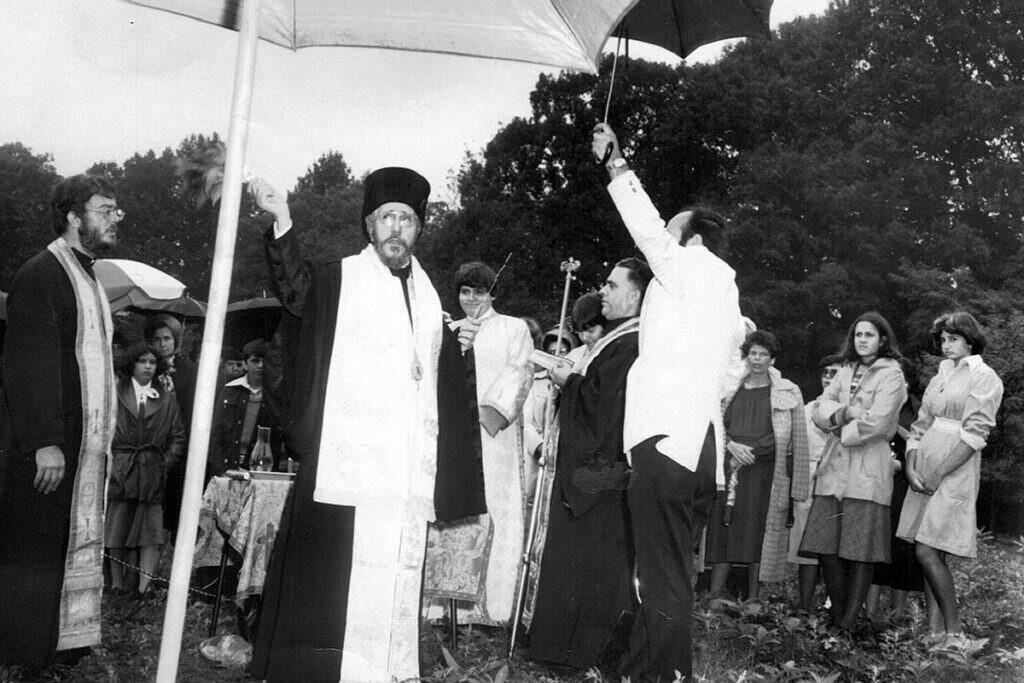
The move was not simple. Parishioners carried nearly the entire burden of the $650,000 project themselves, raising more than two-thirds of the cost and volunteering their labor on weekends. They painted walls, installed insulation, and even put in the heating and air-conditioning by hand. For nearly two years, services were held in a school cafeteria in Middletown, while scaffolding stood waiting on the construction site.
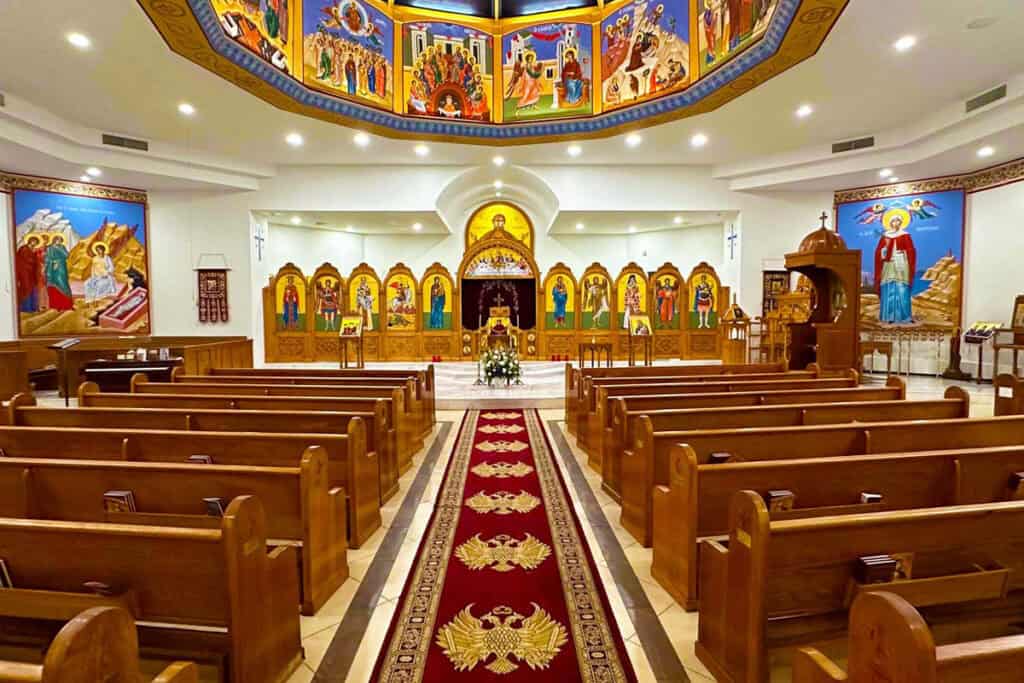
By Easter of 1979, the congregation finally gathered inside their unfinished parish hall. The icons were still in crates, scaffolding stood beneath the high glass dome, and the smell of fresh paint lingered in the air. Yet the pews were full, and for the first time in years the community was home again. Father Laliberte later said it had been “really an ordeal,” but one that was pulled through “with the help of the people and their patience.”
Two months later, on September 9, 1979, Metropolitan Silas officiated at the Thyranoixia, the Opening of the Doors, and presented the key to benefactor Lothar Budike, who opened the doors to the faithful. For those who once prayed at 7th and Kerlin, the Chester church would always remain their first true home, but in Media, the parish had secured its future.
Legacy
The 1949 project was more than a building. It was the culmination of thirty-five years of struggle by immigrants who arrived with little more than faith, language, and determination. They raised nearly 200,000 dollars, shipped marble across the Atlantic, and built a church that declared they were not transients but permanent citizens of Delaware County.
Even today, parishioners who were children in 1949 recall standing beside their parents as Father Sophocles blessed the ground with basil and holy water. For them, that turning of shovels was the moment when Greek heritage and American life came together.
The same spirit carried the parish through the 1970s when families left Chester for the suburbs and built again, this time in Middletown Township. They worshipped for two years in a school cafeteria, gave their savings and their labor, and celebrated Easter of 1979 in a half-finished church, surrounded by scaffolding and the smell of fresh paint. From shipyard to sacred ground, Chester’s Greeks built their corner of the American dream not once, but twice, always with faith at the center.
St. George Greek Orthodox Church: Key Milestones
- 1915 – First Greek families in Chester organize religious life, the oldest Orthodox community in Delaware County.
- 1920s – Early effort fades, then revives in 1926 before stalling during the Depression.
- 1937 – Fund drive raises $3,700 for a future church.
- 1942 – Fund reaches $16,000 and the parish buys a stone house and carriage house on West 7th Street.
- May 4, 1943 – Parish officially incorporated at the Delaware County Courthouse.
- 1943–1944 – Father Demetrios Ouzounyanis serves as first priest until his passing.
- August 14, 1944 – Father Michael S. Sophocles arrives.
- May 1949 – Groundbreaking at 7th and Kerlin Streets.
- October 1949 – Pentelic marble cornerstone laid.
- May 1950 – St. George in Chester completed and consecrated.
- 1960–1975 – Father Anthanase Devedjakis leads parish through years of transition.
- 1975 – Father James Laliberte begins his service.
- September 25, 1977 – Groundbreaking at new site in Media.
- September 9, 1979 – Thyranoixia (Opening of the Doors) celebrated by Metropolitan Silas at the Media church.
- Today – St. George in Media continues to serve Greek Orthodox faithful across Delaware County.