
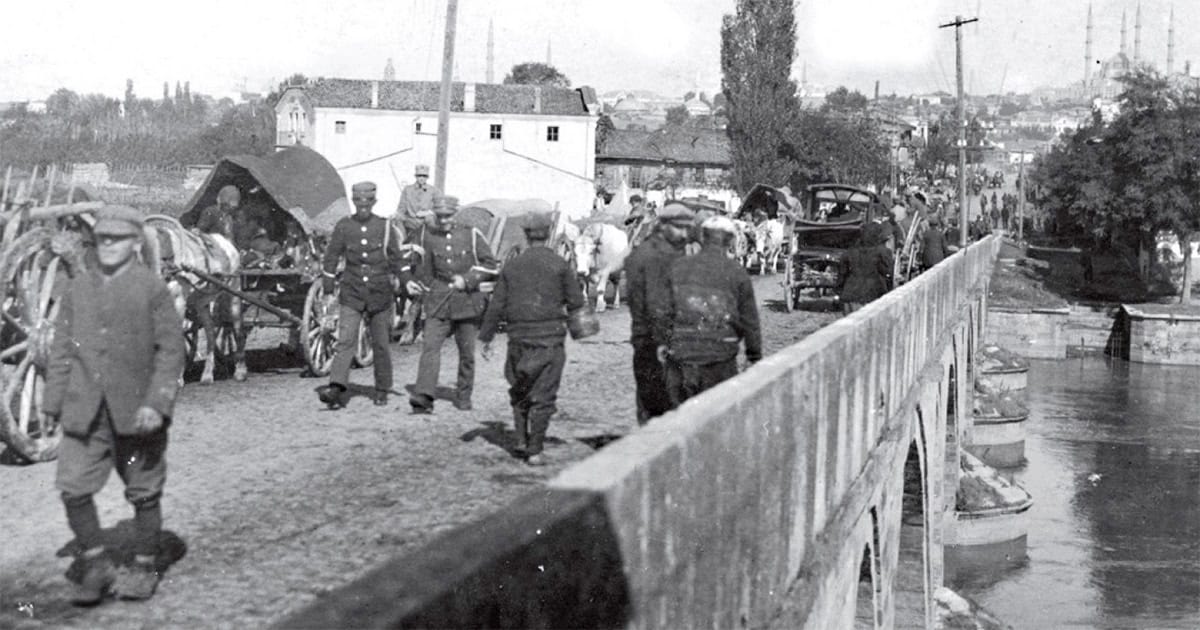
On the morning of April 6, 1914, Easter Monday on the old calendar, the marketplace in Strantza was forcibly shut down.
Gendarmes entered with drawn swords and whips, striking the shopkeepers and ordering the shutters closed. Even the ovens were stopped. Within hours, the Greek families of the village were ordered to leave.
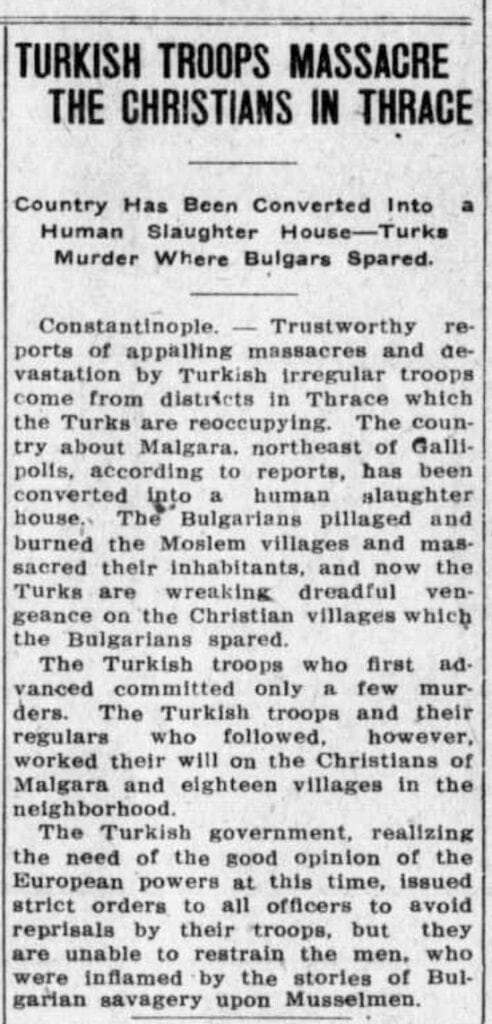
Reports of violence in the region were already appearing the year before. In August 1913, an American newspaper described parts of Thrace as a place of “appalling massacres and devastation,” writing that entire areas had been turned into what it called “a human slaughter house.”
Strantza, known today as Binkılıç, lay in Eastern Thrace, not far from Heraclea on the Sea of Marmara. Like many villages in the region, it had lived through years of mounting pressure after the Balkan Wars. Greek communities still made up a large part of the population, but daily life had already begun to change amid boycotts, taxation, and intimidation.
The account of Aspasia Konstantinidou, recorded a few years later in the Patriarchate’s 1919 publication on the persecutions of the Greek population, follows what happened in Strantza step by step and aligns with other contemporary reports from the same period.
A gendarmerie officer, identified as Ismail, appeared with a group of armed men. When a young man asked why they were being driven out, he was beaten on the spot. Soon after, groups of Muslim refugees moved through the streets alongside the authorities, throwing stones at Greek homes and shouting that the inhabitants must leave or be cut down.
The village did not empty in confusion. It was pushed out in stages. The local elders were summoned to the police station and ordered to produce money. When they said the funds were in Constantinople, the gendarmes whipped them, searched them, stripped what they carried, and threw them into prison. Their release came only after their families handed over what they could. By the time they returned, the decision had already been made for everyone.
The next morning, the expulsions began. Armed men returned with large groups of refugees and went house to house, beating the men and driving families outside. Carts stood waiting in the streets. Refugees moved through the homes, taking clothing, bedding, food, and tools, while others, already inside seized houses, threw stones from the windows at those being forced to leave. Around two hundred Greek families were driven out of Strantza.
They left under guard in a convoy moving toward Heraclea. Along the way, the road became part of the expulsion. After several hours, the group passed through a narrow gorge where Ismail and armed men were already waiting. There, they pulled women from the carts and stripped what remained on them, tearing earrings from ears, ripping chains from necks, and taking whatever money they found.
The stops continued along the route. Gendarmes searched the men again and again, demanding payment and beating those who could not pay. They detained the community leaders once more, forced them to sign documents, and took additional sums.
In one instance, Dimitrios Georgis was seized over taxes he was said to owe. His young son followed, trying to help him. When the father, already stripped of everything, offered his life instead of money, the gendarmes refused. They said they had no orders to kill, only to collect payment, and beat him until he collapsed. When he came to, he was lying on the road, and his son had been left behind in their hands.
The searches did not stop with the men. They pulled women aside and stripped them of jewelry, money, and anything hidden in their clothing. Even small personal items were taken. One woman lost an icon she carried on her chest. Another had money and documents taken from where she had hidden them among the clothes of her infant. At night, the families slept on the ground. In the morning, the searches began again.
By the time they reached Heraclea, the process had begun to feel routine. They were told to pay for having been brought there safely. Those who could not do so lost what they still carried, while carts and animals were taken through forced sales at a fraction of their value.
From there, the families were taken to the water. They were loaded onto boats and then onto a steamship identified in the sources as the S.S. Markella. Even at that stage, the taking continued, as boatmen demanded payment before allowing people to board and searched whatever was left when no money remained.
What happened in Strantza unfolded the same day as similar expulsions across Eastern Thrace. Villages were entered, populations driven out, and property seized, with some communities pushed toward nearby ports and others sent on long marches into the interior. The details vary, but the method does not.
The account of Strantza survives in early recorded testimony. It appears in the English version of the Patriarchate’s 1919 report, and its details align with other contemporary documentation from the same period: the number of families, the route to Heraclea, the role of gendarmes and refugees, the repeated demands for money, and the final removal by sea.
It began in the market and ended at the water. Strantza did not empty on its own. It was cleared.