
The Haddonfield textile artist works with Anatolian Oya lace, family history, and Pontian Greek roots to tell a quieter story about what people carry when history forces them to move.
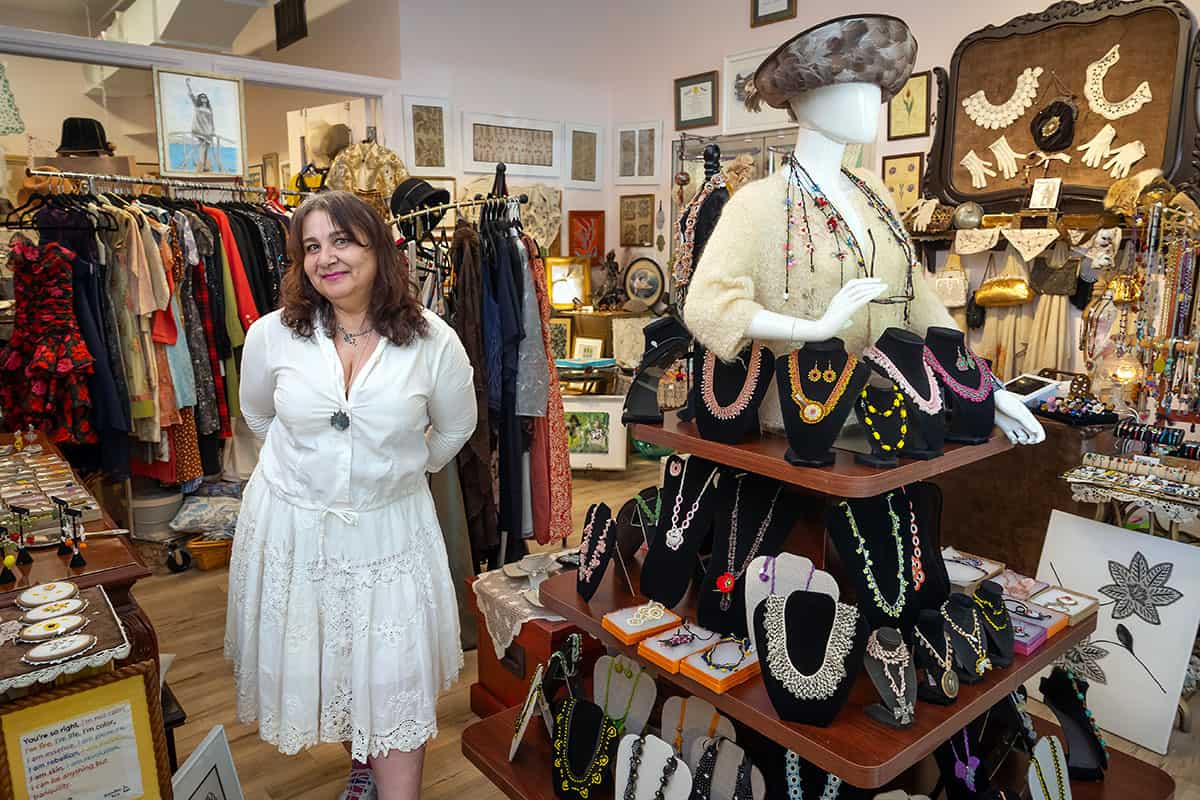
The first thing you notice inside Ylvia Asal’s studio in downtown Haddonfield is not one object, but the feeling that everything has a story attached to it.
Lace hangs near jewelry. Books sit beside garments. A glass jar of golden mountain flowers stands near a long embroidered panel stitched with old photographs, faded handwriting, ticket stubs, and postmarks, small evidence of journeys made and remembered. Icons, thread, and keepsakes fill the rest of the room without turning it into a display. The space is full, but it is not random. It has the order of someone who works with her hands every day and keeps the past close enough to touch.
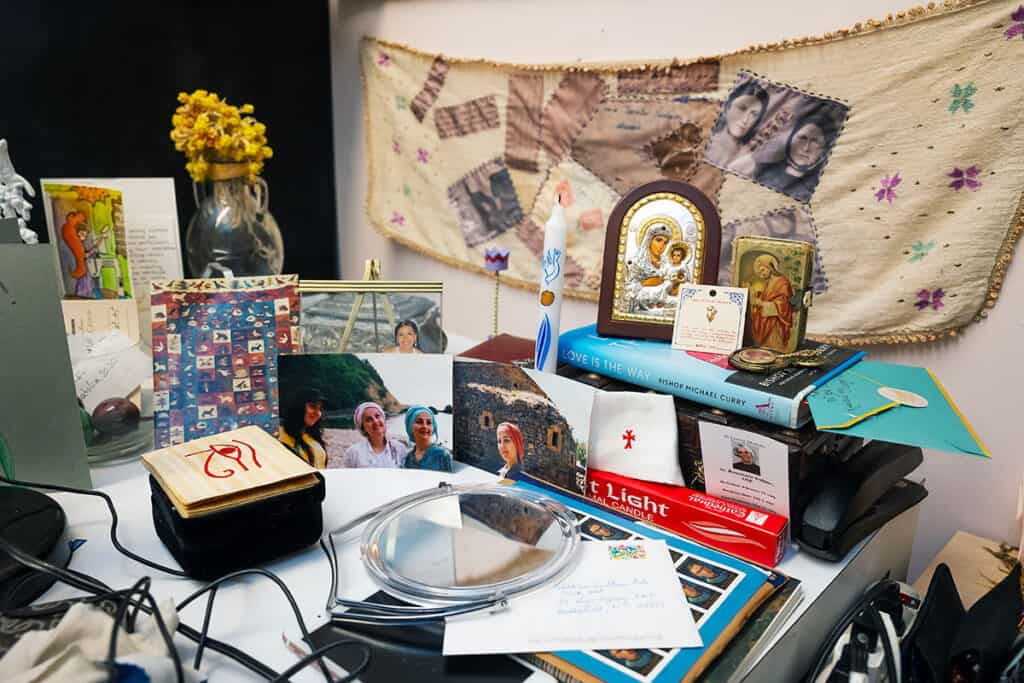
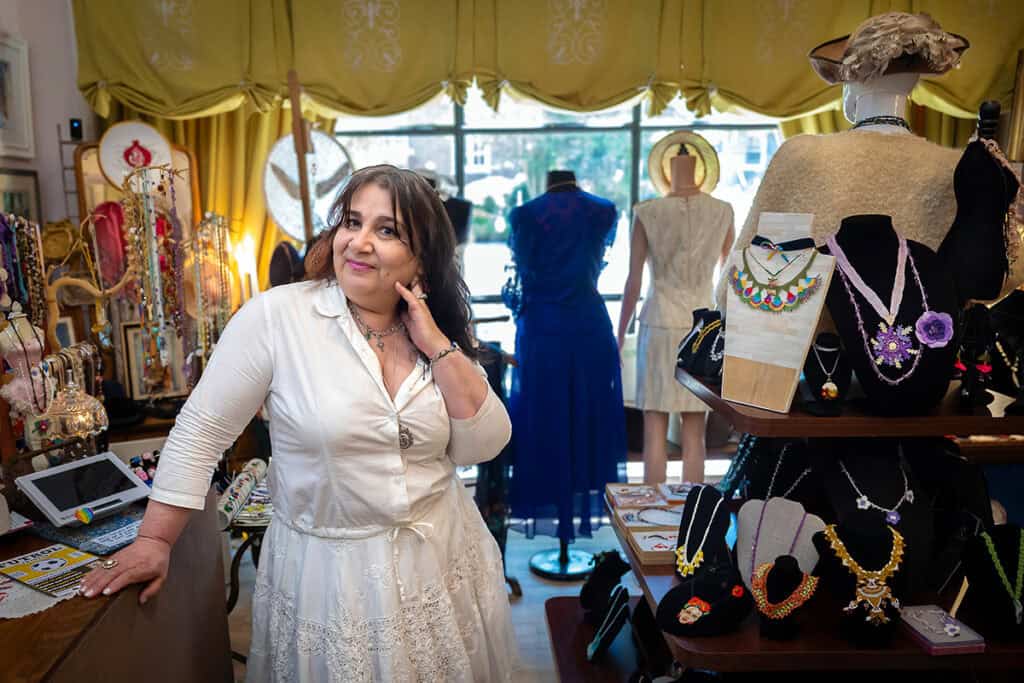
Asal moves through it all in a white embroidered dress, smiling, warm, and free-spirited. The studio is part shop, part classroom, part workroom, and part family record. At her table, surrounded by thread and books, she stitches the small forms that have become the center of her life in New Jersey.
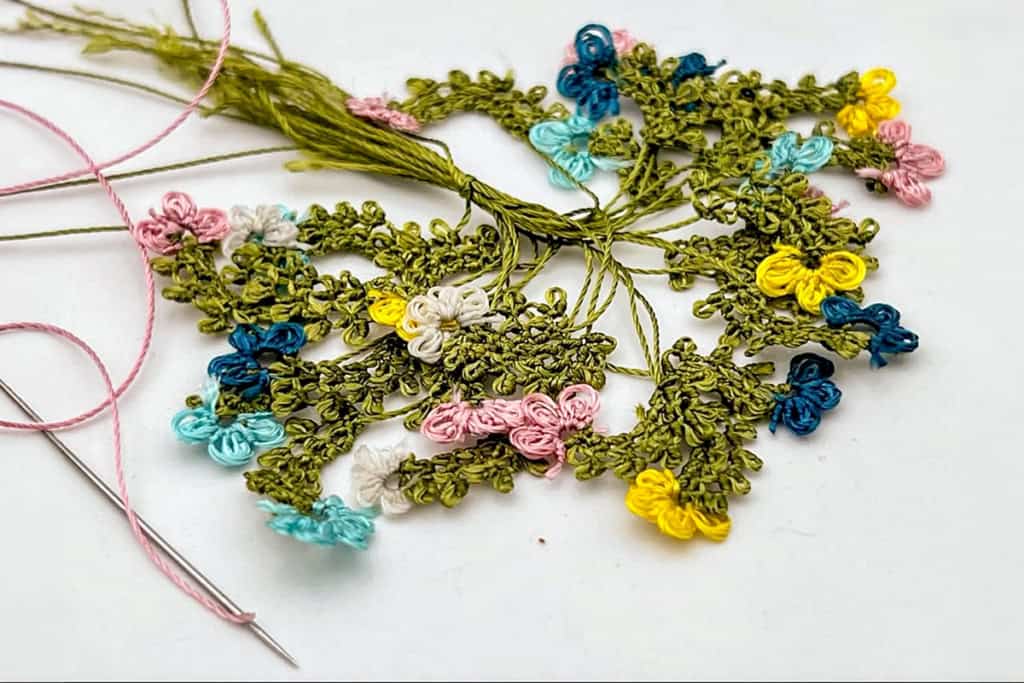
Her work begins with Oya, the traditional Anatolian lace often made with a needle, crochet hook, shuttle, or hairpin technique. For generations, Oya appeared along the edges of women’s headscarves, but it was never just decoration. Asal describes it as a woman’s language, one carried in flowers, colors, patterns, and the patience of the hand.
“Oya is far more than decoration,” she says. “It is a woman’s visual language and a living historical record.”
That idea runs through her Haddonfield studio, Ylvia Asal Studio, Anatolian Cultures and Arts, where handmade jewelry, wall pieces, soft sculptures, workshops, and cultural programs all grow from the same source. Visitors may come in to buy a necklace or take a class. They often leave with a story about Anatolia, the Black Sea, women’s work, migration, and the ways families hold on to what they can.
“Art is a bridge between memory, culture, and people,” she says. “It preserves heritage while creating connection and understanding across differences, reminding us of our shared humanity.”
A Language Made by Women
Oya asks for closeness. You have to lean in to see how much is happening inside a single small flower or knot. The work is delicate, but it is not fragile in the sentimental sense. It comes from women who used what was available to them and turned it into expression.
A color could suggest joy, grief, longing, anger, marriage, motherhood, or silence. A motif could become a message. A headscarf could carry what a woman could not say out loud.
That history is what drew Asal deeper into the form. She learned Oya through family and community, then began pushing it beyond the edges of scarves. In her hands, it becomes earrings, necklaces, wall pieces, sculptural forms, and personal works that mix lace with photographs, writing, and found material.
“My family history carries stories of displacement, loss, resilience, and survival,” she says.
When she stitches, she does not see herself as working alone.
“When I stitch, I feel connected not only to the women who preserved these techniques through their hands, but also to the ancestors whose lives shaped my own.”
Her work has received wider attention in New Jersey. In 2024, State of the Arts NJ featured Asal as an Oya lacemaker whose Haddonfield shop includes both traditional and original work. The segment described Oya as a centuries-old lace tradition once used to trim headscarves and as a way for women across the wider Anatolian world to express themselves.
For Asal, that public recognition does not separate the work from its domestic origins. It brings those origins into view.
From Giresun to New Jersey
Asal was born in Giresun, on Türkiye’s Black Sea coast. She later moved to Istanbul in her early twenties, looking for more opportunities and a wider life. In 2003, marriage brought her to the United States. When that marriage ended, she remained in South Jersey and began again.
She studied business accounting in Philadelphia, but language barriers made the professional path difficult. What she did have were the skills she had carried with her.
“I came here with suitcases full of lace,” she recalls.
The suitcases held more than fabric. They held a way of making and a connection to women whose names were rarely recorded in books.
Asal began selling her work at festivals and craft shows. She opened studios in Ventnor and later worked from the Noyes Arts Garage in Atlantic City before settling in Haddonfield. Over time, her studio became a place where art, teaching, and cultural conversation could happen together.
She does not treat tradition as something frozen. Oya changed as it traveled from village to city, from Anatolia to Istanbul, from Türkiye to New Jersey. In her own work, it continues to change, but it does not lose its source.
Searching for Pontian Roots
Behind Asal’s Anatolian upbringing is another story, one that took her many years to approach fully.
She is of Pontian Greek descent. She grew up in Türkiye, in a family history marked by displacement, assimilation, and the loss of cultural continuity. Much of that identity had been interrupted before it could reach her in a complete form.
“I am of Pontian Greek descent, but I grew up in Türkiye,” she says. “Because of generations of displacement, assimilation, and the loss of cultural continuity, many traditions and aspects of that identity were not preserved in my family.”
Her family stories reach back to the wider Pontos region around the Black Sea, where Greek communities had lived for nearly three thousand years. That presence ended in the violence of the late 1910s and early 1920s, during the Pontic Greek genocide and the 1923 population exchange between Greece and Türkiye, which uprooted survivors and scattered them across Greece and beyond.
As an adult, Asal began following what remained. She traveled to Drama, a city in northern Greece where many Pontian refugees resettled, walking and photographing streets and landscapes connected to her grandparents’ stories. It was not a return to a clear inheritance. She was trying to stand near the places her family remembered and give shape to a history she had received in pieces.
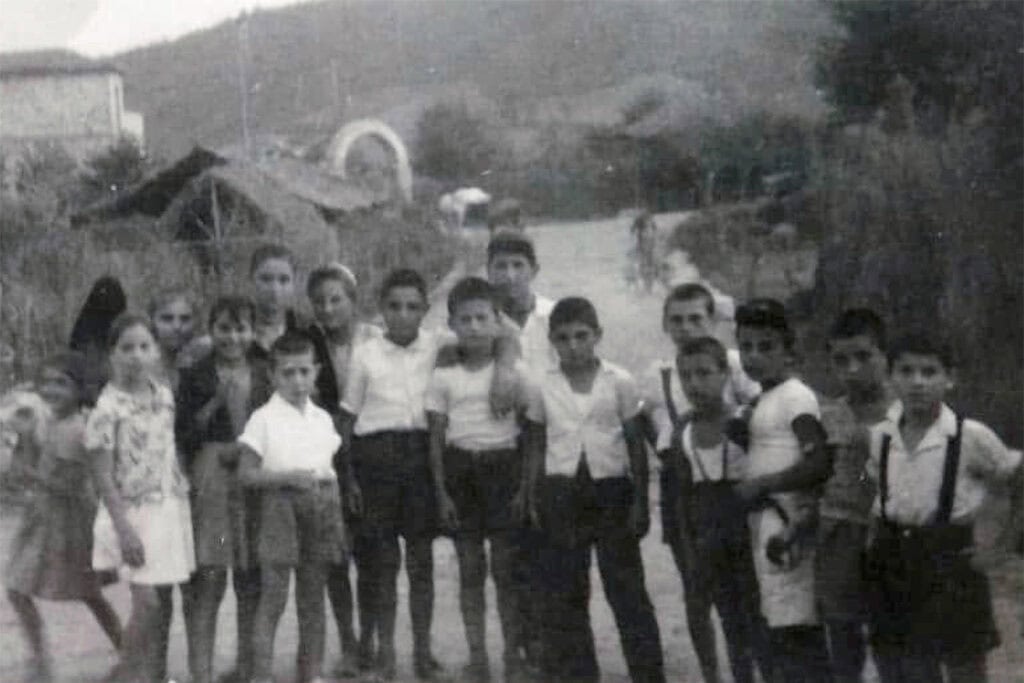
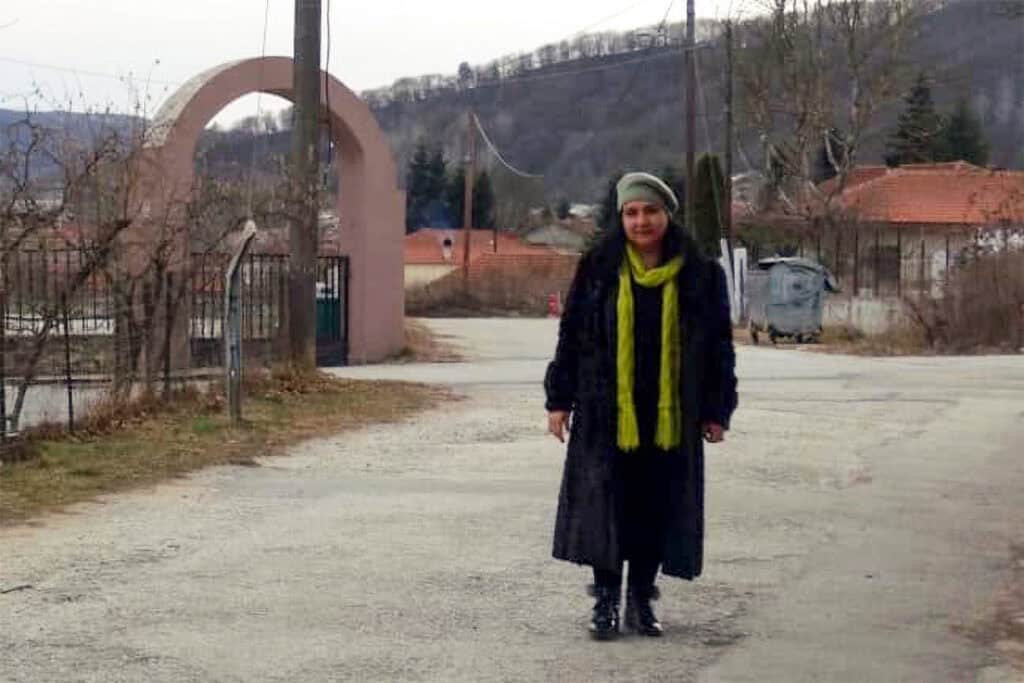
“What I deeply admire about my Pontian Greek roots is the resilience of the community and its ability to preserve language, culture, music, and identity despite displacement and historical hardships,” she says.
Her story is layered: Turkish-born, Anatolian, Black Sea, Pontian Greek, immigrant, American, artist, teacher. The labels do not cancel one another. They sit together, sometimes uneasily, but honestly.
“I say I am American, because it includes everything.”
Finding Community Through Thread
Asal’s search for roots did not stay private. Over the years, she began appearing at Greek, Pontian, and cultural arts events in the Philadelphia and South Jersey region. In Atlantic City, she helped host a Pontian Greek dance program at the Noyes Arts Garage with the Pontian Society Akritai of Philadelphia, connecting her studio to the local Pontian community through music, costume, and dance.
She also sees clear connections between Oya and Greek textile traditions.
“Both belong to a long continuum of decorative textile practices that include fine handwork, embroidery, lace, and intricate surface ornamentation used in everyday and ceremonial textiles,” she says.
Placed side by side, Anatolian and Greek textiles reveal shared habits of the hand. They show how women across neighboring cultures made beauty out of repetition, patience, and skill, and how borders rarely explain the full story of a culture.
That is part of what happens in Asal’s workshops. People sit around a table, pick up thread, and begin with the technique. Then the conversations open. Someone remembers a grandmother. Someone talks about a village. Someone recognizes a pattern, a color, or a gesture from another tradition.
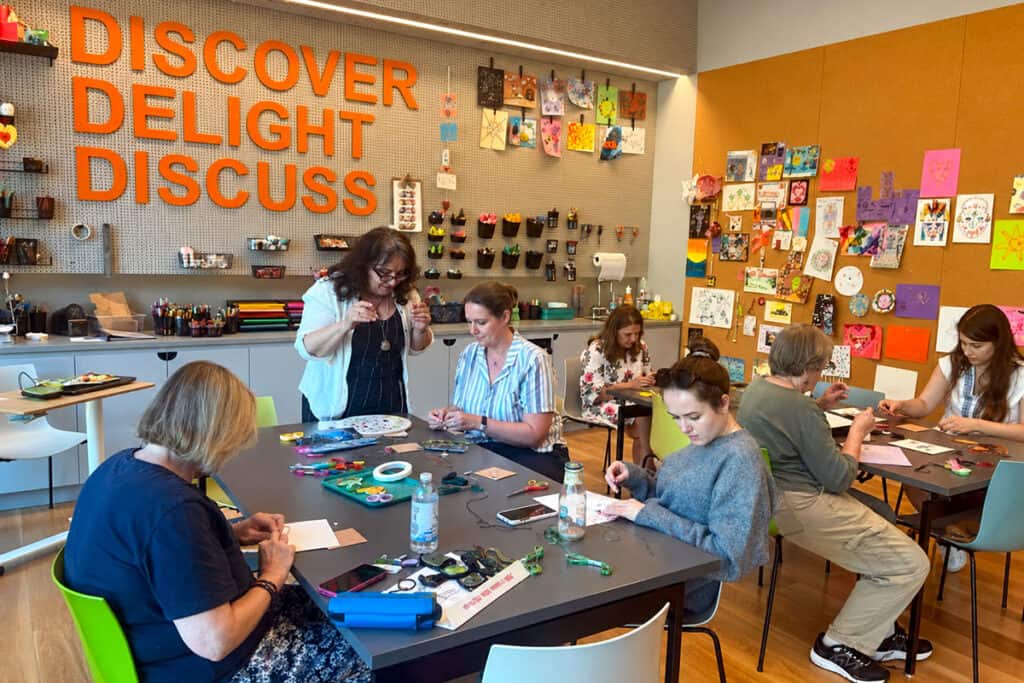
“In my workshops, cultural exchange happens naturally,” she says. “People come to learn traditional techniques, but they also share stories, experiences, and perspectives that open deeper conversations about identity, culture, and what connects us as human beings.”
Her teaching has reached museum and academic spaces as well. In May 2026, the Princeton University Art Museum hosted Asal for an Oya needle lace workshop, introducing participants to traditional stitching, small lace motifs, hand rhythm, and patient making.
Recognition Without Distance
Asal was also named a New Jersey Heritage Fellow, part of a program of the New Jersey State Council on the Arts that recognizes artistic excellence, lifetime achievement, and contributions to the state’s traditional arts heritage. The state’s folk and traditional arts program describes the fellows as artists who keep age-old forms alive through practice and teaching.
“Being named a New Jersey Heritage Fellow was both a tremendous honor and a meaningful affirmation that traditional arts continue to matter in our contemporary world,” Asal says.
For her, the honor did not move Oya away from ordinary life. It brought attention back to the women who made it meaningful in the first place. Oya belongs in galleries and museums, but it also belongs at kitchen tables, in family stories, in workshops, in hands that are still learning.
That is the balance Asal keeps in her studio. She respects the old forms, but she does not copy them mechanically. She lets them speak in the present.
The Artist She Has Become
Ask Asal to define herself, and the answer does not come in one clean line. She was born in Turkey. Her family history carries Pontian Greek roots. Her imagination is tied to the Black Sea. Her adult life is in New Jersey. Her studio sits on Kings Highway in Haddonfield, but the work inside it travels much farther than the town around it.
She continues to follow family stories. She continues to teach. She continues to stitch, gather, photograph, remember, and make. The search is no longer only about recovering what was lost. It has become a way to help others approach their own histories.
“Artists are more than creators,” she says. “They are vessels of memory, meaning, and cultural continuity.”
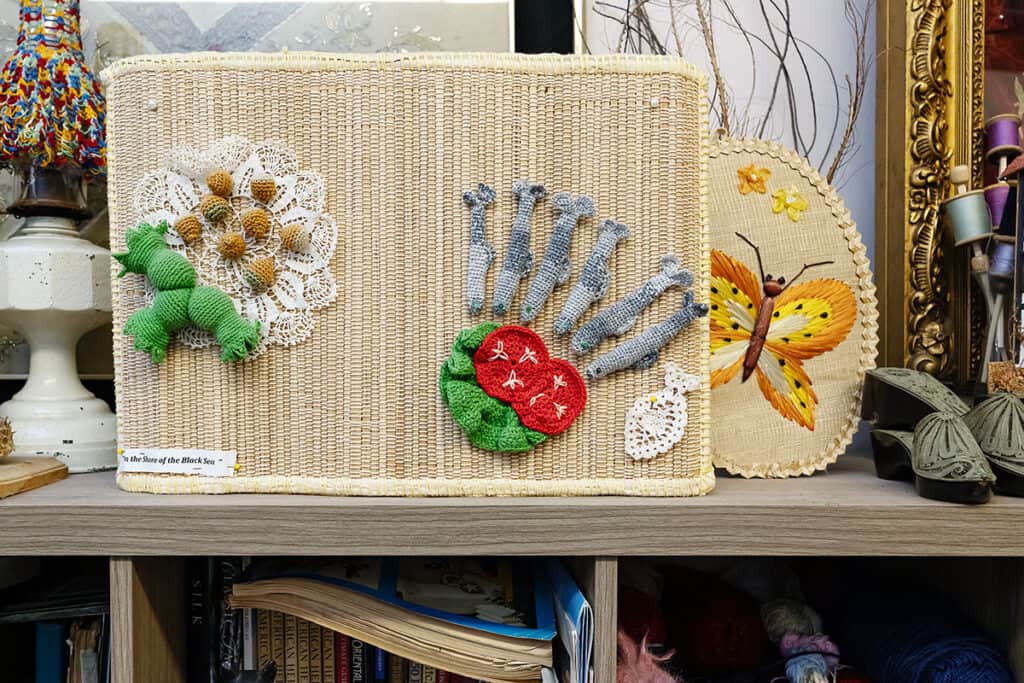
In Haddonfield, surrounded by lace, books, photographs, thread, and the ordinary clutter of a working studio, Ylvia Asal keeps making room for the past without allowing it to harden. The missing pieces of history may never fully return. Through her hands, they still have a place to go.