

When Ioannis Lougaris boarded a ship bound for New York in 1907, his family had mortgaged nearly everything they owned: five and a half acres of land, a burro, and a goat, just to raise the one hundred dollars needed for passage. For the nineteen-year-old, the price of his ticket was measured not only in money but in sacrifice.
The journey across the Atlantic was brutal. Traveling in steerage, Lougaris spent thirty-one days in cramped, unhealthy conditions. He later admitted that he doubted he would ever see land again. When the ship finally reached New York, he stepped into a country that was foreign in every way, with little English, no resources, and the burden to make the gamble worth it. His recollections of that crossing and of his early struggles in America survive in a 1965 oral history interview recorded by the University of Nevada.
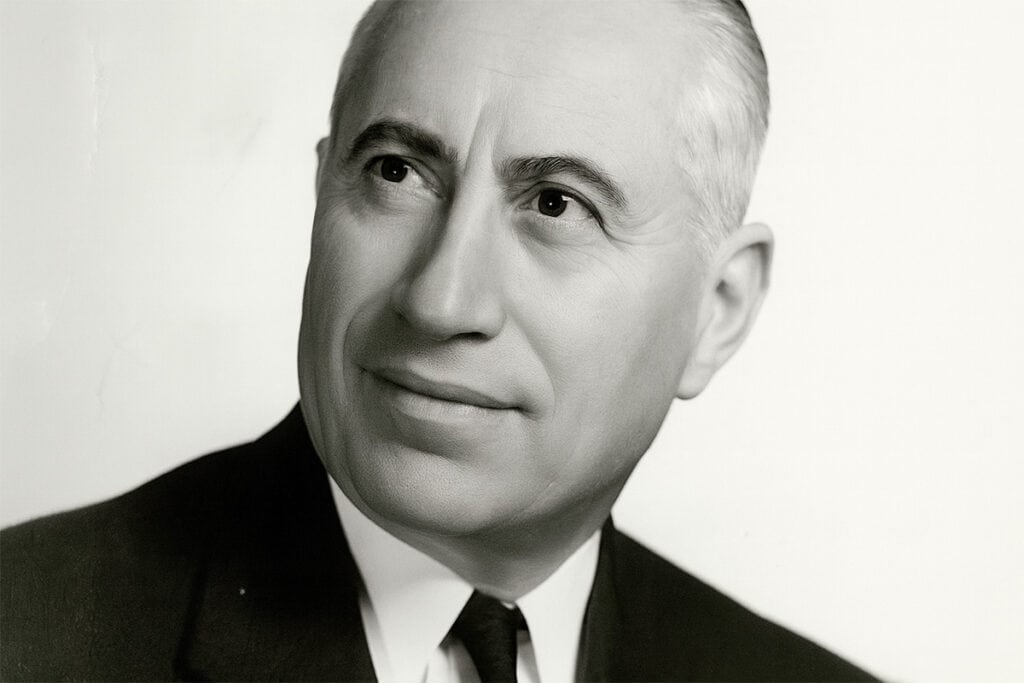
Like so many immigrants, he moved wherever opportunity might be found. New York, Chicago, San Francisco, each city offered him work and survival, but not yet a home. In 1915 he became an American citizen, a decision that would shape the rest of his life. Just a few years later, the United States entered the First World War, and Lougaris answered the call to serve the country that had taken him in.
In France he endured the brutal final months of the war. On November 10, 1918, just one day before the Armistice, he was seriously wounded. He survived the battlefield but returned with injuries and illness that shadowed him for years. At one point, doctors told him he had only months to live.
Instead of giving in, Lougaris pushed forward. In 1920 he found himself in Nevada, far from the big immigrant communities of the East and Midwest. He scraped together a living by running a banana stand. During the day he sold fruit to survive; at night he pored over law books, teaching himself what others learned in universities. Against all odds, he passed the Nevada State Bar and became a practicing attorney.
But it was not just ambition that drove him. Lougaris had seen what war did to men. In Nevada, veterans often had to travel 225 miles to San Francisco to receive medical care. For many, it was a journey they could not afford to make. He believed that Nevada’s veterans deserved better, and he began to lobby lawmakers for a hospital of their own.
His campaign became a personal mission. Lougaris later recalled making as many as sixteen trips to Washington, D.C., at his own expense. He was not a wealthy man, but he was relentless. His persistence eventually won allies in Congress and within the Veterans Administration. In 1937, ground was broken for Nevada’s first veterans hospital. Two years later, in 1939, the facility opened with two physicians, four nurses, and a small staff serving just two dozen patients, as detailed in the VA’s history of the Sierra Nevada health care system.
The hospital grew over the decades, adding new wings and services as the veteran population expanded after World War II, Korea, and Vietnam. Through it all, the memory of Lougaris’s determination remained. In December 1981, Congress officially renamed the facility the Ioannis A. Lougaris Veterans Administration Medical Center, a tribute preserved in congressional records.
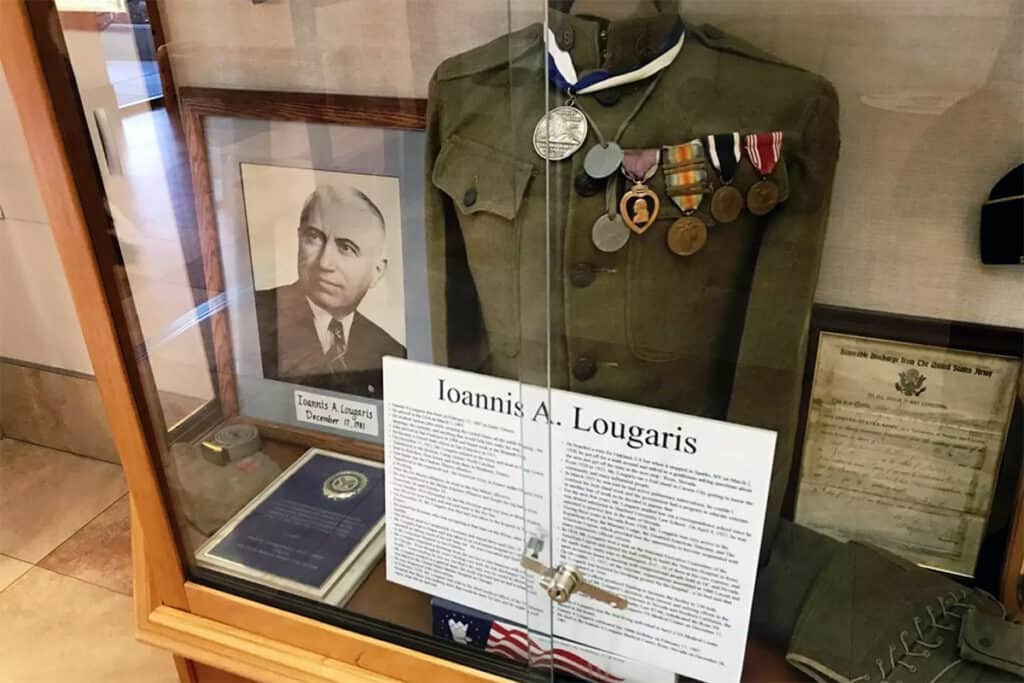
Lougaris lived long enough to see the honor himself. He died in 1987 at the age of one hundred, in the very hospital that bore his name.
He never returned to his village in Greece. His legacy was planted firmly in Nevada, where the hospital he fought for still stands. Each patient who walks through its doors is a reminder that his struggle was not in vain.