

In early August 1918, while the First World War was entering its final months, Toronto witnessed the largest riot in its history. For three days, Greek immigrants and their businesses were the targets of mob violence that left hundreds injured and the city’s downtown scarred. For the families who lived through it, the memory of the “Toronto troubles” was passed down quietly, while official history tried to forget it.
A Small Incident that Lit the Fuse
It began with a quarrel at the White City Café, a Greek-owned restaurant at 433 Yonge Street. On the night of August 1, disabled war veteran Private Claude Cludernay entered the café drunk and aggressive. After striking a waiter, he was thrown out by staff and arrested by police.
What should have been a routine disturbance turned into something much larger. Within hours, rumors spread through the city’s veterans’ circles that Cludernay had been beaten by a group of Greeks. The story was completely inverted. In reality, he had been the aggressor, but word of mouth twisted him into the victim.
This was happening while thousands of veterans were in Toronto for the congress of the Great War Veterans Association. They carried with them frustration about poor pensions, unemployment, and inadequate medical care. When nationalist rhetoric from Mayor Tommy Church declared that “those who fought for the country should own the country,” the stage was set for violence.
The Riots Take Over the City
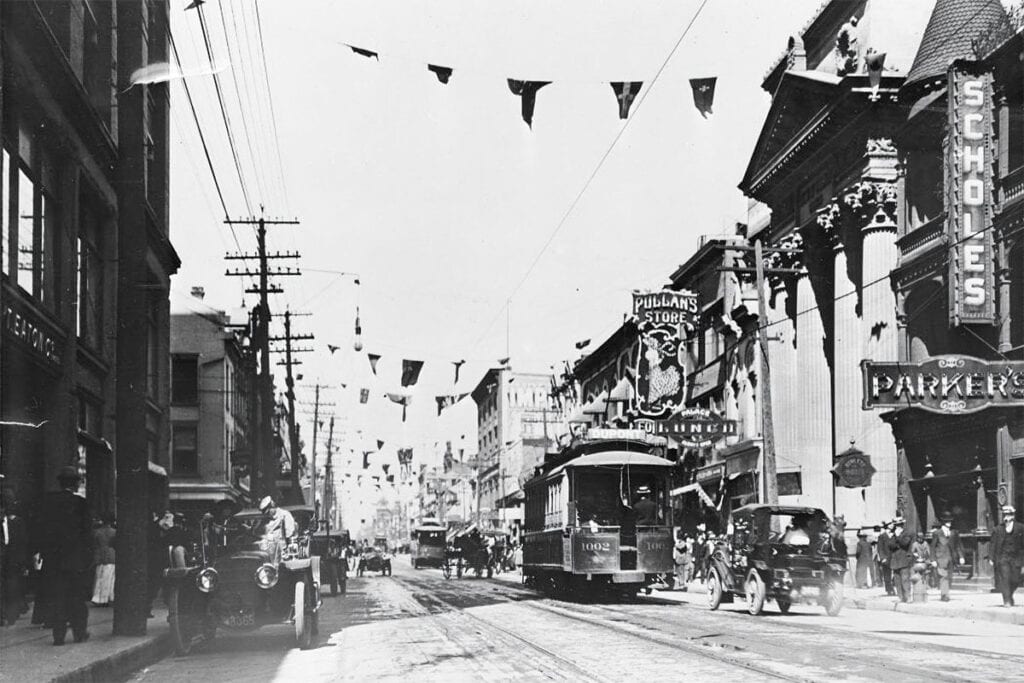
On August 2, crowds gathered outside the White City Café. By nightfall, they swelled to several thousand, many of them veterans. Windows were smashed and the restaurant’s marble counters and mirrors were reduced to rubble. From there, the mob fanned out along Yonge and Queen Streets, attacking any Greek business they could find.
The Toronto Daily Star described the scene inside the café: “Plate glass windows were smashed, as were thirty-two mirrors which lined the walls. The expensive marble tops of tables were torn off and hurled to the ground. Chairs and dishes were broken into a thousand pieces.”
The violence spread with shocking speed. Over the next two days, as many as 50,000 people were involved in some way, including rioters, onlookers, police, and militia. The Globe noted the methodical nature of the destruction: “It was as if the crowd moved with a single purpose, destroying nearly every Greek restaurant in its path.”
Police were overwhelmed and made only token arrests on the first night. By August 3, Mayor Church invoked the Riot Act and called in militia and military police. Soldiers and mounted units clashed with rioters in downtown Toronto before finally bringing the violence under control on August 4.
Damages and Victims
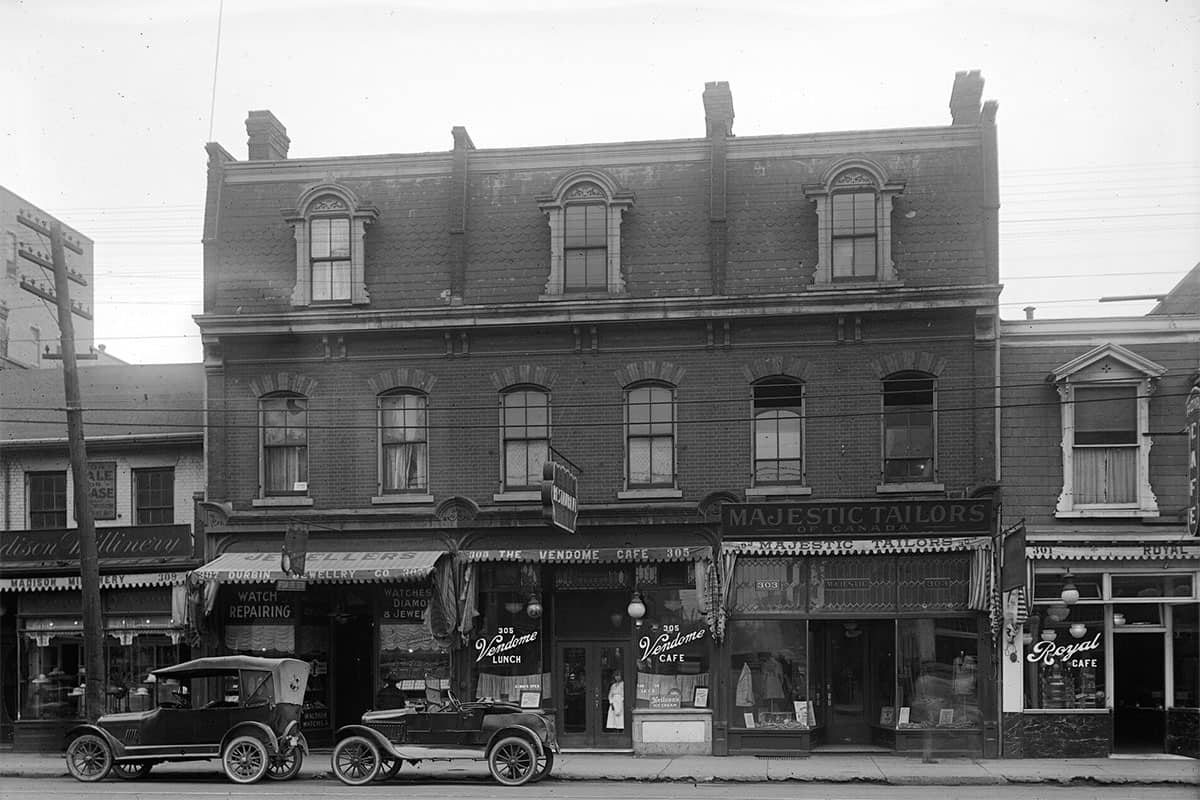
The scope of destruction was devastating. Contemporary reports and later research identified more than twenty Greek-owned businesses that were attacked or destroyed.
- White City Café, 433 Yonge Street, the epicenter of the riot
- White City Café, 985 Bloor Street West, a second location also wrecked
- Marathon Café, 822 Yonge Street
- Star Lunch Café, 441 Yonge Street
- Vendome Café, 305 Yonge Street
- Colonial Lunch, 349 Yonge Street
- Palace Café, 271 Yonge Street
- Superior Lunch, 257 Yonge Street, window smashed
- New London Café, 311 Queen Street West
- Alexandria Café, 750 Queen Street West
- Sunnyside Restaurant, Queen Street West and Roncesvalles
- A Greek-owned shoe-shine parlour north of Bloor
Collateral damage included a butcher shop at 504 Yonge Street that was not Greek-owned.
Casualties and losses
- Around 500 people injured, including women and children
- 34 seriously injured
- No confirmed deaths directly caused by the riot
- Estimated property losses of 100,000 Canadian dollars in 1918, equivalent to at least 1.5 million dollars today
- Greek restaurateurs filed 45,000 dollars in claims for damages, which the city refused to pay
To understand the atmosphere of fear and hostility that swept Toronto in August 1918, the opening minutes of the documentary Violent August capture the story in vivid detail.
Why the Greeks Were Targeted
The rage was not only about a single café brawl. At the time, Greeks made up less than one percent of Toronto’s population, but they owned about one third of the city’s restaurants. Many veterans resented seeing Greek cafés thriving while they themselves faced unemployment and poor support after the war.
International politics added fuel. Until 1917, King Constantine of Greece had kept the country neutral, leaning toward Germany. That history was still fresh, and Canadian veterans used it to argue that local Greeks were pro-German. In reality, more than 2,000 ethnic Greeks were serving in the Canadian Expeditionary Force. At least five Toronto Greeks had been killed in action and ten more wounded. Another 135 had gone back to Greece to fight against the Central Powers. None of this mattered once the rumor about Cludernay spread.
One veteran’s supposed mistreatment at the White City Café was only the spark. The real cause lay deeper. As Dr. Athanasios Grammenos notes in his paper “100 years later: Toronto’s forgotten anti-Greek riots reconsidered,” xenophobia and racism had already influenced the debate about who belonged in Canada. Citizenship was being recast in exclusive terms, and Greek entrepreneurs were stigmatized as outsiders and even traitors, despite their contributions to the war effort.
The Aftermath
The riot reshaped the geography of Toronto’s Greek community. Many families abandoned Yonge Street, no longer feeling safe there, and moved east to Danforth Avenue. In the decades that followed, this corridor became Greektown, one of the most vibrant Greek neighborhoods in North America.
Cosmos Philly visited Greektown back in 2013 for a feature on its restaurants, shops, and the Taste of the Danforth festival, one of the largest street festivals in the world. That photo essay captured a community that had turned tragedy into resilience and built a place where Greek culture thrives openly (read our earlier piece here).
The episode also reshaped community identity. Greeks in Toronto went out of their way to demonstrate loyalty to Canada. During World War II, they became visible buyers of war bonds, and many shortened or Anglicized their names. Churches, schools, and associations on the Danforth anchored the community and ensured that future generations could thrive.
For decades, the riot was absent from Canadian history books. Only in 2018, at the centennial, did the city formally recognize it with a Heritage Toronto plaque at 433 Yonge Street, the site of the White City Café. Heritage Toronto, an independent charity and agency of the City of Toronto, has since published a detailed account of the riots, making this history accessible and connecting it to the city’s broader story of immigration and resilience (read their full article here).
A Wider Pattern
The Toronto riot was not an isolated case. Nine years earlier, in Omaha, Nebraska, a Greek neighborhood had been burned out by a mob after a Greek immigrant was falsely accused of killing a police officer. Both events revealed the same pattern of resentment against immigrants who were succeeding economically, combined with wartime suspicion and xenophobia.
For Greek communities abroad, the answer was resilience. In Toronto, Greeks went on to become an inseparable part of the city’s cultural life. Today, Danforth Avenue hosts one of the largest Greek festivals in the world. The very streets where Greeks once hid in fear are now filled with music, food, and families celebrating their heritage.
Remembering these events matters not only in Toronto but across the wider Greek world. The story of how one immigrant community endured violence, rebuilt itself, and left a lasting mark on the city is also the story of Greek families in Philadelphia, Chicago, New York, and every place where Greeks sought a better life. By recalling the “Toronto troubles,” we honor the resilience of those who came before us and recognize how fragile belonging can be when prejudice takes hold.
Featured image: A front-page report from August 1918 describing how returned soldiers and sympathizers raided Greek-owned restaurants along Yonge Street, causing widespread destruction.