
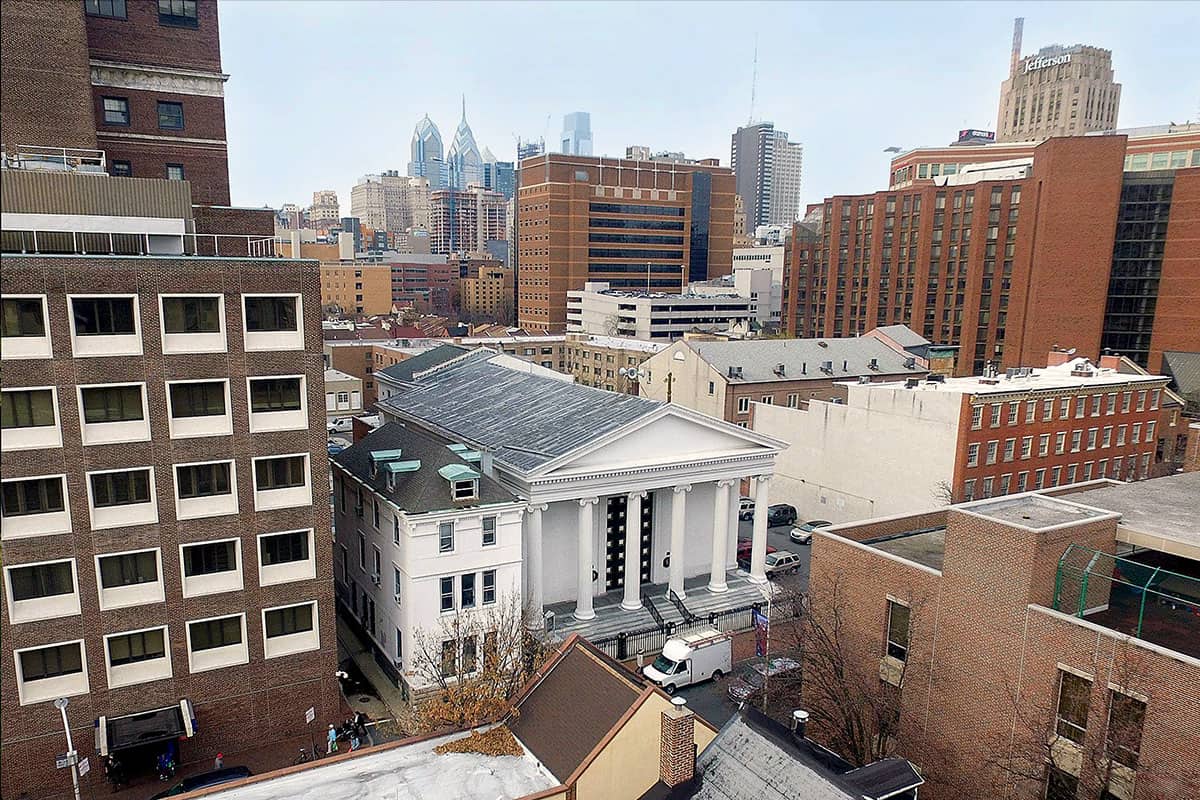
“Did you go into the basement?” For generations of Greek American children at St. George’s, that whispered warning conjured visions of architect John Haviland’s restless spirit. Nicholas Pappas recalls how the very question “injected us with a needle filled with fear” in his investigation, Finding John Haviland for Hidden City Philadelphia. Behind the folklore is a true story of one of Philadelphia’s leading architects, a crypt beneath a Greek Orthodox church, and the way immigrant memory and civic history intertwine.
The Architect Who Brought Greece to Philadelphia
John Haviland was born in England in 1792 and came to Philadelphia in 1816. He rose quickly with monumental designs that shaped the young republic. His best-known work, the Eastern State Penitentiary, opened in 1829, and its initial construction was completed by 1836. It became a model for prisons around the world and a flashpoint in debates over solitary confinement.
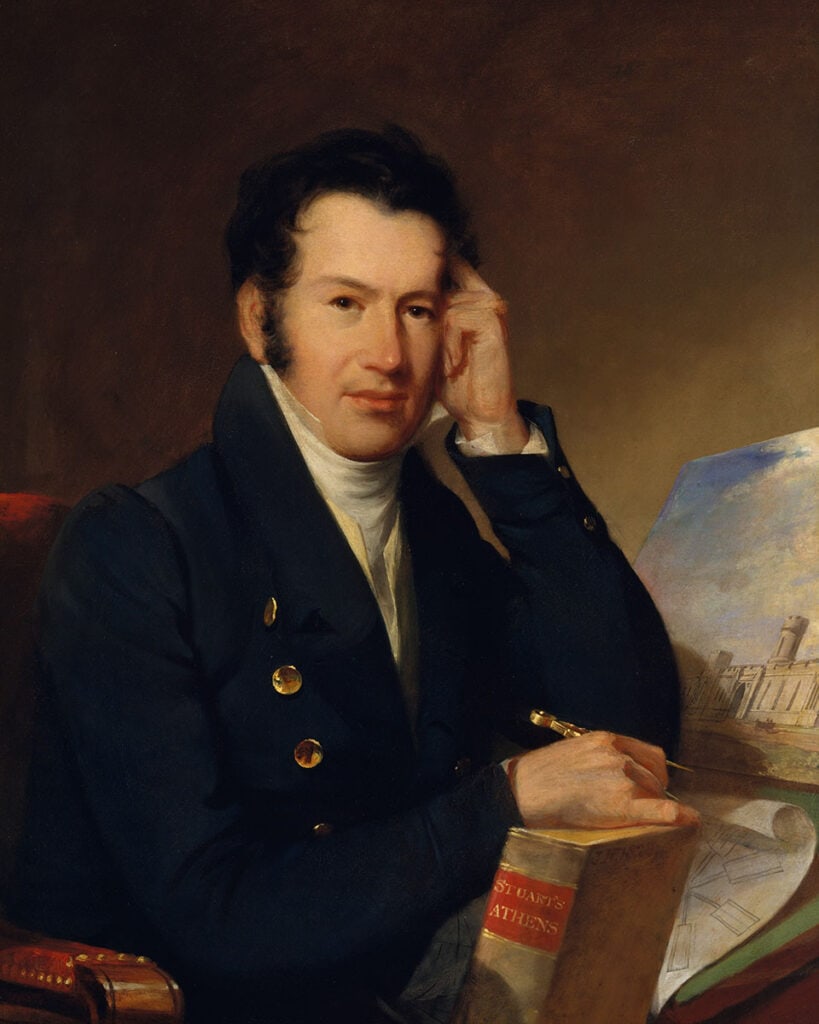
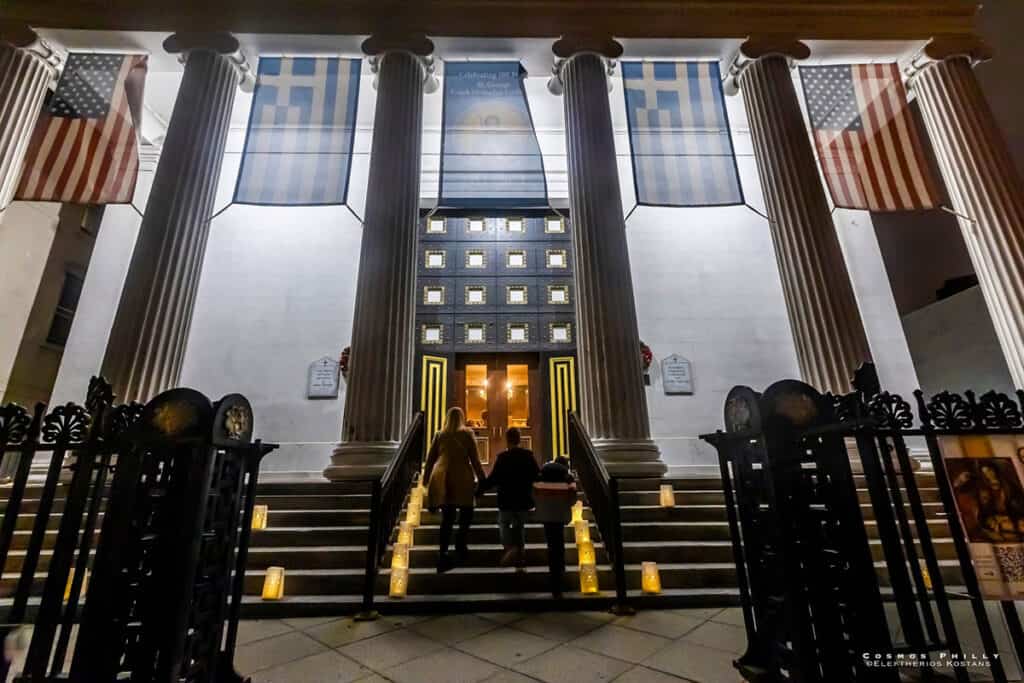
In 1822, he turned his hand to sacred space, completing St. Andrew’s Episcopal Church on South Eighth Street. The Greek Revival façade, with six Ionic columns, evoked the temples of antiquity. Beneath the sanctuary, he created an elaborate crypt with numbered family vaults. The building would later become St. George Greek Orthodox Cathedral, but at the time it stood as Haviland’s own masterpiece, recorded in SAH Archipedia.
Vault number ten was purchased by his wife in 1838. Their children, Mary and James, were laid to rest there first. When Haviland died on March 28, 1852, he joined them in a metal coffin beneath the nave of the church he had designed.
The Cathedral Becomes Greek
By the early twentieth century, Greek immigrants were building a community around South Street and Eighth. In 1921, they acquired St. Andrew’s and rededicated it as St. George. Within two years, a photograph held by the Library Company of Philadelphia already labels the building the “Greek Orthodox Cathedral.”
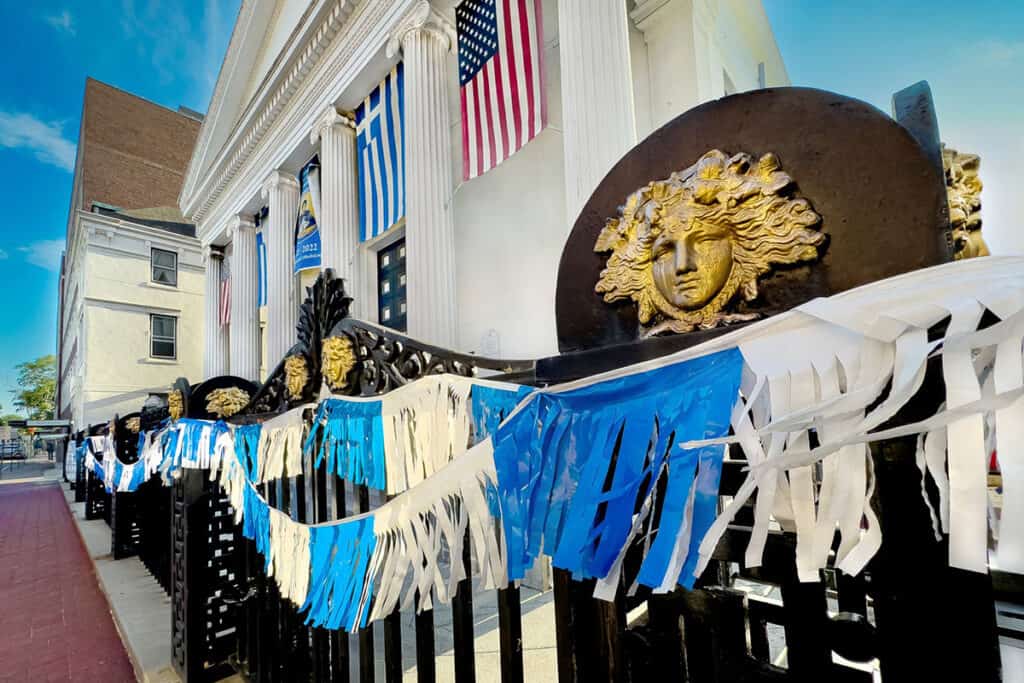
For the city’s Greek faithful, it became a mother church, the site of baptisms, weddings, festivals, and memorials. Its Ionic façade spoke a language of home. Its position near Independence Hall made it a proud landmark of immigrant arrival. But with the church, the community also inherited Haviland’s crypt and the remains beneath the sanctuary.
From Childhood Fears to a Final Resting Place
Orthodox canon law requires that those buried in consecrated ground be members of the faith. That left the new parish with a sensitive problem: what to do with the earlier Episcopalian burials, including Haviland himself.
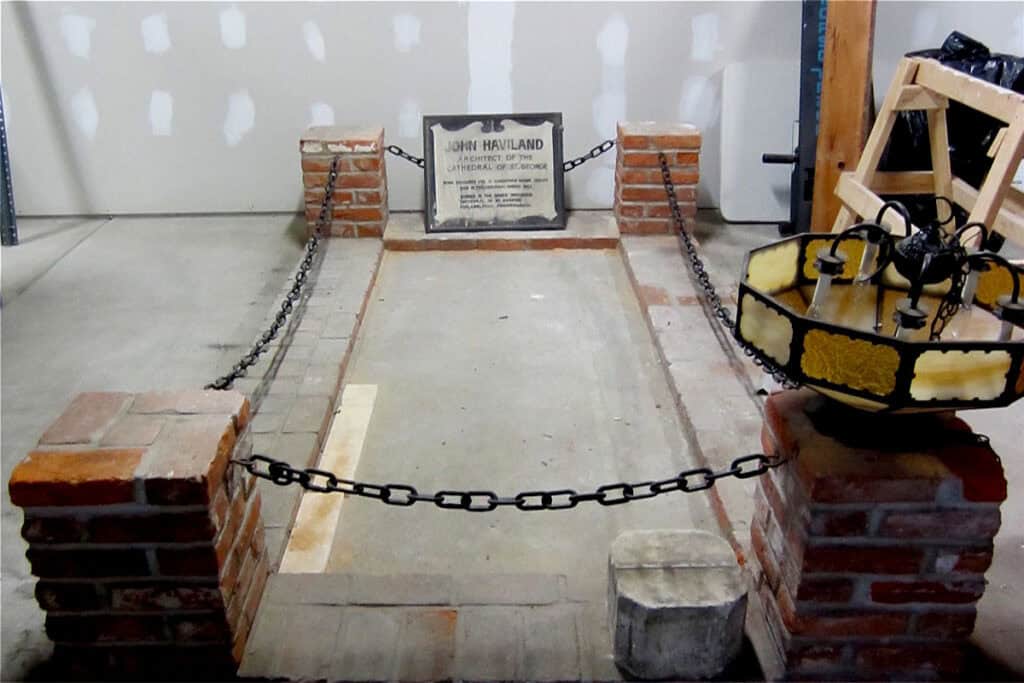
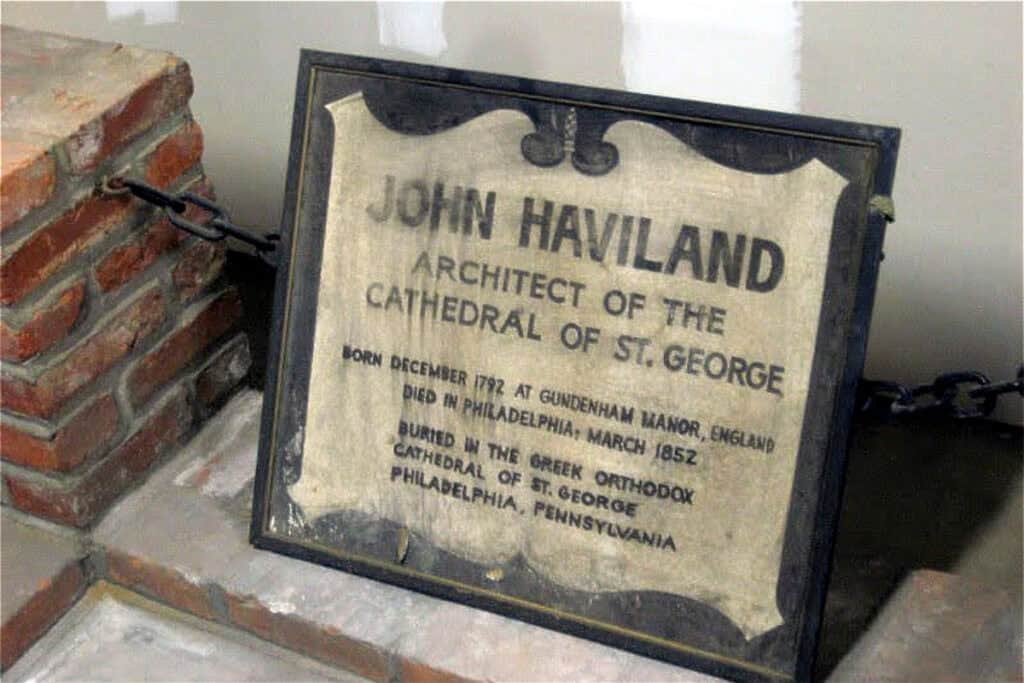
In 1937, the remains from St. Andrew’s were moved to the courtyard crypt of the Philadelphia Divinity School in West Philadelphia, according to the cemetery index for Saint Andrew’s Burial Ground and Vaults. Decades later, in 1976, Haviland and more than two hundred others were reinterred at St. Paul’s Episcopal Church Cemetery in Exton. A granite slab there lists Haviland’s name alongside many others. The stone marker in the cathedral basement is only a cenotaph, a memorial rather than an active tomb.
Restoring the Columns, Preserving the Faith
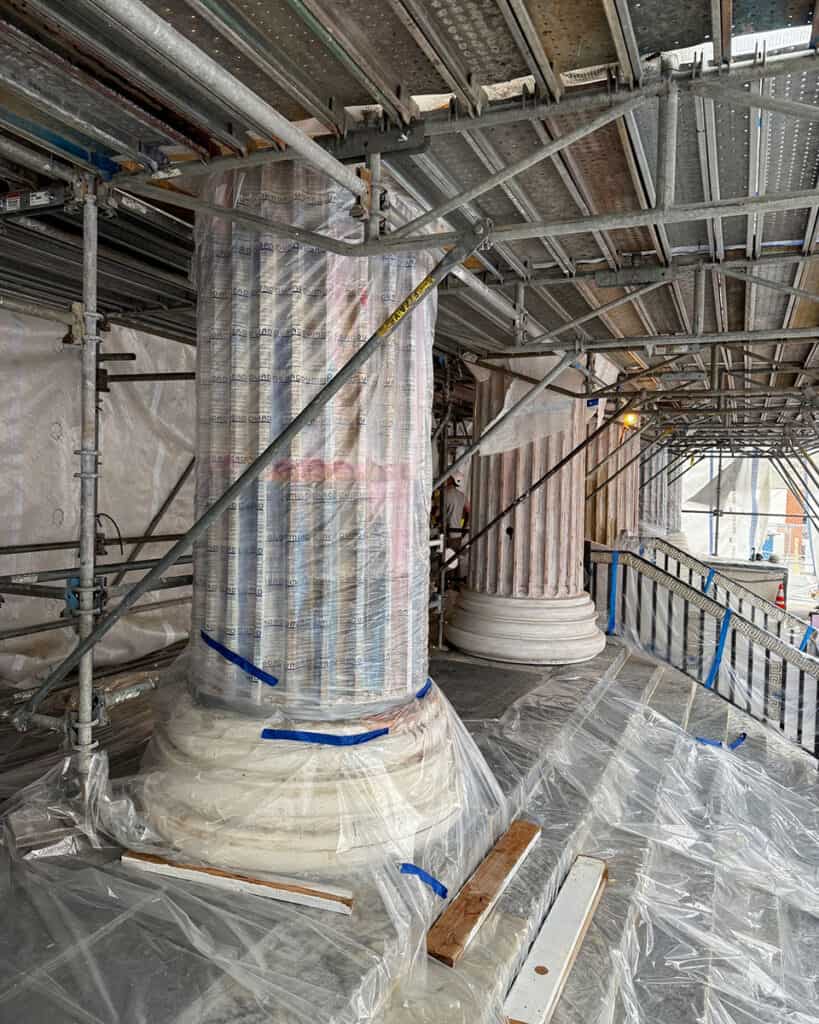
Nearly two centuries after Haviland raised the Ionic portico, time has taken its toll. In February 2025, St. George launched a restoration campaign to repair the original columns, marble steps, and masonry. Scaffolding now surrounds the façade, a daily reminder of both fragility and resilience.
“The same columns that welcomed our grandparents when they arrived now stand in need of our care,” a committee member remarked at the campaign’s launch. The project is more than structural. It is an act of stewardship, preserving the face of Greek Orthodoxy in Philadelphia and ensuring the building remains a place of worship, memory, and community.
A Legacy Rooted in Faith and Stone
Haviland’s remains may lie in Exton, but his spirit endures in Philadelphia. Each Sunday liturgy echoes beneath the same Ionic capitals that rose in 1822. Weddings spill out onto Eighth Street with rice and song. Festivals bring music and friends to the steps. The columns watch over it all, like old relatives who have seen everything and still stand faithfully in place.
What began as an Episcopal sanctuary became a Greek cathedral. Today, it remains a living monument to faith, heritage, and the architect who shaped both public ideals and sacred space.
How to Support the Cathedral’s Restoration
To contribute and help preserve this landmark, contact
- Address: St. George Greek Orthodox Cathedral, 256 South Eighth Street, Philadelphia, PA 19107
- Phone: (215) 627 4384
- Email: restoration@stgeorgecathedral.org
- Online: Visit the St. George Cathedral campaign page