

As the world once again struggles with how to confront mass atrocities, a warning voiced in Philadelphia more than fifty years ago feels newly urgent. On a November afternoon in 1971, Barnard College scholar Marjorie Housepian Dobkin spoke at the Philadelphia Art Alliance about the danger of letting such crimes fade from memory. Later that day, the Philadelphia Inquirer published her op-ed, “Genocide: Why Is It Still ‘Legal?’” calling on the United States to ratify the United Nations Genocide Convention and reminding readers that silence invites repetition.
At the time, Philadelphia’s Armenian and Greek communities were active and visible parts of the city’s civic life. Many families had roots in survivors of the 1915 Armenian genocide or the population exchanges and upheavals that followed the Greco-Turkish War. Their parishes and cultural societies regularly organized lectures and memorial events, determined that their histories not be lost in the rush of postwar American life. It was within this setting that Dobkin’s address found an especially attentive audience.
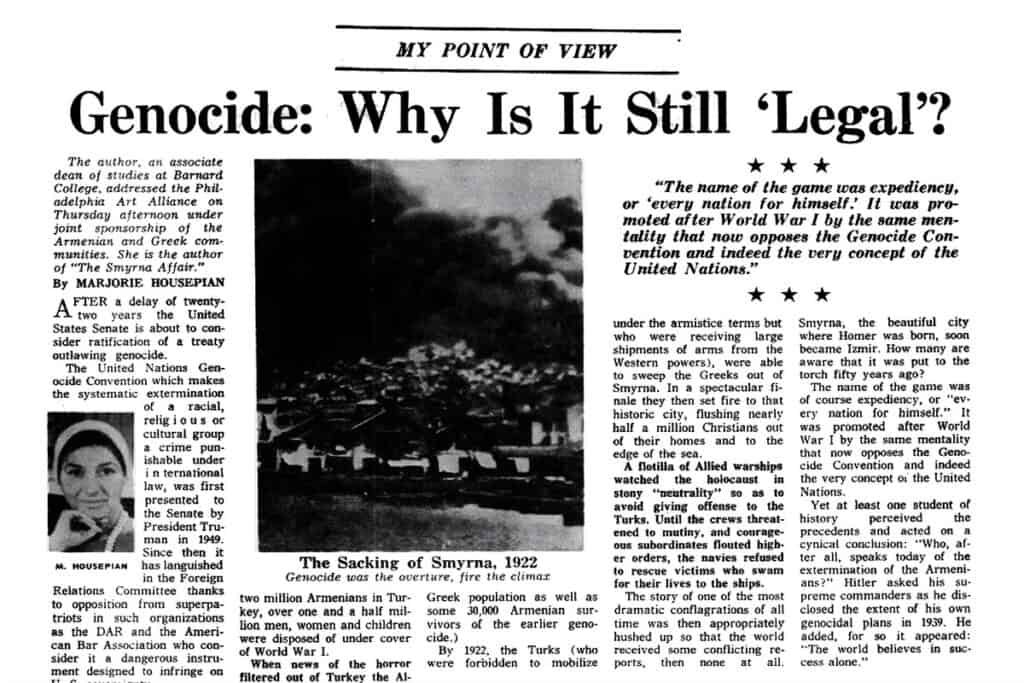
The Philadelphia Inquirer of Nov. 5, 1971, carried that op-ed by Marjorie Housepian Dobkin, then associate dean at Barnard College and already recognized for her historical research on the destruction of Smyrna. Speaking under the sponsorship of these Armenian and Greek groups, the Barnard scholar challenged Americans to confront the reality of genocide and to hold their government to a higher moral standard.
“The United Nations Genocide Convention which makes the systematic extermination of a racial, religious or cultural group a crime punishable under international law, was first presented to the Senate by President Truman in 1949. Since then it has languished … thanks to opposition from super-patriots … who consider it a dangerous instrument designed to infringe on U.S. sovereignty.”
Her concern was not theoretical. The United States had helped draft the Genocide Convention in the wake of the Holocaust, yet for twenty-two years the treaty remained unratified. Sixty-nine other nations, including some that had themselves committed mass killings, had already signed. Dobkin pointed out that Germany and Turkey shared “the distinction of having perpetrated, in this century, the most wide-scale genocides in history,” and she argued that the earlier Armenian genocide had provided a precedent that Adolf Hitler openly recognized.
“Hitler asked his supreme commanders as he disclosed the extent of his own genocidal plans in 1939: ‘Who, after all, speaks today of the extermination of the Armenians?’”
By failing to punish or even consistently acknowledge the crimes of the past, she warned, the international community had created the conditions for future atrocities. To show how quickly ideals can be abandoned when political and economic interests intrude, she turned to the destruction of Smyrna in 1922, an event she would later chronicle in her book The Smyrna Affair.
After the First World War the Allies had authorized Greece to occupy the city, which had a large Greek population and thousands of Armenian survivors of earlier massacres. But as the postwar balance shifted and the oil-rich Mosul region became a prize for the Great Powers, support for the Greek position collapsed. Turkish nationalist forces, though forbidden to mobilize under the armistice, rebuilt their strength with weapons from Western suppliers and retook the city.
When they entered Smyrna, they set fire to its Christian quarters, driving nearly half a million Greeks and Armenians toward the waterfront. Allied warships anchored in the harbor maintained “stony ‘neutrality,’” reluctant to offend the new Turkish government. Only when sailors threatened mutiny did crews begin rescuing those who swam out to the ships. Dobkin later recorded that in the Smyrna district, “posters exhorting the Moslems to murder appeared suddenly on the walls of schools and mosques,” a chilling sign that the catastrophe had been carefully prepared (Smyrna 1922: The Destruction of a City).
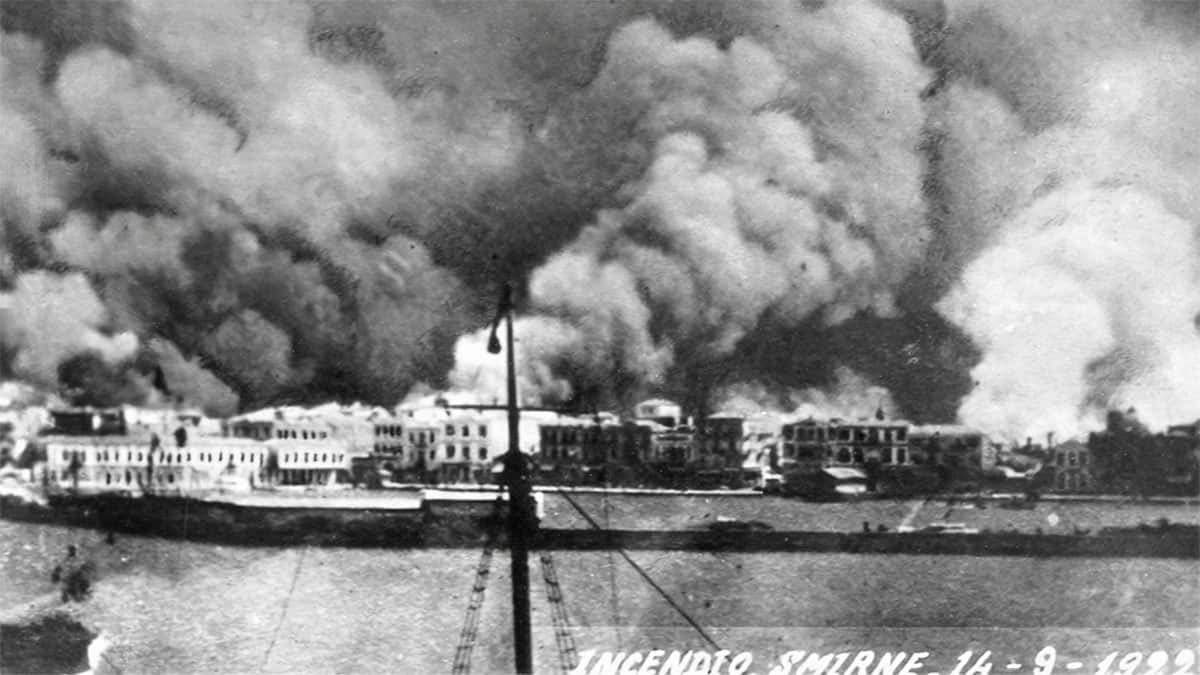
This betrayal of Armenians and Greeks revealed how the Allies’ proclaimed ideals gave way to realpolitik: oil concessions, shifting alliances and what she called the “every nation for himself” mentality that dominated the post–World War I settlement. In her 1971 piece she also stressed that governments which claim the shield of sovereignty to avoid action against mass murderers become morally complicit. Silence and inaction, she argued, enable the next genocide.
The United States eventually moved, but only after many more years of debate. The Senate finally gave its consent to the treaty in 1986, and in 1988 President Ronald Reagan signed the Genocide Convention Implementation Act, known as the Proxmire Act, formally binding the nation to the Convention. At the signing he stated:
“We gather today to bear witness to the past and learn from its awful example, and to make sure that we’re not condemned to relive its crimes.”
(Ronald Reagan Presidential Library)
For Dobkin, writing in 1971, the delay itself proved her point that power and expediency still outweighed justice. Her closing citation of Hitler’s words, “The world believes in success alone,” was meant as more than a historical quotation. It was a challenge to governments and citizens to confront atrocities before expediency once again silenced conscience.
More than fifty years later, as the world grapples with evidence of mass killings in places such as Darfur, Myanmar and Ukraine, her warning continues to resonate with undiminished force. Investigators examining Russian actions in Ukraine have even cited genocidal intent and the use of historical narratives to justify violence, precisely the kind of pattern Dobkin feared where unpunished crimes create templates for future atrocities.
About Marjorie Housepian Dobkin (1922–2013)
Marjorie Housepian Dobkin was a distinguished Armenian-American scholar, novelist and historian. Born in New York City to a family of Armenian genocide survivors, she spent most of her academic career at Barnard College, where she served as associate dean and professor of English.
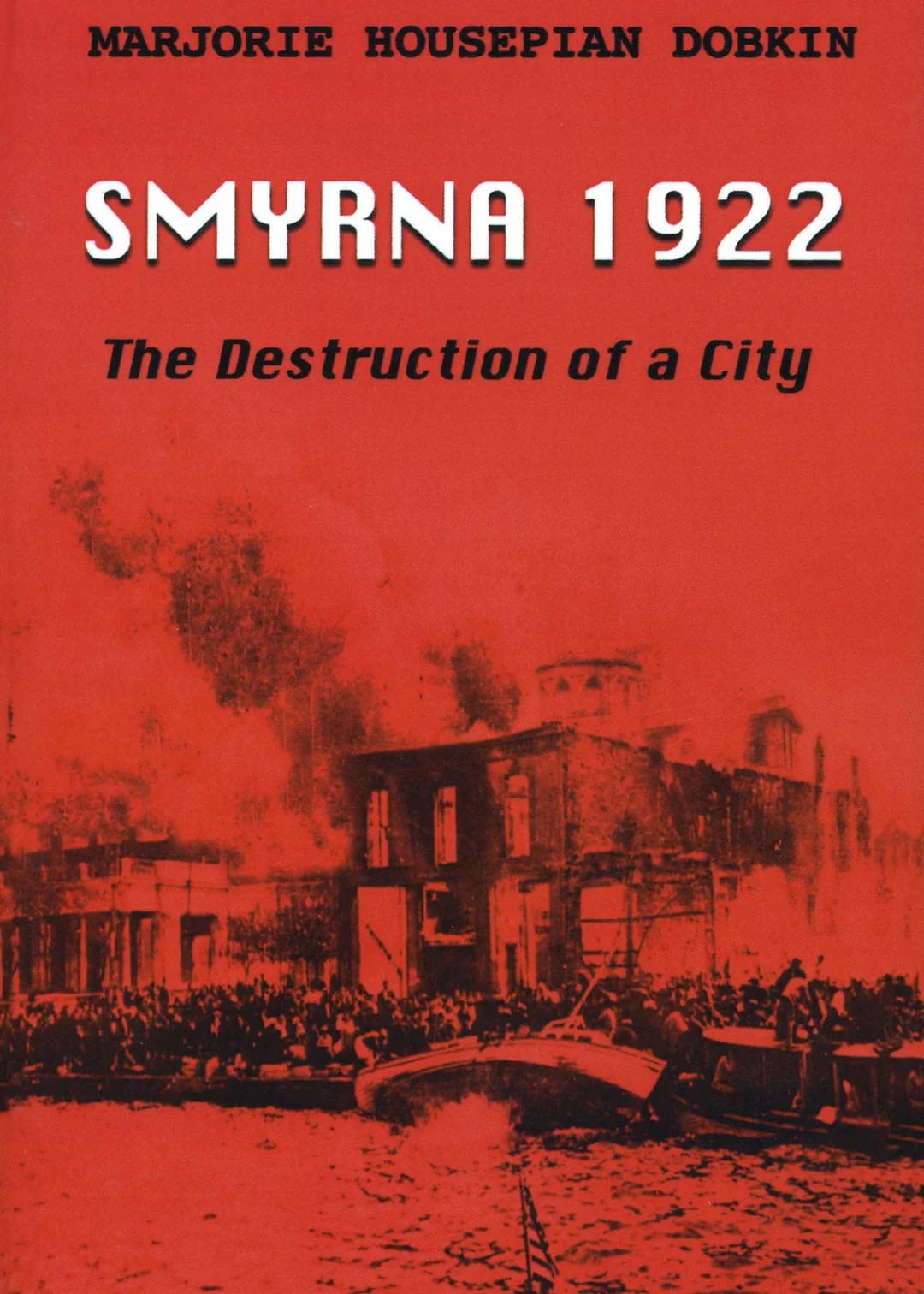
Her acclaimed historical study The Smyrna Affair (later reissued as Smyrna 1922: The Destruction of a City) remains a definitive account of the burning of Smyrna and the fate of its Greek and Armenian residents. She also authored the novel A Houseful of Love (1957) and numerous essays on literature and history.
Dobkin’s lifelong commitment to documenting twentieth-century atrocities ensured that the tragedies of the Armenians and the Greeks of Asia Minor would not be forgotten.
She passed away in 2013 at the age of ninety.
(Biography drawn from Wikipedia and the Armenian Church obituary).
Excerpts from “Genocide: Why Is It Still ‘Legal?’” The Philadelphia Inquirer, Nov. 5, 1971, by Marjorie Housepian Dobkin. Used here for commentary and educational purposes under U.S. fair-use provisions.
Featured image: Marjorie Housepian Dobkin, c. 1957. Photo by her uncle Kegham Ashjian.