

Some nights at the arena fade into box scores and highlight clips. Others stay with you. March 6, 2017, at the Wells Fargo Center was one of those nights.
The Milwaukee Bucks were in town, but for four solid sections dressed in blue and white, the opponent barely mattered. Nearly a thousand Greek Americans filled the lower bowl for one reason: to welcome their own, Giannis Antetokounmpo, to a city that had quietly claimed him as family.
From the start, it was clear this was not a routine NBA promotion. Greek Heritage Night had been built carefully and with purpose by the Philadelphia Greek Basketball League, led by Bill Zonios and John Vasiliou. With support from the Greek American Heritage Society of Philadelphia and community sponsors, they turned a regular-season game into a rare moment of collective pride. Tickets disappeared weeks before tip-off.
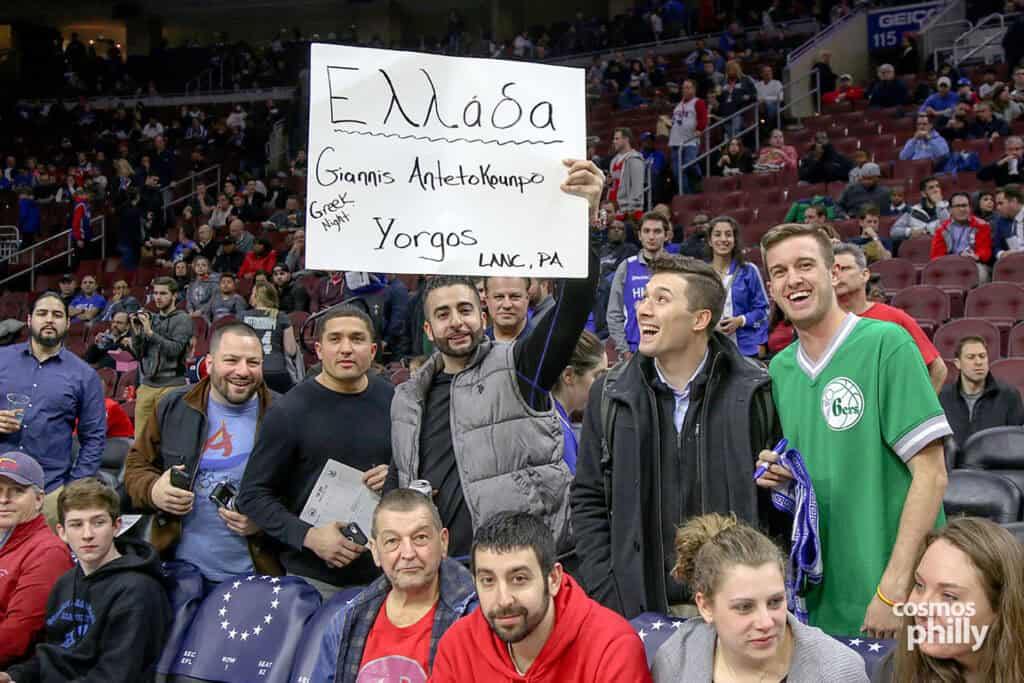
You could feel it the moment you walked inside. Blue-and-white scarves and jerseys. Flags draped over shoulders. Kids bouncing down the aisles in oversized Sixers warm-ups, clutching homemade posters with “Giannis” scrawled in marker and “Ελλάδα” written proudly in Greek letters. Families paused for photos, grandparents and grandchildren side by side, aware they were witnessing something that would last beyond the final buzzer.
Before the opening tip, the court belonged to the community. The Zito Dance Troupe from Lancaster burst onto the hardwood, arms raised, faces lit with anticipation, carrying Greek flags that billowed under the arena lights. Their steps echoed village squares and festival stages, translated into motion beneath a modern NBA ceiling.
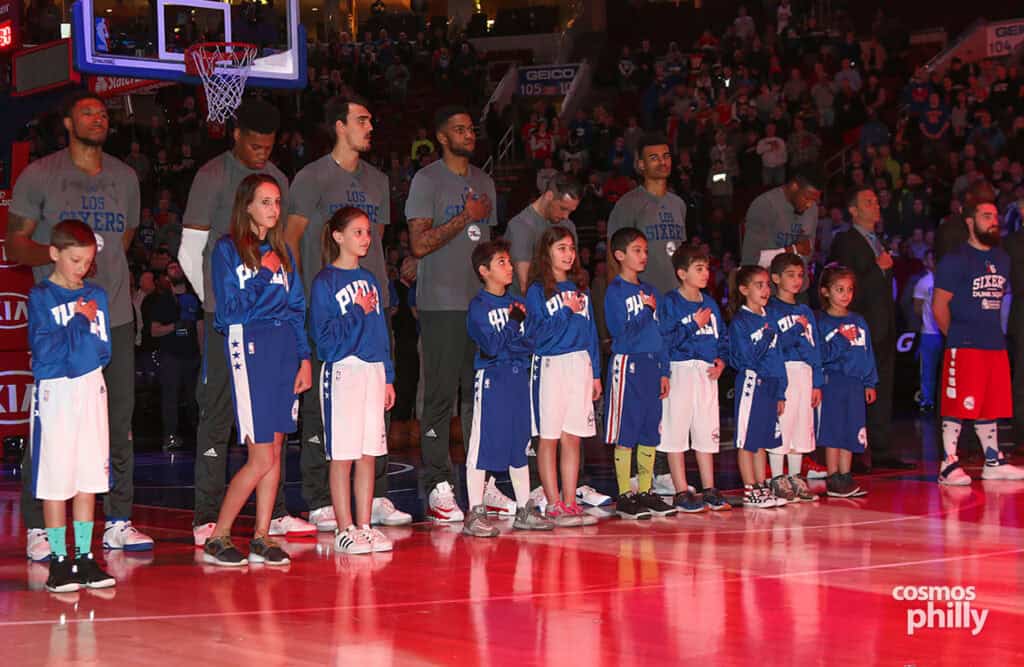
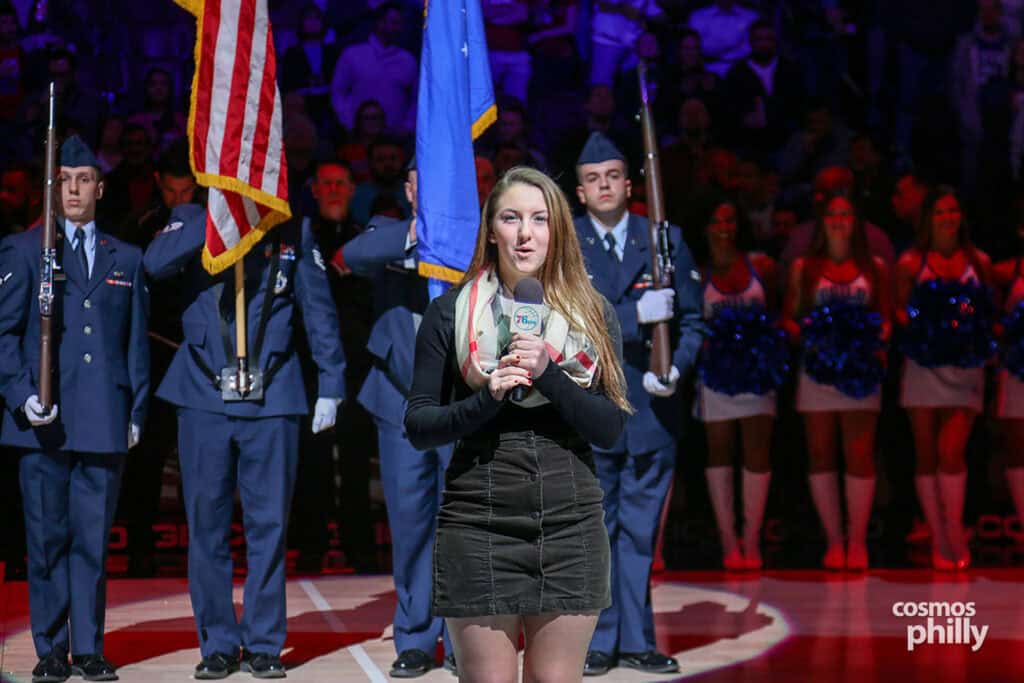
Then came the anthem. Elena Iliadis of Cherry Hill stood at center court, framed by the color guard and a hushed crowd. As she sang, the building seemed to hold its breath. In the stands, people straightened, hands over hearts, feeling that familiar mix of pride and recognition that comes from growing up between languages and places, but sharing the same roots.
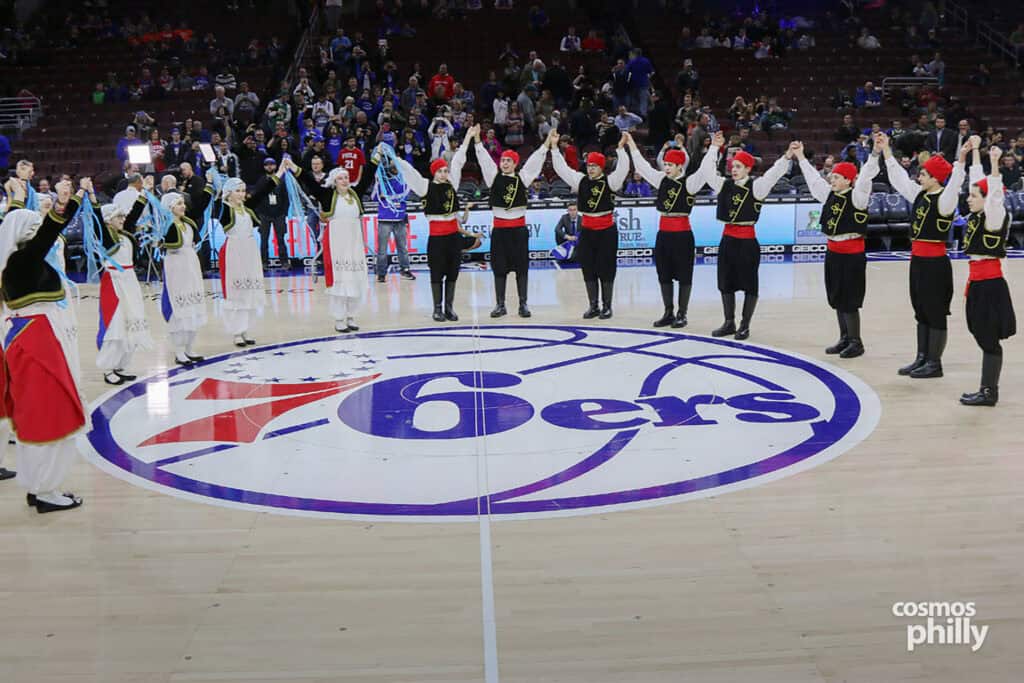
By halftime, the tone of the evening was unmistakable. The Pan Macedonians of Philadelphia took the floor in full traditional dress, forming a circle around the Sixers logo. Syrtaki steps filled the court as cries of “opa” rose from the stands. For a few minutes, the hardwood felt less like an NBA floor and more like a village plaza.
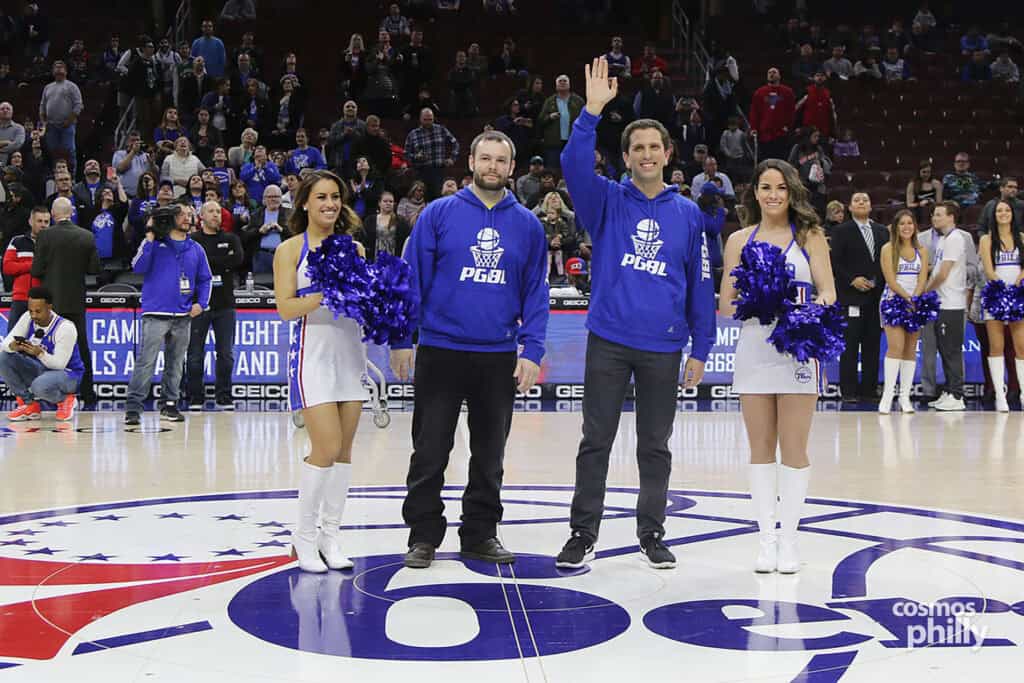
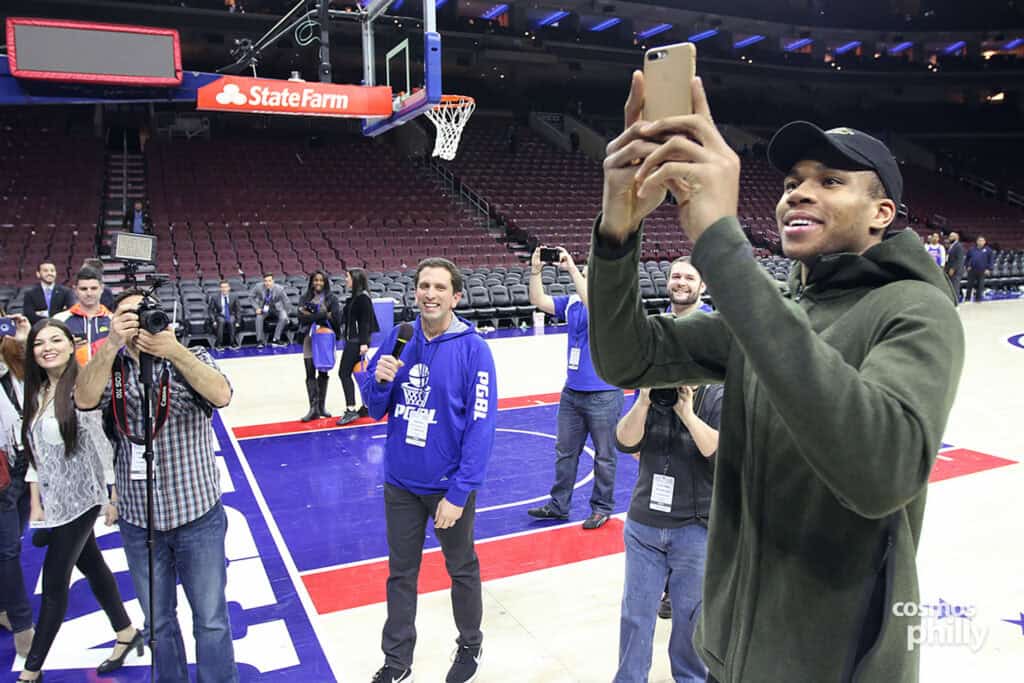
During a break in play, the organizers stepped briefly into the spotlight. Bill Zonios and John Vasiliou stood at center court in PGBL gear, acknowledged on the jumbotron by the Sixers. The recognition was brief, but the work behind it was understood by everyone who had helped fill those sections. This night did not happen by accident.
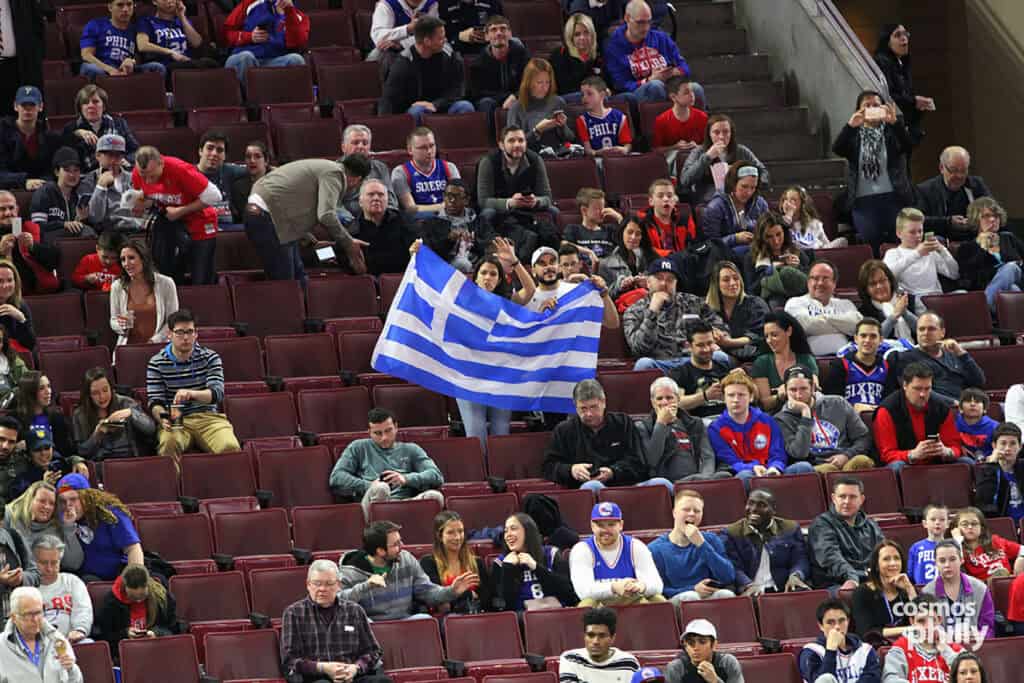
The game itself unfolded almost quietly in the background. Giannis led the Bucks past a young, rebuilding Sixers team. In the Greek sections, the reaction was measured differently. Each time he checked in, flags rose. A lone fan high above waved a large Greek flag, quickly echoed by others below. Kids in number 34 jerseys leapt to their feet with every drive and dunk.
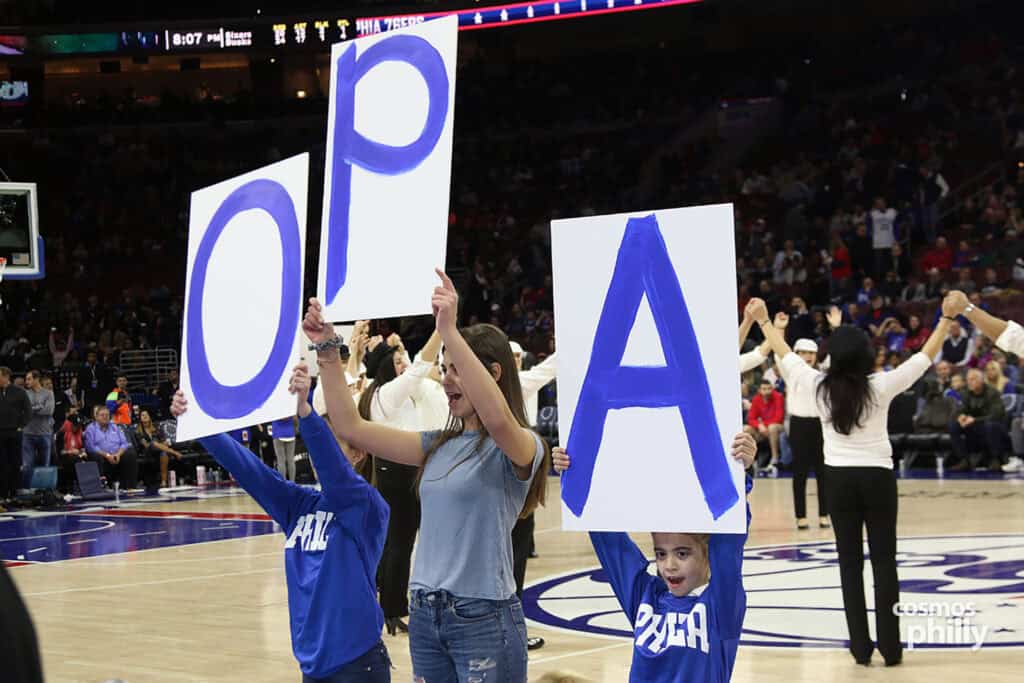
Near the court, a group of children raised white boards painted with thick blue letters: O. P. A. Between timeouts, they held them high. Three letters that captured the feeling perfectly.
When the final buzzer sounded, much of the arena headed for the exits. The Greek sections stayed put, clustered along the railings, eyes fixed on the tunnel. This was the part no ticket could promise. The hope that Giannis would return one more time.
Eventually, he did.
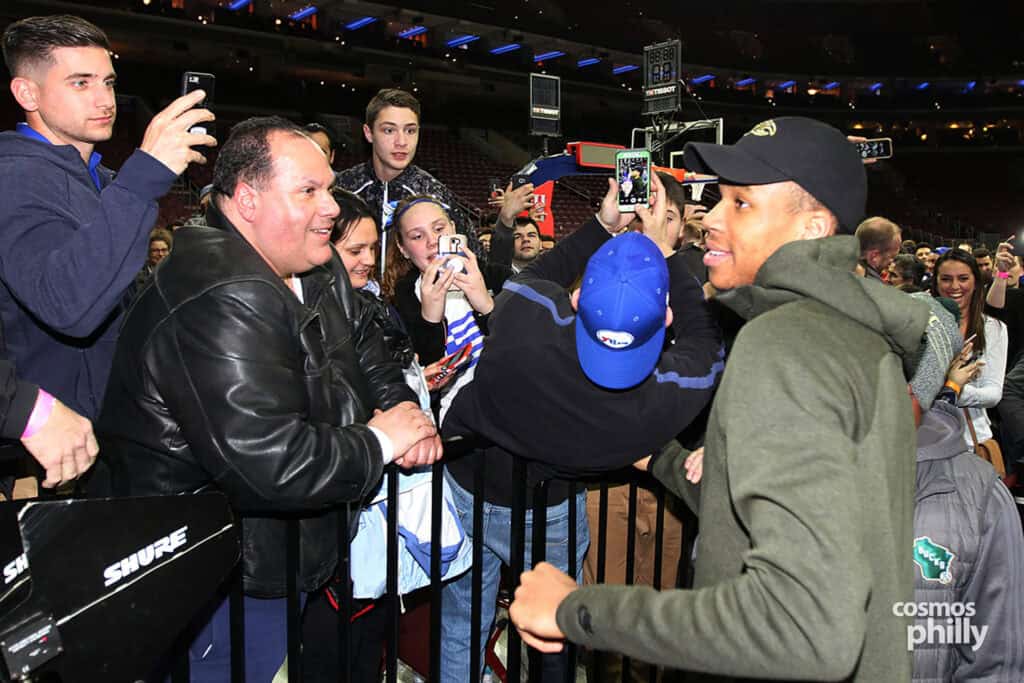
The half-empty arena came alive again. Chants of “Gianni, Gianni, Gianni” echoed through the lower bowl. He looked up and saw faces that mirrored his own story: immigrants, children of immigrants, people who understood exactly what it meant for a kid from Athens to stand among the NBA’s brightest stars.
He moved along the barrier without rushing. Hands reached out. He took as many as he could. Phones angled in for photos. Posters were pushed forward with unsteady hands. Giannis smiled, signed, laughed, and exchanged a few words, fully present in the moment.
Then came the image that defined the night.
At center court, a crowd gathered around a long purple banner stretched across the baseline. Giannis stood in the middle, towering yet blending naturally into the group pressed in on all sides. The message read: “PHILLY LOVES ‘THE GREEK FREAK’ Giannis Antetokounmpo #34.”
A few years earlier, the sign had simply read “Greek Heritage Night.” This time, it was personal. Not a theme, but a statement of connection between a city, a community, and the player who carried their flag onto the world stage.
What lingers now is not the final score. It is the kids standing shoulder to shoulder with NBA players during the anthem. The dancers circling the logo in traditional costume. The sight of community leaders at center court, knowing they had helped create something lasting.
Most of all, it is the memory of an arena that, for one evening, felt less like a sports venue and more like a gathering place. A reminder that heritage is not something stored away, but something lived openly, in movement, music, and voices that echo long after the lights go dark.
Years later, whenever Giannis appears on screen, in an NBA arena or wearing Greece’s colors, Greek Philadelphians still do the same thing. They smile, nod, and remember the night the Wells Fargo Center sounded just a little bit like home.