
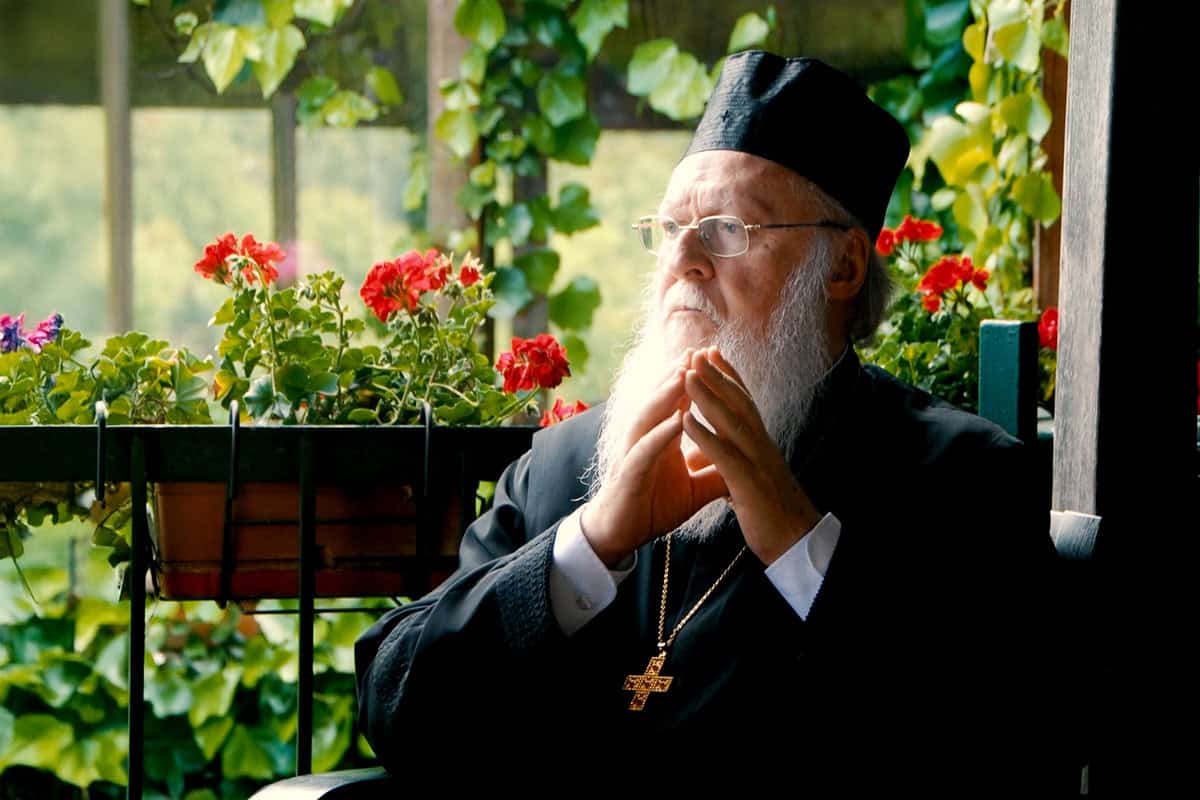
The Ecumenical Patriarch Bartholomew was formally received on March 30 into the Académie des sciences morales et politiques in Paris, one of the five academies that make up the Institut de France, as an associé étranger (foreign associate member).
The position he now holds was previously occupied by Pope Benedict XVI, linking his reception to a line of figures associated with Catholic intellectual life and the Western theological tradition that has long shaped institutions like the Academy.
That context matters. Eastern Orthodoxy has historically had a limited presence in Western academic institutions of this kind, particularly in France, where public life has long been defined by a strict separation between religion and the state. The Academy itself has been a space where religion is studied and debated, but rarely represented from within by leaders of traditions outside the Western Christian framework.
Bartholomew’s reception does not erase that divide, but it makes it visible.
During the ceremony, he was presented with rare editions of the works of St. Maximus the Confessor, a theologian whose writings connect the Greek patristic tradition to the broader Christian intellectual world. The choice underscored the Patriarch’s role as a representative of a theological tradition that developed along a different path from the Western institutions that now receive him.
For Orthodox Christians, the moment carries additional weight when seen alongside the reality of the Ecumenical Patriarchate itself. Based in Istanbul, the Patriarchate operates with limited legal recognition and longstanding restrictions from the Turkish state, including the continued closure of the Halki Theological School, which remains shut even as negotiations with Turkish authorities now point to a possible reopening around the 2026–27 academic year. Its global standing has never depended on political power or institutional scale, but on historical continuity and spiritual authority.
A church with a constrained physical and legal presence in its historic seat is being received at the center of one of Europe’s most established intellectual institutions.
Bartholomew, who has served as Ecumenical Patriarch since 1991, has spent much of his tenure navigating that balance, maintaining the Patriarchate’s role within Orthodoxy while engaging with political leaders, academic institutions, and international bodies abroad. His presence in Paris reflects that outward-facing role, but it also highlights the asymmetry between where the Patriarchate stands at home and how it is received elsewhere.
For many in the Orthodox diaspora, including Greek-American communities, the significance is not ceremonial. In Western Europe, Orthodoxy has no comparable institutional footprint to the Catholic Church: only a scattered handful of theological institutes and university chairs, and limited representation in the intellectual bodies that help shape public debate.
What took place in Paris does not change that balance. But it places the Ecumenical Patriarch inside one of those institutions. Not as an object of study, but as a participant.