
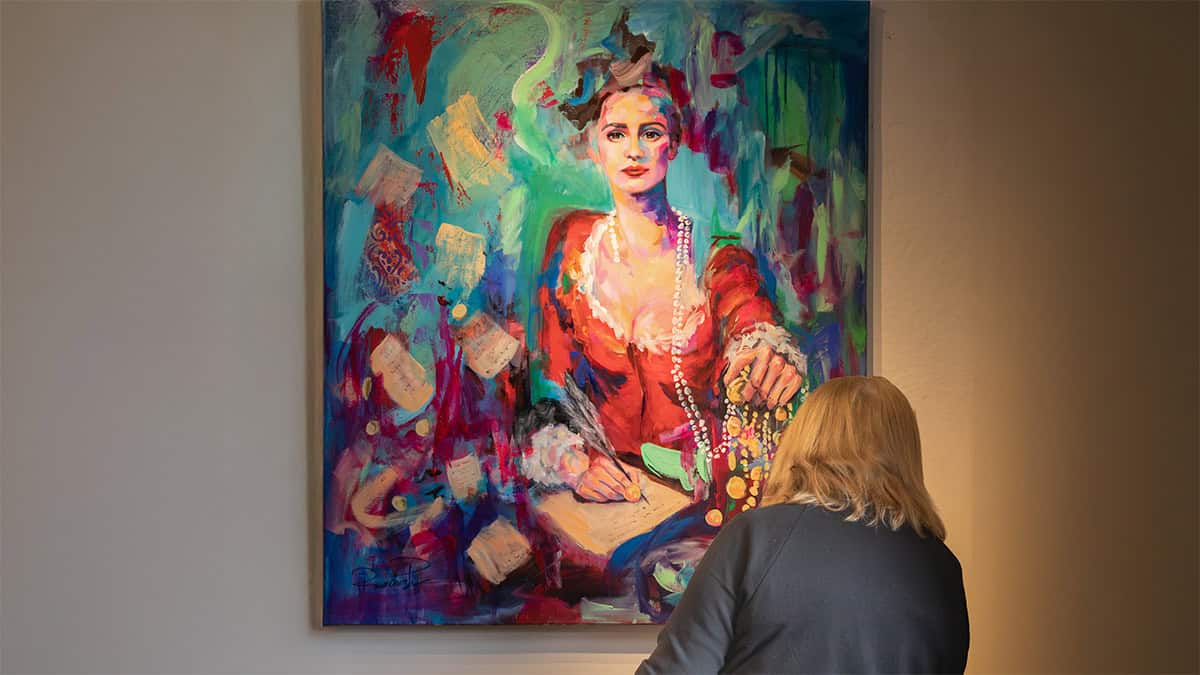
The Greek Revolution is often told through a familiar set of names. Military leaders, political figures, moments of strategy and conflict. Less often does the story linger on the women who lived through it, shaped it, and carried its consequences in quieter, more personal ways.
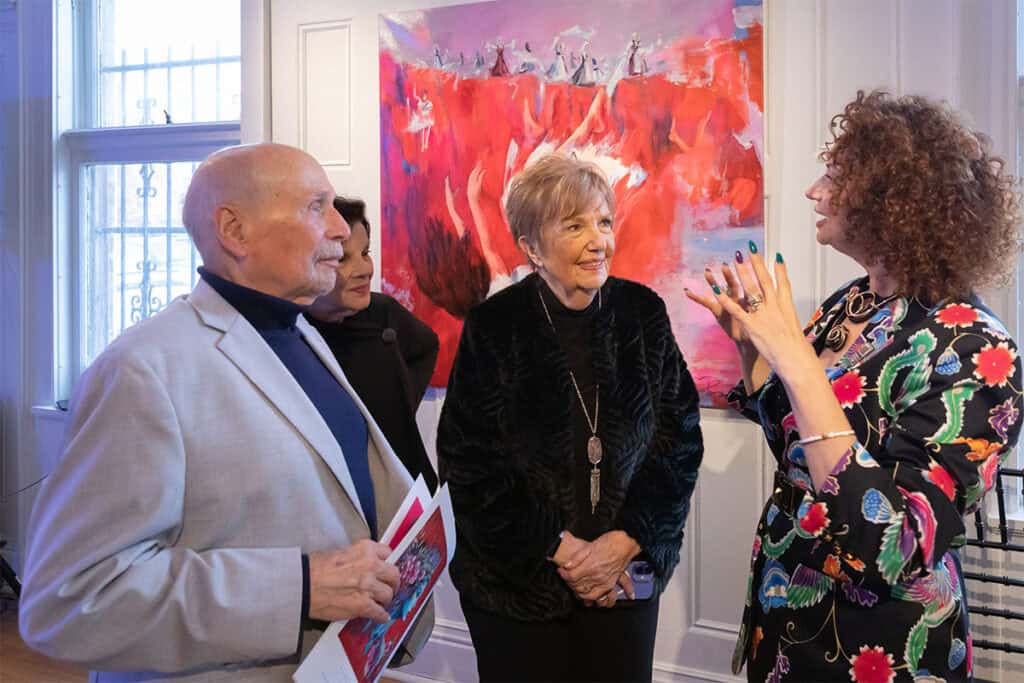
That shift in perspective was on display in Detroit, where visitors from across the region gathered on March 27 at the Hellenic Museum of Michigan for the opening of the exhibition titled #WeAreGreekWarriors: From the Greek Revolution to Today. The exhibition brings together a series of large-scale paintings by Ramona Pintea, centered on the women of 1821 and the ways they can be seen today.
Inside the galleries, the atmosphere moved between conversation and pause. People stepped closer to the canvases, pointed out details, and then, just as often, stood quietly in front of a single figure. The paintings set the tone. Bold in color, but measured in how they reveal their subjects.
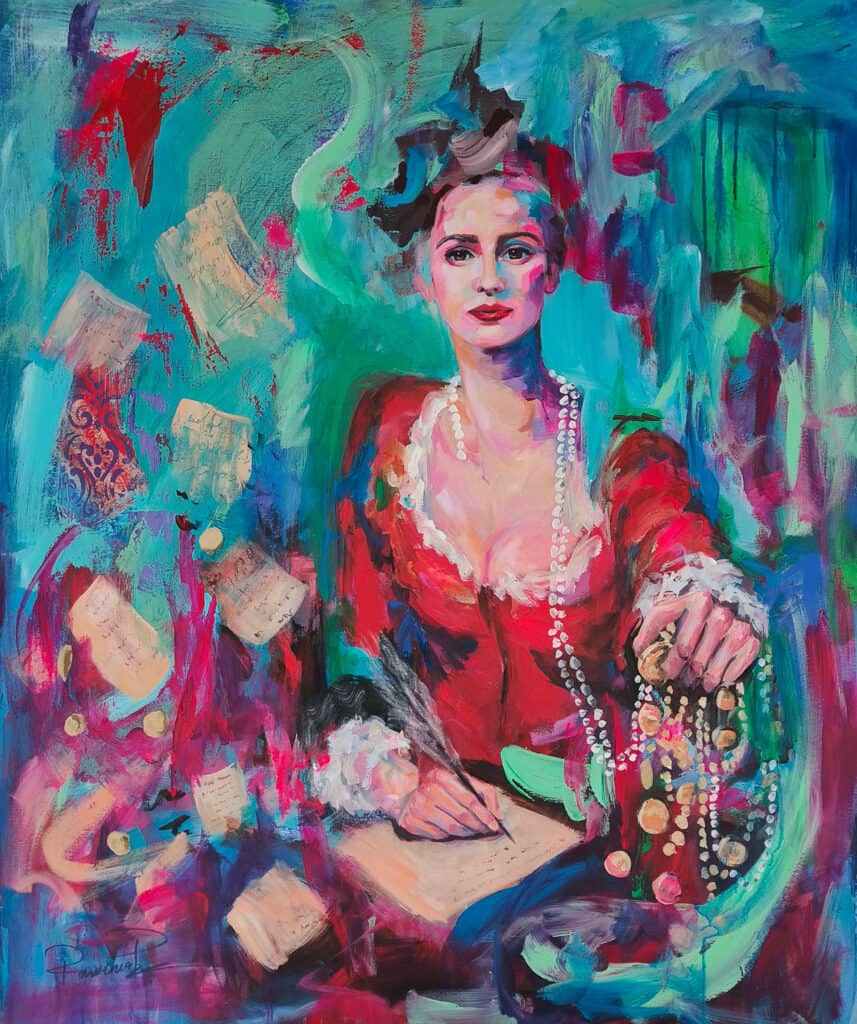
Pintea works in acrylic, but the surfaces carry a sense of motion rather than finish. In the portrait of Manto Mavrogenous, the face holds steady while the surrounding color shifts and breaks around it, as if the image is still forming.
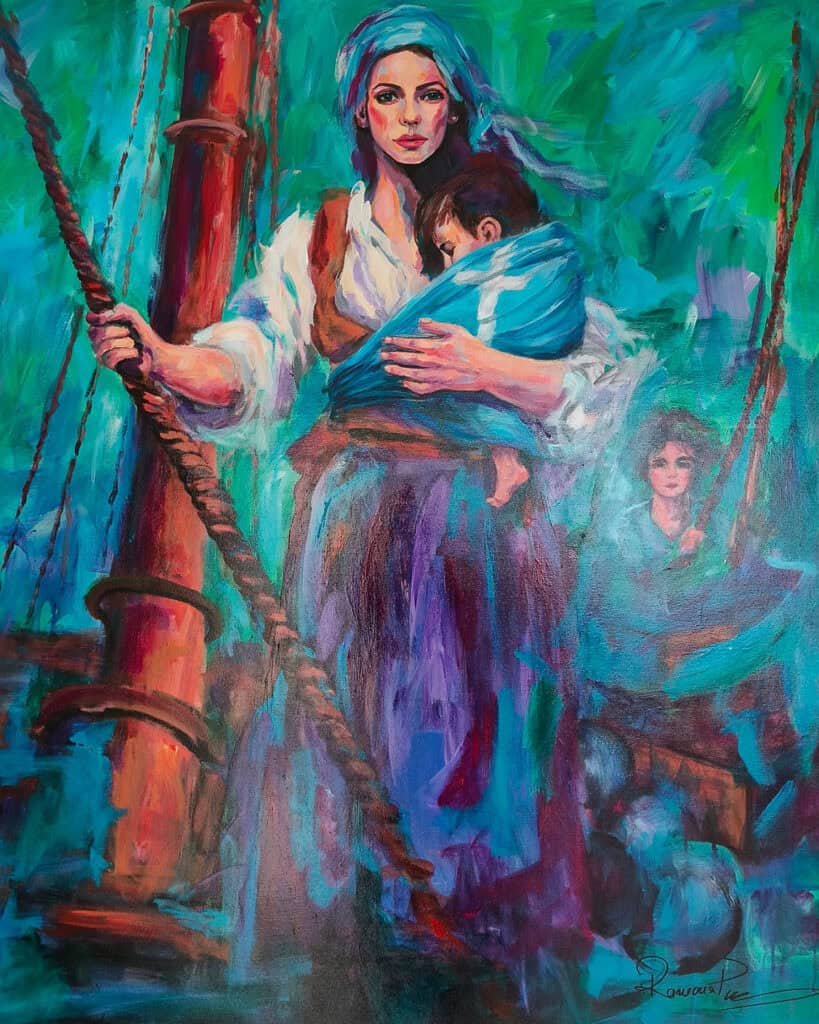
In the scenes of the Souliotisses and the women of Missolonghi, red dominates the canvas, not as background but as pressure. Figures emerge and recede within it, suggesting movement, hesitation, and collapse at once. The historical setting is present, but it never settles into illustration. In one work, Domna Visvizi is shown holding her child, an image that brings the scale of the conflict down to something immediate and personal.
Pintea, who is not Greek, approaches the subject without the weight of inherited narrative. In conversation during the opening, she described the process less as retelling history and more as trying to understand the people within it. That distance is visible in the work. The figures are not framed as icons to be preserved, but as individuals to be encountered.
The exhibition also extends beyond the paintings themselves. Along one wall, visitors are invited to contribute to a growing installation titled “Women Who Inspire Us.” Some add photographs. Others leave short handwritten notes, names, or single lines.
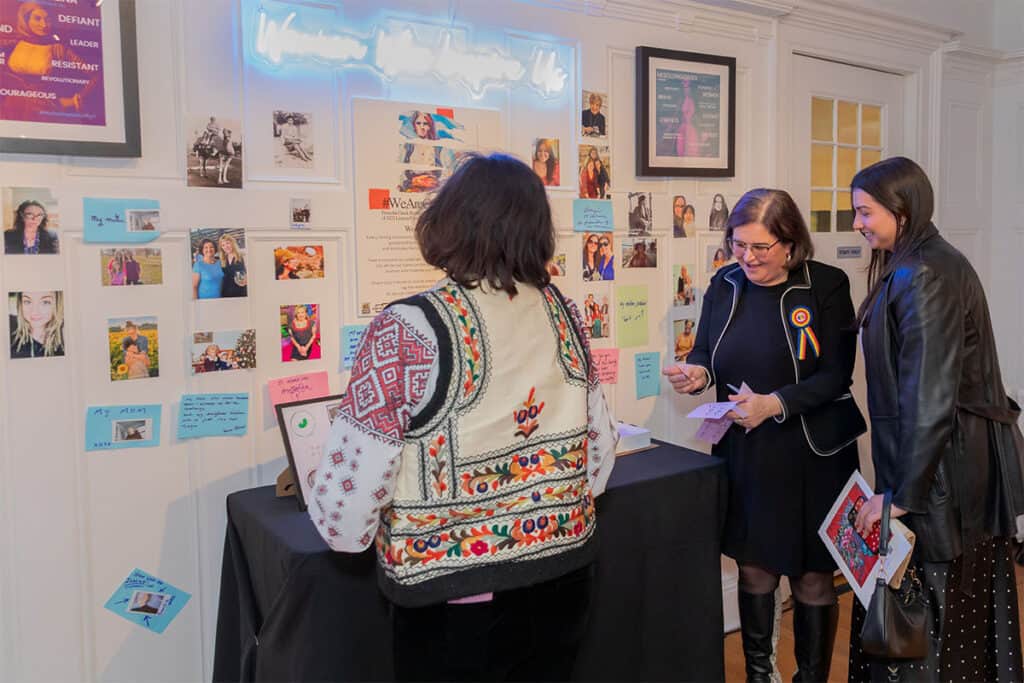
By the end of the evening, the surface had begun to fill unevenly, with clusters of memory forming next to empty space, giving the wall a different rhythm from the paintings around it.
For some visitors, the exhibition offers a way back into a story they thought they already knew, now seen from a different angle.
The exhibition runs through May 17 at the museum in Detroit.