
The latest annual report from the United States Commission on International Religious Freedom (USCIRF) is prompting renewed calls in Washington over religious freedom conditions in Turkey.
The Hellenic American Leadership Council (HALC), a Greek-American advocacy organization active on foreign policy issues, said it has launched a public campaign urging the U.S. Department of State to place Turkey on its Special Watch List, a designation used for countries where serious violations of religious freedom are documented.
USCIRF, which issues annual recommendations to the U.S. government, has again raised concerns about the treatment of religious communities in Turkey, pointing to a pattern that has remained largely unresolved in recent years.
Longstanding issues remain
In its latest report, USCIRF highlights restrictions affecting religious minorities, including limits on legal recognition, property rights, and the ability of clergy to operate freely. It also points to cases involving the deportation of foreign religious figures.
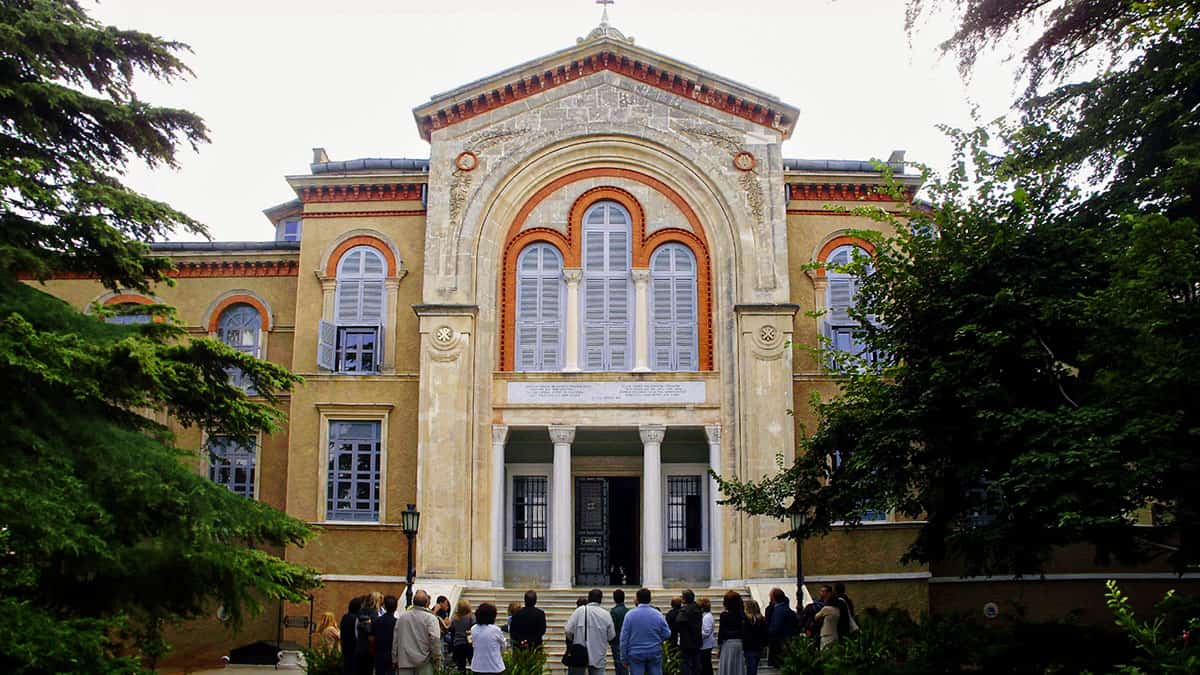
The report again notes the continued closure of the Halki Theological School, which has not operated since 1971 and remains a central issue for the future of the Ecumenical Patriarchate.
The Ecumenical Patriarchate of Constantinople has consistently called for the school’s reopening over the years, though it has not publicly commented on the current campaign.
The report also references the conversion of historic sites such as Hagia Sophia and Chora Church into mosques, decisions that drew criticism from Greece, the European Union, and UNESCO and are often cited as part of a broader shift in policy.
Turkish officials have previously rejected external criticism on religious freedom issues, framing such assessments as interference in domestic affairs, and have defended decisions related to historic sites as matters of national sovereignty.
Push for a stronger response
HALC is calling for a more direct link between U.S. policy and these findings, including the possibility of tying future security cooperation to measurable improvements in religious freedom. Placement on the Special Watch List would signal heightened U.S. concern and increase diplomatic scrutiny, though it does not automatically trigger sanctions and is considered a step below the more serious “Country of Particular Concern” classification.
The campaign includes a petition effort aimed at building support in Washington. HALC has been active in recent years on issues related to U.S.-Greece, U.S.-Cyprus, and Eastern Mediterranean policy, and maintains regular engagement with members of Congress and administration officials. HALC has argued that a softer U.S. approach risks signaling tolerance of ongoing restrictions on religious minorities, both within Turkey and in the wider region.
Whether those recommendations are adopted is up to the U.S. Department of State, which conducts its own annual review before issuing country designations.
Turkey’s status as a NATO ally adds complexity to that decision. While USCIRF findings feed into the process, designations are ultimately shaped by a broader set of priorities, including regional security, defense cooperation, and diplomatic stability. In practice, that balance has often made significant policy shifts difficult, even when concerns are repeatedly raised, and there have been no clear indications of a shift in U.S. policy on this issue.
What happens next
USCIRF has made similar recommendations in past years, and its latest report continues that pattern rather than marking a sudden change.
For advocacy groups, the question is whether sustained pressure can translate into action, or whether longstanding issues like the reopening of the Halki Theological School will remain unresolved despite repeated calls for change.