
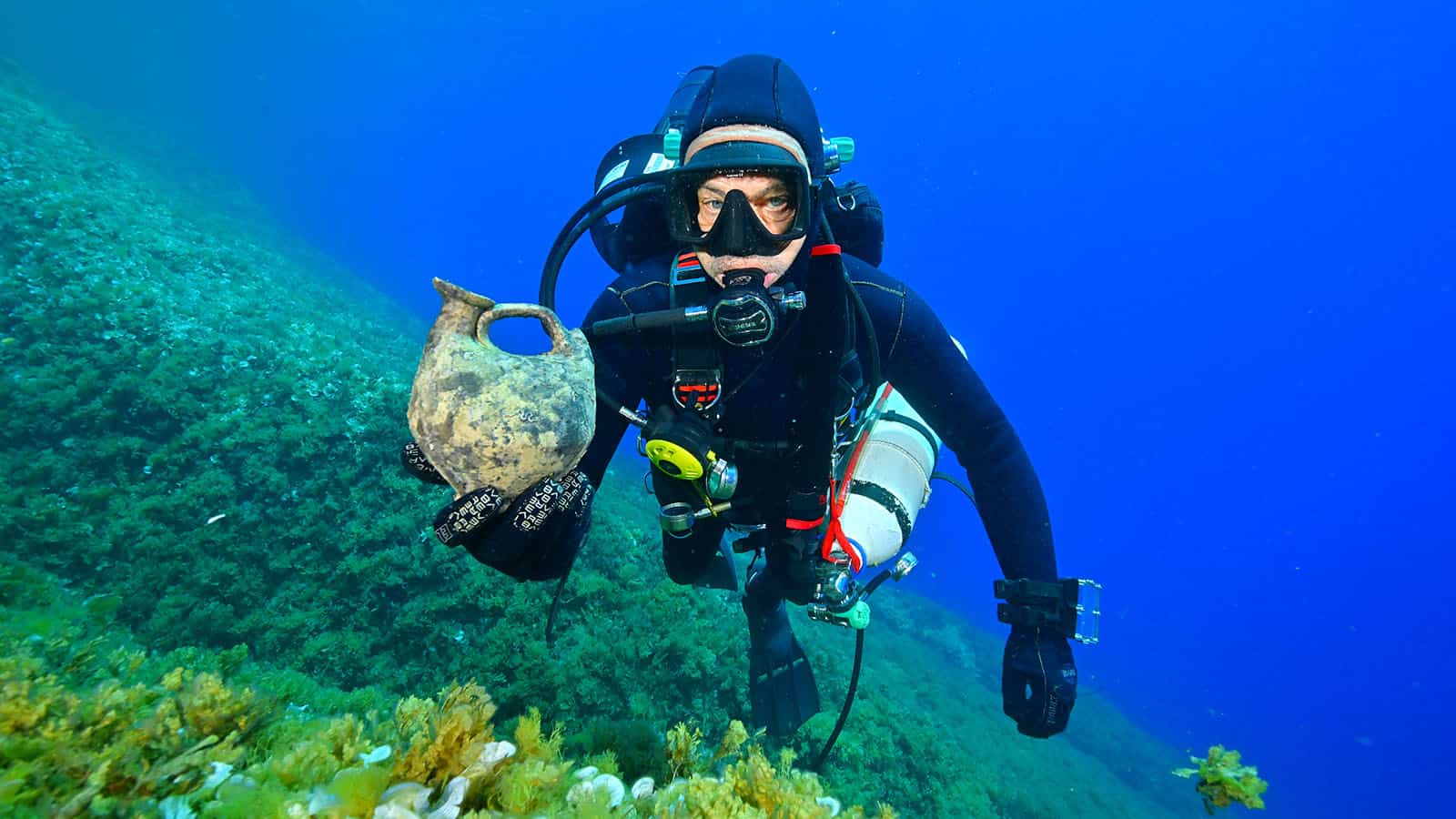
Several pottery vessels recovered from a 2,300-year-old shipwreck off Croatia bear letters scratched into their surfaces. Archaeologists believe the marks may be abbreviated personal names, possibly identifying the belongings of someone who sailed aboard the vessel.
The wreck lies in Gnjilna Bay, near the town of Komiža on Croatia’s island of Vis. The Croatian Conservation Institute identifies it as the first shipwreck discovered in Croatian waters containing Greek fine pottery.
In an October 4 announcement, the institute reported findings from underwater investigations led by archaeologist Jurica Bezak.
On several black-glazed vessels, the inscriptions were scratched into the pottery after manufacture. The institute considers them most likely shortened personal names and suggests they marked the property of a relatively high-status crew member. The announcement does not provide complete readings of the inscriptions, and no individual owner has been identified.
The pottery collection includes drinking cups, bowls, plates, salt dishes, and small containers. Among the recognizable Greek forms are a skyphos, a drinking cup, and a kantharos, a vessel used for drinking wine. Archaeologists also recovered an askos, used for pouring liquids, and an aryballos, a small container commonly associated with oils or perfumes.
These objects could have served everyday needs aboard a merchant ship, from drinking and serving food to storing small quantities of liquids. Their presence alone, however, cannot establish which were used during the voyage and which were intended for sale.
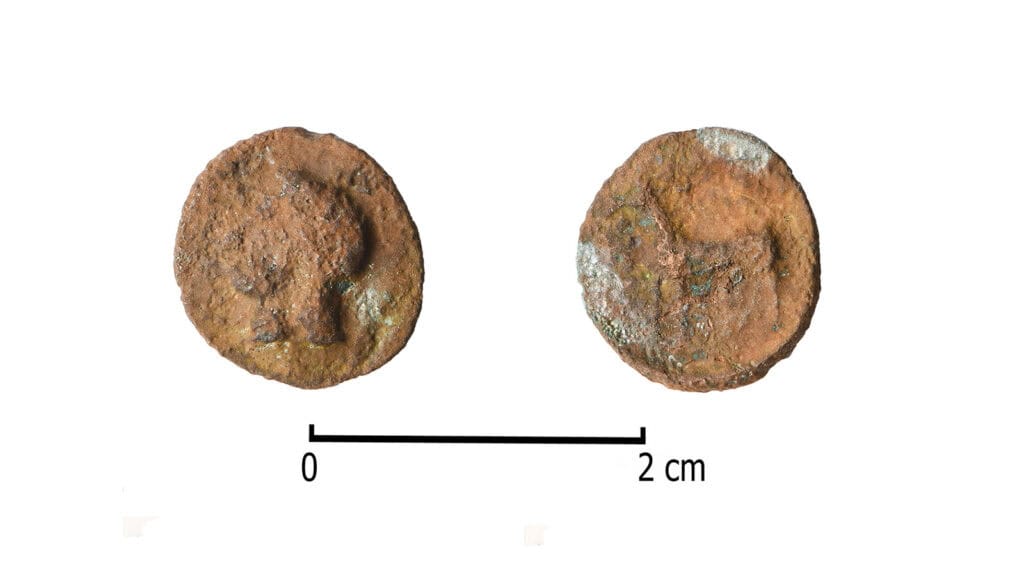
Earlier investigations at Gnjilna Bay had identified fragments of Greek transport amphorae. During the main excavation phase from 2023 to 2025, researchers uncovered approximately six meters of preserved wooden ship structure, including part of the keel and associated planking. They also recovered ship equipment, additional pottery, animal bones, and a fourth-century BC coin from the Greek settlement of Pharos on the neighboring island of Hvar.
Archaeologists provisionally date the wreck to the fourth or third century BC, based on the amphora fragments and the lead core of an ancient anchor stock.
The ship carried Corinth B amphorae, a type of transport container produced from the sixth century to the second half of the third century BC. Wrecks carrying these amphorae are exceptionally rare in Croatian waters and are considered among the oldest ancient shipwrecks identified along the country’s coast.
Apart from Gnjilna Bay, comparable wrecks have been found only near Krava Rock at the entrance to Vis harbor and off the island of Žirje, according to the Croatian Conservation Institute.
Corinth B amphorae were manufactured around Corinth and on Corcyra, modern Corfu. Evidence of their production has also been found on Hvar, where numerous fragments have been recovered from ancient Pharos. The containers were used to transport products such as wine and oil, although the contents of those aboard the Gnjilna ship have not been established.
Vis was home to Issa, a Greek colony whose foundation in the fourth century BC is associated with Dionysius the Elder of Syracuse. The settlement developed into an island town and port, with substantial stone waterfront structures, portions of which remain beneath the sea today, according to the Archaeological Museum in Split. Issa was also known in antiquity for the quality of its wine.
The ship’s destination and the circumstances of its sinking remain unknown. The same is true of the people whose names may have been scratched into its pottery more than 2,000 years ago.