
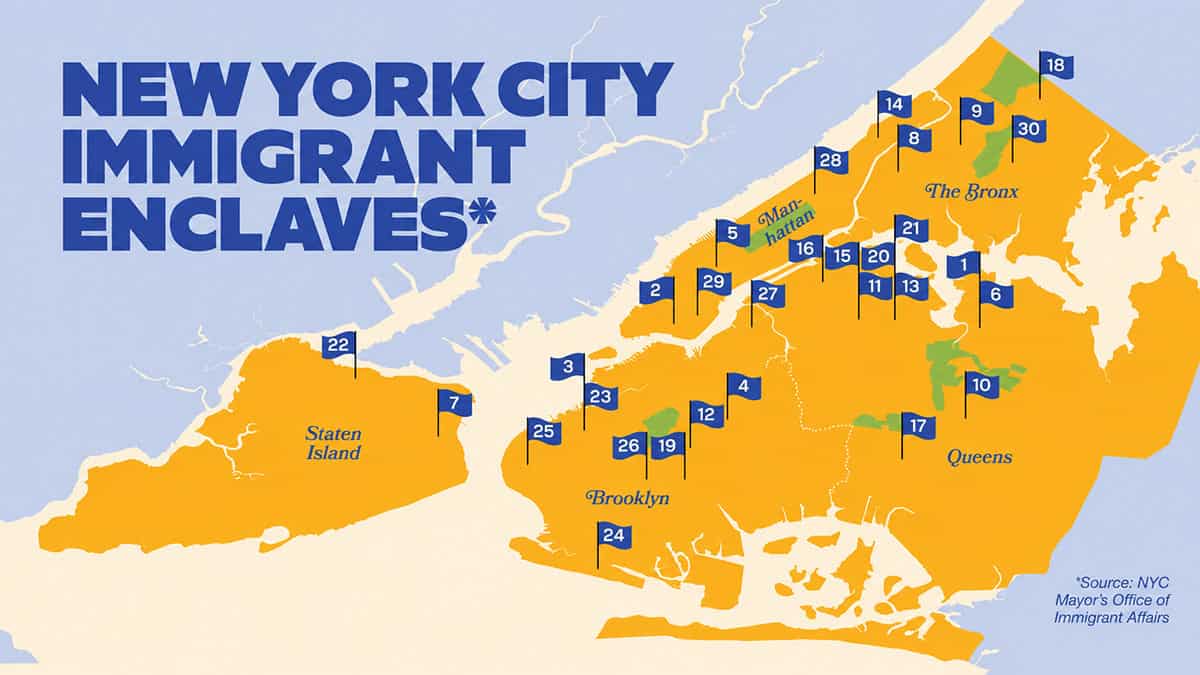
A city map highlighting 30 immigrant enclaves includes Little Egypt in Astoria but makes no reference to the neighborhood’s longstanding Greek-American community.
AHEPA is calling on New York City to recognize Greek Americans amid criticism of a city map that highlights 30 immigrant enclaves but omits Astoria’s historic Greek-American identity.
The “New York City Immigrant Enclaves” map identifies communities across the five boroughs, including Little Poland, Little Albania, Little Palestine, Little Yemen and several Chinatowns. In Astoria, it recognizes Little Egypt around Steinway Street and Astoria Boulevard.
There is no entry for Greek Astoria, one of the best-known centers of Greek-American life in the United States.
In a statement posted by AHEPA, the organization expressed disappointment over what it described as the omission of Greek Americans from New York City’s recent recognition of immigrant communities.
According to AHEPA, Supreme President E. Chris Kaitson wrote to Mayor Zohran Mamdani asking city leaders to correct the omission and ensure that future recognitions include communities that have contributed to New York’s growth and identity.
“For generations, Greek Americans have been a living, breathing part of New York City,” AHEPA said, describing the community as deeply woven into the city’s neighborhoods, economy and cultural life.
The organization pointed specifically to Astoria as evidence of the community’s enduring presence. It cited Greek-American contributions through entrepreneurship, family-owned restaurants, diners and retail businesses, as well as education, healthcare, public service, the arts, philanthropy and civic engagement.
Although AHEPA did not identify the map by name, its statement came as the city faced growing criticism over the communities included in the guide.
The map is connected to the Mayor’s Office of Immigrant Affairs’ Immigrant Enclave Illustration Series, which began in 2023. The city says the project was created to highlight the histories, cultures and contributions of immigrant communities across the five boroughs.
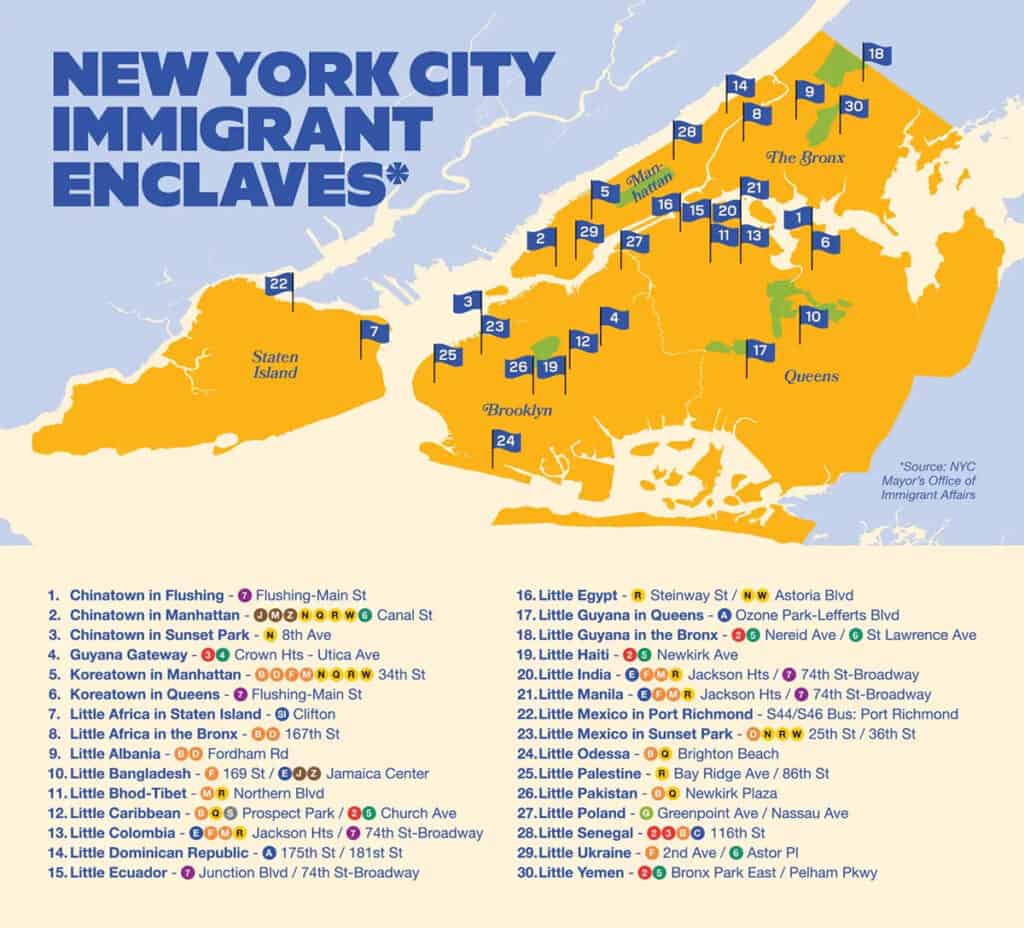
Astoria itself is not absent from the map. Rather, the guide recognizes one part of the neighborhood’s immigrant identity while making no reference to the Greek community that helped shape it for generations.
New York City’s own demographic data also shows that the Greek presence in the area is not only historical.
In the Department of City Planning’s NYC Language Explorer, Greek ranks second behind Spanish among languages spoken by residents with limited English proficiency in Queens Community District 1. The district includes Astoria and Long Island City.
The finding does not provide a complete count of Greek Americans. It measures language rather than ancestry, the community district extends beyond Astoria, and it does not include Greek Americans who primarily speak English.
Still, the data shows that Greek remains one of the most visible languages among residents who may need language assistance in the district.
City Hall has also recognized Astoria’s Greek identity in the past. A 1999 Greek Heritage Month proclamation referred to the “vibrant Greek community in Astoria” while noting the presence of Greek-American churches, businesses and institutions across New York.
AHEPA said other longstanding communities, including Italian and Jewish Americans, had raised similar concerns about being overlooked.
Responding to the wider controversy on July 10, Mamdani said the list was not intended to represent every immigrant community in New York.
“It’s clearly not an exhaustive list of the more than 200 ethnic communities that call our city home,” the mayor said during a City Hall news conference.
Mamdani said the administration had already added several neighborhoods and would continue making changes. He specifically confirmed that Little Italy would be added but did not mention Greek Astoria among the planned additions.
The controversy raises a broader question about what the map is intended to represent. Some of the listed enclaves reflect communities with large immigrant populations today, while critics argue that the city should also recognize neighborhoods shaped by earlier generations whose cultural presence remains significant.
AHEPA said recognition efforts should reflect both New York’s present diversity and the communities that helped build its neighborhoods and institutions.
“Recognition efforts should accurately and comprehensively reflect the full history of New York City’s diverse population,” the organization said.
The city has not announced whether Greek Astoria will be included in a future version of the map.