
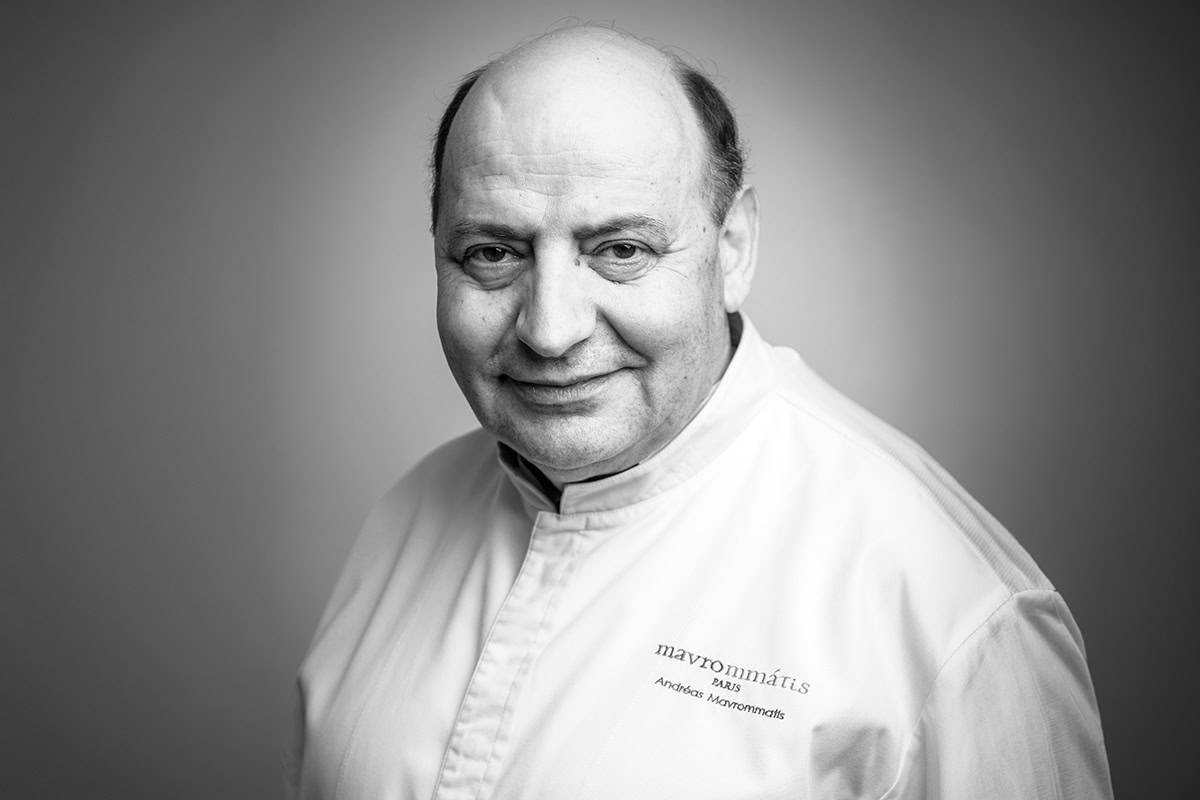
For many years, one small corner of Paris offered something unusual: Greek cooking presented with the precision and elegance of a French restaurant.
That corner belonged to Andreas Mavrommatis, the Cypriot-born chef who spent decades introducing the flavors of Greece and Cyprus to the Paris dining scene. Mavrommatis died on March 15, 2026, at the age of 69.
He was not the first person to cook Greek food in the French capital, but he was among the first to place it confidently within the world of Parisian gastronomy.
Mavrommatis was born in Cyprus near Limassol and moved to France in the 1970s to study. Like many young immigrants arriving in Paris at the time, he began working in restaurant kitchens while continuing his education.
He later trained at the respected Lenôtre Culinary Arts School, where he learned the techniques of classical French gastronomy. Those lessons stayed with him, but the flavors he returned to were always those of the Eastern Mediterranean.
In interviews over the years, Mavrommatis often said his goal was simple: to cook the food he grew up with using the discipline he had learned in France. Greek cuisine, he believed, did not need to imitate French cooking. It simply needed to be treated with the same care for ingredients and balance.
In 1981, Andreas Mavrommatis and his brothers Evagoras and Dionysos opened a small delicatessen in Paris’ 5th arrondissement selling Greek and Cypriot products.
The shop was modest, but it quickly became a discovery point for many customers in the neighborhood. Olive oils from Greece, Cypriot cheeses, herbs, wines, and traditional sweets appeared on the shelves at a time when those ingredients were still unfamiliar to much of the Paris market.
While Andreas focused on cooking, his brothers helped build the business side of what would become Maison Mavrommatis. Over time, the small shop grew into a network of restaurants, wine bars, and delicatessen stores across Paris, with additional locations in cities such as Strasbourg and Nice.
In 1993, Mavrommatis opened the restaurant that would eventually become the center of the group’s reputation.
The kitchen drew on ingredients and culinary traditions from Greece and Cyprus but presented them with the refinement expected in Paris. Grilled octopus appeared with smoked eggplant purée and herb sauces. Dolmades were sometimes prepared with Swiss chard rather than vine leaves and served in light citrus broths. One of his more distinctive creations paired Jerusalem artichoke soup with mastiha, the aromatic resin from the island of Chios.
The restaurant also introduced many diners to wines from Greece and Cyprus, pairing dishes with grape varieties that were still unfamiliar to much of the French public.
By the late 2010s, the restaurant had become one of the most recognized Greek kitchens in the city. In 2018, it received a star from the Michelin Guide, confirming the reputation Mavrommatis had built over decades.
News of his death brought tributes from chefs and restaurateurs across France and the Mediterranean.
The Maison Mavrommatis group continues today under the leadership of his brothers, who helped build the business alongside him from the beginning.
When the family opened their small delicatessen in Paris in 1981, Greek cuisine was still largely absent from the city’s fine dining circles. By the time the restaurant earned its Michelin star nearly four decades later, that landscape had changed.
The path had widened. Other chefs could follow it. Greek cooking had found a place at the table.