
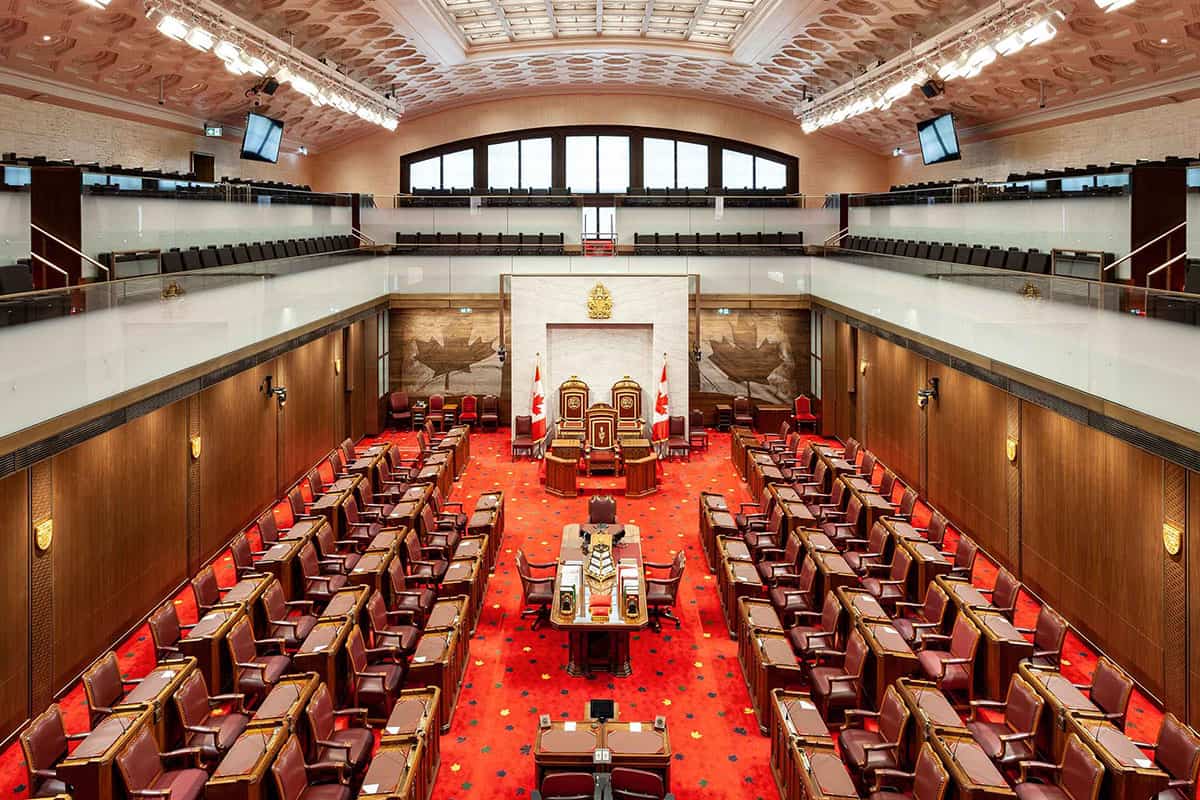
In Canada, a quiet but consequential debate is underway. If approved, March will become Hellenic Heritage Month nationwide, marking the first time Greek history, culture, and civic contribution receive formal recognition across the country.
The proposal, known as Bill S-220, is currently before the Canadian Senate. It has received public support from the Greek Orthodox Archdiocese of Canada, which welcomed the bill as an affirmation of a community whose presence has long been felt, even when it went largely unacknowledged.
On paper, the bill is symbolic.
In the life of a diaspora, symbolism is rarely small.
Recognition After the Work Is Done
Greek communities in Canada did not wait for official recognition to build institutions. Churches were established before neighbourhoods were stable. Afternoon Greek schools operated long before multiculturalism became policy. Cultural festivals, local associations, and family networks carried language and memory forward with little public visibility.
Symbolic recognition does not replace that work.
But it does something else.
It confirms presence.
During the Senate debate, Leo Housakos, former Speaker of the Senate and current Leader of the Opposition, and a longstanding member of the Greek Orthodox community, spoke in support of the bill. His remarks linked Hellenic heritage not to nostalgia, but to civic values that remain central to Canadian public life, including democracy, the rule of law, and individual rights.
For many in the diaspora, that framing matters. It places Hellenism not at the margins of national culture, but within it.
Why Now
Hellenic Heritage Month already exists at the provincial level in Ontario, first established in 2019 following sustained advocacy led by Effie Triantafilopoulos. Bill S-220 would extend that recognition nationwide, with March 2026 envisioned as the first official observance across Canada.
The timing is not accidental. Diaspora communities across North America are grappling with familiar pressures: aging memberships, language loss, shrinking institutions, and younger generations negotiating identity in more fluid ways.
Official recognition does not solve those challenges.
But it can change how they are met.
When a community is publicly acknowledged, continuity becomes easier to argue for. Participation feels less like preservation and more like belonging.
A Question Greek Americans Know Well
For Greek Americans, this debate feels familiar. Recognition has often arrived unevenly, sometimes after communities have already done the work of sustaining themselves. The question has never been whether Hellenism deserves visibility, but whether it will be recognized while it is still lived, not only remembered.
Canada’s discussion does not answer that question outright. But it reflects a growing awareness that cultural presence cannot be taken for granted, especially in societies shaped by migration and pluralism.
Hellenism has never depended solely on geography. It endures where people insist on continuity, and where institutions are willing to say, clearly and publicly: you are part of this story.