
Archaeologists working on the slopes below Nevşehir Castle in Cappadocia uncovered a rock-carved church with partially surviving wall paintings. Early reports described the sanctuary as possibly 1,500 years old, but later research dates the church and its decoration to the beginning of the 13th century.
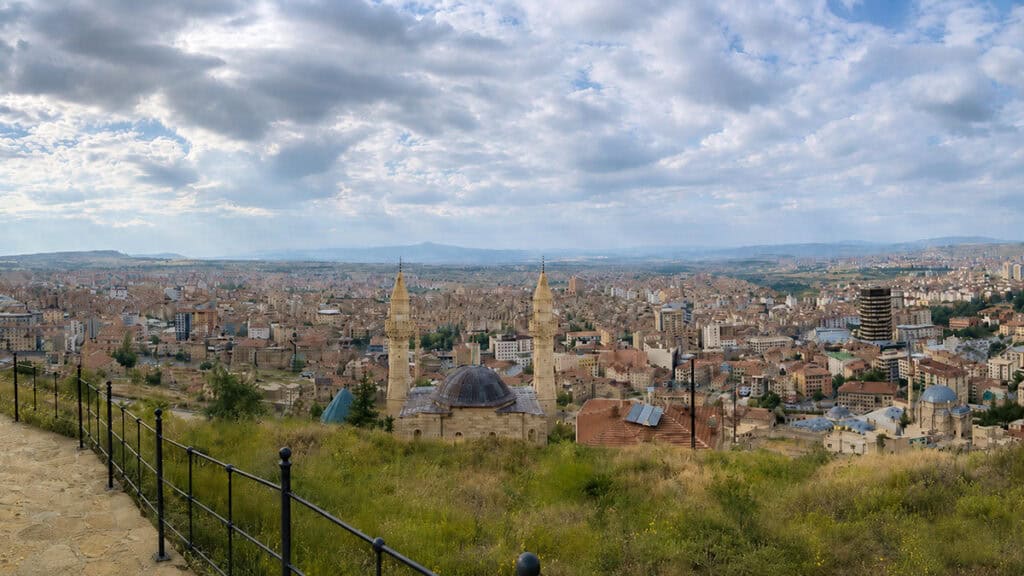
The church is part of Kayaşehir, an extensive settlement cut into the terraced hillside surrounding the castle in the modern city of Nevşehir. Although early international coverage often called the site an underground city, a peer-reviewed study of Nevşehir Castle and the surrounding settlement describes it more precisely as a rock-cut slope settlement containing rooms, passages, kitchens, storage areas, cisterns, workshops, and stables.
The sanctuary emerged on December 16, 2015, during clearing work conducted by Nevşehir Municipality under the supervision of the Nevşehir Archaeology Museum. Much of the building remained filled with soil when the discovery was announced the following month, and only portions of its upper walls and roof could initially be seen.
The excavation team faced an immediate conservation problem. Thin sections of rock had collapsed after exposure to rain and snow, while moisture inside the church threatened the painted surfaces. Archaeologists temporarily stopped removing soil so that the chamber could dry gradually and collected detached fragments of painted plaster one by one.
The paintings exposed during the early work were reported to include the Crucifixion and Ascension of Christ, apostles, saints, and the Old Testament figures Moses and Elisha. Nevşehir’s mayor at the time also described scenes involving fish falling from Christ’s hand and the punishment of sinful souls.
Those descriptions were made while large parts of the church were still buried and should not be treated as a complete interpretation of its decorative program. Claims that some of the scenes had no parallels in other churches came from local officials before specialists had fully examined the interior.
One figure has been identified more firmly. The scholarly study of the settlement reproduces a surviving wall painting of Saint Antipas, an early Christian bishop and martyr traditionally associated with Pergamon. The image helped researchers connect the church with other examples of 13th-century religious art in Cappadocia.
The same research rejects the fifth-century estimate that shaped the first international headlines. Its authors date the church and its partially preserved paintings to the beginning of the 13th century. A municipal account proposes the narrower range of 1215 to 1217, based on the church’s architecture, painting style and similarities to the nearby Tatlarin I church.
The initial confusion may have resulted from the different periods represented across Kayaşehir. Archaeologists also documented a separate, high-ceilinged rock-cut religious space with carved crosses and architectural decoration associated with sixth-century Cappadocia. The earlier structure and the painted 13th-century church belong to different phases of the settlement.
The church was decorated while central Anatolia was governed by the Seljuk Sultanate of Rum, rather than the Byzantine Empire. Its architecture and paintings nevertheless belong to Cappadocia’s continuing Orthodox Christian and Byzantine artistic tradition.
Christian communities remained active in the region under Seljuk rule. Researchers have identified more than 40 Cappadocian rock-cut churches with paintings associated with Orthodox communities living during the early 13th century. The Nevşehir church adds evidence of a Christian settlement at the foot of the castle during the same period.
Rock-carved sanctuaries form part of a much broader Christian landscape across Cappadocia. UNESCO describes the churches and dwellings around Göreme as important evidence of post-Iconoclastic Byzantine art and of centuries of settlement within the region’s volcanic rock.
Kayaşehir continued to develop long after the church was painted. The hillside contains hundreds of interconnected rooms and passages, along with water systems, agricultural spaces, oil workshops and later structures from the Ottoman period. Nevşehir Municipality says the wider site contains close to 1,000 rooms, although only selected paths, tunnels and chambers have been prepared for visitors.
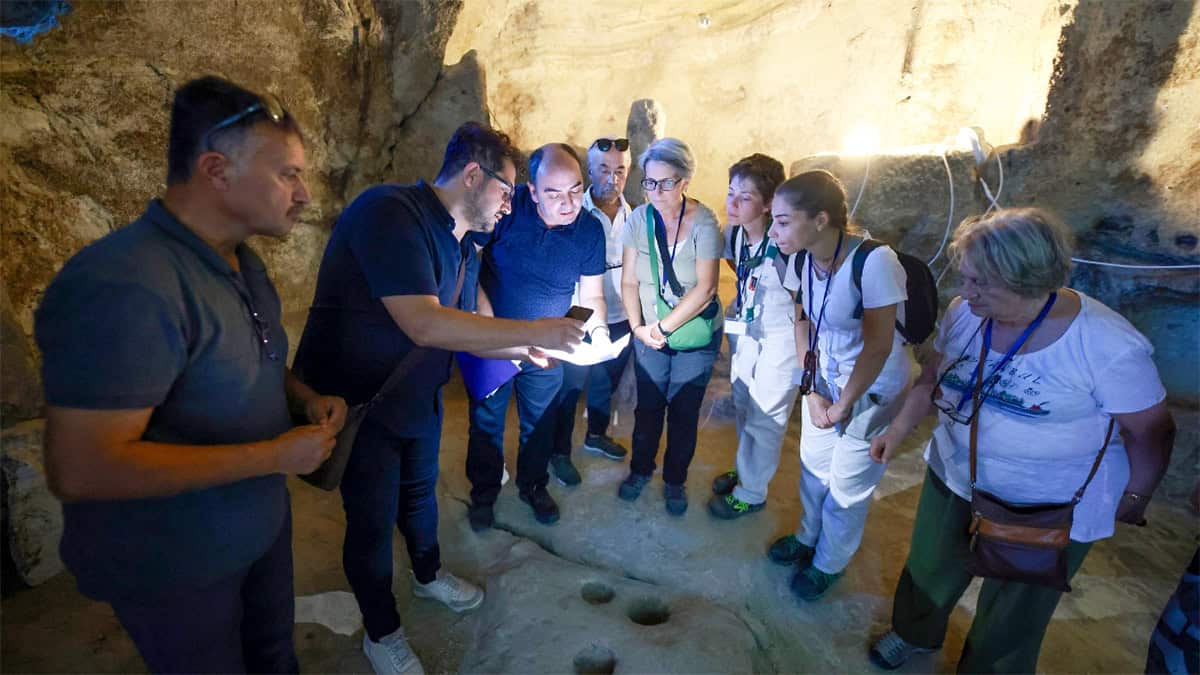
The frescoed church itself remains a conservation project. Specialists from Italy’s Tuscia University examined the building in September 2024, studying its stability, materials and wall paintings as the municipality considered how to restore the sanctuary and eventually include it in the city’s tourism plans. The municipality describes the single-nave church as Byzantine and its wall paintings as Late Medieval.
Kayaşehir is open to the public, and visitors can walk through selected paths, tunnels and rock-carved rooms. There is no official indication, however, that they can routinely enter the church’s painted interior. The municipality’s continuing conservation work suggests that the sanctuary remains under preparation rather than forming part of the regular visitor route.
Later research places the church in the early 13th century, rather than the fifth century suggested in the initial reports. What survives is a fragile record of an Orthodox Christian community that continued to worship and produce religious art in Cappadocia under Seljuk rule.