
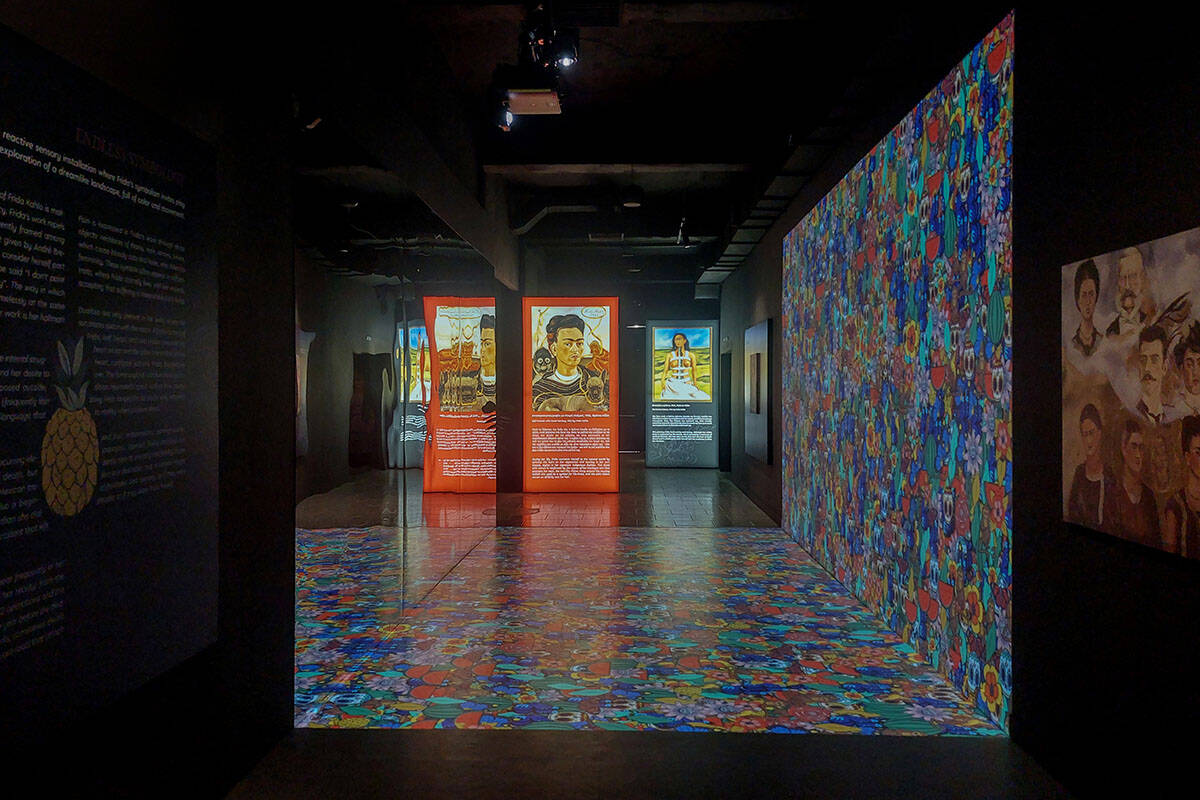
When I walked into Frida Kahlo: Beyond the Icon – Immersive Experience at the new Panorama Digital Theatre in Thessaloniki, I knew right away this was not going to be a quiet encounter with paintings on a wall. Instead, I was stepping into Frida’s colors, her pain, her joy, projected in moving light and sound across 600 square meters of screen.
Clouds rolled beneath my feet, an airplane passed overhead, and then Frida herself appeared in the jungle with animals at her side. For a moment it felt as if she were still here, asking us to see her not as a frozen image but as a woman who refused to look away from herself.
The show at Panorama captured very well the way Frida moved between her different identities as woman, painter, and patient. It also brought out with clarity the surrealist character that shaped her vision.
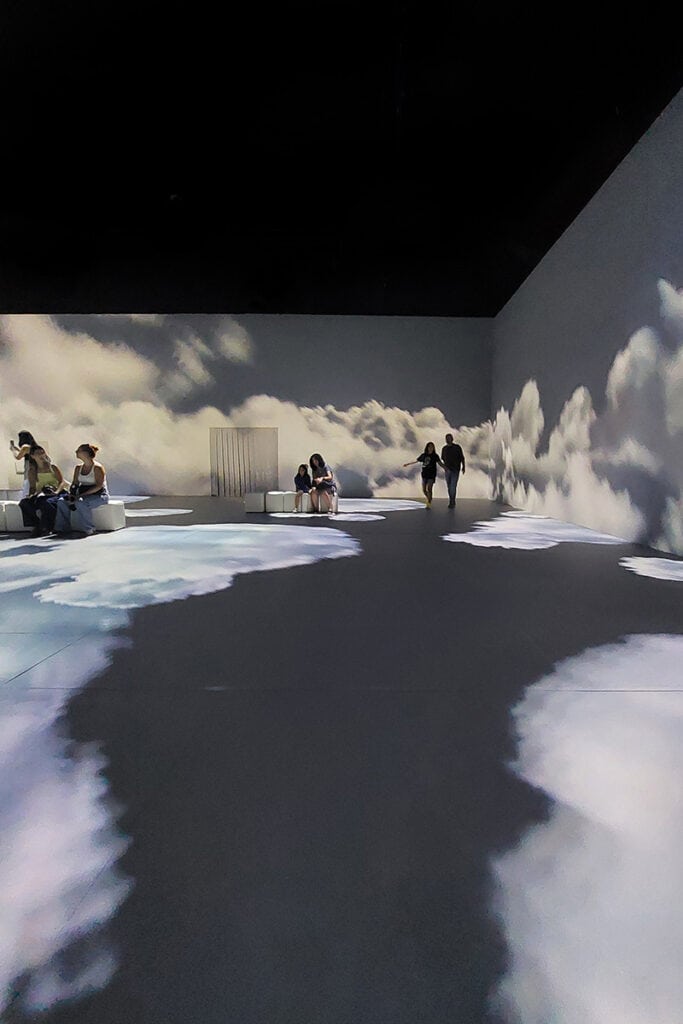
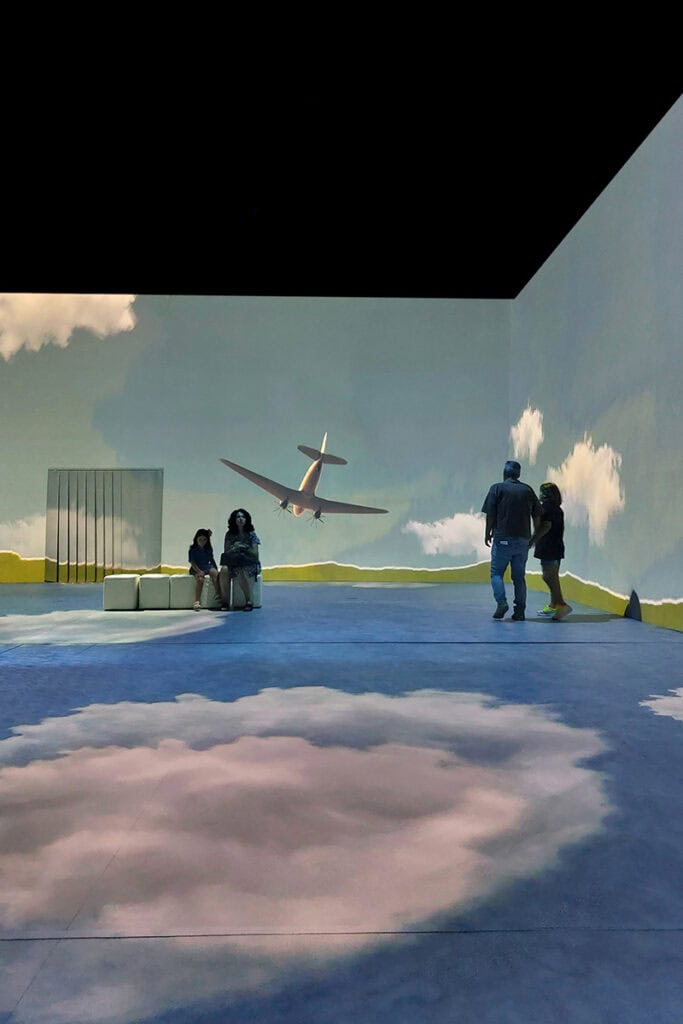
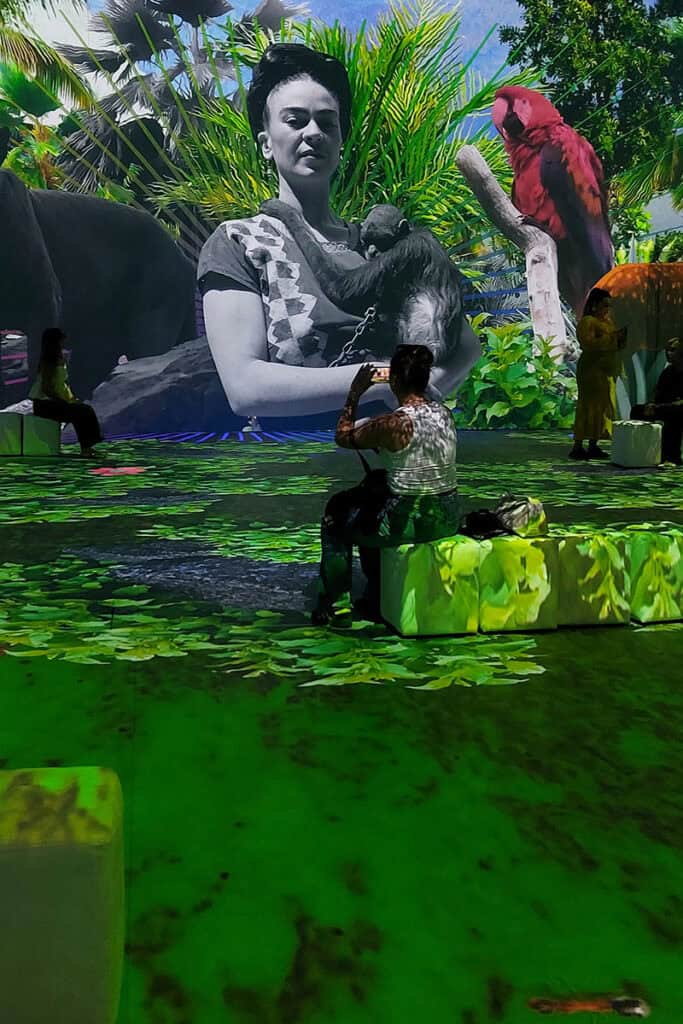
This exhibition is part of a global tour, and Greece is hosting it for the first time from August 2, 2025 to January 10, 2026. It blends photographs, films, and digital art with 360° projections and virtual reality, turning Frida’s life and art into an environment you can walk through. Some might call it spectacle, but there is something valuable in being pulled inside her work, reminded that her paintings were never just about aesthetics but about endurance.
And in just a month, another side of Frida will arrive here. On October 3, 2025, the MOMus–Thessaloniki Museum of Photography will open Frida Kahlo – Her Photos, an exhibition that has already traveled to more than twenty cities and is coming to Greece for the first time.
Where the immersive show expands her art into vast projections, this one turns inward, presenting 241 photographs from her personal archive. Many were hidden for decades in her Mexico City home, the Casa Azul, locked away at Diego Rivera’s request until 2003. They reveal faces, gestures, and fragments of everyday life that shaped Frida behind the myth.
As a photographer, I felt a different intimacy in this collection. Paintings can transform suffering into allegory, but photographs catch what slips through, the fleeting moments, the small human details. Looking at the images she kept close, we see the relationships that sustained her, the Mexico she carried inside her, and a woman who was never just an icon but someone deeply alive in her contradictions.
To experience both exhibitions is to hold two sides of Frida at once: the myth and the woman, the projection and the intimacy. Thessaloniki is fortunate to be the place where these two perspectives meet. For those of us who live here, and for anyone visiting, this is an invitation to spend time with Frida, not only as a symbol but as a human being who continues to speak to us.
Exhibition details
Frida Kahlo – Beyond the Icon: The Immersive Experience
Panorama Digital Theatre
Leoforos Miki Theodoraki 15, Thessaloniki
August 2, 2025 to January 10, 2026
Frida Kahlo – Her Photos
MOMus–Thessaloniki Museum of Photography
Warehouse A, Pier A, Thessaloniki port area
October 3, 2025 to January 4, 2026
For all of us, Frida’s story carries echoes that feel close to home. Her art was shaped by resilience, identity, and the search for belonging, experiences that touch anyone who has faced loss, carried culture across borders, or tried to hold on to themselves through difficulty. To walk through her world here in Thessaloniki is also to walk through pieces of our own, and to remember the strength it takes to turn hardship into something that endures.
Anyone who wants to stay with Frida a little longer has many ways to do so. The Frida Kahlo Museum in Mexico City opens the doors of her Casa Azul, the house where she lived and worked. Online resources such as fridakahlo.org bring together her paintings, timeline, and biography. And for a deeper portrait, books like Frida: A Biography of Frida Kahlo by Hayden Herrera or the documentary Frida offer a more personal journey into her life.
Vasiliki Eleftheriou is a photographer and the founder of Photoglobe, a photography school in Thessaloniki. She works with portrait and creative photography, exploring how presence and attention shape the way we see. Writing about Frida Kahlo’s exhibitions in her own city, she approaches them as more than cultural events, seeing in them the same resilience, intimacy, and search for belonging that continue to guide her own work with photography since 2013.