
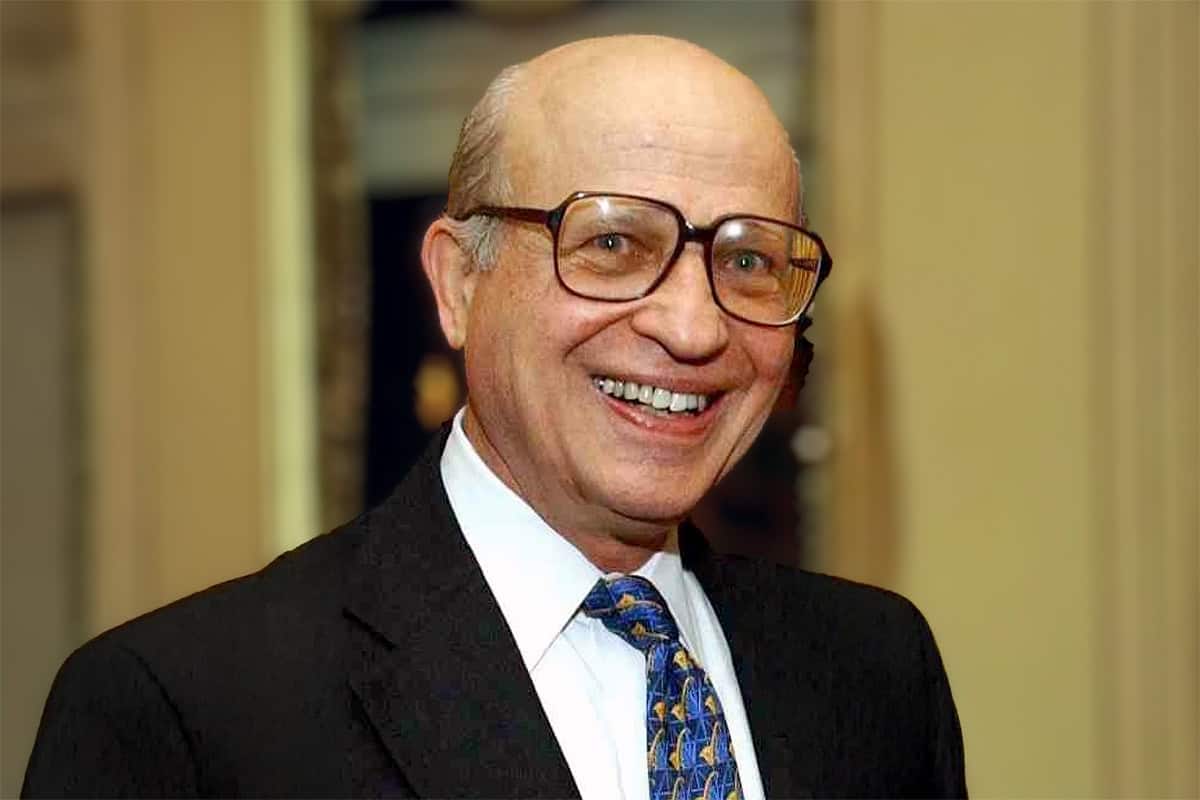
When Gene Rossides was born in Brooklyn on October 23, 1927, the odds were stacked against him. His father, a doctor from Cyprus, died before Gene was a month old, and his mother raised the family on her own. She gave him the middle name Telemachus, after the loyal son in Homer’s Odyssey. It turned out to be more than a classical flourish and became a quiet symbol of the persistence that defined his life.
Brooklyn in the 1930s offered few easy breaks, but Gene found one on the football field. At Erasmus Hall High School, he became a gifted passer with the poise of someone far older. Sid Luckman, the Chicago Bears legend and fellow Erasmus graduate, advised him to play for coach Lou Little at Columbia University. Gene listened. He turned down two full scholarships and chose a partial one to play for the Lions. His younger brother Daniel Rossides would also later attend Columbia, continuing the family’s link to the university.
Columbia football was about to have its finest years. In 1945 Gene, then a halfback, scored five touchdowns in a single game against Cornell, a record that still stands. Soon he moved to quarterback and formed the celebrated “Goal Dust Twins” backfield with Lou Kusserow.
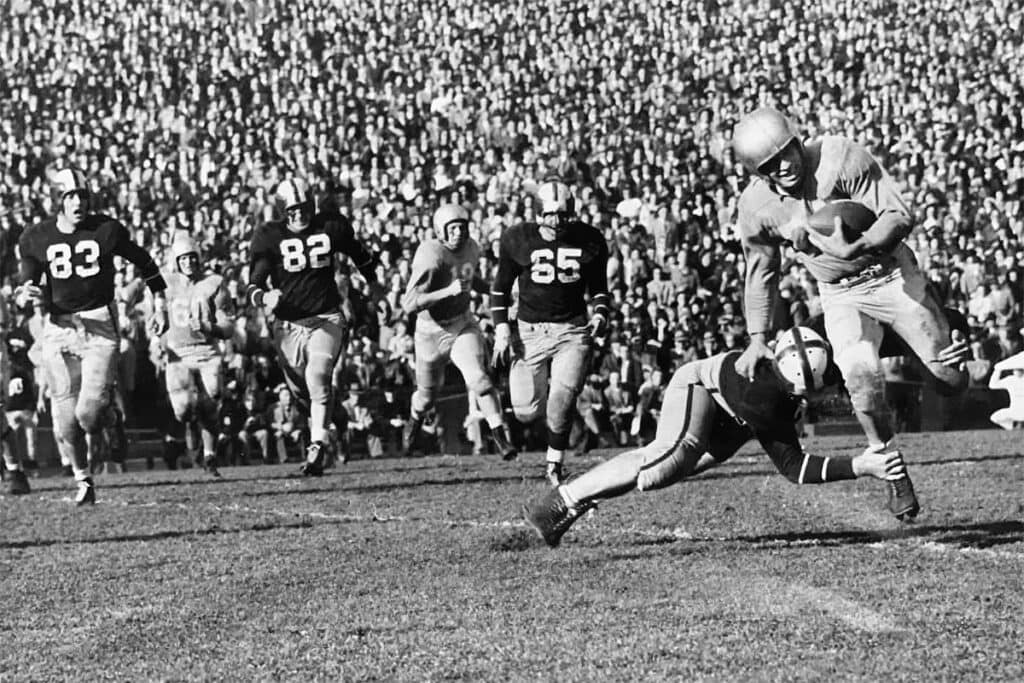
His defining moment came on an October afternoon in 1947 when Columbia faced Army, a team that had not lost in 32 games and carried two straight national titles. With the game slipping away, Gene calmly led a late drive and threw the winning pass to Bill Swiacki. The 21 to 20 upset rattled the college football world and helped secure the nickname that followed him through life, the “Golden Greek,” a title that reflected both his athletic brilliance and his later achievements.
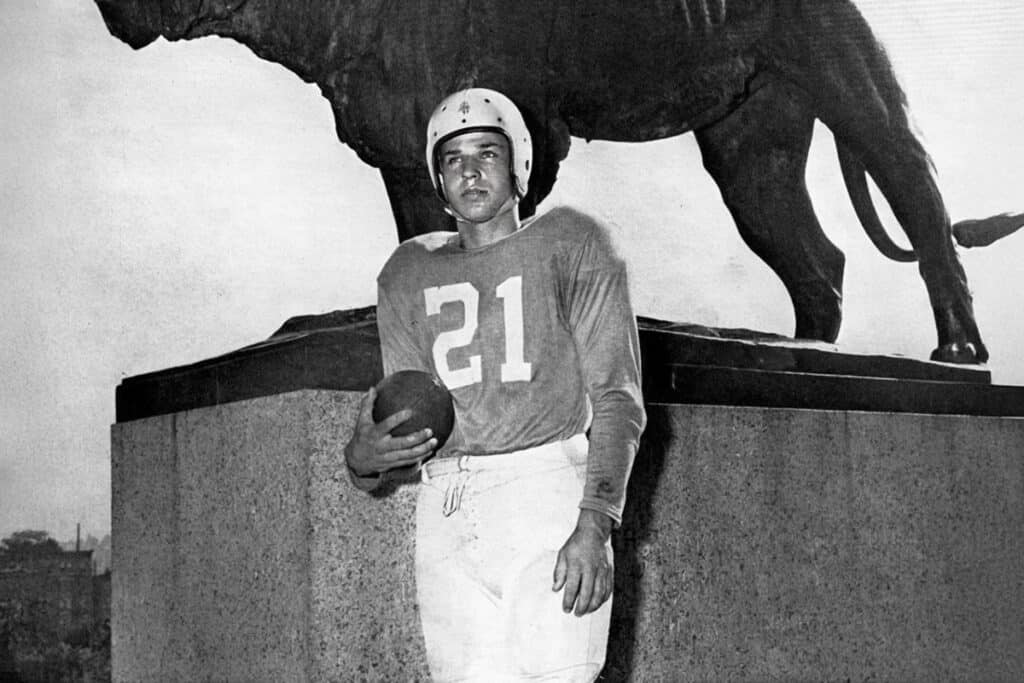
The New York Giants drafted him in 1949, but Gene chose a different challenge. “Law presents more of a challenge for me,” he said, and enrolled in Columbia Law School. After graduating in 1952, he worked under Manhattan District Attorney Frank Hogan and served as a legal officer in the U.S. Air Force.
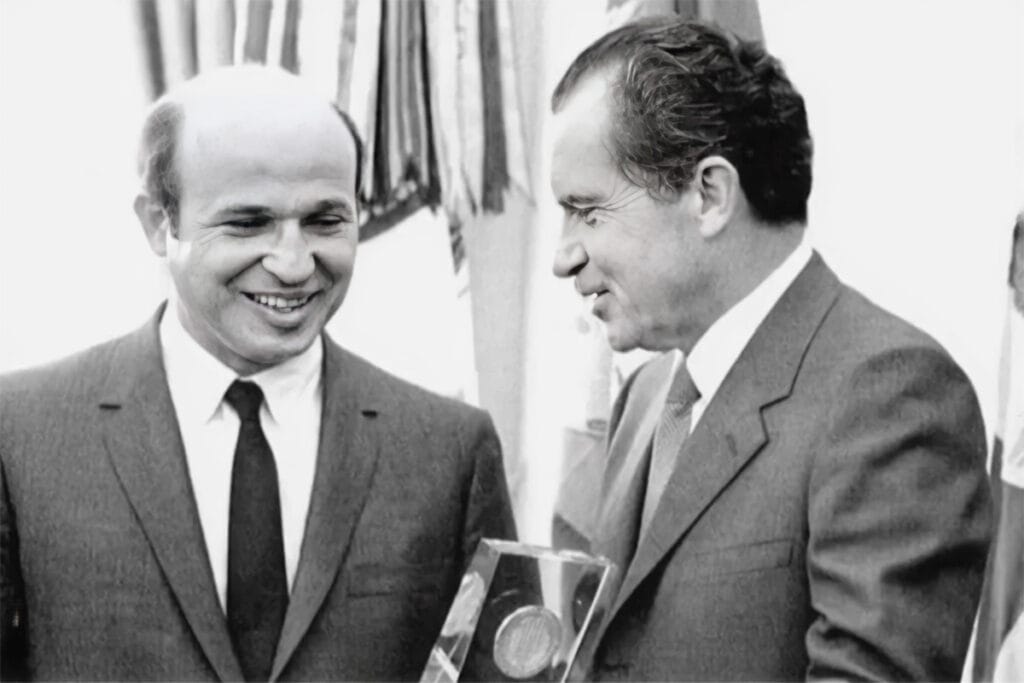
He then moved through state and federal posts. By 1969, President Richard Nixon appointed him Assistant Secretary of the Treasury for Enforcement and Operations, making him the first Greek American confirmed by the Senate to an executive branch position. He oversaw the Customs Service and the Secret Service, created the Bureau of Alcohol, Tobacco, and Firearms in 1972, and admitted the first women to the Secret Service that same year. The same calm and precision that once guided a game-winning drive now shaped federal law enforcement.
In July 1974, Turkey invaded Cyprus, the island where Gene’s father had been born. He turned his legal and political experience to the crisis and on August 1 of that year, founded the American Hellenic Institute (AHI) in Washington. He argued before Congress that Turkey had violated United States foreign assistance laws by using American weapons for purposes other than self-defense.
His efforts helped bring about a United States arms embargo on Turkey in February 1975 and a 25-million-dollar aid package for the Republic of Cyprus. What began as an emergency response became a permanent institution. AHI gave Greek Americans their first organized professional voice in Washington and set the model for Hellenic advocacy that continues today.
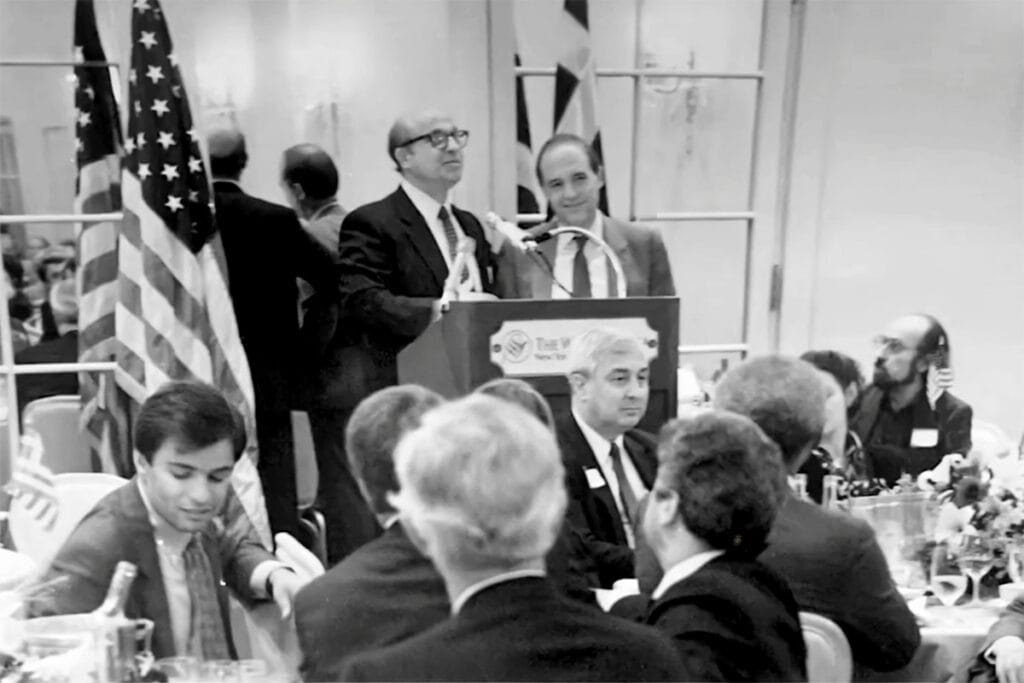
Greek Prime Minister Kyriakos Mitsotakis later called Rossides’ legacy “a shining example for future generations, as it is based on strong foundations and is inspired by universal principles: patriotism and respect for law and democracy.”
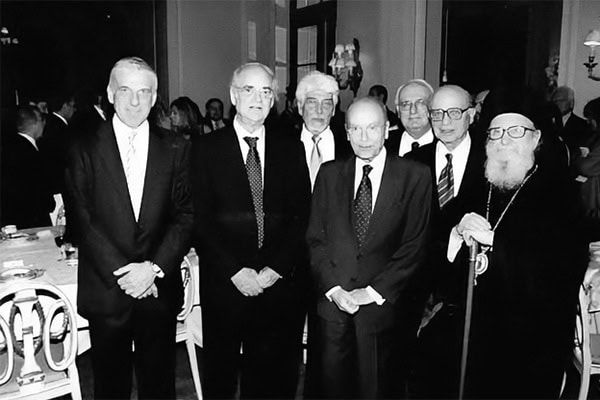
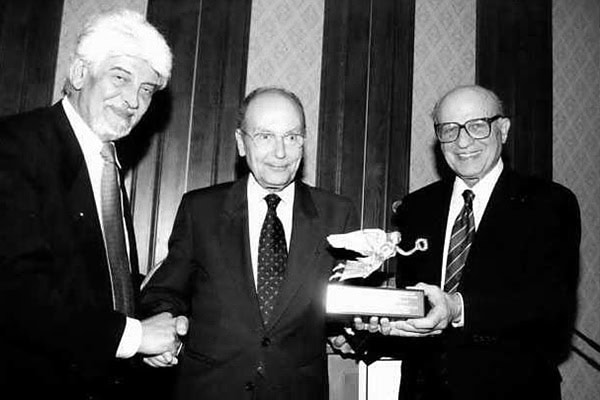
Alongside his advocacy, Gene briefly served as publisher of The National Herald, the leading Greek-American newspaper, from 1976 to 1979, helping to strengthen the paper’s role as a national forum for Hellenic issues. The American Hellenic Institute summarized his life’s work simply: “A proud American who never lost sight of his ancestry, Gene Rossides championed and inspired a generation and more to advocate for the rule of law, for Hellenism, and justice for Cyprus.”
Gene never left the law. For nearly forty years, he practiced international trade and finance at the New York firm Rogers and Wells, while writing books such as Kissinger and Cyprus: A Study in Lawlessness. Honors came from every corner, including Columbia’s Medal for Excellence, induction into the university’s Athletics Hall of Fame, the Republic of Cyprus Presidential Exceptional Service Medal, and the AHEPA Lifetime Achievement Award.
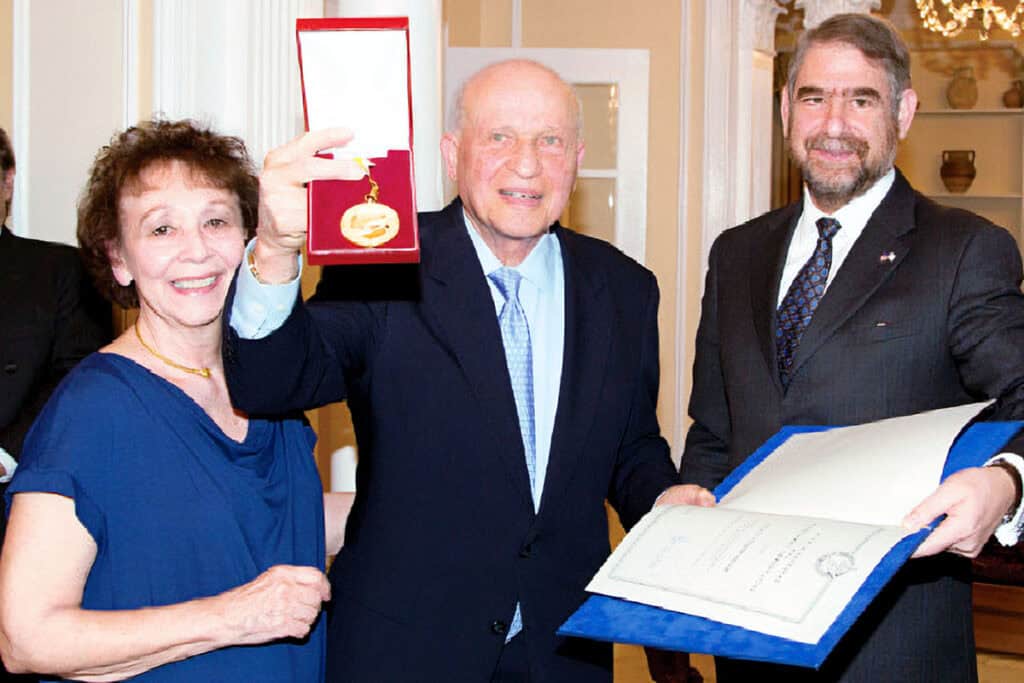
In his personal life Gene was first married to Eleanor Burcham, a union that ended in divorce. He later married Aphrodite Macotsin, and together they raised four children. His daughter Gale Rossides followed his path into public service and became acting administrator of the Transportation Security Administration.
Gene Rossides died on May 16, 2020, at his home in Washington, D.C., at the age of ninety-two. From the roar of a football crowd to the quiet negotiations of Capitol Hill, his life carried the same thread: a belief that heritage is strength and that public service is a calling. On this day, the Greek American community remembers not only the quarterback who shocked Army in 1947 but also the man who gave Hellenic America a lasting voice in the nation’s capital.