
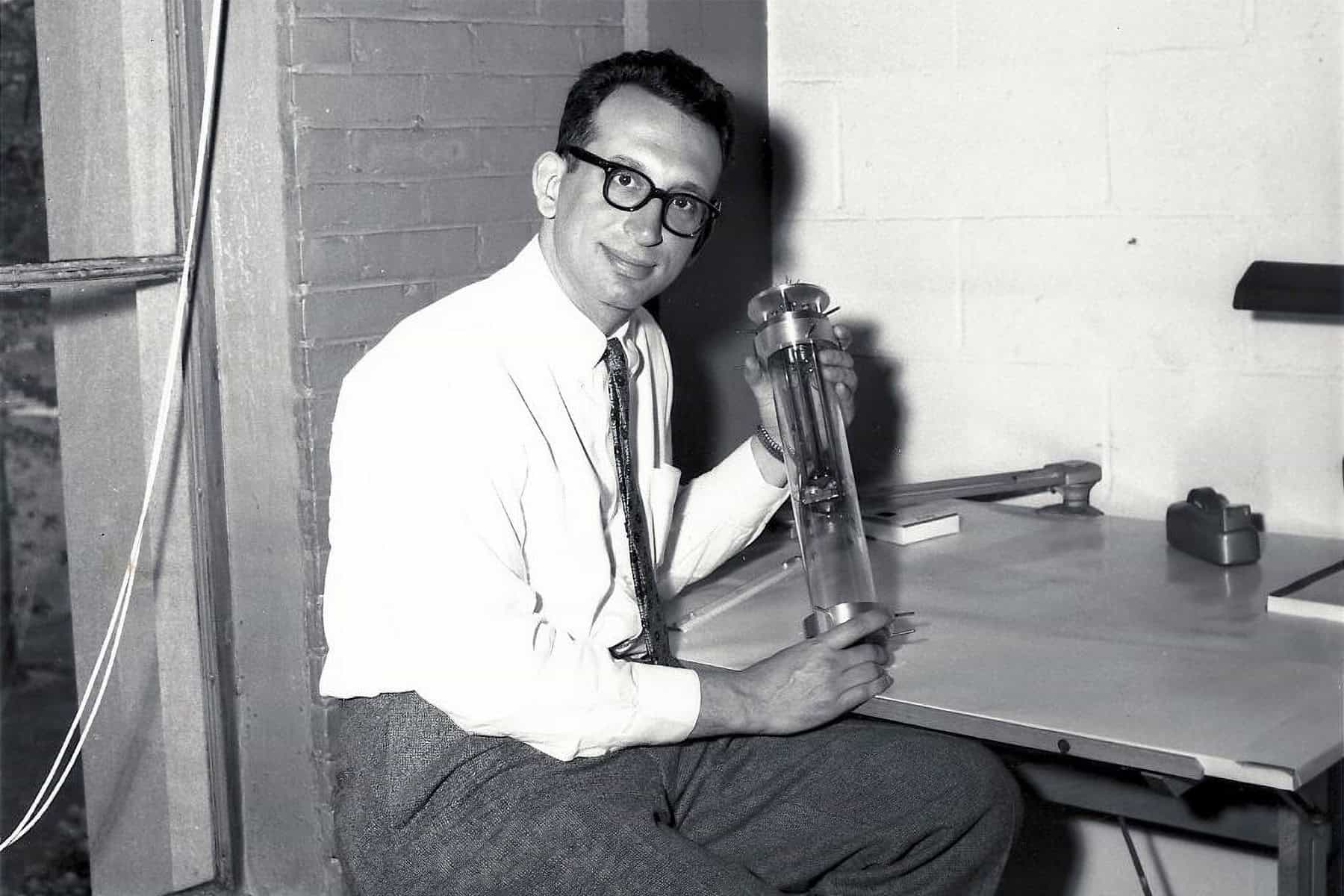
In 1942, German officers occupied part of the Hatsopoulos family home in Athens. George Hatsopoulos, then a high school student, was scavenging radio parts from junkyards and assembling receivers he could use to hear news about the Allied war effort.
Listening to such broadcasts was forbidden under the occupation. The officers his family had been forced to house were living upstairs.
MIT later included the episode in its account of Hatsopoulos’s life. The Heinz Awards, which honored him decades later, also recorded that he built illegal radios and transmitters as a teenager in occupied Greece.
Fourteen years later, Hatsopoulos completed a doctorate at MIT and turned his research into the basis for a company. Thermo Electron Corporation would eventually employ more than 24,000 people in 23 countries, producing scientific instruments and technologies while experimenting with a corporate structure that attracted the attention of investors and academic researchers.
It began with Hatsopoulos and another young Greek, Peter M. Nomikos.
From Athens to MIT
George Nicholas Hatsopoulos was born in Athens in 1927. Several members of his family were engineers, and his interest in machines appeared early. MIT recalled that at six he built an image projector using cellophane and a light source.
After the war, he studied at the National Technical University of Athens before moving to the United States. He earned four degrees in mechanical engineering from MIT, completing his doctorate in 1956.
His dissertation, The Thermo-Electron Engine, examined the direct conversion of heat into electricity without moving parts. MIT held a 50 percent interest in the resulting patent and had provided early support for his research.
Years later, Hatsopoulos recalled offering to buy MIT’s share. Engineering dean C. Richard Soderberg instead returned the Institute’s interest with an informal understanding: if the company succeeded, Hatsopoulos would eventually endow an MIT professorship.
He did.
Peter Nomikos, meanwhile, had also arrived in the United States from Athens. He studied mechanical engineering at Princeton and earned an MBA from Harvard Business School in 1955.
Nomikos later recalled that he and Hatsopoulos discussed forming a company over dinner in April of that year. They needed $50,000. Nomikos’s father, Markos, provided the money, apparently expecting the venture to fail and the two young men to return to more conventional careers.
Hatsopoulos and Nomikos co-founded Thermo Electron in 1956.
Beyond the first invention
The thermo-electron engine provided the young company’s starting point, but Thermo Electron did not remain tied to one technology.
It pursued research and government and industrial contracts, developed new products and expanded through acquisitions. Its businesses eventually covered analytical and environmental instruments, biomedical products, energy systems and equipment for industrial applications.
Hatsopoulos continued his academic work while building the company. He joined MIT’s mechanical engineering faculty after completing his doctorate, taught there until 1962 and remained a senior lecturer until 1990.
His younger brother John also joined Thermo Electron and became increasingly important to its financial operations. John later remembered working in the company’s early quarters beneath a body shop, where he sometimes had to shovel away snow that had blown inside before his brother arrived.
He eventually became chief financial officer in 1988 and president in 1997. George remained chairman and chief executive until retiring in 1999.
The brothers’ roles were distinct but closely connected. George was primarily the engineer, scientist and company builder. John concentrated increasingly on finance. That division became particularly important as Thermo developed the corporate structure for which it became known on Wall Street.
Thermo’s spinout strategy
Thermo Electron’s first equity carve-out came in 1983, when Thermedics became separately traded while the parent company retained control.
More followed.
Instead of selling a subsidiary, Thermo sold a minority interest to public investors and kept majority ownership. The subsidiary could raise its own capital, and managers could hold stock whose value reflected the performance of the business they were running.
Thermo called the companies “spinouts.” By the late 1980s, it had adopted the approach as a broader strategy. Company filings say that by 1997 it had created 22 public entities serving different markets.
Hatsopoulos described the idea as an attempt to give smaller businesses the entrepreneurial characteristics of startups while retaining the resources of a larger company. John became closely involved in the financing that allowed the system to expand.
The arrangement was unusual enough to become a subject of academic study.
Jeffrey Allen examined Thermo’s structure in a 1998 paper in the Journal of Financial Economics. He found that the carve-outs increased capital and research-and-development spending, shifted more investment decisions to subsidiary managers and, during the period studied, produced shareholder gains well above market and industry benchmarks.
A $100 investment in Thermo Electron in August 1983 was worth $1,667 at the end of 1995, according to Allen’s study. The same $100 invested in the S&P 500 would have grown to $381.
The numbers help explain the attention Thermo received, but descriptions of Hatsopoulos as having “rewritten the rules of Wall Street” go too far. Equity carve-outs were not new. What distinguished Thermo was the extent to which it repeatedly used them as a way to finance and manage technology businesses.
The limits of the model
By the late 1990s, Thermo’s network of public subsidiaries was becoming difficult to manage and difficult for investors to follow.
In August 1998, the company announced a reorganization intended in part to reduce the complexity of its structure. It proposed cutting the number of majority-owned public subsidiaries from 23 to 15 and consolidating related businesses.
A broader restructuring followed in January 2000. Thermo began taking its remaining public subsidiaries private, selling operations outside its core business and separating other divisions.
The process was substantially completed in February 2002. Thermo later reported that the businesses divested during the reorganization represented more than $2 billion in annual revenue. The company that remained was concentrated on scientific instrumentation.
Later academic work offered a less favorable assessment of the carve-out model than the studies written during Thermo’s rapid expansion. A 2010 Technovation paper examined both the benefits of the structure and the reasons the company ultimately abandoned it.
Thermo’s experience therefore resists the simpler version of the story in which one financial innovation changed Wall Street. The structure helped raise capital, encouraged managerial independence and supported years of growth. It also became too complicated to preserve in its original form.
Thermo Electron becomes Thermo Fisher
Hatsopoulos retired as chairman and chief executive in 1999. By then, according to MIT, Thermo Electron employed more than 24,000 people in 23 countries.
Seven years later, Thermo Electron and Fisher Scientific International agreed to combine in a stock transaction valued at approximately $10.6 billion when it was announced in May 2006.
The merger was completed on November 9, creating Thermo Fisher Scientific.
Thermo Fisher was not simply Thermo Electron under another name. It joined two established companies, with Fisher shareholders receiving roughly 61 percent of the combined business and Thermo shareholders about 39 percent when the agreement was announced.
But one branch of the company’s history leads directly back to the venture Hatsopoulos and Nomikos started with $50,000 and research developed at MIT.
Engineering, teaching and Greece
Hatsopoulos’s work extended beyond Thermo Electron.
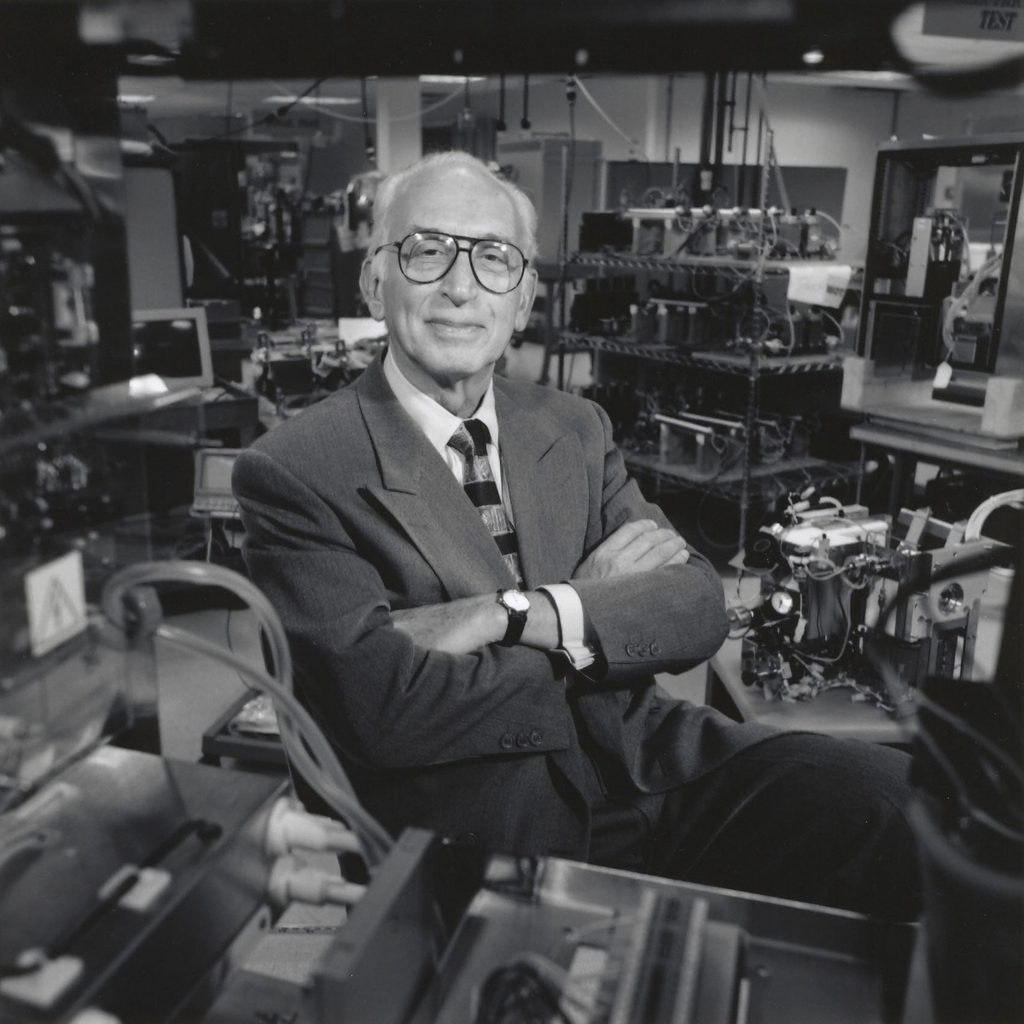
With MIT professor Joseph H. Keenan, he wrote the 1965 textbook Principles of General Thermodynamics. He continued working in thermodynamics and remained closely connected to MIT for the rest of his life.
He served on the board of the Federal Reserve Bank of Boston, including two years as chairman, and on the governing council of the National Academy of Engineering. His honors included the John Fritz Medal in 1996 and the Heinz Award for Technology, the Economy and Employment. Greece named him a commander of the Order of Honor.
His connections to Greece also continued. A National Academies biographical profile lists him as a board member of College Year in Athens and a trustee of the Maliotis Foundation.
Hatsopoulos passed away on September 20, 2018, at 91.
Thermo Electron had ceased to exist as a separate corporate name 12 years earlier, but the company he and Nomikos founded remained part of Thermo Fisher Scientific’s lineage. At MIT, his record remained visible in a different way: in decades of research and teaching, and in the professorship he had once promised to establish if the company born from his doctoral work succeeded.