
When U.S. Interior Secretary Doug Burgum visited Greece in September 2025 to discuss energy cooperation, his trip highlighted how closely American and Greek interests now intersect in global energy.
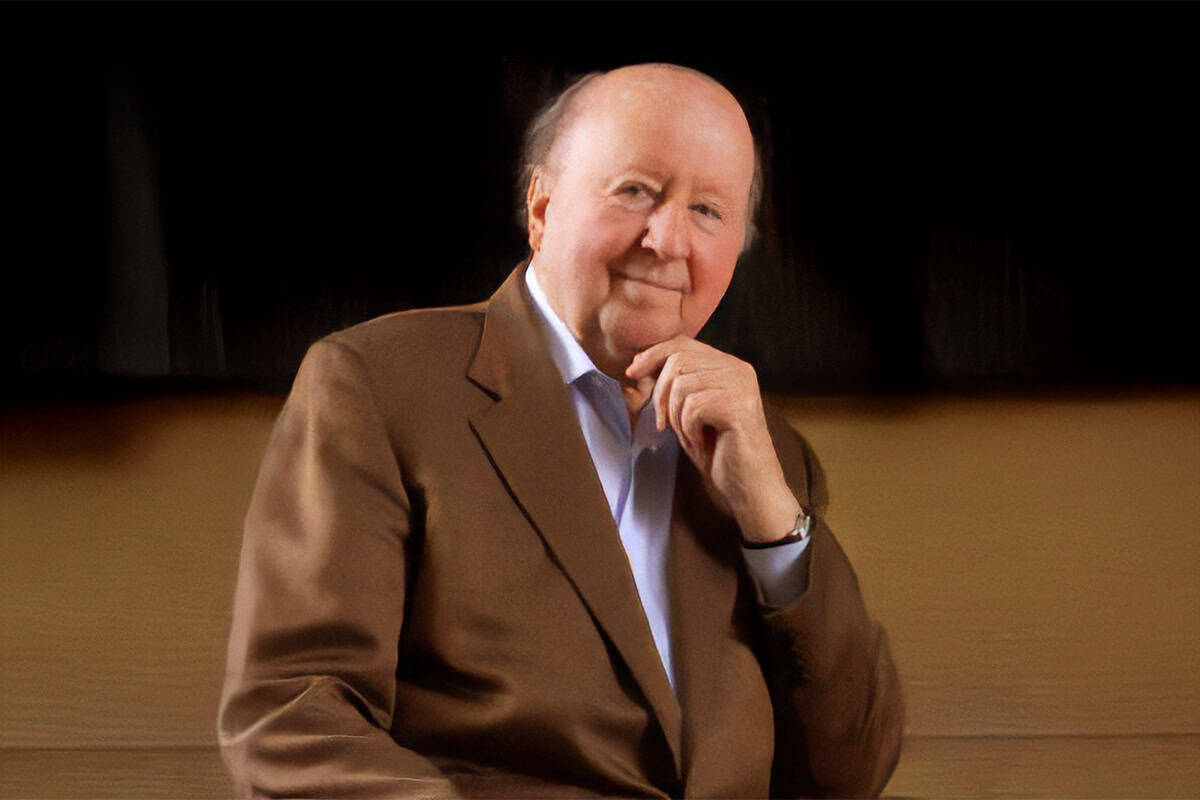
It is a transformation that owes much to the life’s work of George Pheidias Mitchell, the son of Greek immigrants from the village of Nestani in Arcadia, whose persistence helped launch the modern shale gas industry.
From Arcadia to the Gulf: A Childhood Forged in Two Worlds
George was born in 1919 in Galveston, Texas, to Savvas Paraskevopoulos and Katina Eleftheriou.
Savvas had herded goats in Nestani before sailing through Ellis Island in 1901. A railroad paymaster, frustrated by his long Greek name, urged him to choose something simpler. He became Mike Mitchell, and the name stayed.
George spoke only Greek until his mother died when he was thirteen. He grew up in what he called a “League of Nations” neighborhood, playing with children of many immigrant families and learning early to work for what he wanted. He sold fish and handmade bamboo fishing poles to tourists and helped in his uncle’s restaurant and bathhouse.
At sixteen, he finished high school and, after a summer on the oilfields with his older brother, enrolled at Texas A&M University. To cover his tuition, he pressed clothes and did laundry, captained the tennis team, and completed a five-year petroleum engineering degree in just four years as valedictorian. A brief job with Amoco and service in the Army Corps of Engineers during World War II gave him practical experience, but he returned to Texas determined to strike out on his own.
Betting on the Impossible: The Shale Gamble
In 1946, Mitchell helped form the company that became Mitchell Energy & Development. He was the classic wildcatter, taking risks the big oil companies avoided, drilling thousands of exploratory wells and discovering hundreds of oil and gas fields. By the early 1970s, his company was a Fortune 500 success, but his most important work was still ahead.
Hydraulic fracturing, or fracking, was not new, but no one had made it profitable in dense shale rock. Beginning in the early 1980s, Mitchell and his engineers spent nearly twenty years experimenting in the Barnett Shale north of Fort Worth. Industry experts dismissed the effort as a fool’s errand.
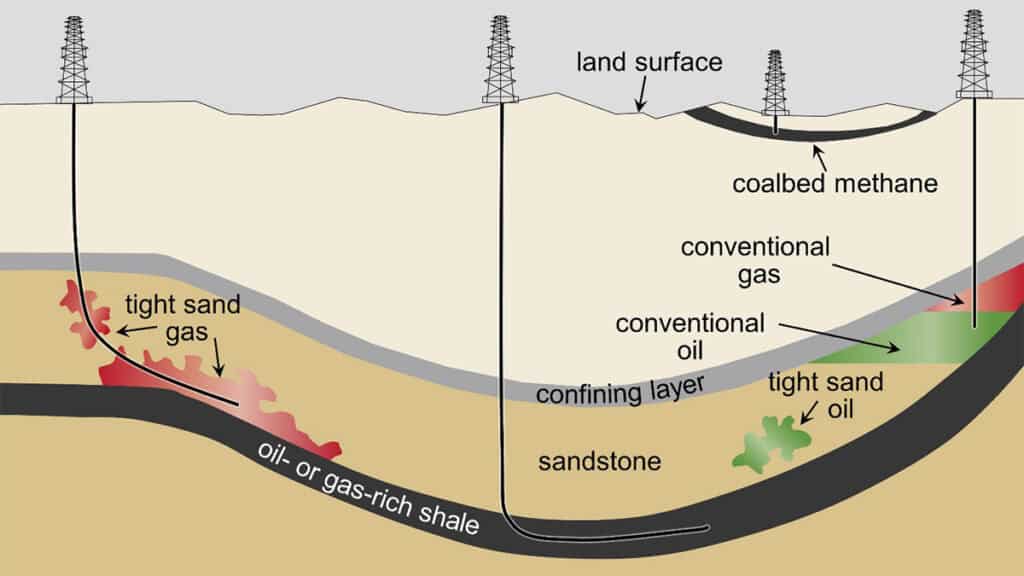
In 1997, engineer Nick Steinsberger tested a “slickwater” technique using more water, higher pressure, and fewer costly gels and finally unlocked the gas. Production soared. The American shale gas revolution had begun.
Cheap, abundant natural gas transformed U.S. manufacturing, turned the country into a major exporter of LNG, and altered global energy politics. Mitchell is widely known as the “father of the shale gas revolution,” though hydraulic fracturing itself had existed for decades; his real achievement was proving that shale gas could be tapped economically at scale.
Innovation with a Shadow: The Environmental Reckoning
Fracking itself remains hotly debated. Environmental groups and many local communities have raised concerns about groundwater contamination, methane emissions, and the link between high-pressure drilling and small earthquakes. Studies by the U.S. Environmental Protection Agency and independent researchers have found that poorly constructed wells can allow gas to migrate into water supplies and that methane, an especially potent greenhouse gas, can leak during production.
These concerns have prompted several U.S. states, including New York and Maryland, to impose bans or strict moratoria, while others, such as Pennsylvania and Texas, continue to regulate and monitor operations more tightly. Internationally, countries from France to South Africa have paused or restricted shale development over similar worries. The debate continues to shape energy policy worldwide.
Mitchell never ignored the consequences of his own success. Late in life, he argued for strict environmental rules to curb methane leaks and protect groundwater. He joined forces with Michael Bloomberg to fund state efforts for stronger regulations, saying in 2012 that fracking “only works if it is done right.”
At the same time he was building an energy empire, Mitchell invested in communities and conservation. He created The Woodlands, a master-planned community outside Houston where nearly a third of the land remains green space and miles of trails wind through preserved forest. He and his wife, Cynthia, helped revive historic Galveston, restoring more than a dozen nineteenth-century buildings and bringing Mardi Gras back to the island.
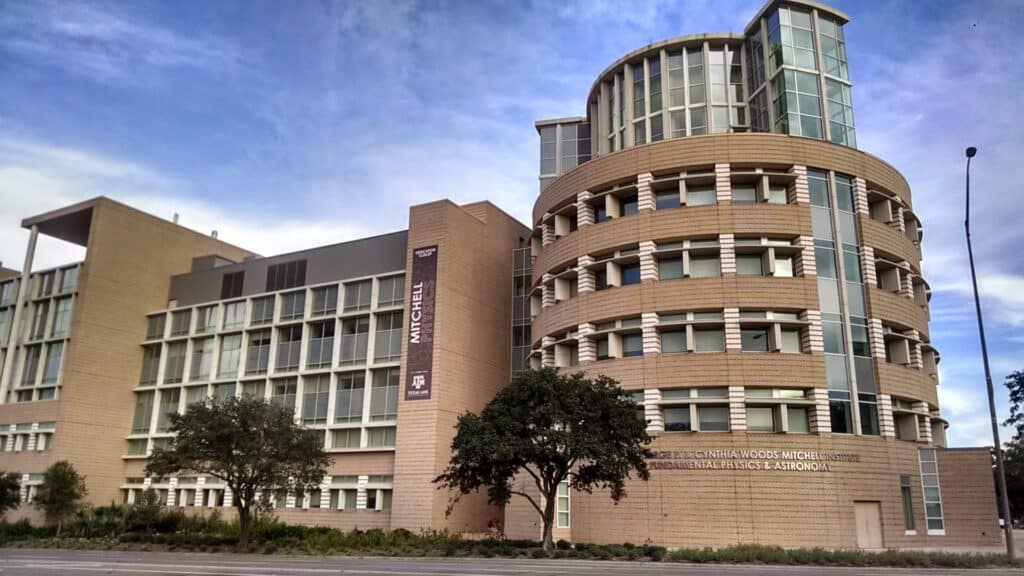
Through the Cynthia and George Mitchell Foundation, he ultimately gave or pledged more than $400 million to science, conservation, and sustainability projects. His gifts to Texas A&M, over $100 million, funded research in physics and astronomy and built facilities that bear his name.
A Legacy That Still Shapes the Future
George Pheidias Mitchell died in 2013 at the age of ninety-four, but his influence continues to ripple outward from the energy security debates now linking Athens and Washington to the scientific research his philanthropy still funds.
His path from a goat herder’s son in Arcadia to the pioneer of America’s shale boom shows how one life can change global energy and how even the boldest innovators must face the responsibility of the change they set in motion.