
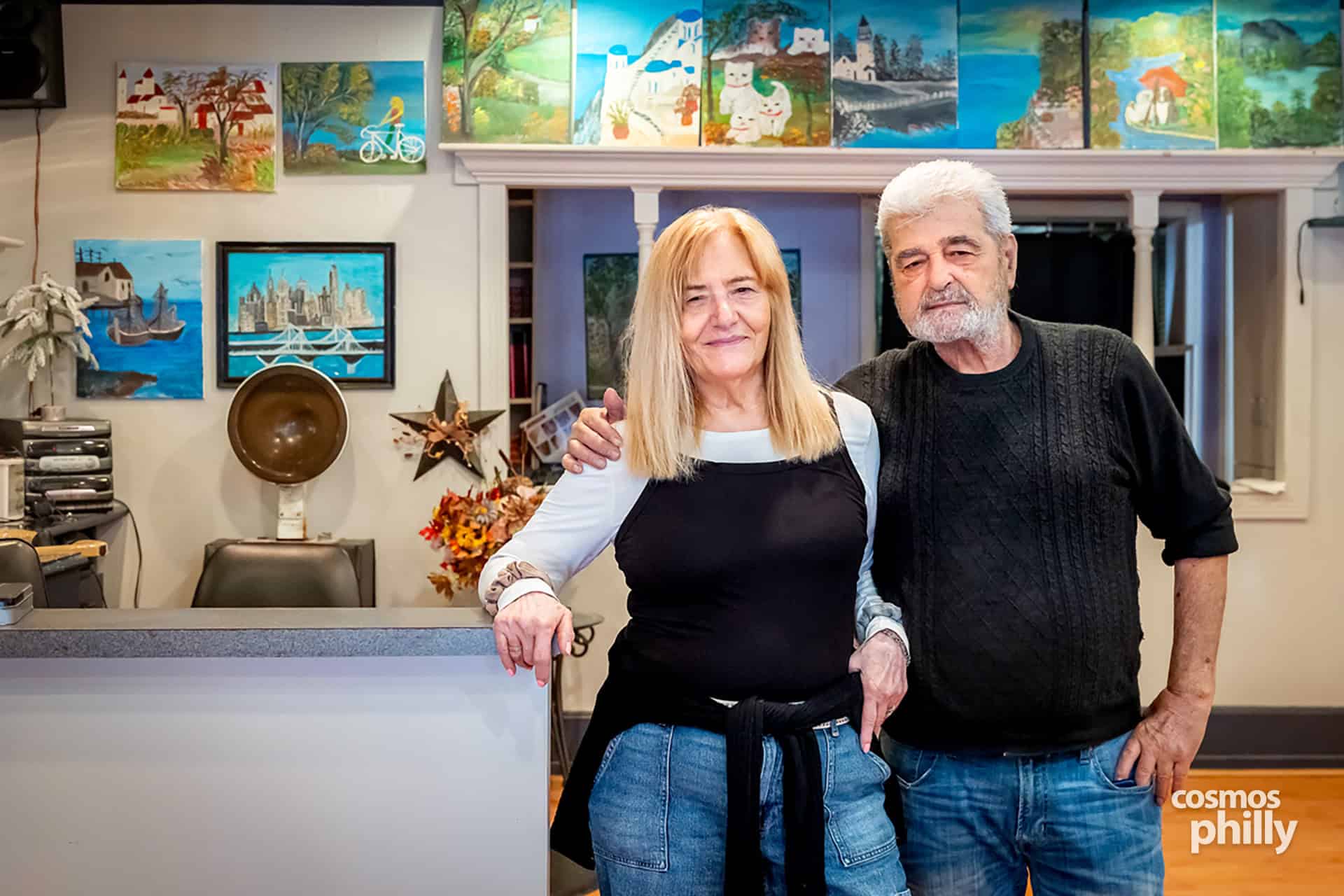
Giota’s West End Hairstyling and Barbershop in Media, Pennsylvania, will close its doors on May 30, ending 36 years under the care of Giota and Fotis “Foti” Hartas and bringing to a close one of Delaware County’s quiet Greek-American landmarks.
For Greek Americans across greater Philadelphia and beyond, places like Giota’s are more than neighborhood businesses. They are extensions of home, where language, music, memory, and hospitality survive in everyday rituals.
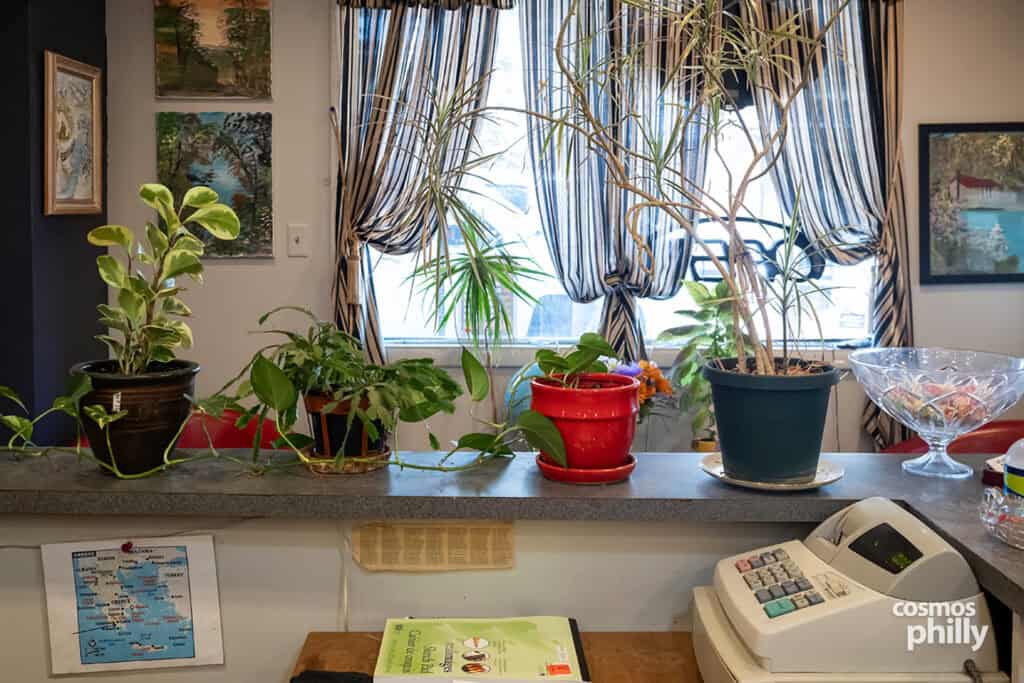
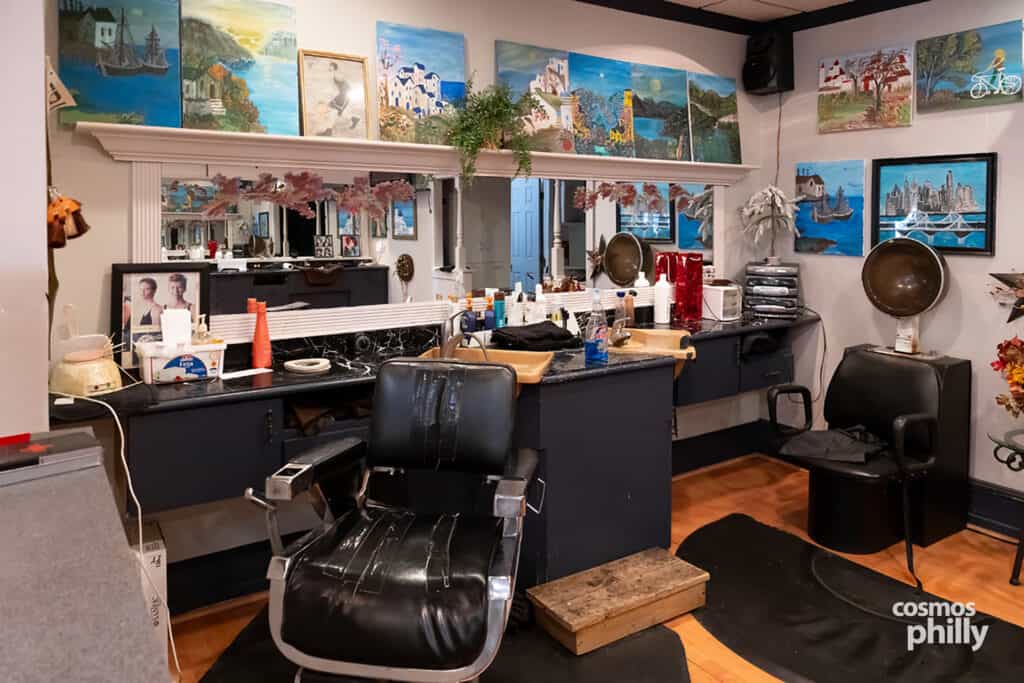
Just off State Street, the awning at 20 South Orange Street reads in hand-painted letters: “GIOTA WEST END HAIR STYLING & BARBER SHOP.” Step under it, and you do not walk into a sleek, minimalist salon. You walk into something closer to a Greek living room: classic black barber chairs, long mirrors framed in molding Foti built himself, potted plants along the counter, and walls crowded with paintings of whitewashed villages, blue seas, and stone streets.
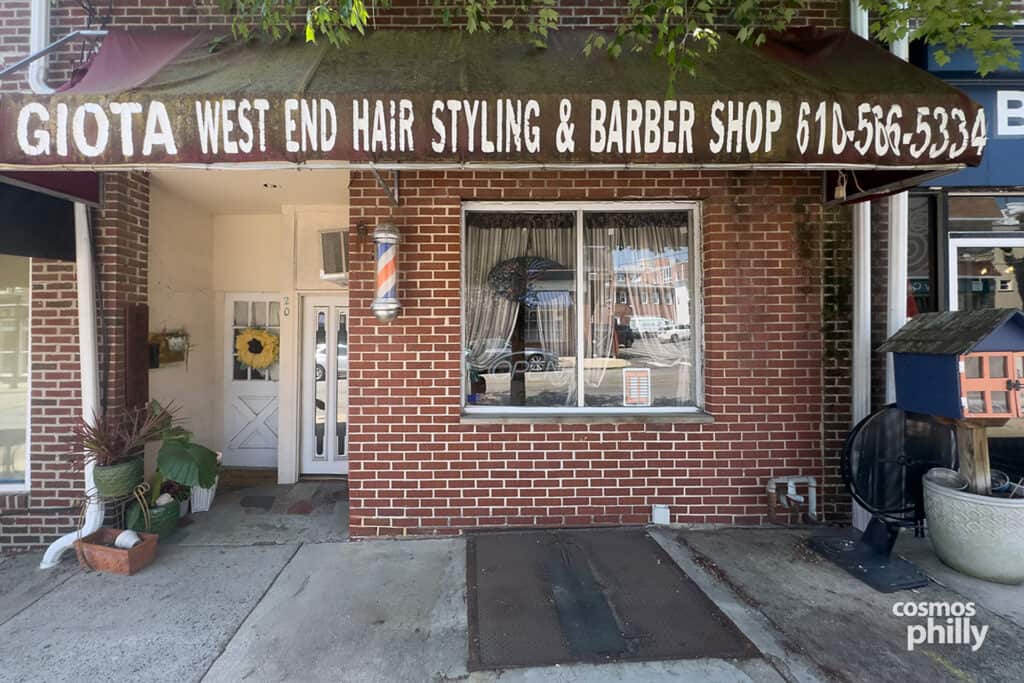
“People open the door and think it’s little,” Giota says. “But when they open, they say, ‘Oh my God, this looks good… it’s like home, almost.’”
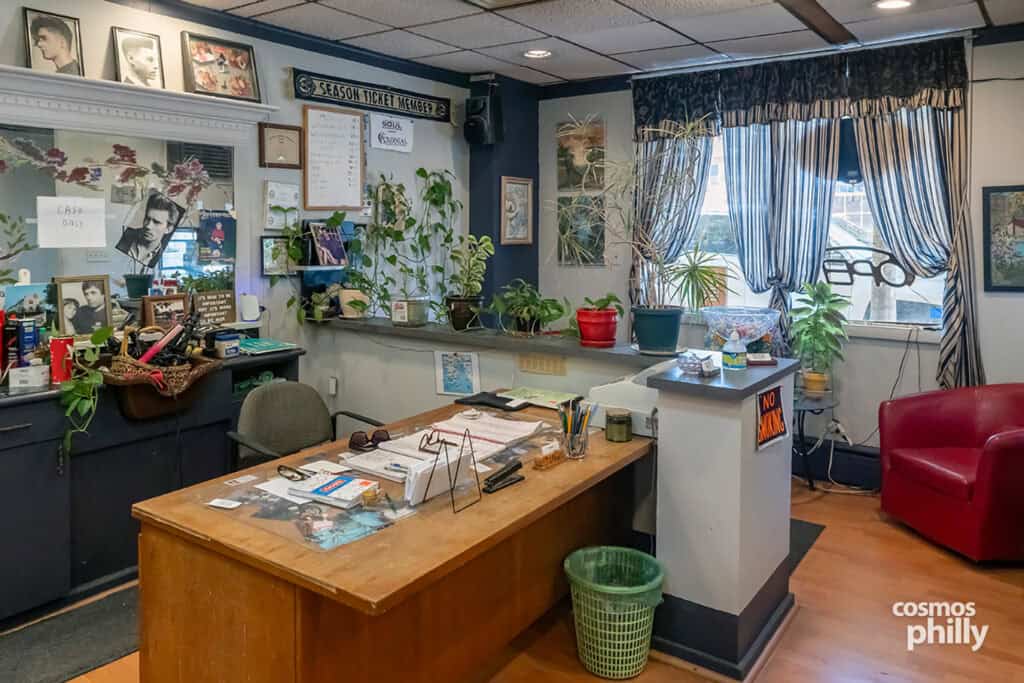
Behind the chair where she has stood for decades, a well-worn mat, a taped-up barber seat, and a small wooden step for children quietly testify to generations of haircuts. Greek television murmurs from a corner screen, usually tuned to news from the old country, while laïko and classic Greek songs float above the buzz of clippers. Customers come on foot from the nearby Delaware County Courthouse, from the neighborhood, and from across the county. Some arrive with walkers or wheelchairs. Giota insists they stay where they are and cuts their hair right there.
“I want to keep it that way,” she says. “The people feel comfortable to come, comfortable to sit down… comfortable, comfortable, home.”
From Patra to Media
Giota and Foti’s story begins far from Media, on the streets of Patra, Greece. They grew up as neighbors, eventually married, and started their family before leaving for the United States in 1975. They had two sons in Greece and, after arriving in America, welcomed a daughter.
Like many Greek immigrants of that era, they moved between places, including Eddystone in Delaware County, Arizona, and Florida, balancing work, weather, and the pull of relatives who had already crossed the Atlantic. In Florida, while the boys were at school and Foti was working on construction sites, Giota sat at home alone and decided she needed more to do. She enrolled in cosmetology school, earned her hairdressing diploma, and discovered she loved the craft and the conversations that came with it.
When the family finally settled in Delaware County, she took the Pennsylvania licensing exam and started over again, this time in English.
“I don’t speak English when I start here,” she remembers. “I do the job, but I don’t know what they talking… they teach me the language. They teach me everything.”
Media became her classroom. Customers corrected phrases, explained expressions, and kept coming back until the town itself became familiar.
The Hartas family also found its spiritual home at St. George Greek Orthodox Church in Media, where they have been parishioners for decades. Church, work, and family formed the classic Greek-American triangle: Sunday liturgy and coffee hour, weekdays at the shop, holidays around a long table with their growing clan.
Today they are parents of three, two sons and a daughter, and grandparents to 14 grandchildren. One son works as a stylist in South Carolina, and another branch of the family is in Florida, where the couple plans to spend part of their retirement.
A shop they made their own
Giota’s path to owning her own place began almost by accident. After earning her Pennsylvania license, she was sent to a small shop in Media owned by Italian barber Louis Portore, though she did not think of herself as a barber at all.
“I say, ‘I’m not a barber, I’m a hairdresser,’” she recalls. “He tried hard to get me here. He said, ‘Come here, do whatever you can do. If you don’t like it, you go.’”
Her first day behind the chair on South Orange Street was a revelation. The shop was “packed,” she says, unlike anything she had seen before. She went home that night with a fistful of tips and the feeling that Media might be where her American story finally settled.
Giota had already been working at the South Orange Street shop before she and Foti bought it in 1990. When the owner was ready to retire, he turned to the Hartases and asked if they wanted to buy the place. Foti, by then an experienced carpenter, took the leap. They got a bank loan and bought both the business and the building, taking over a barbershop with roots at that address going back decades.
“We paid it off in ten years,” Foti says proudly.
Owning both the shop and their townhouse in nearby Aston meant no landlord and no rent hikes, a freedom that would shape everything from the layout of the space to Giota’s famous prices.
Over the years, Foti rebuilt the interior by hand, leaving his own mark on almost every part of the shop. He opened up the old backyard to add another room, knocked out a wall near the entrance to let light into the front, laid new floors twice, and replaced the tiny stations with long mirrors and custom trim.
“I put a lot of work here,” he says. “All of this with the crown molding… I did everything.”
For decades, his trade was carpentry. He was the one on construction sites, working with wood, walls, floors, and tools. But when he retired seven years ago, he did not really leave work behind. He came to the barbershop.
Since then, he has stood behind the register almost every day, answering the phone, taking payment, sweeping the floor, making supply runs, and keeping the rhythm of the place moving around Giota’s chair. It was not glamorous work, and he does not present it that way. But it meant she was not there alone.
“We got along here,” Giota says, teasing that he stands behind her and bothers her every minute. The joke carries the ease of a couple who have spent more than half a century together, first building a life and then keeping a small business alive side by side.
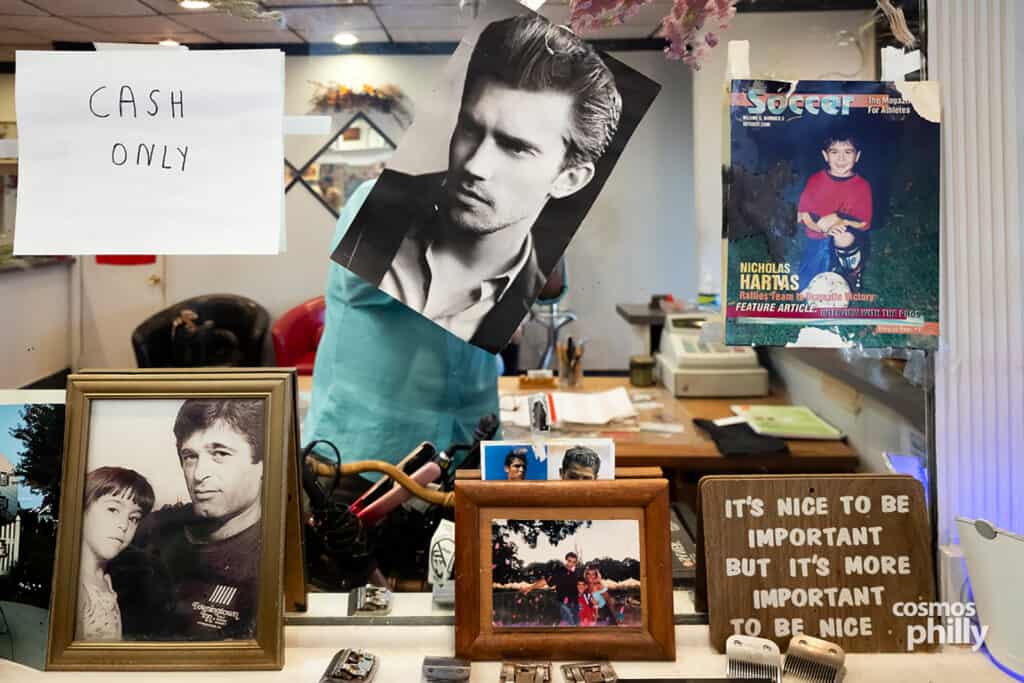
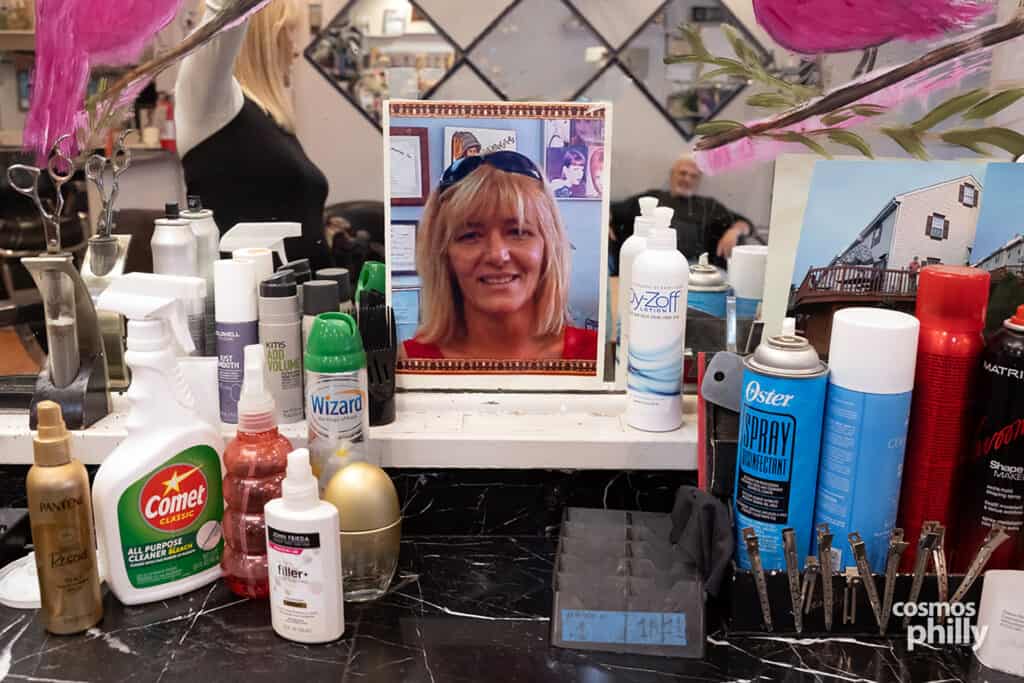
Their 56-year marriage, three children, fourteen grandchildren, and life split between Patra and Pennsylvania are all reflected in the family photos that sit among combs, clippers, and product bottles along the counter.
Fifteen dollars, and people kept coming back
In an era when a men’s cut often starts at $30 or $40, Giota’s price has remained stubbornly old-fashioned: fifteen dollars. A hand-lettered “CASH ONLY” sign taped to the mirror sums up the straightforward spirit of the place.
“Everybody says, ‘My God,’” Foti says. “If we charged what they charge, I’m gonna be retired now… but I never thought about to put it up.”
For Giota, the low price was never a strategy. It was conscience. Many of her regulars were working people tied to the courthouse or longtime neighbors who built their routines around her chair. Foti calls the shop “like a family thing.” Fathers, sons, daughters, and mothers would come through together, often three generations deep.
One of her oldest customers, now 83, told her he has been coming to the shop since he was a boy, brought by his father when the original owner still stood at the chair. “I know you for 37 years,” Giota told him recently, only to realize his relationship with that address went back even further than hers.
Over the decades, Giota’s chair became an unofficial annex of the Delaware County Courthouse.
“I have a lot of professional people from the courthouse,” she says. “I have lawyers, I have the cops, the judges, they’re still coming.”
There was even a mayor of Media among her regulars. Her clientele, she says, came largely from the courthouse, nearby offices, longtime local families, and the surrounding community. At the same time, the shop quietly served local Greeks and Greek Americans. Friends and fellow parishioners from St. George stopped by, as did Greeks from across the region who heard about the woman from Patra who cut hair with Greek TV playing in the background.
Children could move around the shop. Older customers could sit as long as they liked. Customers who traveled to Greece would return to tell Giota what they had seen, where they had eaten, and how the old country had surprised them.
Her filotimo, the Greek sense of honor, generosity, and obligation, showed up in the small details: the unchanged price, the extra minutes calming a nervous child, the patience with older customers, and the easy hospitality of a place that never tried to become something polished or impersonal.
Between haircuts, Giota often slips back to paint. Without formal training, she uses acrylics to create landscapes of Greece, Italy, and imagined coasts she finds online, then lines them up above the mirrors like windows into another world.
Over time, she began gifting canvases to customers who asked. Some pieces now hang in homes across the country and even in island resorts, including one she sent with a ship’s chef returning to Greece so it would “stay forever” there. Many more wait on the third floor of the Hartas home in Aston, ready to move with her into retirement.
A changing Media, a hard goodbye
Owning the building meant the Hartases could keep prices low, but it also means their final act as shopkeepers is to sell. Media’s property values have risen sharply, Foti says, and they decided this is the moment to let go. A clothing store is expected to take over the space once the barbershop closes, and the upstairs apartment will be part of the sale.
Giota has watched Media change from what she remembers as a quieter town, with small family businesses on every block, to a busier destination lined with restaurants and bars. Many of the little shops she knew when she started have already disappeared. Now the shop she and Foti shaped for more than three decades is preparing for its own last day.
“I’m gonna miss a lot the people,” she says. “The people, it was good for me.”
She has never taken to travel for its own sake. She has flown back to Greece only once, in 1995, and surprised herself by wanting to return to Pennsylvania early because she missed her neighbors and friends. Retirement will mean more time in Florida with her grandson and a break from Pennsylvania winters, but not a life of airports and suitcases.
“I’m gonna go to Florida,” she says simply. “Relax.”
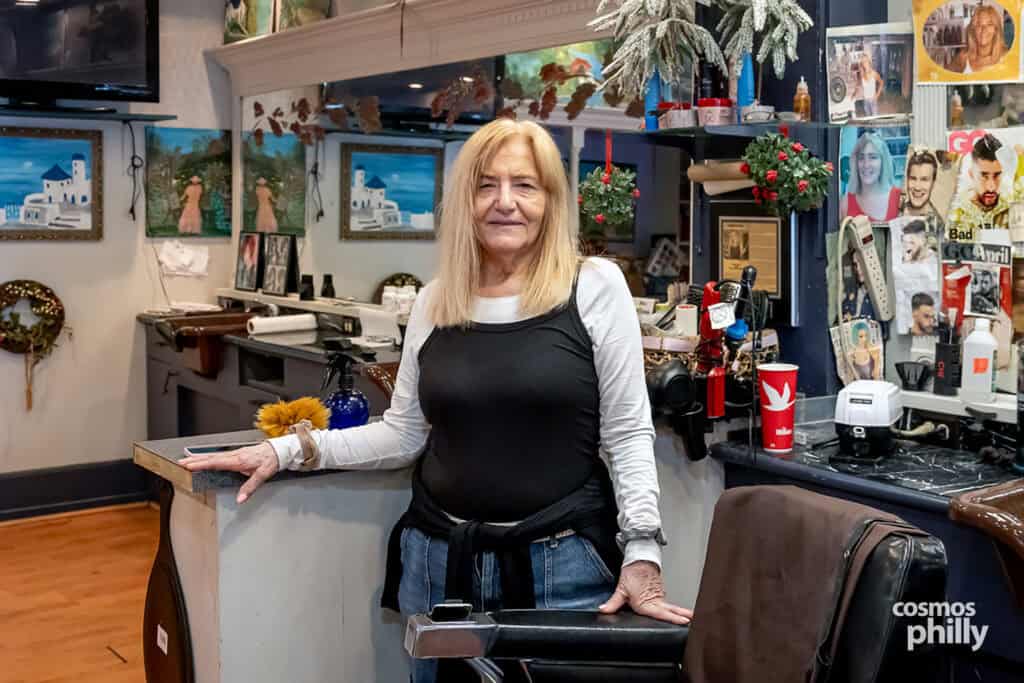
What Giota cannot imagine replacing is the daily stream of faces and stories that passed through the shop.
“Thank you for giving me all these years,” she says to her customers and the community. “They give me the business, because the business hold from these people… I want to thank them for being here for me, teach me everything.”
On May 30, the chairs will empty, the Greek television will go quiet, and Giota and Foti Hartas will leave behind the small shop they shaped for more than three decades.
For their customers, it was never only a place to get a haircut. It was a place where they were known.
Correction: An earlier version of this article misstated Giota and Foti Hartas’ family history by referring only to their two sons. The Hartases have three children, two sons and a daughter.