
For more than a century, the sweet aroma of chocolate drifted out of 800 North Market Street in Wilmington. It came from Govatos Chocolates, the last traditional candy maker in the city and one of the most enduring Greek-American family businesses in the Delaware Valley. When the family finally closed the doors in August 2024, they brought an era to an end. But they also left behind a story that shows how immigrants built communities, how traditions passed from one generation to another, and how a business could be about far more than profit.
A Greek dream begins in Wilmington
The story starts in 1894, when John Govatos left Greece and arrived in Wilmington. Like so many immigrants of his time, he carried little more than determination and a set of recipes that had been handed down through his family. He opened his first shop at 4th and Walnut Streets, recorded in some directories as 405 N. 4th Street, calling it “Queen Elizabeth Chocolates.” In 1898, he proudly gave the store his own name: Govatos Chocolates (Family Business Magazine).
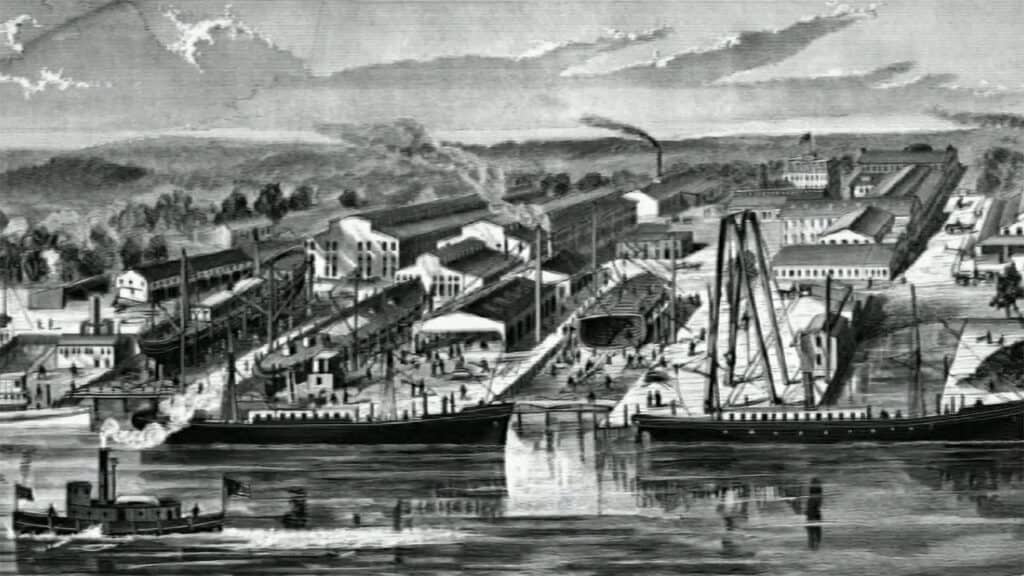
John was not only a candy maker. He was also a provider, a guide, and a kind of father figure to his family. With the profits from his growing shop, he brought three younger half-brothers to America, found them housing, and insisted they receive an education. Though one of them was 25 years younger, John embraced the responsibility of keeping the family together in a new land. For him, success meant more than financial security. It meant making sure others could share the same chance at a future.
A new home on Market Street
By the early 1900s, Wilmington was filling with immigrant businesses. Greek confectioners and restaurateurs set up storefronts along Market and King Streets. The Govatos family soon joined them at the heart of the city. John introduced Wilmington to the ice cream soda, blending Old World skill with New World creativity.
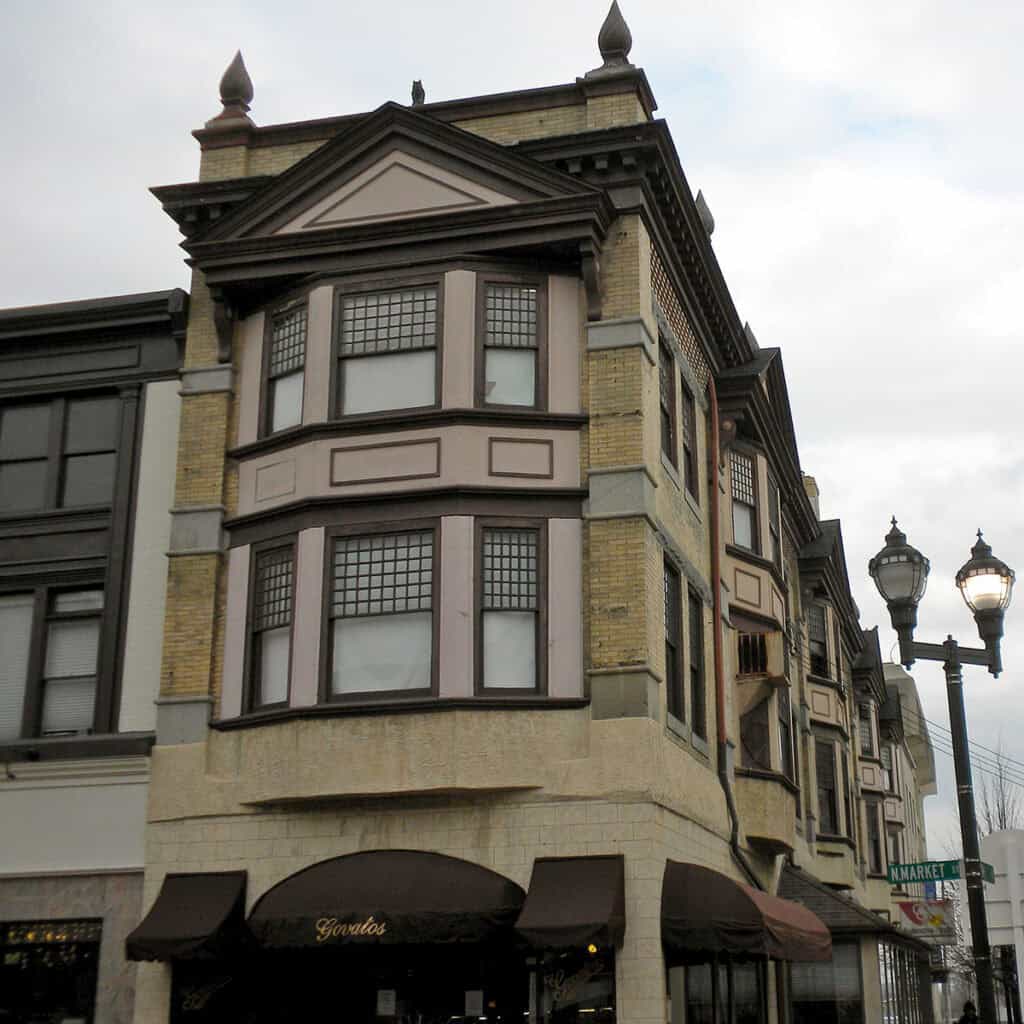
Around 1912, the family moved into the three-story building at 800 North Market Street, which became the permanent home of Govatos Chocolates (National Register of Historic Places). The structure, with its distinctive copper bays and Queen Anne design, stood as both a candy counter and a luncheonette. Customers came not only for chocolates but also for meals and conversation. In that way, the store became something like the kafeneio of Greece, a place where food and fellowship went hand in hand.
The Greek community of Wilmington
When John opened his shop, Wilmington’s Greek community was still small. The first known Greek settlers were the Tsagares brothers, whose arrival in the United States was documented in 1891, with their presence in Wilmington directories recorded by 1892. Over the next decades, more families came, spreading throughout the city in neighborhoods from the East Side to the Ninth Ward. They did not cluster tightly as Greeks in Philadelphia often did, which made businesses like Govatos all the more important.
By 1934, the community had grown enough to establish Holy Trinity Greek Orthodox Church at 808 North Broom Street. The church became the spiritual anchor for Wilmington Greeks, while the businesses along Market Street provided economic and social stability. Together, they helped keep Hellenism alive while giving families a pathway into American life.
Handmade chocolates with care
From the beginning, what set Govatos apart was the way the candy was made. Nearly ninety percent of the products were created on the third floor of the Market Street building. Recipes stayed traditional, and molds were left to dry naturally, depending on the weather. This meant production was slower and more demanding, but it also meant every piece carried the flavor of craftsmanship.
Valentine’s Day and Easter were the busiest seasons. On Valentine’s weekend, more than a thousand chocolate hearts left the shop in carefully packed boxes. Easter brought buttercream, coconut, and peanut butter eggs, along with the famous “Chop Suey” egg filled with coconut, cashews, honey, and raisins.
The hand-molded figures became part of Wilmington’s seasonal traditions: ducks, crosses, bunnies, even a Flying V guitar or Popeye on a horse. Customers placed orders by phone long after online shopping had become the norm. Relationships mattered more than efficiency.
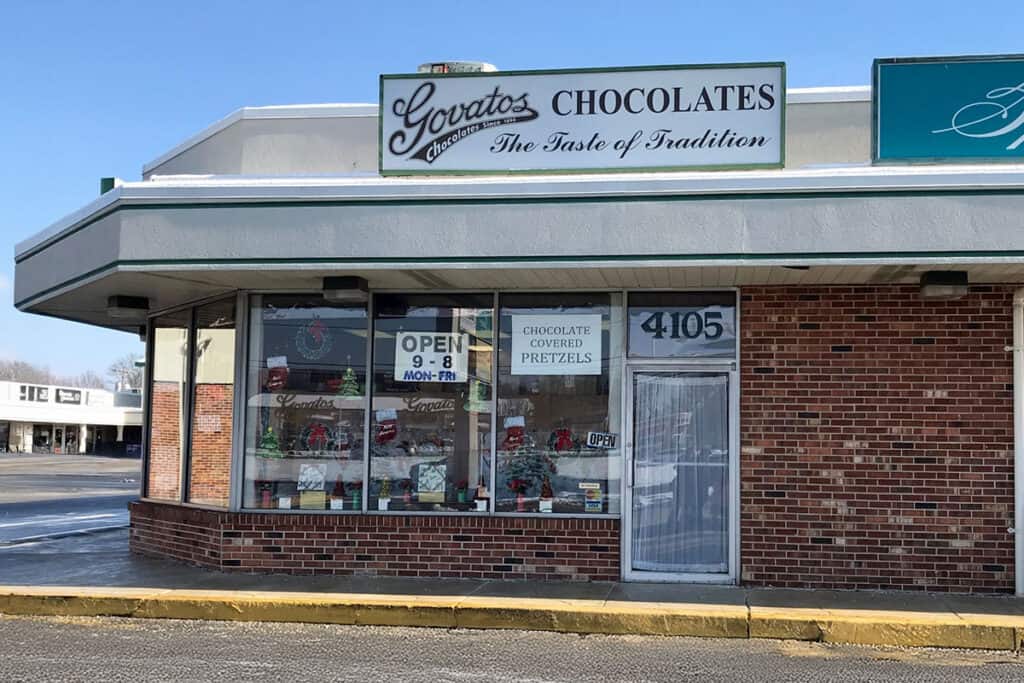
While the company later opened suburban shops, all production continued on the third floor of the Market Street building, which remained the heart of Govatos Chocolates until its closure.
Three generations at the helm
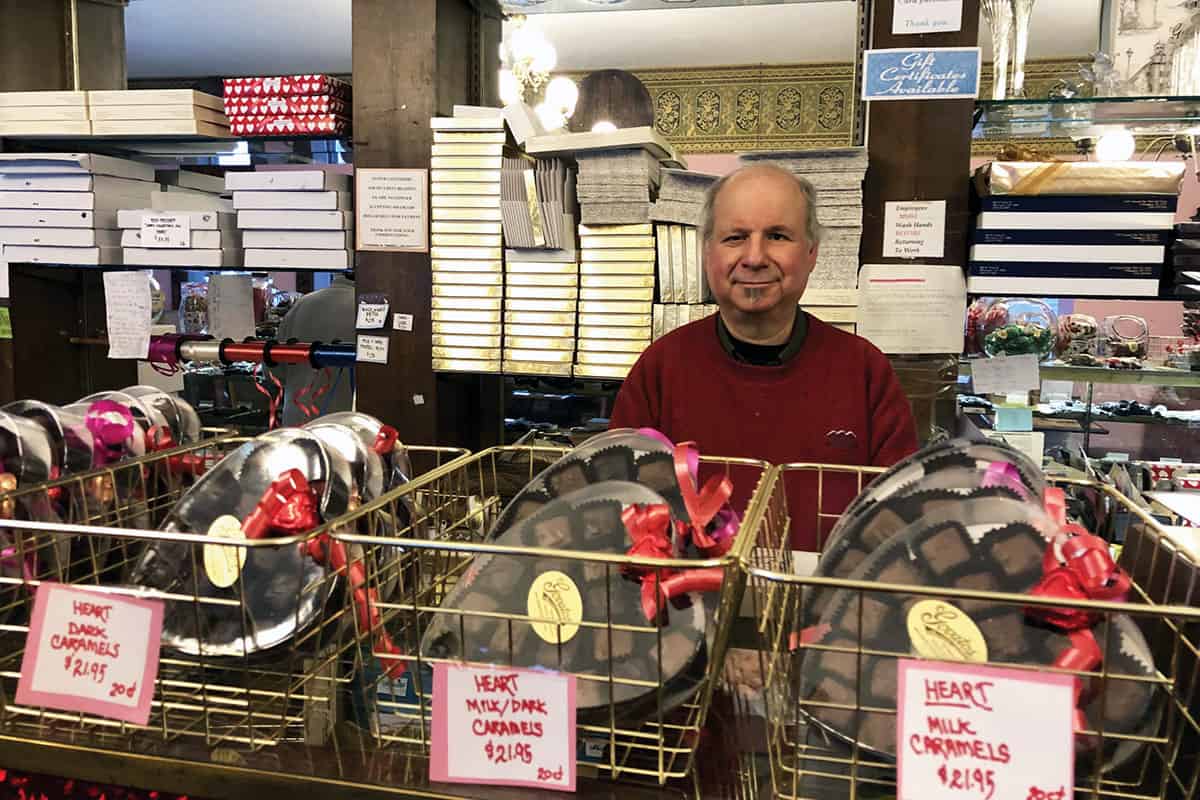
When John died in the early 1940s, his brother Nicholas carried on the business. Nicholas passed it to his son Richard, who became both proprietor and chief candymaker. Later, Richard’s sons Nick and Richard Jr. represented the third generation to carry the business forward. Richard Jr. mastered the craft of chocolate making while Nick managed operations, keeping alive the balance of art and business that their great-uncle had begun.
Closing the doors
By the 2020s, change had come again. After more than forty years of candy making, Richard Jr. had no children interested in carrying the tradition forward. Nick, after fifty years of managing the shop, faced the same reality. The next generation had moved into other careers, and the time had come to decide.
In August 2024, Nick announced that Govatos Chocolates would close (Fox 29 Philadelphia). He admitted that the choice was bittersweet. “It’s been 130 years in business as a family, and it hits you hard, it really does,” he reflected. His wife, with a mixture of humor and honesty, reminded him that time is precious: “She hit me with a frying pan and basically made me wake up, that you don’t have that much time left.”
With that, the last candy maker in Wilmington ended its run.
A lasting legacy
The closing of Govatos was more than the end of a store. It marked the passing of a tradition that had shaped Wilmington’s cultural life for over a century. The Market Street building, listed on the National Register of Historic Places since 1985, still stands as a monument to the craftsmanship and perseverance of immigrant families.
Even without the chocolates, the legacy of Govatos remains. It is there in the memories of children who grew up with Easter eggs from Market Street. It is there in the values John showed when he spent his early profits on his brothers’ education rather than personal comfort. It is there in the way generations placed quality before convenience, family before profit, and community before expansion.
For Wilmington’s Greeks, Govatos was more than a business. It was proof that heritage could be carried across an ocean, planted in American soil, and handed down through time. The sweet aroma may have faded, but the story continues to inspire.
Featured image: Nick Govatos behind the counter at Govatos Chocolates, carrying on a 130-year family tradition until the shop closed in 2024.