
Animal rescue in Greece is moving from emergency improvisation into the country’s official disaster response system.
The government presented a new national mechanism on June 15 at the animal reception station in Galatsi, where Prime Minister Kyriakos Mitsotakis toured the facility with Interior Ministry officials, Civil Protection representatives, local authorities, volunteers, and animal welfare groups, according to the prime minister’s office.
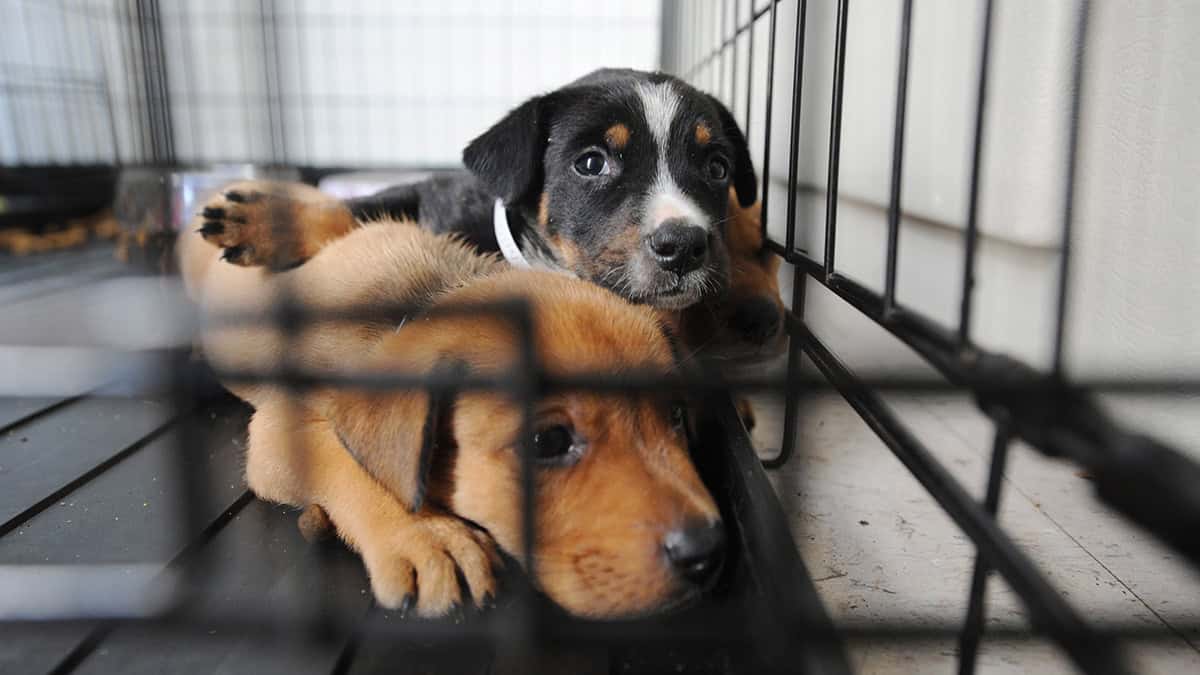
The Galatsi facility is designed to receive animals affected by fires, floods, earthquakes, and other emergencies. It includes areas for intake and reunification, veterinary care, and operational coordination, giving rescuers and authorities a fixed point for animals that are lost, injured, or separated from their owners.
The practical tools include the 10400 helpline, a Civil Protection-registered animal rescue team, training programs, the Attica reception station, and the possible use of 112 emergency alerts for animal-related instructions, Ta Nea reported.
Taken together, those pieces point to a change in how Greece is trying to handle animals during disasters. Until now, much of the work has depended on shelters, local welfare groups, volunteers, and individual rescuers acting quickly, often with limited coordination and little institutional support.
That volunteer response has saved animals during fires and floods, but it has also shown the limits of goodwill under pressure. When animals are scattered across burned properties, flooded yards, damaged shelters, and evacuation zones, rescue depends on more than speed. It needs communication, transport, veterinary support, temporary shelter, and a clear chain of responsibility.
The new mechanism tries to give that work a public structure. Instead of treating animal rescue as something separate from disaster management, it places volunteers, authorities, veterinarians, emergency communication, and reception facilities inside the same response framework.
Animals are rarely a side issue for the people who care for them. A family may delay leaving because a dog is missing. An older resident may refuse to abandon a cat. Volunteers may try to reach unsafe areas because no official animal response has been activated. A better system for animals can reduce confusion and risk for people, too.
Civil society remains central to the plan. Dogs’ Voice, the organization founded by Elena Dede, has been closely associated with animal rescue work in Greece and was visibly involved in the Galatsi presentation. Dede guided the prime minister through the facility, while Mitsotakis publicly praised volunteers and animal welfare groups for the role they have played in past emergencies.
The strongest version of the mechanism would not bury volunteer knowledge under bureaucracy. It would give that experience, training, equipment, insurance, legal clarity, and a place in the command structure.
The rollout begins in Attica, with the stated goal of expanding across Greece by 2029. That timeline may be realistic, but it also shows where the next challenge lies.
Greece’s most difficult emergencies often take place far from the center, in villages, islands, mountain areas, farming communities, and regions where local capacity is limited. A national mechanism will need more than one well-organized reception station. It will need trained local teams, transport, veterinary networks, temporary holding areas, and coordination that works under stress.
There is also one important gap in the first version. Ta Nea reported that farm animals and horses are not yet fully covered by the institutional framework. That leaves a question for the next stage, especially in rural areas where animals are tied not only to families, but also to work, land, and livelihood.
Companion animals are the most visible part of the issue, particularly in urban and suburban disasters. But fires and floods do not stop at the edge of a home. They also affect stables, sheepfolds, farms, kennels, and small rural holdings. A fuller system will eventually need to account for transport, feed, water, veterinary checks, temporary shelter, movement rules, and the ministries responsible for agricultural life.
Even with that gap, the mechanism does something Greece had not done before: it brings animal rescue into the official structure of disaster response. It also acknowledges what rescuers and residents have known from experience: animals are part of the emergency, not an afterthought.
Greece will face more fires, floods, and extreme weather events in the years ahead. The success of the new mechanism will depend on how well it works away from a launch event, when roads are closed, phones are ringing, animals are missing, and local authorities are already stretched.
For now, Greece has moved animal rescue closer to the center of disaster response. The next task is to make sure the system can travel beyond Attica and hold up when it is needed most.