
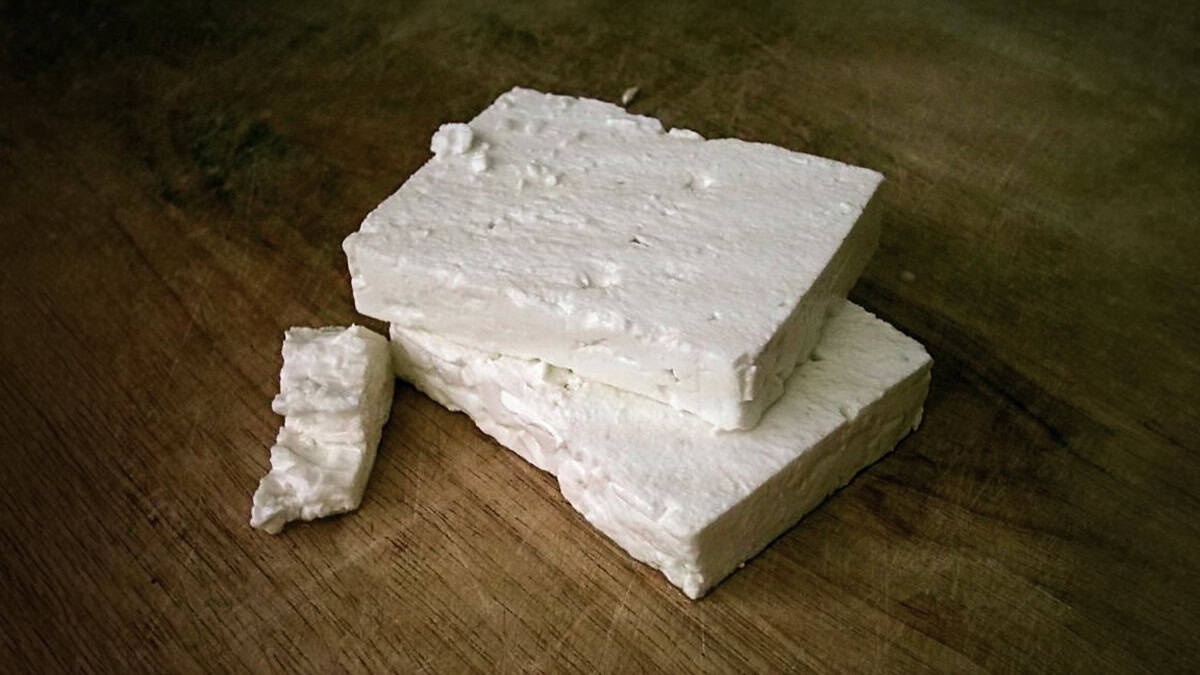
A growing livestock health crisis in Greece is beginning to affect something familiar: feta.
Since 2024, outbreaks of sheep and goat pox have been recorded across northern Greece and parts of the Aegean, including Lesvos, a region closely tied to dairy production. Veterinary authorities have responded with containment measures that include culling infected and nearby animals, restricting movement, and isolating farms.
According to regional veterinary authorities, thousands of animals have already been culled in affected areas. For farmers, the impact is immediate. For feta production, the consequences unfold more slowly.
When herds shrink, production tightens
Feta is not just another export. It is Greece’s leading cheese product, with exports exceeding €700 million annually in recent years. Its protected designation of origin means it can only be made in specific regions of Greece using local sheep’s and goat’s milk.
That protection preserves quality. It also limits flexibility.
When herds are reduced, production cannot shift elsewhere. Milk supply tightens, and with it, the margin producers rely on to absorb shocks.
The pressure is not coming from a single outbreak but from repetition. Each cycle of disease, culling, and restriction leaves less room to recover.
Losses that take years to rebuild
In affected regions, losses are not measured only in numbers. When animals are culled, rebuilding a flock takes time. Breeding cycles stretch over years, not months, and farmers must absorb the cost of feed, labor, and uncertainty while they recover.
Most farms involved in feta production are small or mid-sized family operations. In many cases, the herd represents decades of gradual growth.
State compensation programs are in place, but farmers’ associations have warned that payments often fall short of real losses, especially when factoring in lost milk production over time rather than just the value of the animals.
Containment first, debate ongoing
Greek authorities have followed EU protocols focused on containment: restricting movement, isolating outbreaks, and culling to prevent wider spread.
At the same time, the crisis has reopened debate around vaccination. Some producers argue that broader vaccination could stabilize herds and prevent recurring losses. Others point to regulatory and trade concerns, as vaccination status can affect export classifications within the EU framework.
For now, containment remains the dominant approach.
What tighter supply means abroad
The effects are unlikely to appear overnight, but they are already shaping how the market responds.
Feta depends entirely on Greek milk. When supply tightens, producers have limited ways to compensate. Prices can rise, availability can fluctuate, and export markets may feel the changes unevenly.
For Greek communities abroad, where authentic feta remains a staple, this often shows up quietly. A higher price. A different brand on the shelf. Or a product that is simply harder to find at certain times of year.
Greece’s dairy sector has weathered financial crises and rising costs before. What makes this moment different is that it reaches into the foundation of production itself.
There is no single breaking point here. No defining event. It is a steady shift.
Fewer animals. Less milk. And a product that depends entirely on both.