
Most of us in the Greek-American community know our usual points of connection. We talk about the old country, the church festivals, and where our families came from. Usually it’s a village, a small town in the north, or a coastal place our grandparents still call home. We’re familiar with our place in Philadelphia, in America, and in Greece itself. But every now and then, something shifts our perspective. That’s how we felt learning about the relationship between Greece and the Philippines.
This year marks 75 years since Greece and the Philippines formally established diplomatic ties. The official agreement was signed in August of 1950, though it didn’t take full effect until 1954. Either way, it’s a relationship that has lasted for decades. The two countries are worlds apart, but somehow, they’ve built something that continues to grow.
The earliest thread goes all the way back to the ancient world. Greek writers in the first century BC described an island called Chryse, meaning “the golden one.” They placed it somewhere east of India and believed it was rich in natural resources. Some modern scholars have speculated that Chryse may have referred to Southeast Asia, possibly even the Philippines. Others disagree. The connection is still up for debate, but it shows that even back then, Greek thinkers were looking far beyond their own shores.
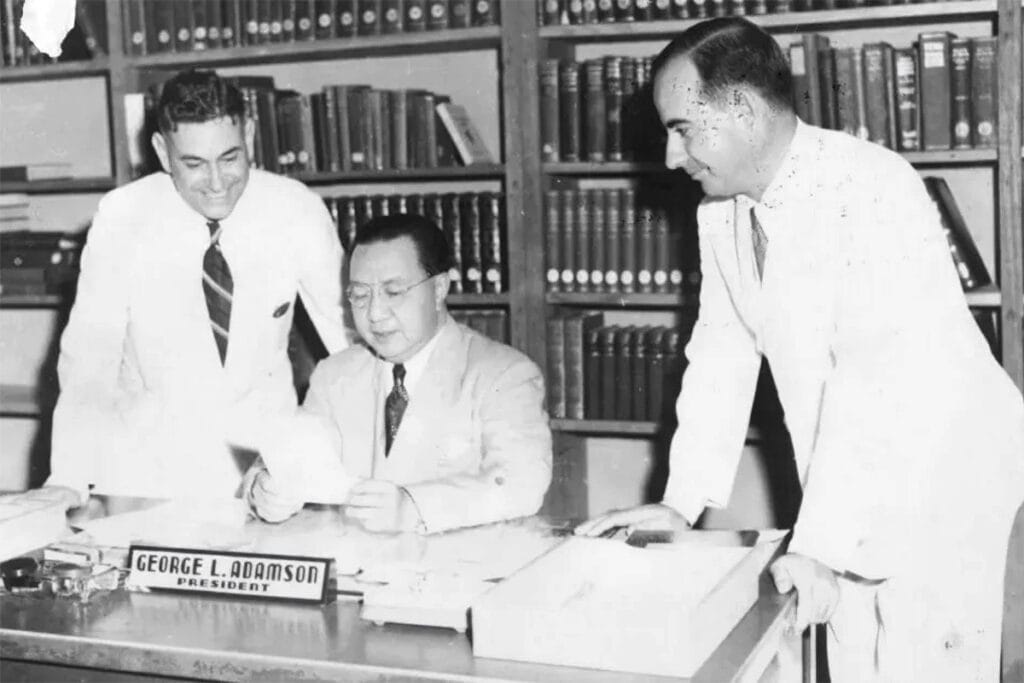
The story becomes much more concrete in the 20th century. In 1932, a Greek chemist from Athens named George Lucas Adamopoulos moved to Manila. He founded what became Adamson University, now one of the most respected schools in the Philippines. He didn’t stop there. He helped establish the country’s first Greek Orthodox foundation and later served as Greece’s Consul General. He also signed the original Treaty of Friendship between the two countries. When he passed away on February 28, 1974, he left behind not just a school but a legacy that still matters today.
The Orthodox community in the Philippines remains small but steady. In the late 1980s, the Hellenic Orthodox Foundation was established. A few years later, a cathedral was built in Sucat, just south of Manila. In March of 2000, Patriarch Bartholomew consecrated it. Today, the Orthodox population in the Philippines is around 2,500 people. Some are Greek, many are Filipino. The liturgy, the hymns, and the candles are familiar to anyone who has sat through a Holy Week service in Upper Darby or Broomall.
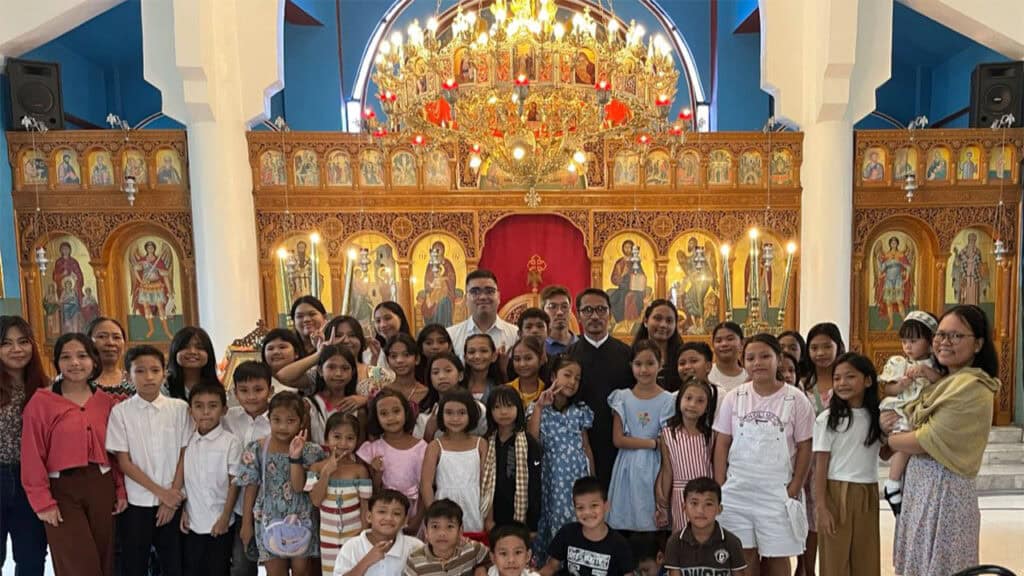
There is only one Greek Orthodox priest serving the Manila area. Like many clergy in newer communities, he works a full-time job during the week and tends to his parish on weekends and evenings. Most of his congregation is Filipino. He travels for services, feeds the poor, and keeps the church open with little fanfare. As described in Finding Greece in the Philippines: A Billa in Manila, published by Neos Kosmos in 2024, it’s the kind of quiet service that holds a community together, even when that community is small and scattered.
The Greek presence in the Philippines has always been limited in numbers. In the same article, writer Billy Cotsis describes the local Greek population as fewer than 100, with no formal community organizations. Some are involved in shipping, others in hospitality, and a few have married locally and settled down. In 2024, the Greek Embassy celebrated March 25 publicly in Manila for the first time, a small but meaningful milestone for a diaspora that mostly moves through the country quietly.
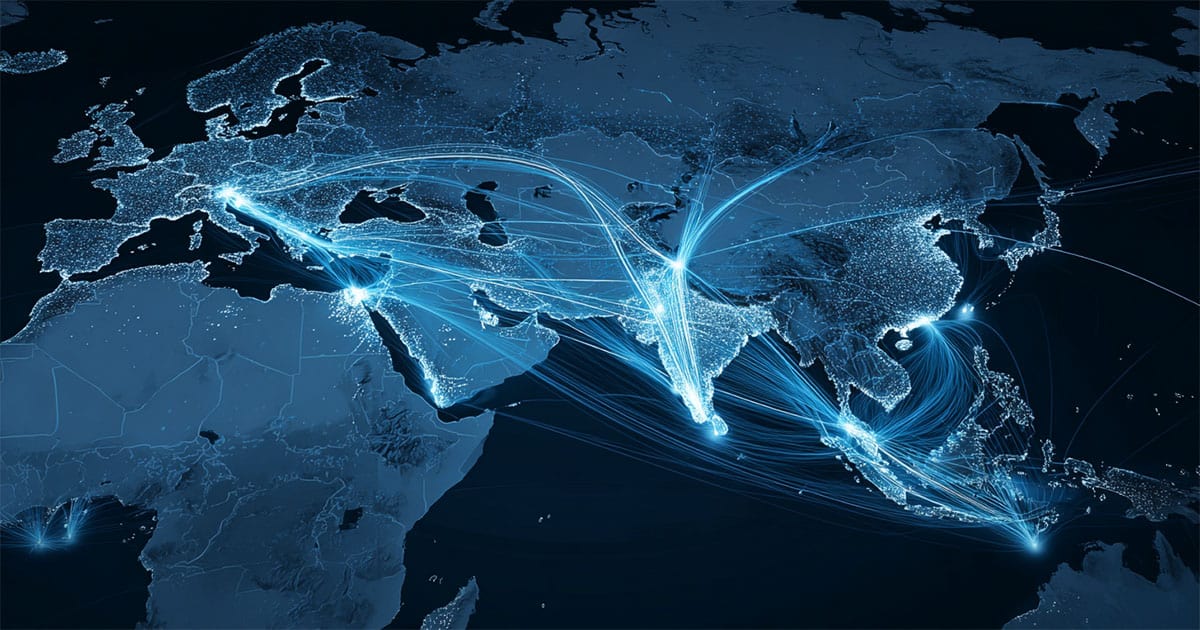
But the most significant connection between the two countries lies at sea. Greece operates the world’s largest merchant fleet. The Philippines supplies between 25 and 30 percent of the world’s seafarers. At any given time, tens of thousands of Filipino crew members are working aboard Greek-owned or managed vessels. Some estimates put that number at 50,000. Others are more cautious. The exact figure is hard to pin down, but the relationship is real and it matters. Greek shipping depends on Filipino labor. Filipino seafarers depend on those jobs to support families back home.
This partnership has effects on land as well. In recent decades, many Filipinos have made Greece their home. Some sources from the 2000s estimated the population as high as 30,000. Other figures, such as valid residence permits, were much lower. Today’s estimates vary, but a working number often cited is around 15,000. Most live in Athens and other urban centers. They work in homes, in hospitality, and in maritime support. Their presence is quiet but steady, woven into everyday life.
Greece and the Philippines also share certain geopolitical concerns. Both are maritime nations with regional disputes. Greece faces challenges in the Eastern Mediterranean, and the Philippines is involved in disputes in the South China Sea. They have found common ground in advocating for international maritime law and freedom of navigation. In recent years, this shared position has led to more cooperation, including joint discussions on maritime security.
Trade between the two countries has grown, though it remains modest compared to larger economies. Older figures put exports in the 8 to 10 million dollar range in each direction. More recent data shows a jump. In 2024, Greece exported nearly 26 million dollars in goods to the Philippines. The Philippines sent roughly 27 million the other way. That number rose again in 2024. The overall scale is still manageable, but it is trending upward. Sectors like shipping technology, renewable energy, and food products are getting more attention, along with talk of a European Union–Philippines free trade agreement that could open even more doors.
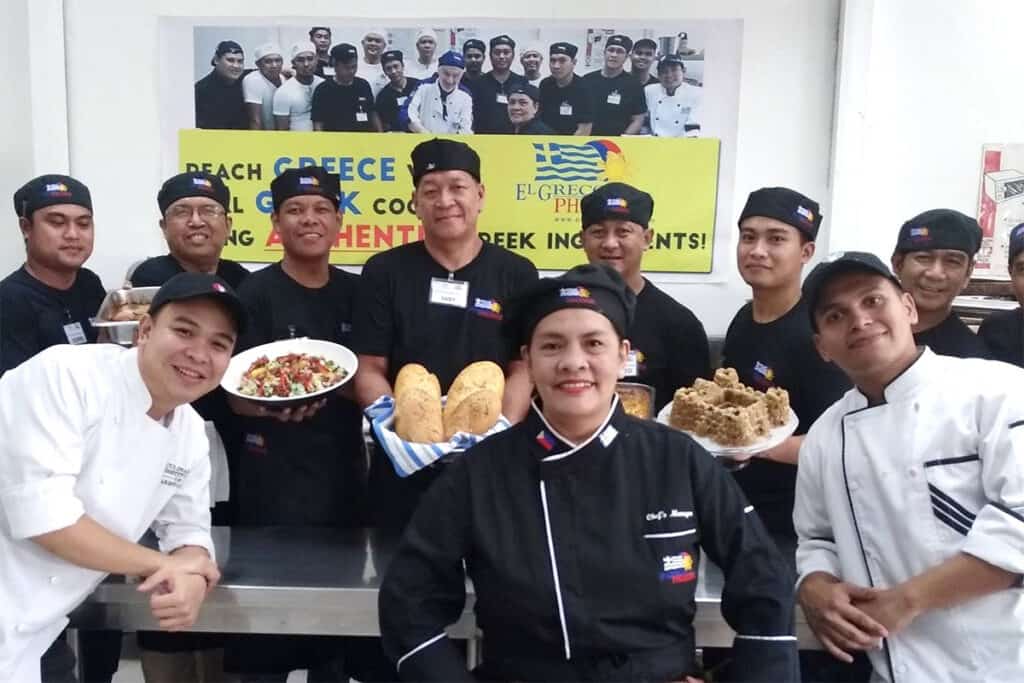
One unexpected example of cultural exchange is a Greek cooking school just outside Manila. The El Greko Cooking Center, run by Chef Anthony Kouroustsavouris and his wife Emily Reyes, trains young Filipino chefs in Greek cuisine and language. According to Neos Kosmos, the school has operated for over a decade and gives its students a real path to global opportunities, often through shipping industry kitchens. For many, it is their first encounter with Greece, experienced not through books, but through food and language.
Greek restaurants also dot the Metro Manila area. Souv by Cyma, owned by award-winning Filipino chef Robby Goko, offers a modern take on Greek cuisine in Taguig. Another local favorite is Akrotiri in Alabang. These places may be few, but they reflect a genuine and growing appreciation for Greek food among Filipino diners. For travelers or locals with a taste for moussaka, grilled lamb, or galaktoboureko, Greece is never too far away.
We don’t often talk about Greece and the Philippines in the same sentence. But the connections are there, and they are real. From a university founded in Manila by a Greek chemist to a Filipino sailor aboard a Greek vessel, the story stretches across oceans. It shows how relationships form not just through geography or politics, but through work, faith, and the quiet decisions of people who carry more than one place in their lives.