
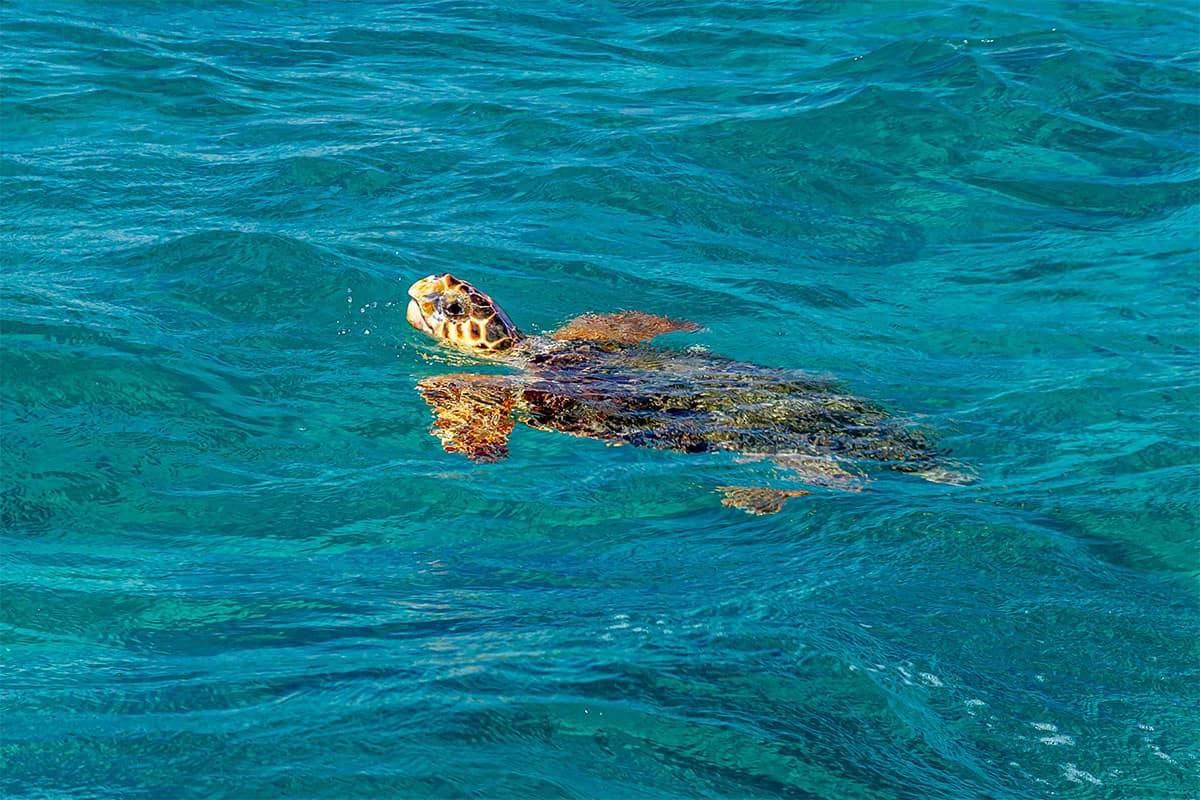
Along the wide curve of Kyparissia Bay, where sand dunes meet the Ionian Sea, something extraordinary happened this past summer in Greece. Beneath the surface of the quiet beach, thousands of sea turtles began to hatch. It was one of the most successful nesting seasons the country has ever recorded.
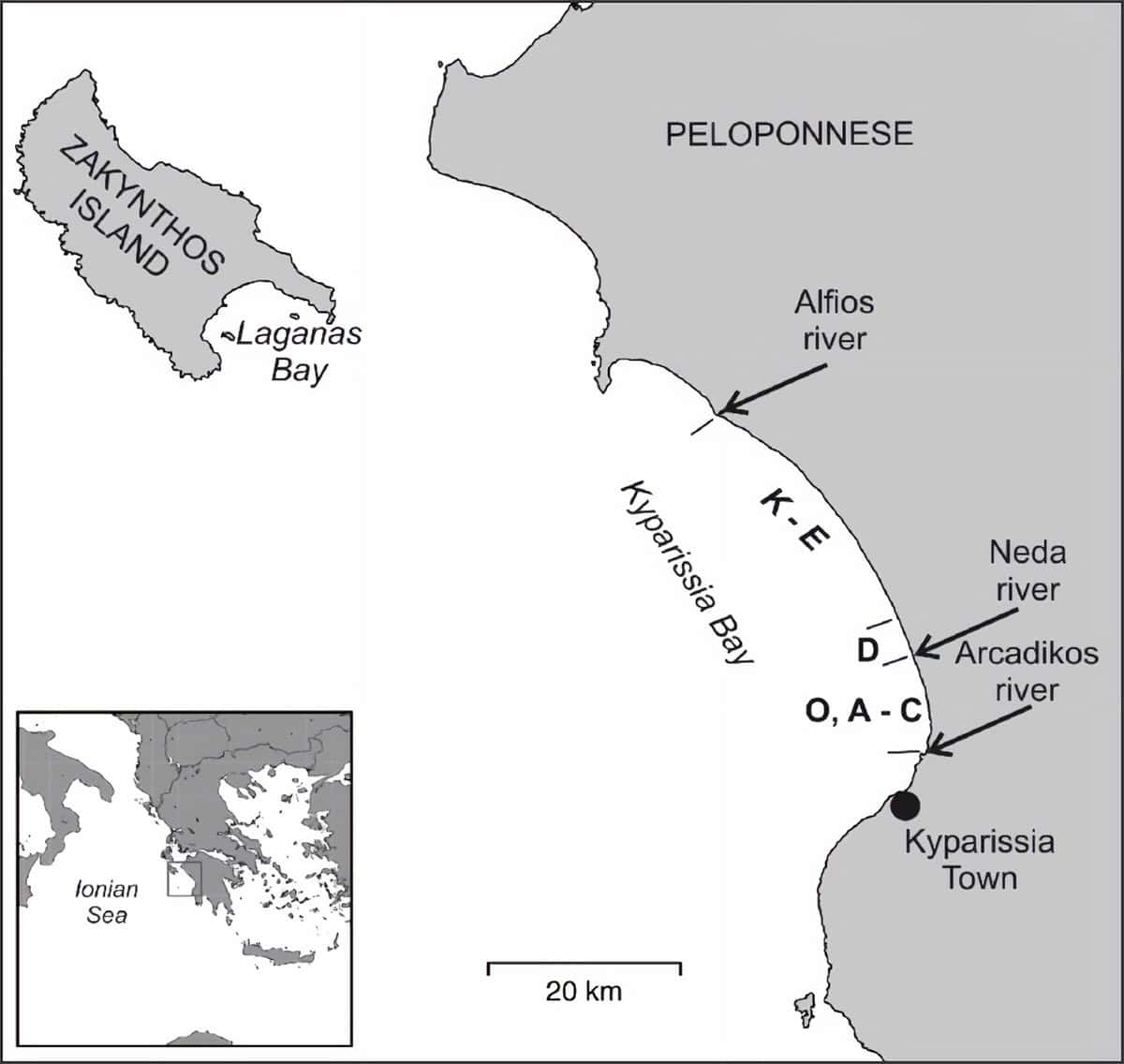
According to ARCHELON, Greece’s Sea Turtle Protection Society, the 2025 season brought about 6,700 loggerhead (Caretta caretta) nests to the core nesting area of Kyparissia Bay, the 9.5-kilometer stretch between the Arkadikos and Neda rivers. A further 1,200 nests were recorded north of the Neda River toward Tholo, bringing the expanded monitoring total to roughly 7,900 nests.
The organization credits this success to decades of fieldwork. Since 1992, ARCHELON has been protecting nests along the core beach, recognized as part of the European Natura 2000 network.
The fieldwork: science and sacrifice
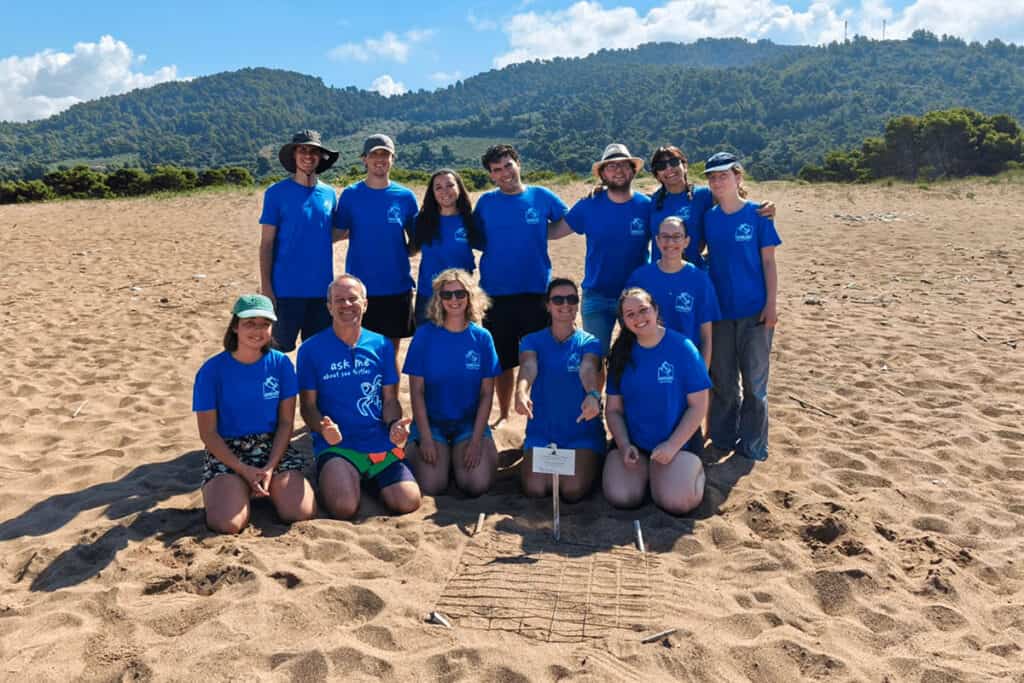
Behind these numbers lies an extraordinary commitment from volunteers and researchers. Between May and September 2025, ninety volunteers and researchers joined the effort, working through every stage of the nesting cycle. Their days followed an intense rhythm set by the turtles themselves.
During the nesting season, from mid-May through mid-August, volunteers began dawn patrols as early as five in the morning, walking miles of beach to locate females coming ashore and record their nesting activity. Each nest was measured, documented, and marked with careful precision. Night patrols, held between ten in the evening and four in the morning, required special care. Researchers approached nesting females slowly and quietly, fitted them with satellite tags when authorized by the European LIFE MareNatura project, and took biometric measurements without disturbing them.
Two adult turtles received satellite transmitters in 2025. The data added to a growing record that reveals the hidden geography of loggerhead life, with feeding grounds scattered across the Mediterranean and migratory routes stretching for thousands of kilometers.
As the nesting season gave way to hatching season, from mid-July through late September, the volunteers’ work changed. Nests were excavated after hatchlings emerged to estimate hatching success rates. More critical still was protecting vulnerable hatchlings from artificial light pollution. Volunteers built shading structures that guided disoriented baby turtles toward the sea and away from beach lights, roads, and shops that could fatally mislead them. They placed protective metal fencing around nests to guard against predation by dogs, foxes, and other mammals, a simple measure that has sharply reduced nest loss in busy sections of the beach.
The volunteers came from across the world. Many returned year after year, forming what ARCHELON members describe as a close community bound by shared purpose. One longtime volunteer said that living simply at the field camps brought an invaluable form of personal growth, teaching patience, resilience, and a deep emotional investment in the work. When volunteers watched hatchlings reach the sea, they felt profound pride. When flooding or predators destroyed nests despite their efforts, they carried the losses just as deeply.
Watch: Volunteers with ARCHELON during a nesting patrol on Crete, part of the same nationwide effort to protect Greece’s loggerhead sea turtles. (Video: EyeQ Creative Media / ARCHELON)
Engaging the community
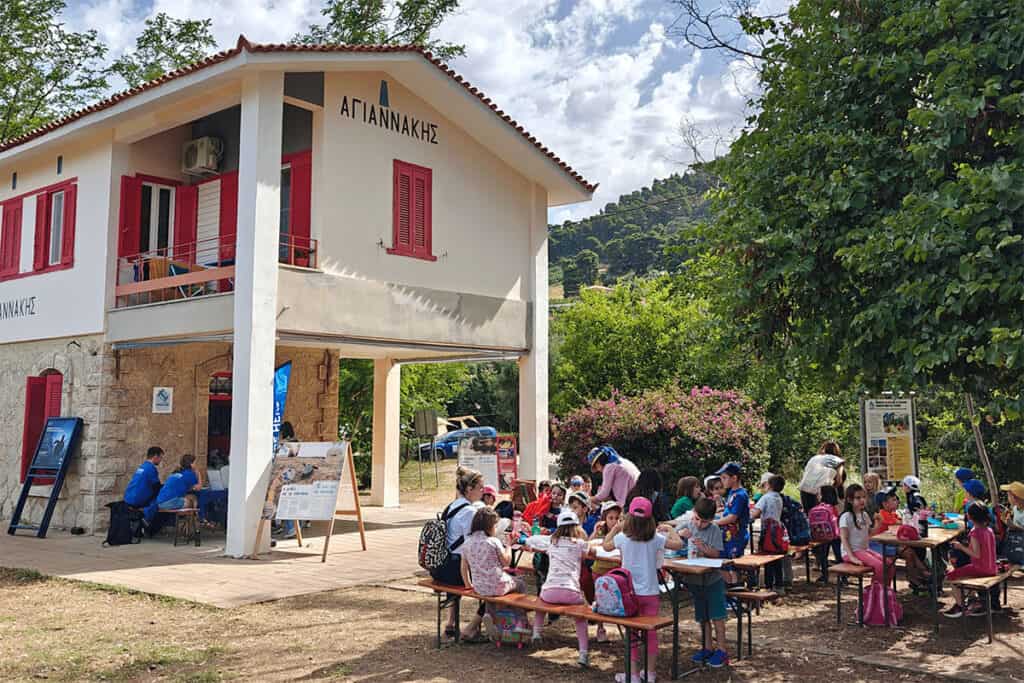
While fieldwork took place on the beaches, conservation efforts also reached into the villages and towns surrounding Kyparissia Bay. Nearly six thousand residents and visitors joined guided walks, school presentations, and beach cleanups during educational activities at ARCHELON’s Environmental Station in Agiannaki and at its seasonal information points in Kalo Nero and Kyparissia. These public events raise awareness and help both locals and visitors understand why the turtles matter and what threatens them.
The balance between tourism and conservation remains delicate. Research from the University of the Aegean found that Kalo Nero beach, the core nesting area, was receiving about seven hundred more visitors per day than it could sustain without harming nesting success. Beach furniture left on the sand at night often prevents females from reaching suitable nesting grounds, forcing them to lay eggs in less ideal spots or abandon nesting altogether. Uncontrolled camping, vehicle access, and strong lighting from beachside establishments further disrupted the turtles’ behavior.
Yet many in the community have begun to see conservation as part of Kyparissia’s identity. Smaller family owned businesses and local tourism operators have worked with ARCHELON to protect nesting areas. These partnerships show that environmental protection and tourism can coexist, strengthening the region’s reputation as a destination for responsible, nature conscious travel.
The fragile victory
Despite the progress, ARCHELON’s report warns that the achievement is fragile. Although Kyparissia Bay was designated a protected nature area in 2018, the management plan required by law has still not been implemented. Illegal construction, camping, bright lights, and vehicle access continue to threaten the beaches. The local management authority remains understaffed, and enforcement of environmental rules is limited.
ARCHELON notes that weak implementation of environmental legislation has been repeated year after year, with authorities and coastal businesses often ignoring restrictions meant to safeguard the nesting grounds. The organization is calling on the Greek state to fully apply the National Action Plan for the Loggerhead Sea Turtle, approved in 2021, and to provide financial support for long-term monitoring and protection. To date, ARCHELON has covered all core monitoring and protection costs on its own, a burden that becomes increasingly difficult as nesting numbers grow.
A quiet symbolism
Even with these challenges, the report ends on a hopeful note. Together with Laganas Bay in Zakynthos, Kyparissia Bay now accounts for more than half of all loggerhead nests in the European Union. The government’s proposal for a new Ionian Sea National Marine Park, which would include both areas, offers a chance to secure that progress for future generations.
The loggerhead turtles of Kyparissia return each year to the same stretch of sand where they were born. Their survival depends on care, vigilance, and respect for the natural world. It also depends on the thousands of young people who spend their summers protecting a species they may never see again, and on coastal communities learning to value what the turtles represent —a living connection to the Mediterranean’s wild heart.