
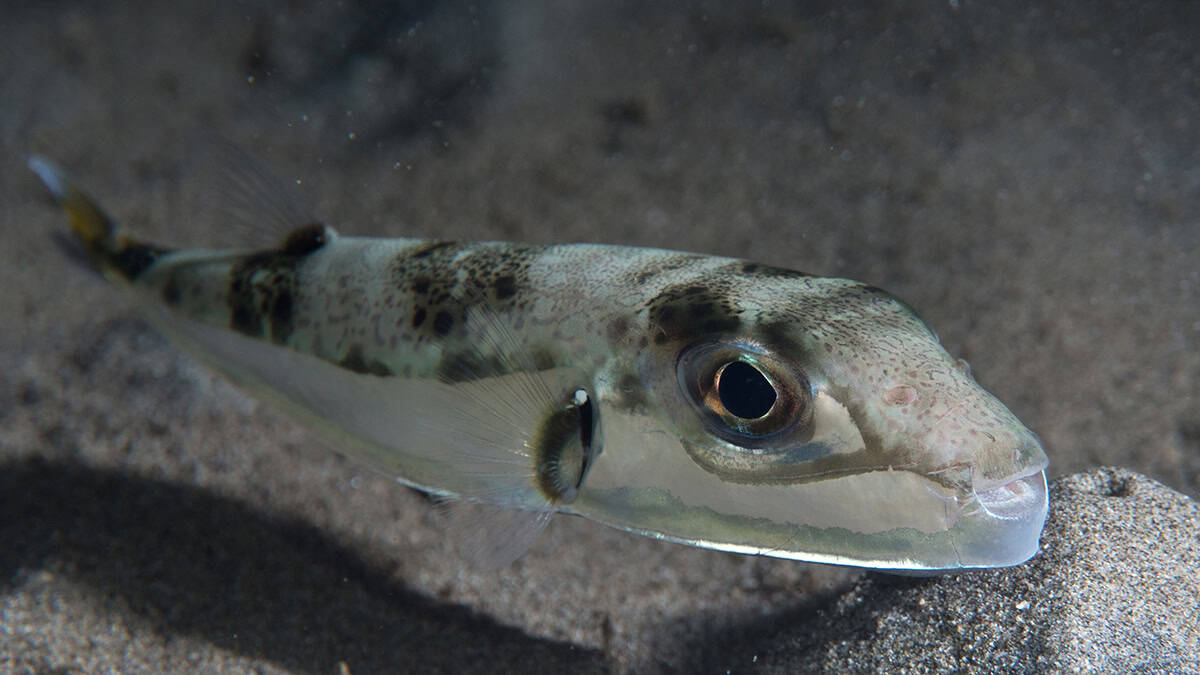
Greece has started paying fishermen to remove one of the most damaging invasive species spreading through its southern seas: the silver-cheeked toadfish, a toxic pufferfish known in Greek as lagokefalos.
The pilot program, announced by the Greek Ministry of Agriculture and Food, offers professional fishermen €5.33 per kilogram for catches of the toxic pufferfish. It begins in Crete and the South Aegean, where the species has become a serious problem for fishing crews.
The fish will not be sold. Catches will be collected, frozen, and destroyed through local government facilities.
For fishermen, the damage is practical and costly. The silver-cheeked toadfish eats fish already caught in nets, tears lines and gear with its strong teeth, and has no commercial value because it is unsafe to consume. In parts of Crete, crews have described losing fishing days to repair damaged nets.
The health risk comes mainly from eating or mishandling the fish. Silver-cheeked toadfish can contain tetrodotoxin, a powerful neurotoxin that can cause paralysis, respiratory failure, and death if consumed. Authorities warn people not to eat the fish, clean it, or handle it casually.
Public concern has also grown because of reports of bites, but officials have tried to keep the risk in perspective. The Associated Press reported that Greek authorities had not recorded sightings in bathing areas at island resorts, and medical and tourism groups on Crete have said there is no imminent danger to bathers.
Greek media have reported a suspected bite incident at Varkiza, near Athens, where an elderly woman reportedly needed stitches after being injured while swimming. Separately, the Hellenic Red Cross has issued first-aid guidance for wounds caused by the fish’s strong jaws. The bite itself is not toxic, but it can be severe.
The silver-cheeked toadfish is not native to the Mediterranean. It entered from the Red Sea through the Suez Canal and has spread as warmer waters make the region more hospitable to species once limited to more tropical seas.
Natural predators offer little relief. A 2021 review in Frontiers in Marine Science identified the loggerhead sea turtle, Caretta caretta, as one of the few documented predators of adult silver-cheeked toadfish in the Mediterranean, but researchers found natural predation too limited to control the invasion.
Greece is following a path already tried in Cyprus, where authorities have paid fishermen to remove invasive pufferfish from local waters. The idea is to compensate crews for bringing in a fish they otherwise cannot sell, while reducing some of the pressure on local fisheries.
The program is not expected to eliminate the species from Greek waters. It may help fishermen recover part of their losses and remove more of the fish from areas where it is doing the most damage.
For the public, the advice is simple: do not touch, clean, cook, or eat the fish. For fishermen, the new payment offers some support against a species that has become another sign of how quickly the Mediterranean is changing.