
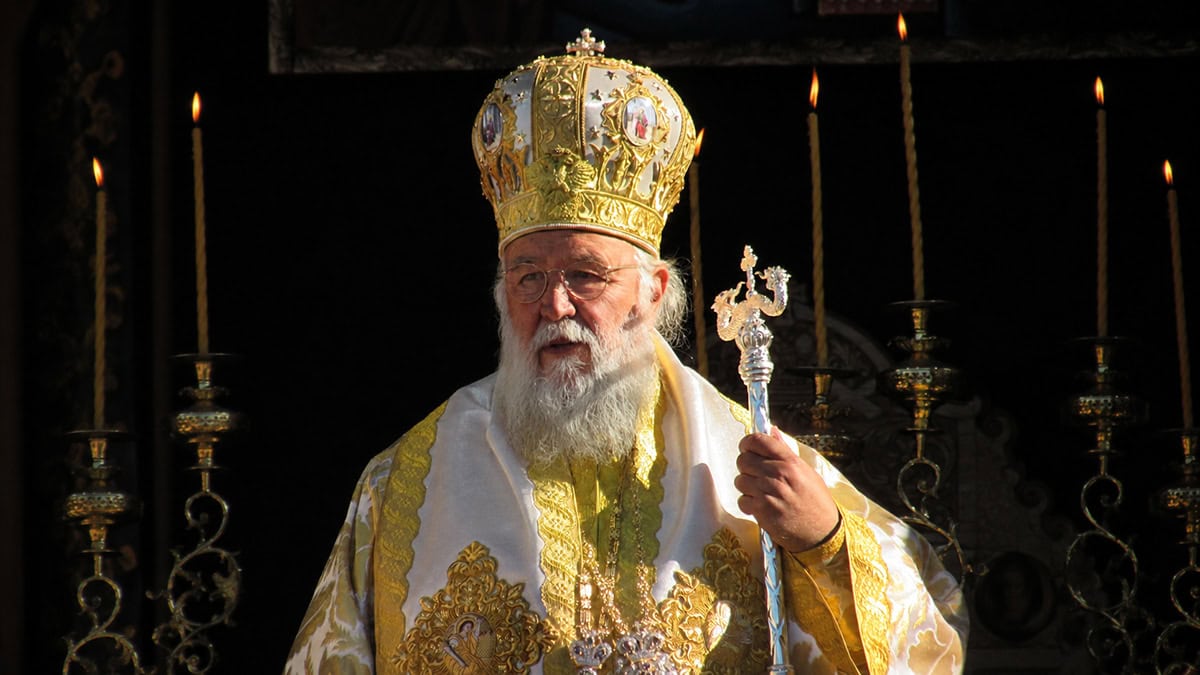
A dispute over bishops’ salaries in Greece has moved beyond the size of the paycheck.
Metropolitan Nektarios of Corfu has asked whether the senior hierarchs of the Church of Greece should be paid by the state at all. His intervention followed criticism of a Finance Ministry measure that would raise the gross monthly pay of the Church’s highest-ranking bishops.
Under Article 56 of the Finance Ministry bill, the Archbishop of Athens, metropolitans, and titular metropolitans would receive total monthly gross pay equal to 90 percent of the salary ceiling used for a ministry general secretary. Titular and auxiliary bishops would receive 70 percent of that amount.
The figure that drew attention was the top gross monthly amount, about €4,671.90. Kathimerini reported that metropolitans’ current gross monthly pay ranged from about €2,400 to €2,475, making the increase close to a doubling in some cases.
In Greece, numbers like these rarely remain technical. They arrive in a country where many people still measure public pay against rent, food prices, pensions, low wages, and the long memory of austerity. Even when a measure has a legal explanation, the reaction often comes from everyday life.
Clergy pay in Greece also belongs to a background that can be difficult to translate for readers used to the Greek Orthodox parish model in the United States.
American parishes rely on stewardship, donations, festivals, endowments, and local community support. Greece has a different arrangement. The Church of Greece has public-law status, and clergy salaries have long been paid through the state.
The official Greek and Church explanation links that arrangement to Church and monastic property that passed to the state through transfers, expropriations, and concessions from the early years of the modern Greek state through the twentieth century. A 2015 statement from Greece’s Ministry of Education and Religious Affairs connected clergy payroll to that property history and noted that salaries are paid directly by the state to clergy, not through the metropolises.
That background does not settle the argument. It explains why the issue is never only about a monthly figure.
The measure has also exposed different instincts inside the hierarchy. eKathimerini reported that Metropolitan Symeon of Nea Smyrni called for the provision to be withdrawn, saying no bishop had publicly requested a pay increase and describing the situation as a public humiliation. His objection focused on the provision itself. Nektarios went further, asking whether senior bishops should be on the state payroll in the first place.
In an article published by the Metropolis of Corfu, Nektarios acknowledged the criticism around the proposed adjustment and the disappointment it had caused. He did not write as if concern from ordinary people could be brushed aside as misunderstanding.
His concern was pastoral. He asked what the controversy revealed about how Greeks see the Church, the bishop, and the state. Then he went further. He said he had already raised inside the Synod, and was now repeating publicly, the thought that senior hierarchs should perhaps seriously consider fully resigning from the state payroll.
He did not present the idea as a slogan. He tied it to the Church’s spiritual freedom and to the credibility of the bishop before the people.
Nektarios was speaking about senior hierarchs, not ordinary parish priests across Greece. He also pointed to priests serving small, poor, remote, or difficult communities, where parish life often continues with limited resources and quiet pressure. In his view, any discussion of senior bishops’ pay should also look toward the clergy carrying the daily life of the Church in places where money and people are scarce.
His proposal leaves an obvious practical question unanswered. If senior bishops left the state payroll, the money would have to come from somewhere else, whether from diocesan resources, Church property income, donations, or another arrangement not yet defined. Nektarios raised the moral and pastoral issue more clearly than the financial mechanics.
The Holy Synod has defended the pay framework. In a statement by its press representative, Metropolitan Bartholomew of Polyani and Kilkis said the measure should not be treated as a new privilege. The Synod placed the matter in the long record of Church property and state obligations, and argued that the new structure brings the pay of senior hierarchs into the logic of public administration.
For critics, the increase looks badly timed in a country where confidence in public institutions remains fragile. For Church officials, the public salary system is not a favor granted in the present, but the result of a long and complicated settlement between the Church and the Greek state.
Nektarios’ statement cuts across that familiar divide. He does not deny the history. He does not treat the bishop’s office as an ordinary job. He asks whether the Church might speak with greater freedom if its senior leaders were no longer paid by the state.
There is dissent over the pay provision, but no clear sign yet that Nektarios’ specific proposal has become a wider movement among the hierarchy. Objecting to a raise is one thing. Asking bishops to leave state funding is another.
For Greek Americans, the story may sound familiar at first, but the setting is different. A parish council balancing a local budget is one reality. A national Church with public-law status and state-paid clergy is another.
Still, the question feels recognizable. Who supports the Church? What does that support ask in return? And when people are skeptical of institutions, what kind of example should bishops set?
Nektarios has not settled those questions. He has made the issue harder to treat as payroll alone.
Greece is now also being asked what kind of independence the Church wants, and what kind of public trust it can still command.