
There is a kind of place that almost every Greek-American family knows, even if it is not their own. A diner where someone stood behind the counter for years, where orders were called out in English and answered in Greek without anyone noticing the shift. A table in the corner that filled up at the same hour each afternoon, coffee always present, conversation moving easily between what was here and what was left behind.
In 1976, a young photographer named Kay Zakariasen walked into these places in New York and began documenting them. She had studied photojournalism at the University of Minnesota and was working at the time under the name Kay Caranicas. Her work, now held by the New York Public Library, combines hundreds of color slides with interviews and research notes documenting Greek restaurant workers across New York City.
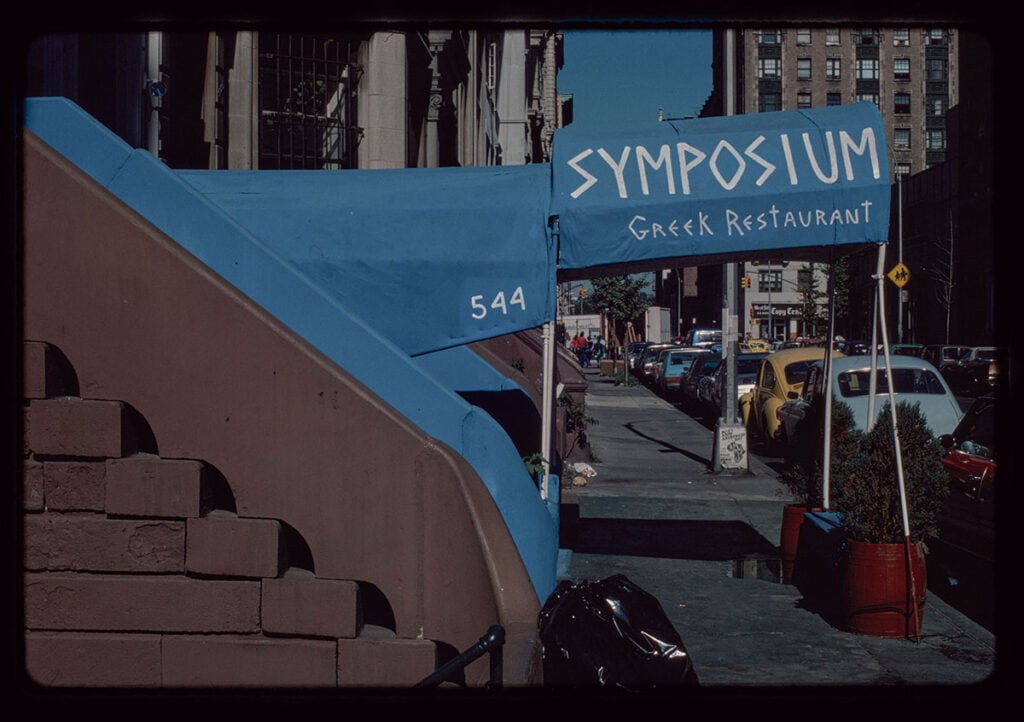
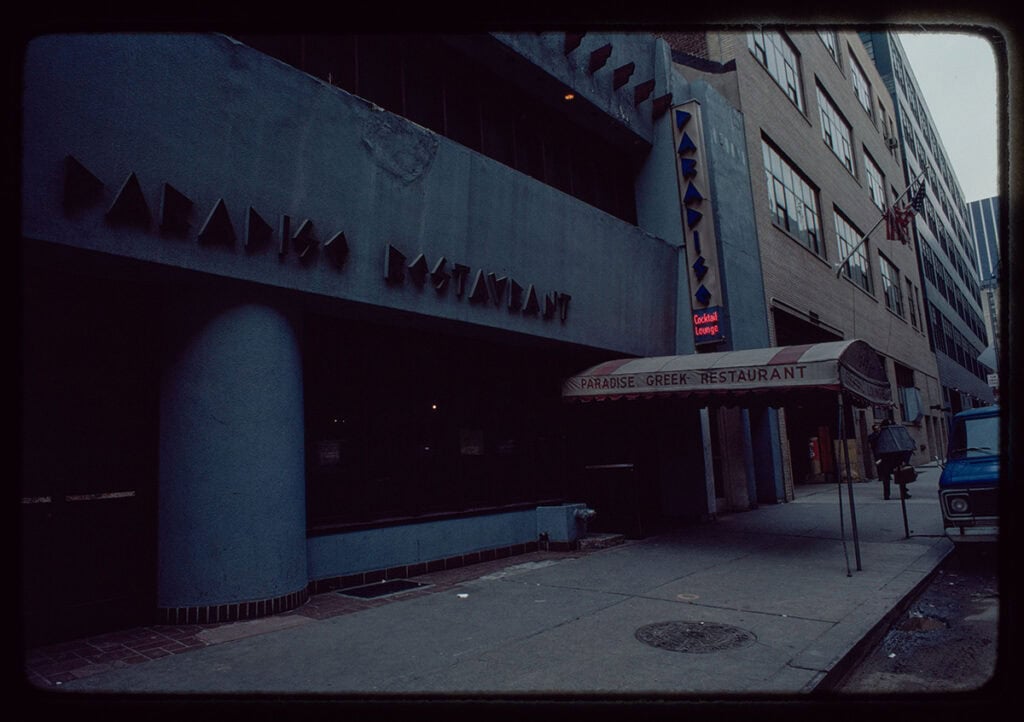
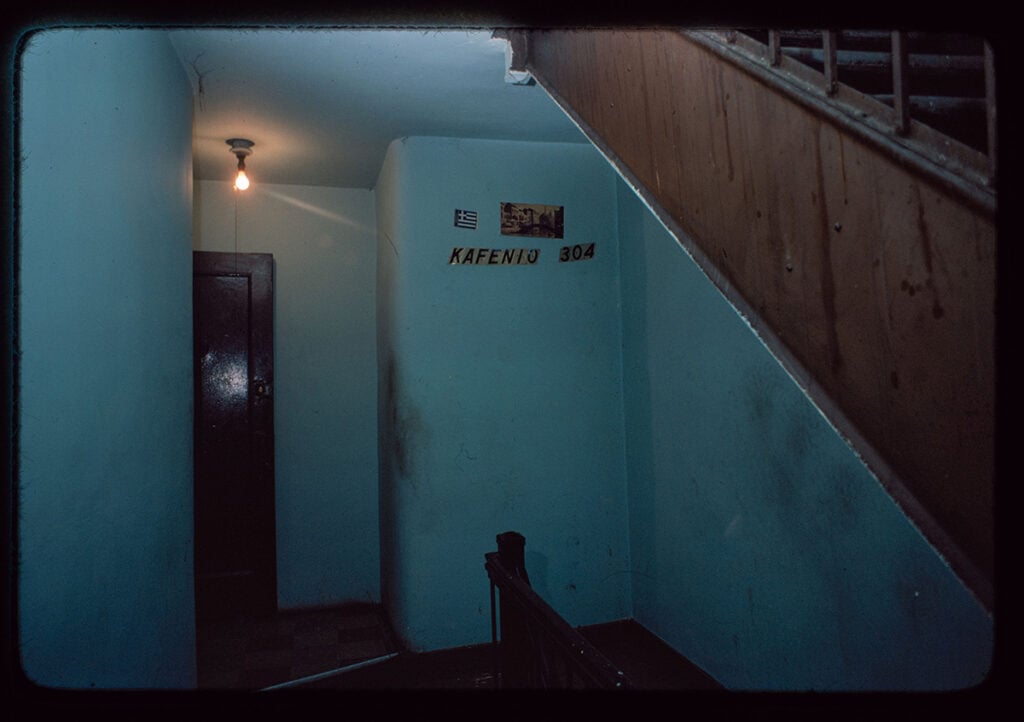
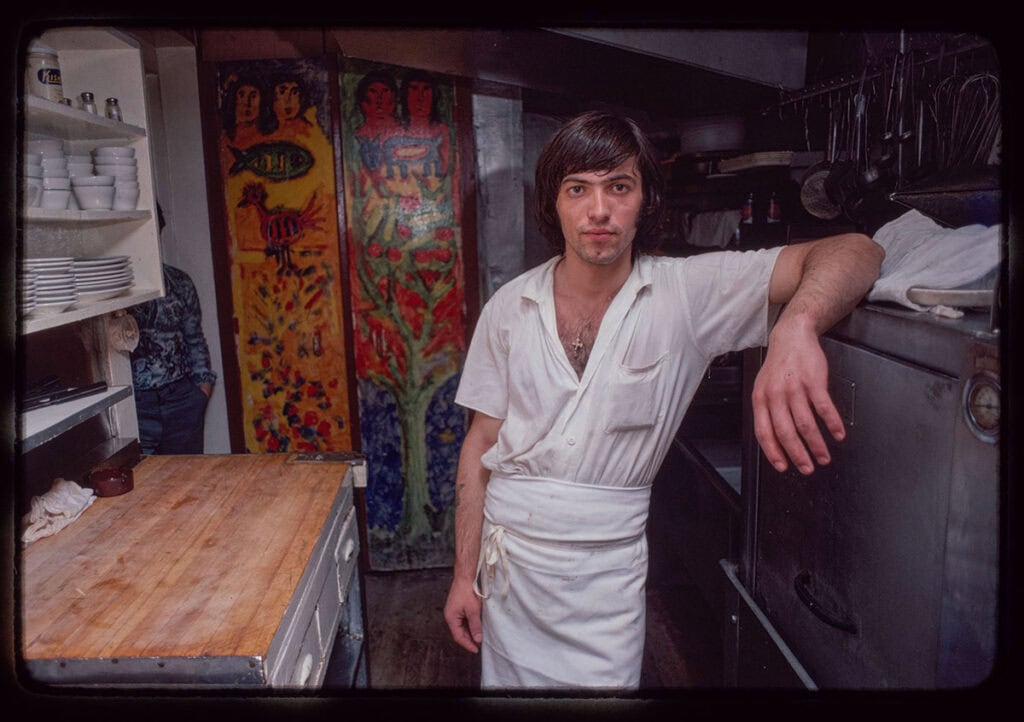
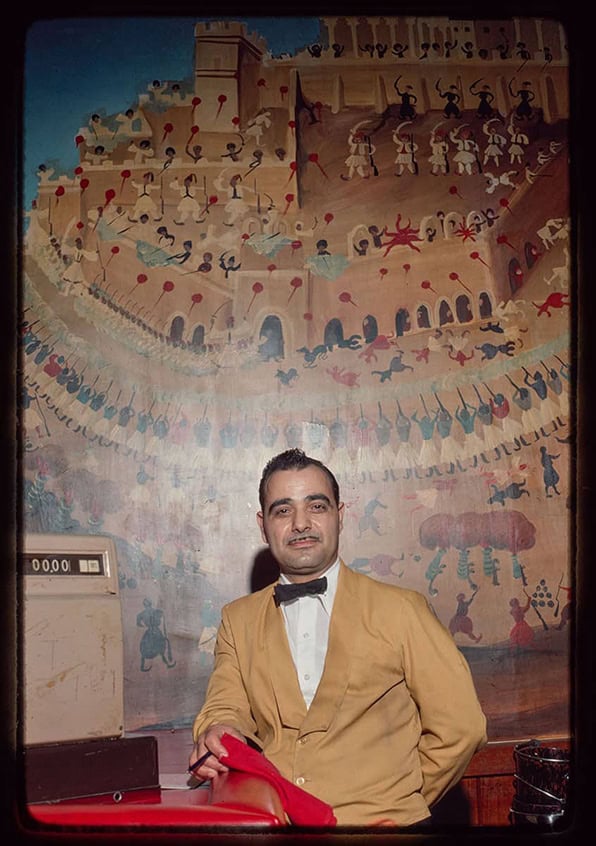
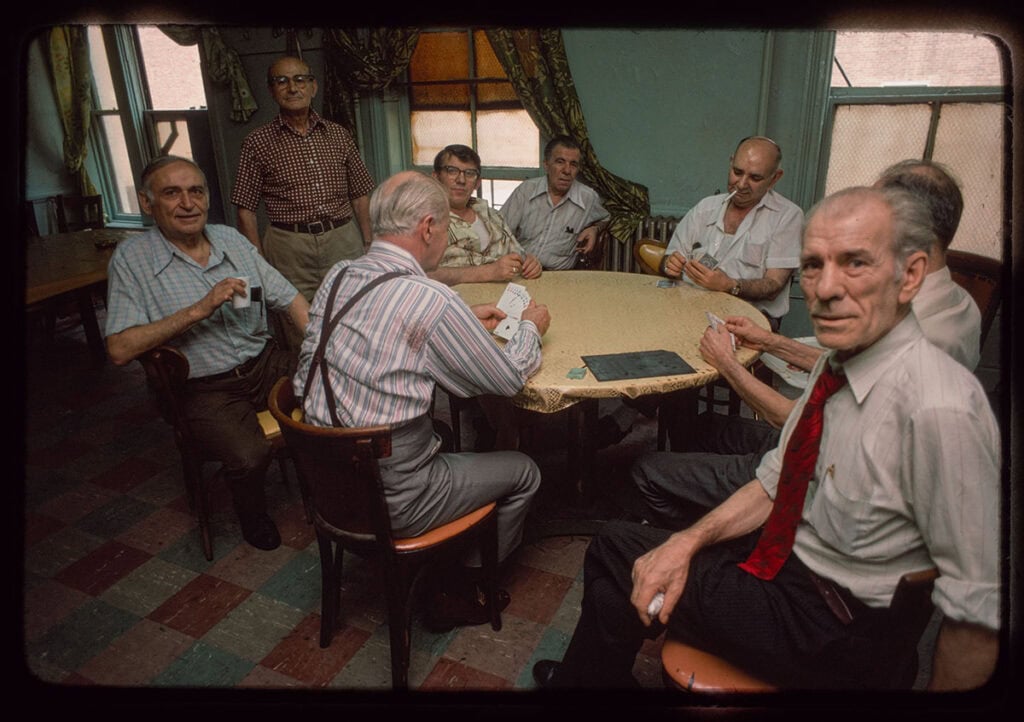
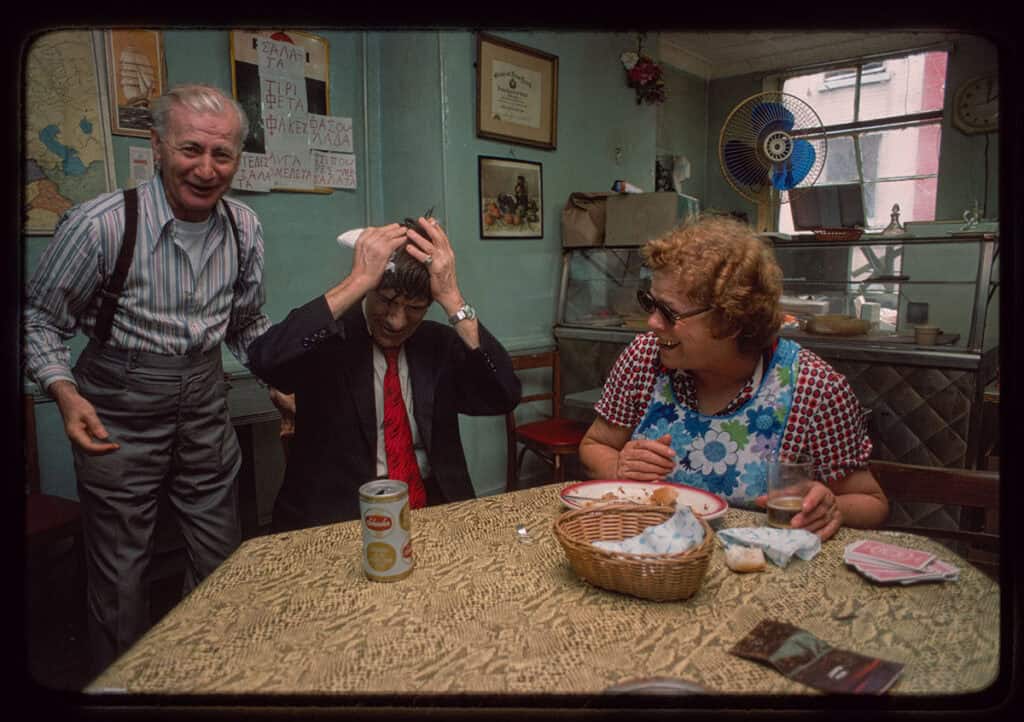
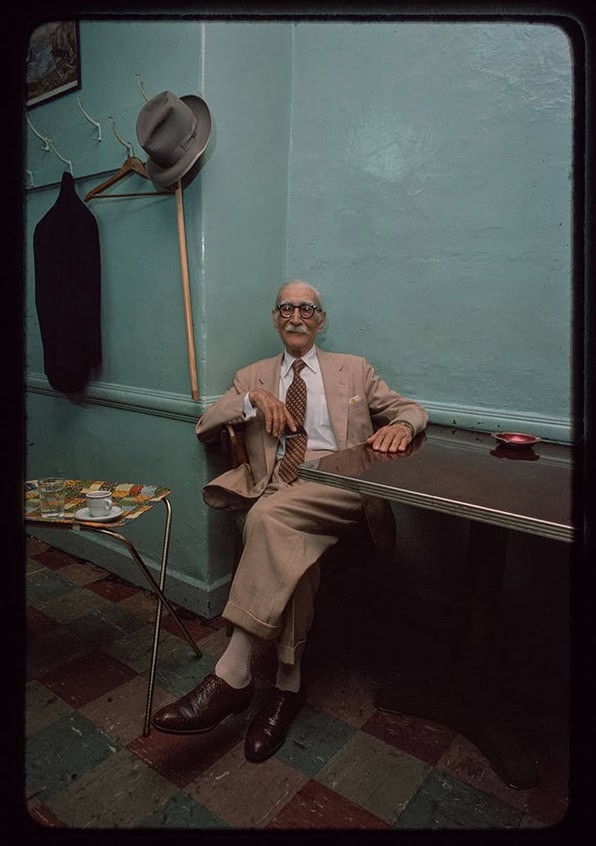
The photographs move between storefronts and interiors, between portraits and moments that seem to happen without noticing the camera. A waiter pauses for a second. An owner sits half-turned at a table. A narrow hallway leads deeper into a kafenio, into a space that feels more private than public. The images do not try to explain anything. They accumulate, and over time, a world begins to take shape.
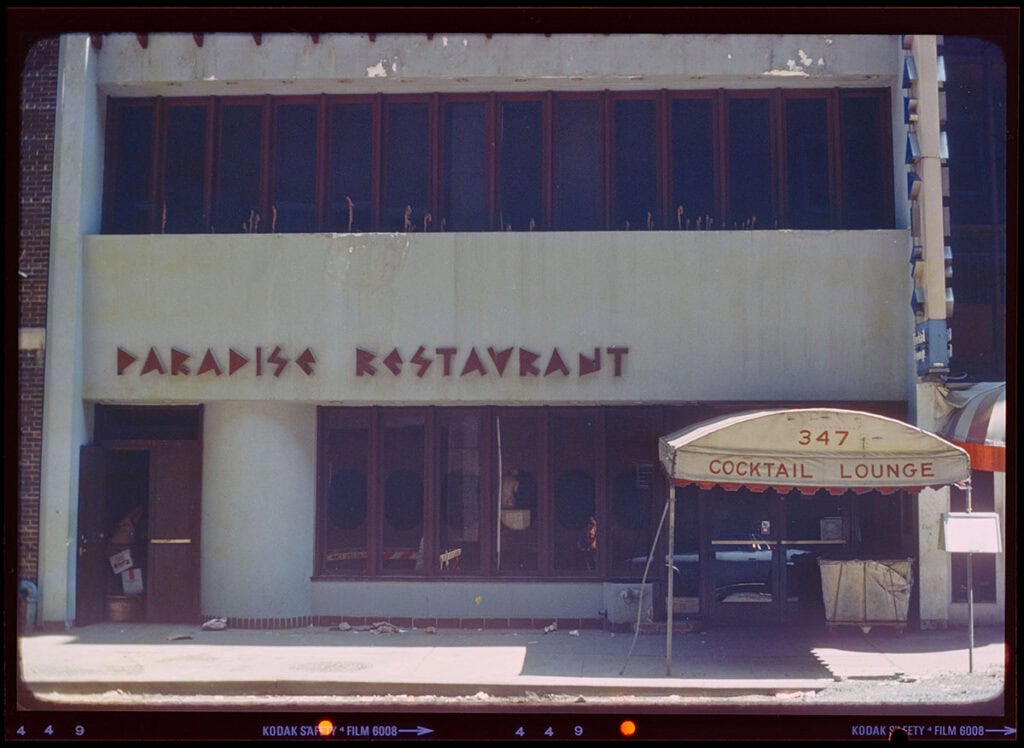
Names appear throughout the collection, and they matter. Not because they complete the story, but because they keep it from becoming abstract. A retired waiter named Peter Lorandos appears more than once and gradually becomes familiar. Gus Kokis stands outside the Paradise Restaurant, the name larger than the storefront behind him. Others appear in similar ways, sometimes looking directly at the camera, sometimes caught mid-motion. The photographs do not attempt to summarize their lives. They leave them open.
What becomes clear, slowly, is how much these places held. They were businesses built on long hours and repetition, but they were also something else. A point of entry into a new life, and at the same time, a place where the old one could still be spoken. You see it in the way people sit together, not formally, but with the ease of habit. Chairs pulled close, bodies angled inward, conversations that do not need to be performed.
There is nothing in these images that tries to elevate the ordinary. A counter, a cup, a doorway, a glance. And yet the longer you stay with them, the more the weight of it becomes clear. This was not temporary work. For many, it was the center of daily life, measured in shifts and hours rather than milestones.
Nearly fifty years later, the distance is there. Many of these places have disappeared. Others remain, but not in the same way. It would be easy to read the photographs as something already fading.
But they resist that. They show this world as it was, when it was still fully present, without nostalgia or commentary. That is what gives them their force. They return you to a moment before any of it had been turned into memory.
The archive itself is extensive, with hundreds of color slides, interview transcripts, and research materials that extend beyond diners to include bakers, street vendors, and grocers. Together, they form one of the most detailed visual records of Greek working life in New York during that period.
The collection is now held by the New York Public Library, carefully preserved. But the real archive is already there in the images themselves.
You do not need to be told what they mean. You only need to look long enough to recognize them.