

If you ask around in the Greek-American community in Philadelphia, the same story comes up sooner or later. A restaurant in South Philadelphia. Early 1980s. A shooting people still remember, even if the details shift depending on who tells it.
That moment has often been taken as proof that a “Greek Mafia” operated in the city. But when you move past the retelling and look at what is actually documented, the picture becomes more specific and more limited. What existed was not a formal crime family, but a small network operating within a larger system it did not control.
Greek-American life in Philadelphia had already been established for decades by that point. Neighborhoods in South Philadelphia and Upper Darby were built around small businesses, churches, and extended family networks, where people relied on each other, shared information quickly, and operated on trust. That same environment also made informal economic activity possible. Loans were often handled privately, cash transactions were common, and favors carried expectations. Most of this remained part of everyday community life.
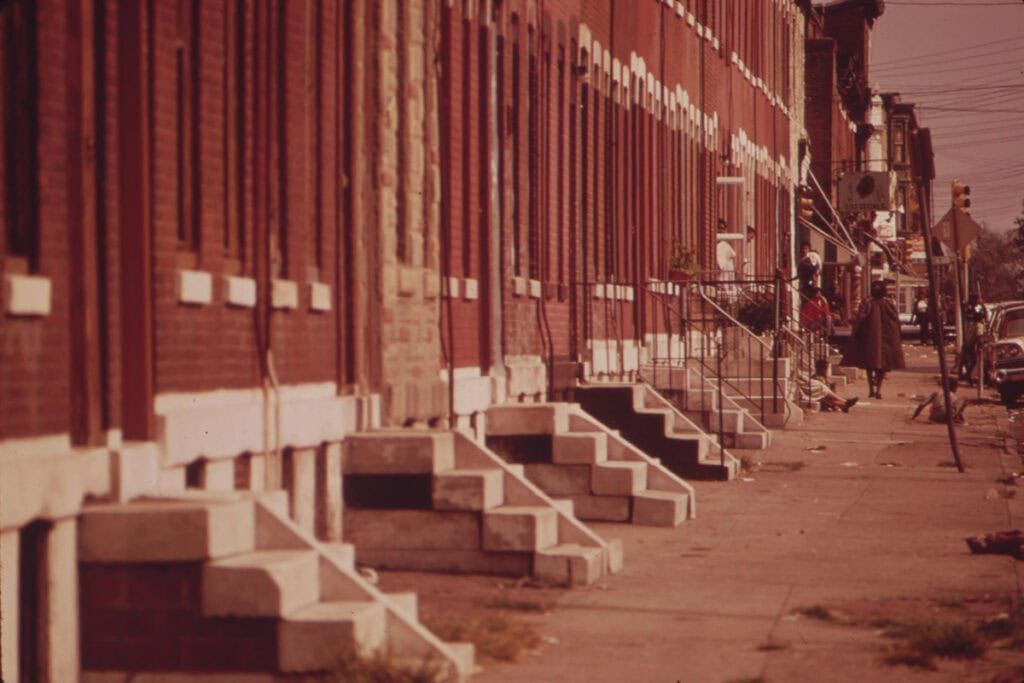
At the same time, Philadelphia had a long-established organized crime structure dominated by the Italian-American crime family. Anyone operating outside that structure still had to navigate it. By the late 1970s, law enforcement and journalists began referring to a group of Greek-American operators as a “Greek Mob,” a label that suggested something more organized than what actually existed. In reality, this was a small network of individuals connected through business relationships and shared background.
At the center was Chelsais “Steve” Bouras, a Greek-American figure involved in loansharking and drug activity. Contemporary reporting, including coverage in the New York Times, described the group as small—roughly a dozen people at its core. That scale matters because it places the group closer to a working crew than a structured organization with hierarchy and continuity.
To understand how that network fits into the broader picture, it helps to look at Philadelphia at the time. Under Angelo Bruno, the city’s Italian-American crime structure operated with a degree of stability. Violence was controlled, and relationships defined who could operate and how. Non-Italian groups were not part of the core structure, but they could function as long as they stayed within accepted limits.
That balance shifted after Bruno’s murder in 1980. Control became more aggressive, especially under Nicodemo “Little Nicky” Scarfo, who pushed for tighter oversight of independent operators. Groups that had previously operated with some flexibility now faced greater pressure. The Greek-American network did not suddenly expand during this period, but the system around it changed, making it more visible.
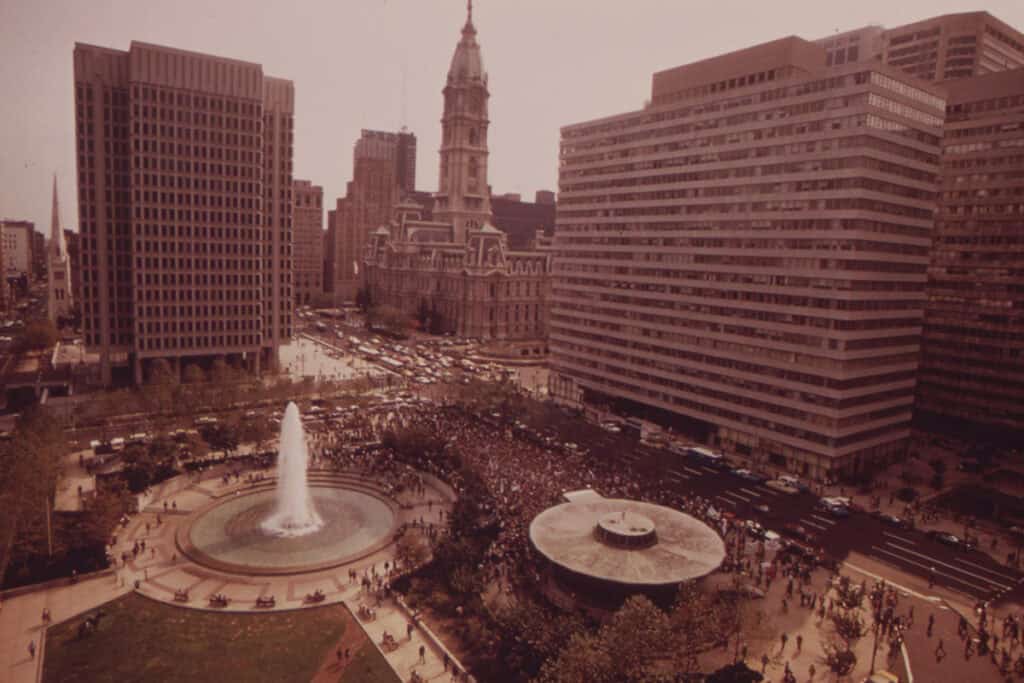
In May 1981, two killings brought that visibility into focus. Bouras was shot and killed while dining in a South Philadelphia Greek restaurant, later identified publicly as the site of the hit, a setting that made the event travel quickly through the community. Around the same time, Harry N. Peetros, a Greek-American loan shark connected to the same circle, was found dead in the trunk of his car in Delaware County suburbs. The proximity of those events led investigators to treat them as connected, and from the outside, it appeared to signal a larger conflict.
However, the record does not show a broader wave of organized violence tied to a growing “Greek Mafia.” Instead, the story shifts into investigations and court cases. One of the most notable was the case of Neil Ferber, who was convicted of Bouras’s murder and sentenced to death before his conviction was overturned. The case raised serious questions about how evidence was handled and how conclusions were reached.
At the same time, investigations into related activity revealed how closely this network was tied to its environment. Meetings took place in familiar settings, conversations often happened in Greek, and law enforcement relied on officers who understood both the language and the community context. This was not a distant or hidden world. It was embedded in everyday life.
By the mid-1980s, attention shifted more clearly toward drug distribution. A network connected to Athanasios Theodoropoulos became the focus of a federal investigation involving cocaine trafficking. This phase is documented in greater detail through wiretaps and surveillance, which captured how the group operated and how coded language was used in ordinary conversation. By the time the case reached the U.S. Court of Appeals for the Third Circuit, investigators had outlined roles, supply chains, and coordination across the region.
Even at that stage, the same pattern remains. There was organization, but not the kind of formal structure associated with a traditional crime family. More importantly, the network did not operate independently. Under Scarfo’s leadership, organized crime in Philadelphia functioned through control of access. Earning money required approval, and profits were expected to be shared. The system, often described as a “street tax,” acted as a way of enforcing authority over smaller groups.
Testimony involving Robert F. Simone reflects how decisions about safety and business were influenced by figures outside the Greek-American network. The group functioned, but it did not define the system it depended on.
When you step back and look only at what the record supports, a consistent picture emerges. There was a small network of Greek-American operators involved in loansharking, gambling, and later drug distribution, with clear connections to a larger organized crime structure. What does not appear is a long-standing, hierarchical “Greek Mafia” operating independently over time. That version of the story developed later, shaped by how these events were remembered and retold.
Part of the reason the story stayed with people is how close it felt. These events took place in familiar spaces, in restaurants, neighborhoods, and social settings that were part of everyday life. Information moved through conversation rather than headlines, and people understood it through what they heard from others.
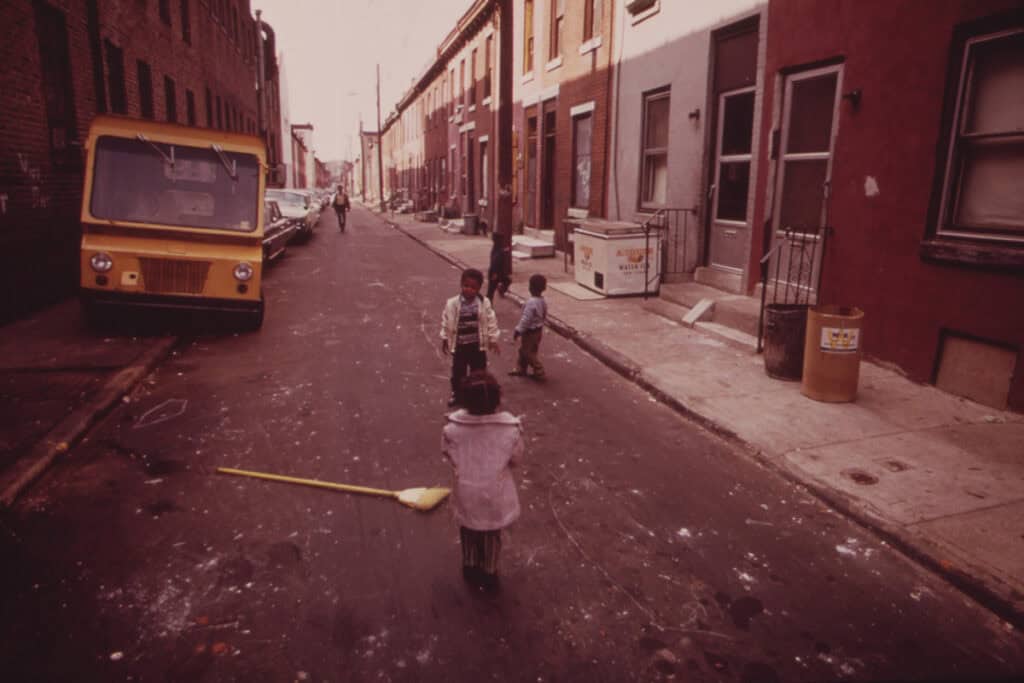
Reactions within the community were not uniform. Some saw it as something negative, something that reflected poorly on Greek-American life. Others felt uneasy because of how close it seemed, even if they had no direct connection to it. There were also those who interpreted it differently, not as pride exactly, but as recognition of a certain way of navigating difficult systems. What some would call magiá (μαγκιά), a toughness or confidence in how someone moves through constraints, shaped how a small number of people understood it.
Over time, the story did not disappear, but it changed form. Greek-American involvement in organized crime appears less in official records in later decades and more in personal accounts. Books like BOOKED: PhillyGodfather, as covered by Cosmos Philly, reflect that shift. It is not a direct continuation of the Bouras-era network, but an example of how Greek-American proximity to the underworld later appears in personal narratives rather than organizational records.
In the end, the phrase “Greek Mob” suggests something fixed and clearly defined. The historical record points to something more limited. A small network, shaped by its environment, operating within a system it did not control. For a brief period, it became visible. After that, it did not disappear. It simply became less clear and easier to misunderstand.