
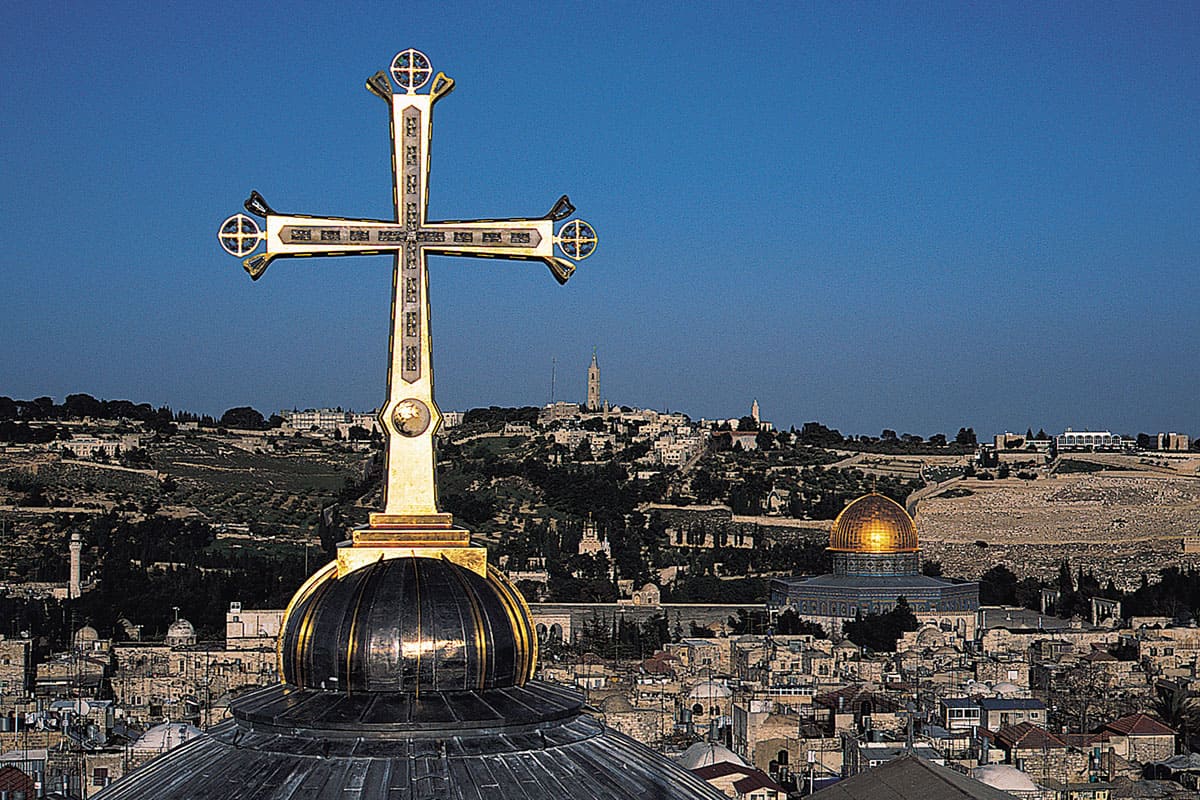
Once central to Jerusalem’s Christian life, the city’s Greek population has become a small fraction of what it once was, shaped by war, displacement, demographic decline, and unresolved property battles. Yet those who remain continue to sustain traditions and institutions with deep roots in the city.
For centuries, Greek prayers echoed through Jerusalem’s Old City. Shopkeepers, teachers, clergy, and families formed a small but deeply rooted population that helped shape Christian life in the Holy Land.
Today, fewer than one hundred Greeks are believed to remain in Jerusalem. They maintain ties to churches, institutions, families, and places that once served a much larger Greek population.
The decline did not happen suddenly. It unfolded through war, displacement, emigration, legal battles, and decades of demographic change.
A Community Once at the Center
In the early twentieth century, Jerusalem was home to a substantial Greek population. Some estimates place the number as high as 20,000 in the wider Jerusalem and Jaffa area during the British Mandate period.
Greeks were merchants, professionals, educators, and clergy, woven into the city’s religious, commercial, and social life.
As their numbers grew, Greeks expanded beyond the Old City walls and established what became known as the Greek Colony, an affluent neighborhood between Katamon and Baqa. Stone villas with tiled roofs, gardens, and cultural institutions reflected the confidence of a community firmly rooted in Jerusalem.
That world changed dramatically in 1948.
1948 and a Community Transformed
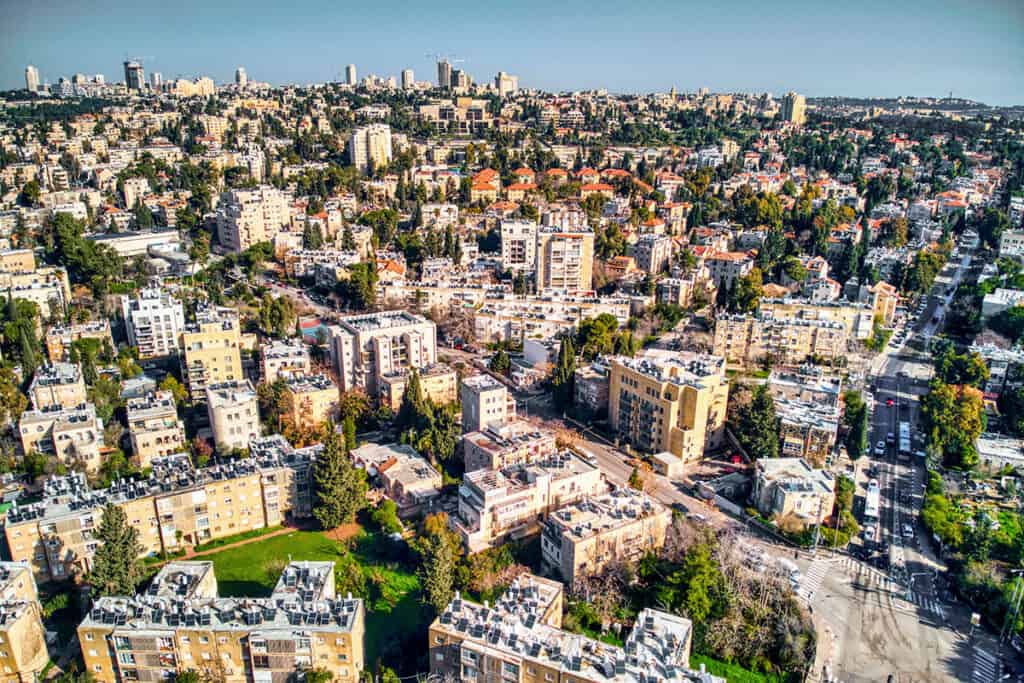
As fighting spread through Jerusalem, many Greek families left the Greek Colony, some seeking refuge near the Church of the Holy Sepulchre inside the Old City. Like many others displaced during the conflict, they expected their absence to be temporary.
Many never returned.
The demographic character of West Jerusalem changed after the war. Properties changed hands, families dispersed, and the number of Greeks in the city began a long decline.
The Greek Colony, however, continued as a center of communal life for those who remained. Its institutions and social connections endured on a smaller scale, preserving a link to the much larger Greek Jerusalem that existed before the war.
The Church That Remains
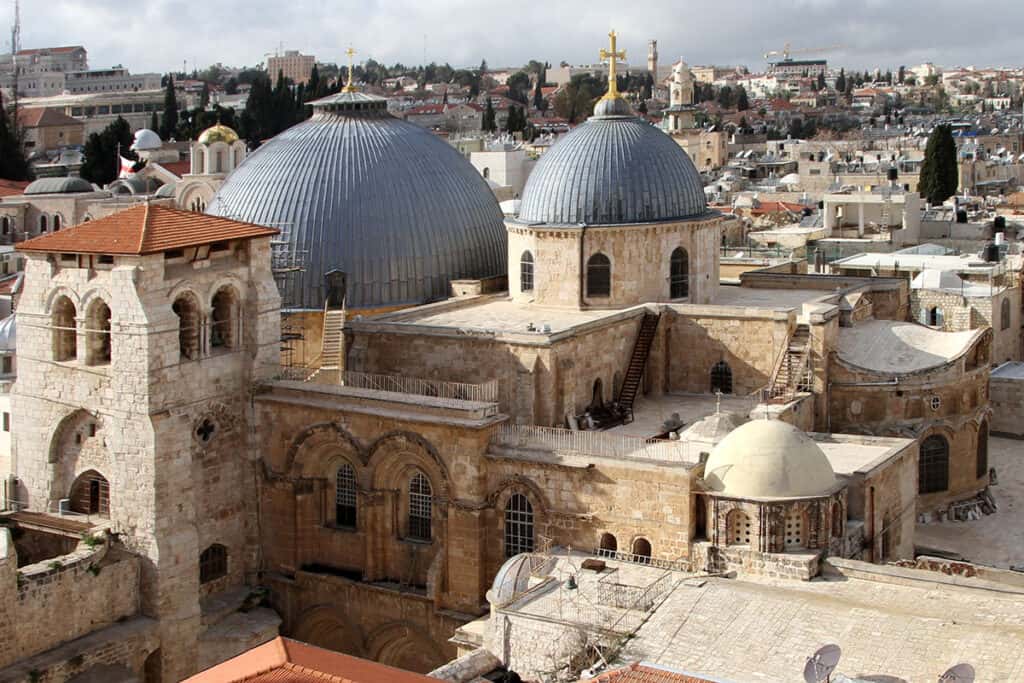
The shrinking local population stands in contrast to the continuing importance of the Greek Orthodox Church in Jerusalem.
At the center of that presence is the Church of the Holy Sepulchre, one of Christianity’s holiest sites. The church is shared among several Christian denominations under the centuries-old Status Quo arrangements governing worship and control of its sacred spaces.
The Greek Orthodox Patriarchate remains one of its principal custodians, responsible for major sections of the building and an important part of its daily liturgical life.
Two Muslim families continue to hold responsibility for the church’s keys, opening and closing its doors under an arrangement whose origins stretch back centuries.
One of Christianity’s most important sacred sites therefore retains a powerful Greek Orthodox identity even as the local Greek population around it has become exceptionally small.
Property Battles at Jaffa Gate
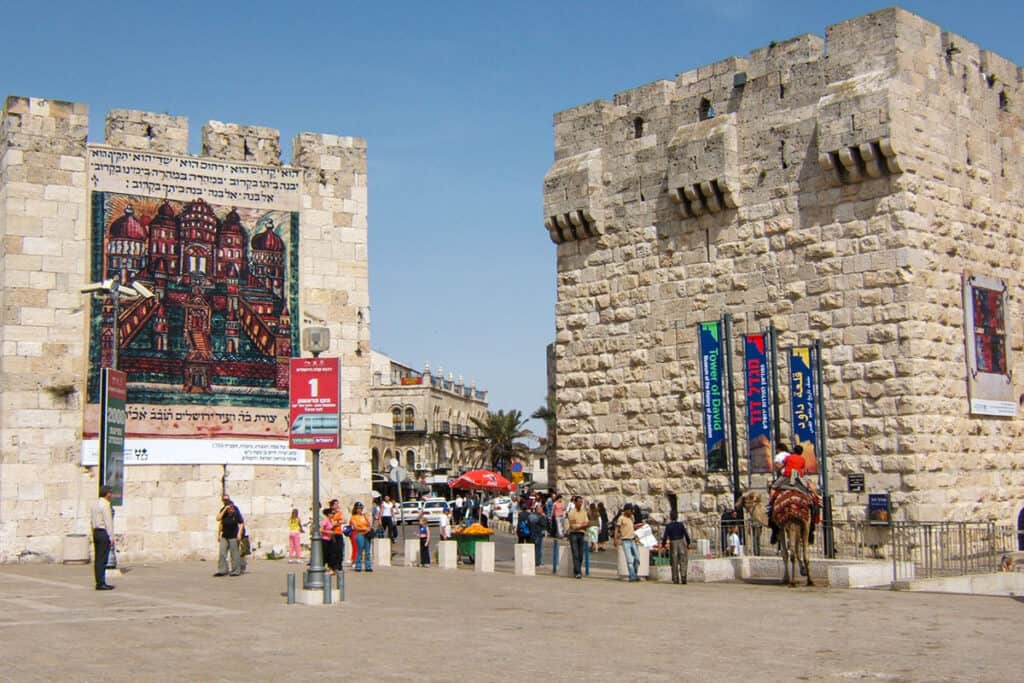
Property disputes have added another layer of uncertainty to Christian life in Jerusalem.
In 2004, long-term leases involving prominent Greek Orthodox Patriarchate-owned properties near Jaffa Gate, including the Petra Hotel and the Imperial Hotel, were transferred to companies later linked to Ateret Cohanim, an organization seeking to strengthen Jewish presence in East Jerusalem.
The Greek Orthodox Patriarchate challenged the transactions, alleging corruption and improper conduct surrounding the deals. The controversy contributed to a major institutional crisis and the removal of Patriarch Irineos I in 2005.
After years of litigation, Israeli courts upheld the transactions.
The buildings sit near an important entrance to Jerusalem’s Christian Quarter, giving the dispute significance beyond the properties themselves. Church leaders have argued that control of the area affects the future character of the Christian Quarter and access to its holy sites.
The Lesky and a Living Community
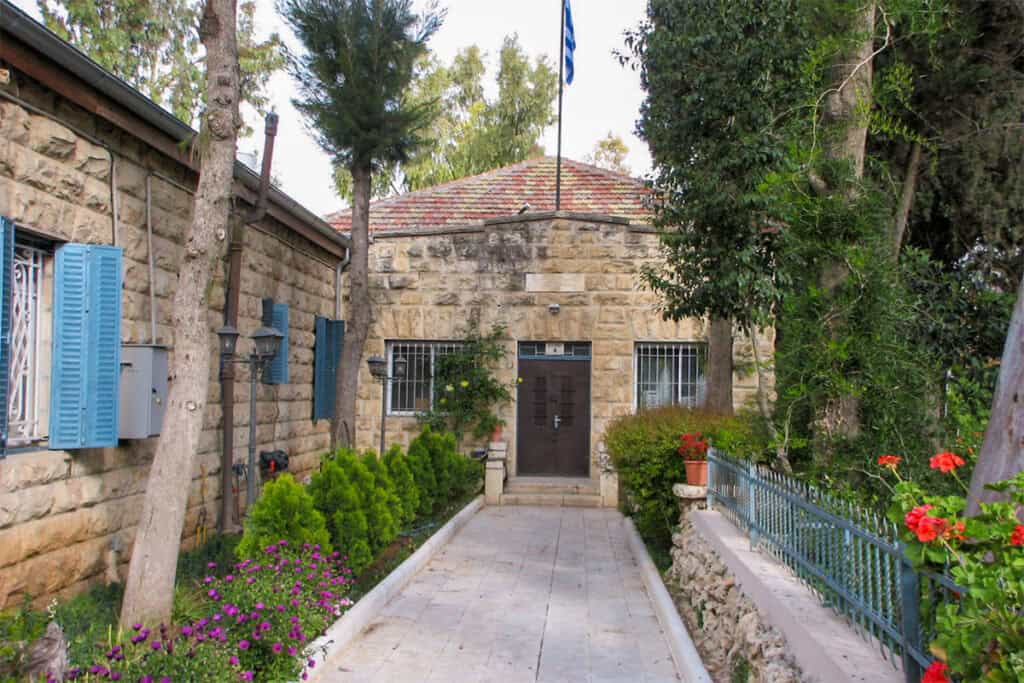
One of the enduring centers of Jerusalem’s Greek life is the Lesky.
Built in 1902 during the late Ottoman period, the Greek social club became a gathering place for generations of Jerusalem’s Greeks. Set behind iron gates and a garden in the Greek Colony, it has served as a center for social and cultural life.
Its significance also reaches into Greek literature. The Lesky appears in the wartime world described by Stratis Tsirkas, whose Drifting Cities trilogy captured the political, social, and emotional experiences of Greeks across the eastern Mediterranean during the Second World War.
The Lesky has continued to serve Jerusalem’s Greeks through the decades. Gatherings and cultural activities have persisted even as the number of people able to sustain them has grown smaller.
Greek life in Jerusalem has contracted sharply, but the Lesky remains part of a network of institutions and relationships that has survived for more than a century.
A Wider Christian Decline
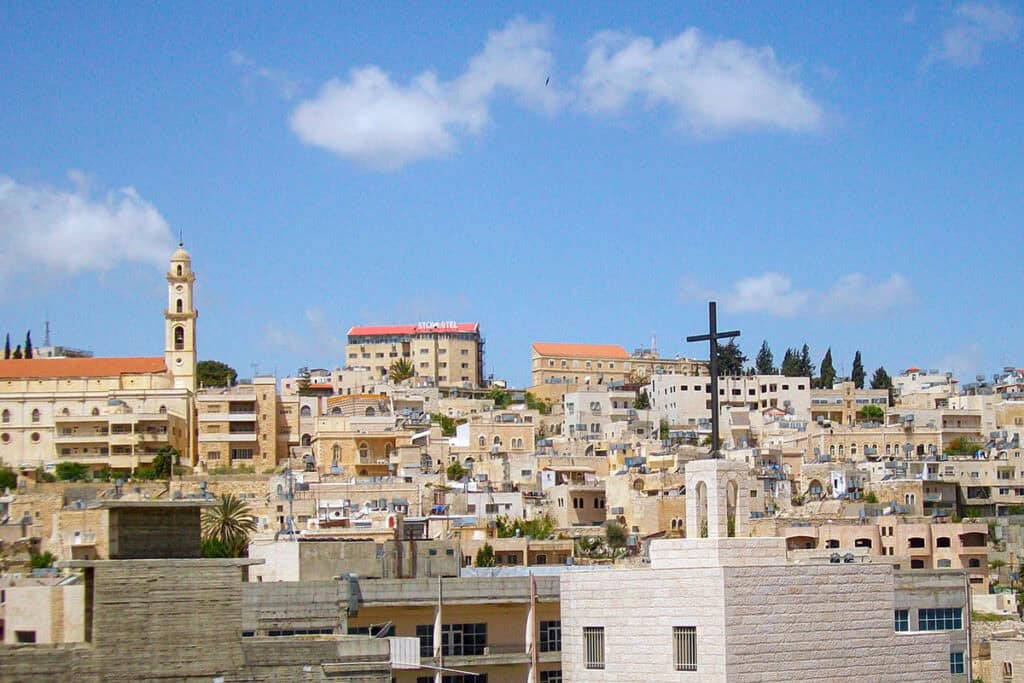
The shrinking Greek population is part of a broader decline among Jerusalem’s long-established Christian communities.
Christians once represented a considerably larger share of the city’s population. Today, they make up only a small minority.
A similar demographic shift has taken place in Bethlehem, where Christians once formed a majority but now account for a much smaller share of the population.
Jerusalem’s Greeks have their own history of displacement, emigration, and property disputes, while also sharing many of the pressures faced by other Christian communities in the region.
Evangelicals and the Silence of the West
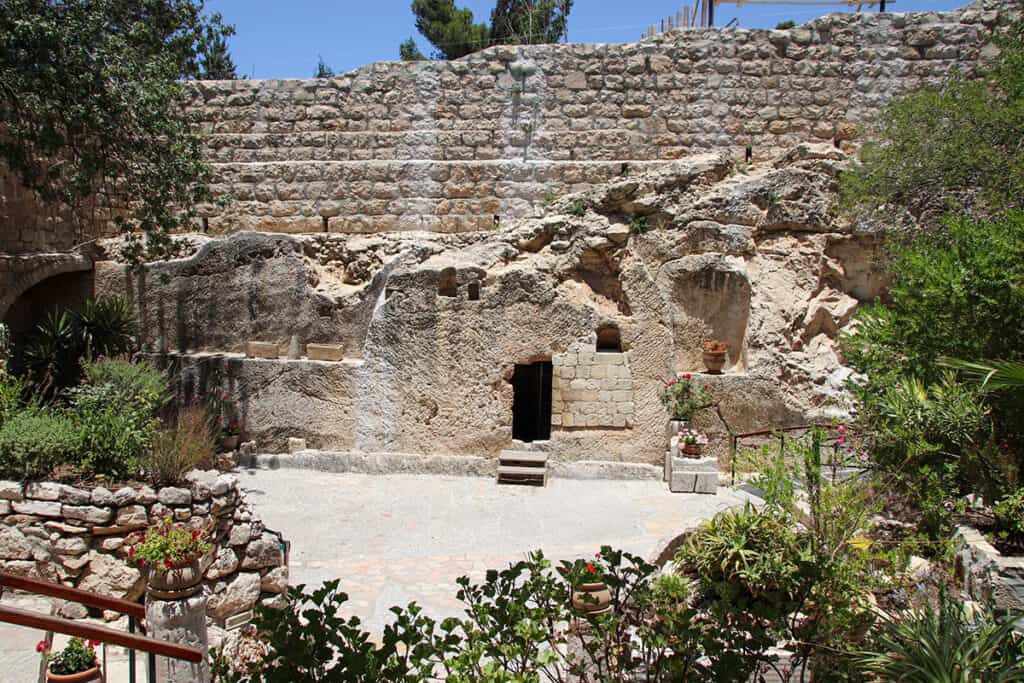
Many Greek Christians in Jerusalem feel overlooked by the wider Christian world. Millions of pilgrims visit the Holy Land each year, but relatively few encounter the local Christian communities still living there.
American evangelical tourism, in particular, often follows a different religious geography from that of the historic churches. Sites such as the Garden Tomb attract evangelical pilgrims who do not recognize the Church of the Holy Sepulchre as the place of Christ’s burial.
The divide extends beyond pilgrimage. Polling in the United States has found strong belief among white evangelicals that the land of Israel was promised by God to the Jewish people, a theological view closely associated with strong political support for Israel.
For Jerusalem’s remaining Greeks, this creates an uncomfortable contrast: Christianity draws millions of believers to the Holy Land, while some of its oldest local communities continue to grow smaller.
A Story Beyond Jerusalem
The history of Jerusalem’s Greeks also belongs to a wider eastern Mediterranean story.
Sean Mathews explores that world in The New Byzantines, placing Jerusalem alongside cities such as Alexandria and Istanbul, where once-prominent Greek populations declined dramatically during the twentieth century.
Jerusalem forms part of that larger transformation of Greek life across the former Ottoman world.
But numbers tell only part of the story. Family histories, cultural institutions, archives, religious traditions, and personal connections continue to link a small contemporary population with a much larger past.
What Disappears When a Community Fades
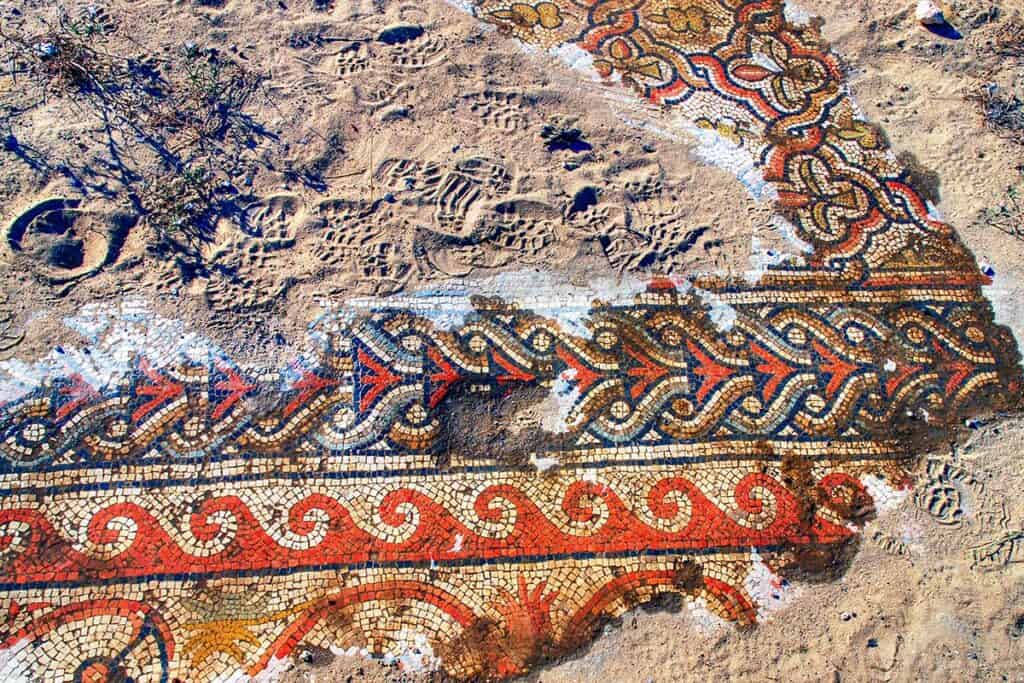
The loss of a community cannot be measured only by population figures.
As communities shrink, language, ritual, informal memory, and family history can become harder to pass from one generation to the next. Those losses are harder to see than an abandoned building or a changed neighborhood.
Jerusalem has always been a city of layered histories, and the Greek story is one of them.
Its scale has changed enormously, but Greek life has not disappeared. People still gather, maintain institutions, preserve records, and carry forward traditions that connect them to earlier generations.
For Jerusalem’s Greeks, survival now means passing enough of that inheritance forward for another generation to recognize it as its own.
Update, September 2026
Since this article was first published, the Greek Community of Jerusalem has launched GreekColonyJerusalem.org, a website devoted to its history and current activities.
The site documents the Greek Colony and the historic Lesky, presented as the Lesky Hellenic Cultural Centre. It is also gathering photographs, publications, family histories, archival material, and personal testimonies.
The Greek Colony and the Lesky are not recent revivals. Both have remained active for decades as centers of Greek social and cultural life in Jerusalem.
The website allows Jerusalem’s remaining Greeks to share those activities, record their history, and reach people beyond the city.
The population decline described in this article has not been reversed. The new site instead gives a public voice to a community that has continued its work throughout that decline.