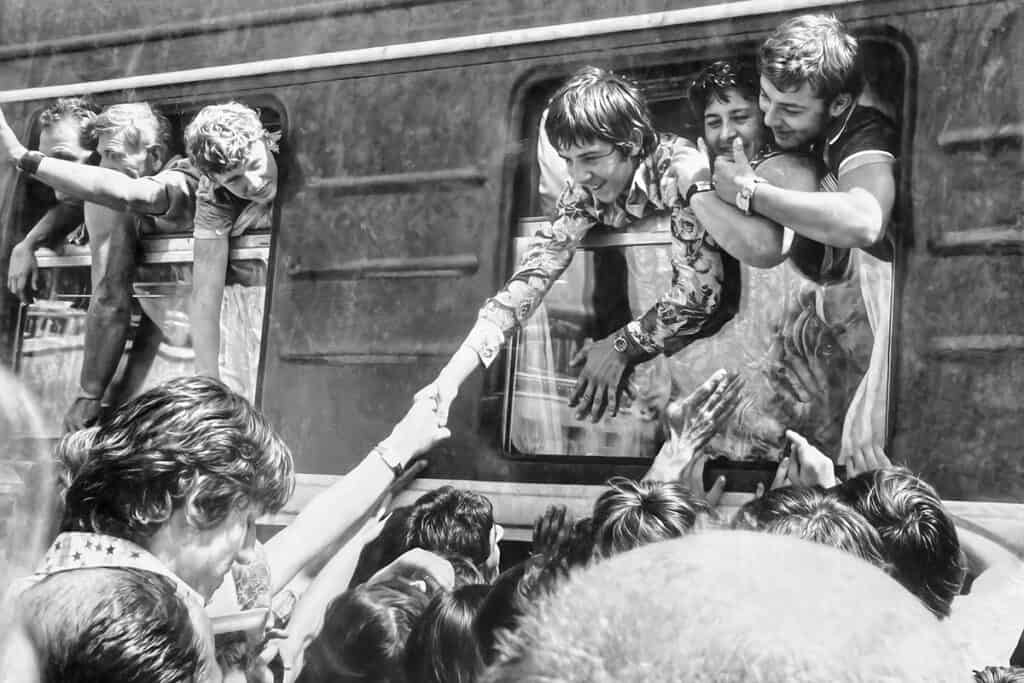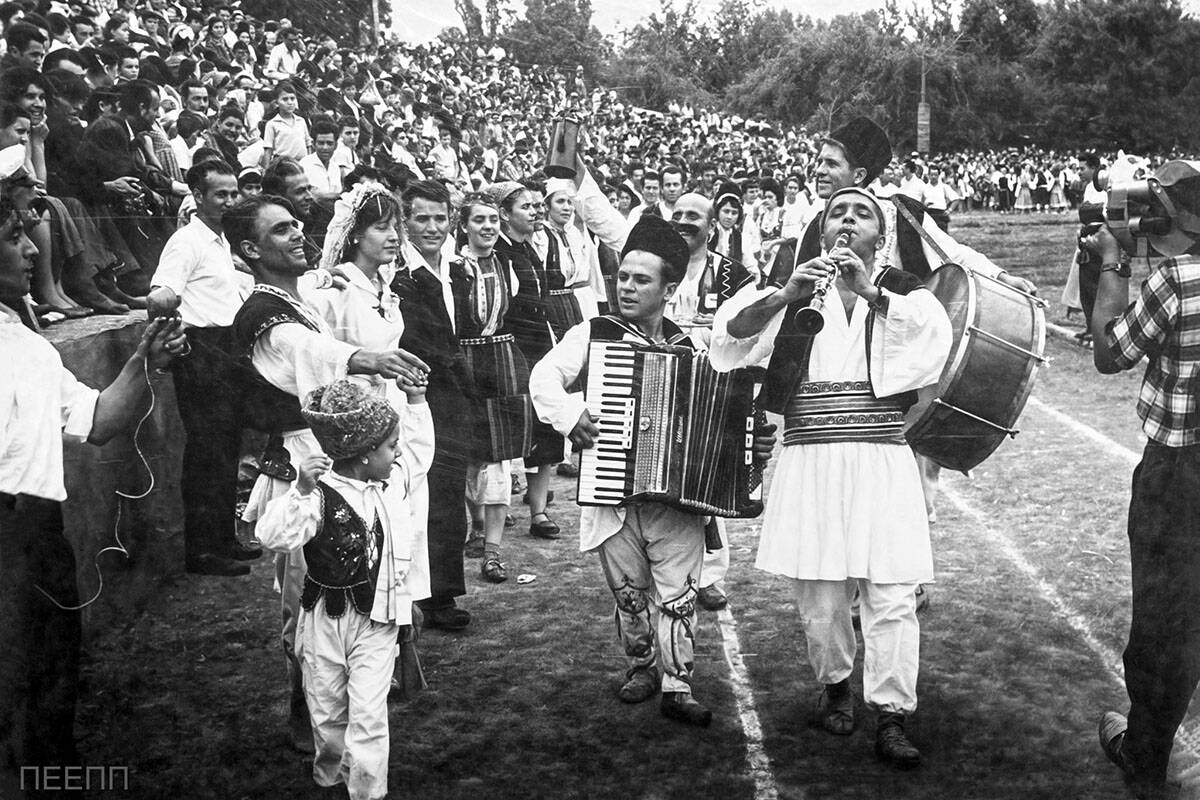
When we think of the Greek diaspora, certain places always come up. New York, Melbourne, Toronto, Munich. Cities where Greeks arrived looking for work and freedom. But there is another story, less known, written not in the free world but in exile behind the Iron Curtain. It is the story of the Greeks of Tashkent, Uzbekistan.
From Civil War to Central Asia
The Greek Civil War ended in 1949, but for tens of thousands of families, it was not the end of the struggle. Fighters from the defeated left, their families, and even orphans were sent out of Greece in waves. Around 11,000 Greek political refugees were resettled in Tashkent, the capital of Uzbekistan. The first roll-call in December 1949 counted 8,571 men, 3,401 women, and just 25 children, nearly 70 percent of them members of the Communist Party of Greece (KKE), according to Dr. Helen Vatsikopoulos’s keynote at the South Australian History Festival. Over the following decades, the community grew, reaching a peak of 35,000 by 1972, and spreading into fourteen Greek “towns”, or politíes, across the city.
Among them was Antonis Vratsanos, a decorated resistance fighter from the Second World War. After leading sabotage operations against German trains in Thessaly, he too ended up in Tashkent, living the rest of his years far from the mountains where he had once fought. His story became a symbol of how even national heroes were swallowed by exile.
They were later joined by tens of thousands of Pontic Greeks who were Soviet citizens, deported from the Black Sea and Caucasus regions to Central Asia during Stalin-era operations between 1937 and 1949. Together, these deportees and the Greek political refugees formed the two distinct but overlapping populations that shaped the Greek community of Tashkent. By the 1960s, the combined exile and deportee population made the Greeks one of the largest minority communities in Tashkent.
The choice of Tashkent was not random. The city had industry, housing blocks, and collective farms ready to absorb new arrivals. The Greeks were put to work in textile factories, construction sites, and agricultural projects. Entire neighborhoods became Greek overnight.
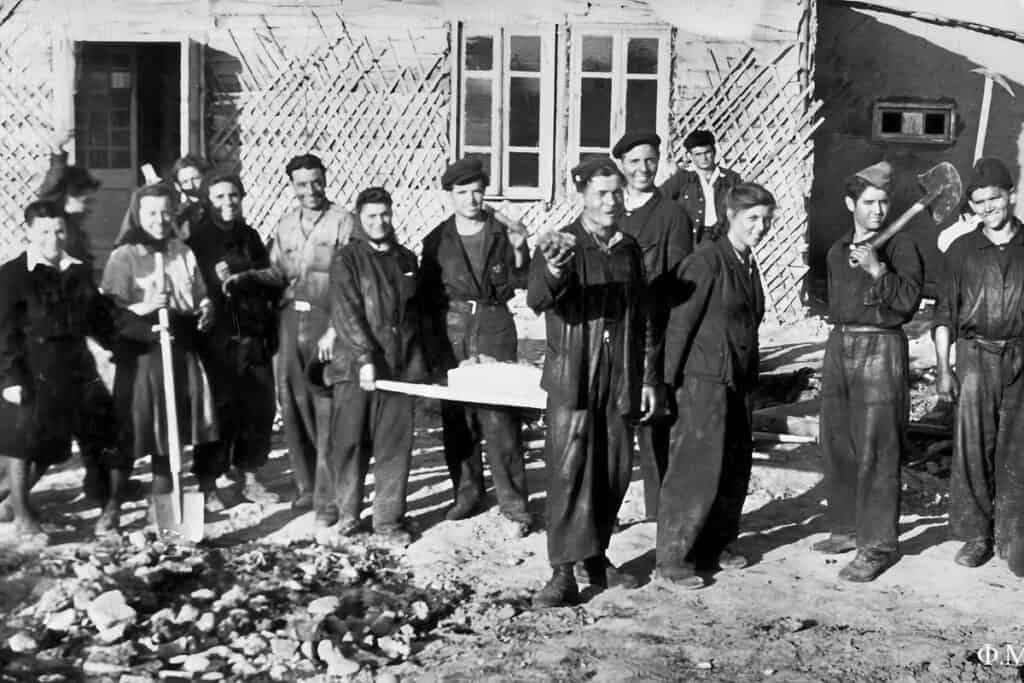
In interviews decades later, exiles remembered the shock of it. “We were children who had never left our villages,” recalled one Pontian woman on ERT’s Historical Walks, who was deported to Central Asia as a child. “Suddenly, we were in a place of cotton fields and heat, where we did not even know the language. But we clung to Greek words and songs like a lifeline.”
Building a Community in Exile
Even under Soviet control, the exiles organized. Cultural associations flourished. The Greek Cultural Center of Tashkent became a hub of theater, dance, and language classes. They also published newspapers such as Prosti Nk and later Nea Odos, described in a documentary on Tashkent’s Greek quarters, giving the community a written voice in exile. Today, the Tashkent Urban Community of the Greek Culture continues that tradition, offering services to the smaller Greek community that remains.
Life was not easy, but there was pride in preserving customs. Weddings were held with Pontian lyra music. Easter lambs were roasted in courtyards. Families taught their children Greek lullabies alongside Russian and Uzbek songs.
As one exile told Fergana News, “We arrived with nothing but our icons and a few family photos. We built everything else from the ground up, together.”
As Costas Politis, current president of the Cultural Center, put it in a 2024 interview:
“The Greeks of Tashkent are a defining example of Hellenism. In the harshest conditions, they kept language, music, and faith alive. They created a Greece in exile.”
Restrictions and Daily Life
In the Soviet system, Greek refugees in Tashkent, largely aligned with the Communist movement, were registered as political refugees. They were given housing and work placements but not the same rights as Soviet citizens. Many lived for years on temporary residence permits before receiving internal passports, and even then, movement was restricted. Traveling outside Uzbekistan or across Soviet borders required special permission that was rarely granted, as explained by Uzbek Journeys.
Like other “special settlers,” Greeks in Tashkent lived under the Soviet propiska system. Their work permits tied them to specific jobs, and changing residence or employment required police approval. These controls kept the community under close watch and reinforced their sense of living as outsiders, tolerated but never fully trusted.
This restriction created painful family tragedies. Thousands of Greek exiles had relatives scattered across the communist world in Romania, Poland, Czechoslovakia, or East Germany. When a brother or parent died abroad, families in Tashkent often begged for exit permits. “Permission was asked,” recalled one exile, “but almost never given.” Many carried the grief of never being able to attend a funeral or say goodbye.
Exiles were monitored by local authorities, and some professions, particularly in administration, the military, or state security, were closed to them. Access to universities was possible but often depended on proving loyalty to the Party.
Faith and Resilience
Greeks worshipped at Orthodox churches in Tashkent, such as the Cathedral of the Assumption and the St. Alexander Nevsky Church. These were multi-ethnic parishes shared by Russians, Ukrainians, and Greeks alike, with no dedicated Greek clergy, as noted in the entry on Eastern Orthodoxy in Uzbekistan. Services were monitored, and open displays of faith could cost someone a job.
One lay leader recalled:
“We had to be discreet, but on feast days the bells rang, and you knew there would be Greeks in the pews. Faith gave us strength when politics failed.”
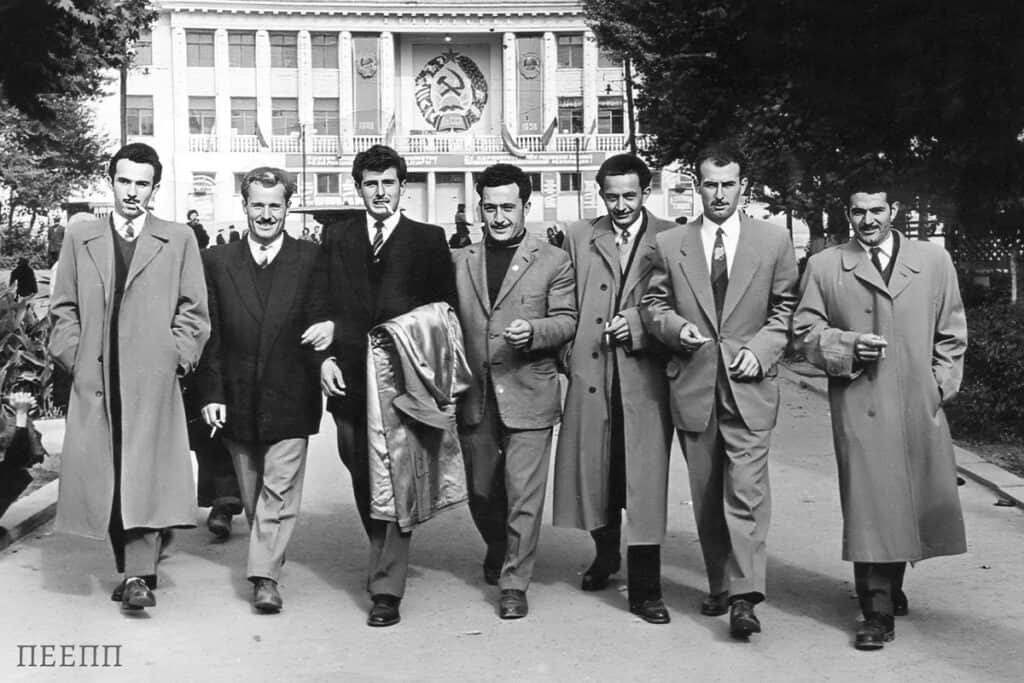
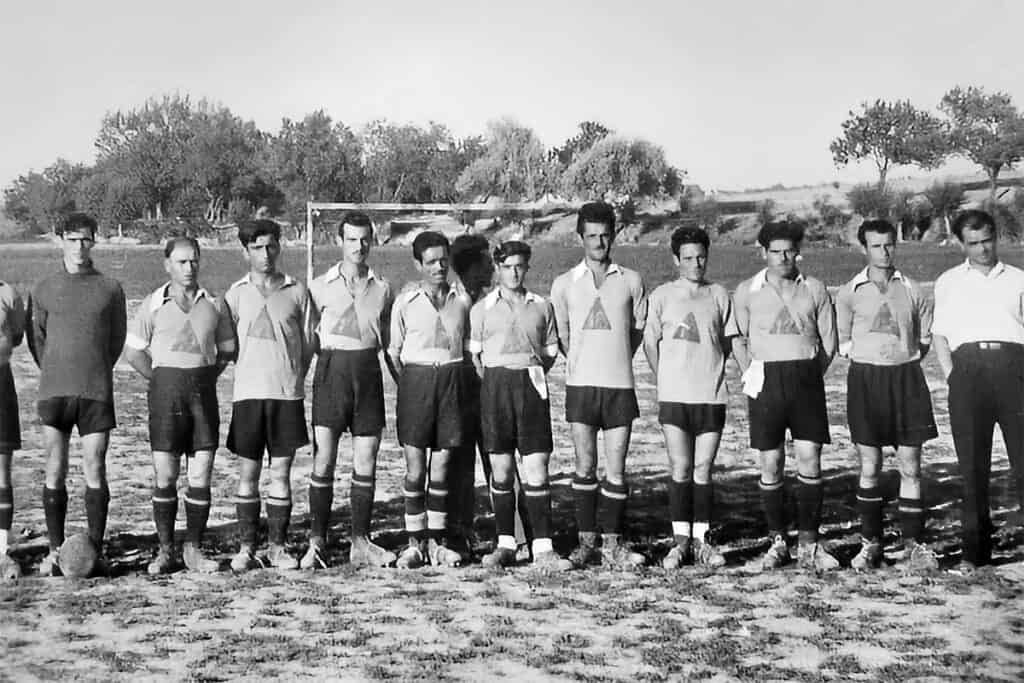
Despite restrictions, the exiles built parallel lives. They organized Greek-language schools, theater groups, and sports clubs. These spaces became small sanctuaries where Hellenism could survive, even under the shadow of Soviet suspicion.
Factional Clashes, 1954–56
Politics soon returned to divide the exiles. Between 1954 and 1956, the Greek community in Tashkent was torn apart by factional struggles inside the Communist Party of Greece. Stalin’s death in 1953 and the waves of de-Stalinization that followed under Nikita Khrushchev sent shock through every communist organization in the Eastern Bloc. For the exiled Greek fighters who had built their identity around loyalty to Stalin and the wartime resistance, this shift felt like a betrayal.
Tensions deepened between those who defended the old line and those who supported the new leadership in Moscow. The conflict soon spilled into the streets. Demonstrations and violent clashes took place between rival groups of Greek exiles, some loyal to Nikos Zachariadis and others siding with reformist cadres who aligned with Khrushchev’s policies. Soviet militia were eventually called in to stop the fighting, which left hundreds injured.
The crisis culminated in 1956, when Soviet authorities intervened directly to remove Zachariadis from the leadership of the KKE, an event often seen as both the end of Stalinism in the Greek communist movement and the breaking point for the exiles’ unity. Contemporary archival accounts describe how trust among comrades collapsed overnight, leaving a legacy of suspicion that haunted the community for years.
Scholars debate the scale of these events. Some describe them as an internal party crisis rather than a rebellion, but all agree that destalinization split the community ideologically as well as emotionally.
Preserving Memory
The exile years left scars but also stories. Exhibitions such as The Greeks of Tashkent in South Australia have brought photographs and testimonies to new audiences. One curator described the collection as “a hidden chapter of the Civil War, told through the faces of children who grew up in Tashkent.”
Greek public radio has aired programs like Historical Walks, recording memories of the first generation. Memoirs such as A Doctor in Three Wars trace how families carried the weight of exile.
“My grandfather arrived in Tashkent with nothing but a photograph of his village,” one descendant wrote. “For us, Greece was always an image, not a place. But even in Uzbekistan, he told us we were Greeks.”
What Remains Today
The 1982 amnesty law opened the way for large-scale return. By 1991, nearly 30,000 Greeks from Uzbekistan had repatriated to Greece, though many had already left in earlier waves during the 1970s and 1980s, after spending much of their working lives in Tashkent. The law explicitly applied to “Greeks by genus,” which meant non-Greek spouses and children were often excluded from automatic repatriation, a painful reality for mixed families.
Homecoming was not simple. Families who had lived in Central Asia for decades spoke Greek with Pontian or Russian accents, held Soviet passports, and often carried documents the Greek state did not fully recognize.
There were painful complications. Marriages performed in Tashkent under Soviet law were sometimes not recognized in Greece, and many couples had lived together or married unofficially during the years of exile. Children born abroad faced delays in being registered as Greek citizens. Families who had already endured exile now found themselves struggling to prove their own existence on paper. “We came with photographs and baptismal records,” one returnee told a journalist, “but the offices wanted certificates that no longer existed.”
Economically, the adjustment was harsh. Many returnees were placed in settlements in northern Greece, often in rural towns with few jobs. Some saw their qualifications dismissed, and women from Soviet factories faced sudden unemployment. For many, it felt like another kind of exile, this time inside their own country.
Still, the community found ways to overcome. Family networks and local associations helped new arrivals adapt. Over time, many younger returnees entered universities, started businesses or moved into public life. Slowly, the wounds of displacement gave way to integration.
The Greeks Who Remained
Not everyone left Uzbekistan. Today, roughly 1,200 to 1,500 people of Greek descent still live in Tashkent, mostly descendants of those first political refugees. One of the most enduring symbols of their persistence is the Greek Cultural Center, built by the first exiles with their own hands, which continues to preserve archives, photographs, and community memory from the years of exile. It remains the heart of the community, hosting theater, gatherings, and informal language classes sustained entirely by volunteers.
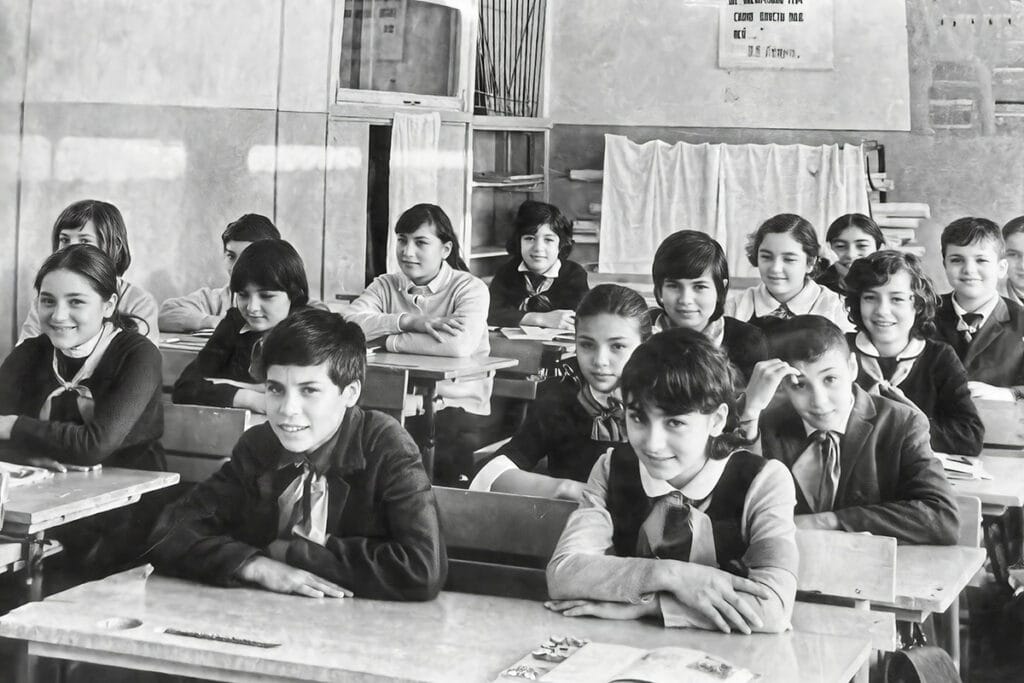
As reported by Voria.gr, community president Costas Politis says the Greek state stopped sending teachers about fifteen years ago, leaving the language at risk of disappearing. “We try to teach the children ourselves, as best we can, but it’s not our profession,” he explains. Many families also face bureaucratic barriers when trying to visit or reconnect with Greece. Some have never been able to obtain a visa, and others remain without citizenship despite clear Greek lineage.
In May 2025, MP Michail Chourdakis raised the issue in Parliament, urging the government to fund language programs and support the Tashkent Cultural Center. His appeal reflected a long-standing feeling within the community that Athens has forgotten them.
Despite these difficulties, the sense of belonging endures. For most Greeks of Tashkent, identity is carried not in passports but in memory, song, and the stories passed down since 1949.
As Costas Politis has said, “The Tashkent Greeks are a bridge. They connect Greece, the Soviet story, and now the diaspora around the world.” For a community once born of exile, being that bridge is perhaps the strongest legacy of all.