

At the corner of Darby and Eagle, Havertown Grille serves breakfast to regulars most mornings. A few times a year, it also becomes a movie set.
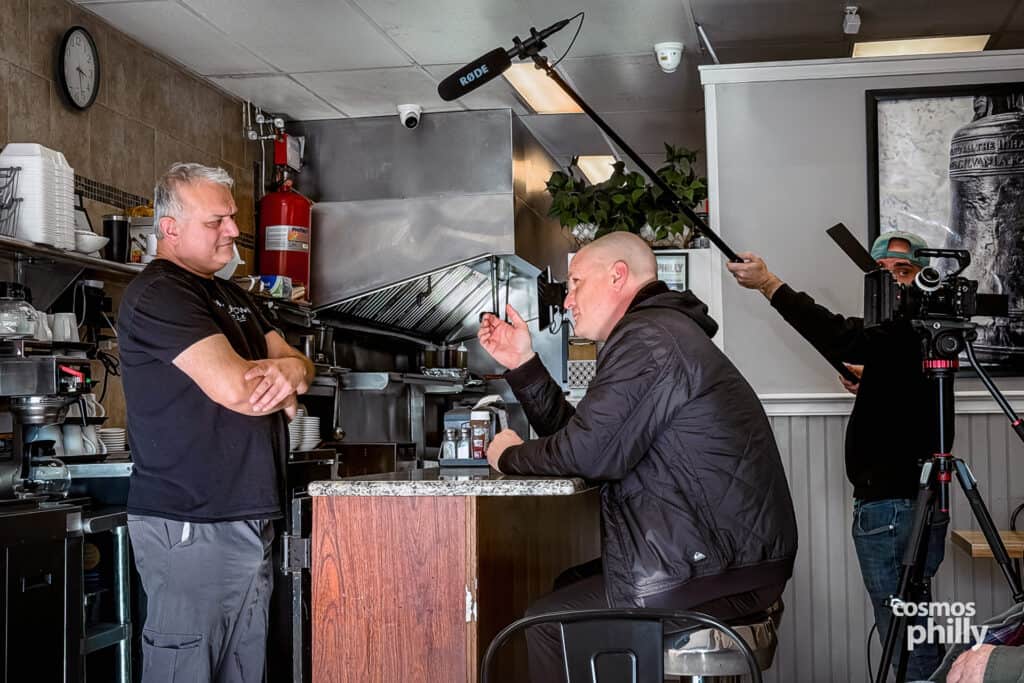
By the time the cameras rolled on Thursday, February 12, chef Yiannis Akritidis had already been working for hours. The griddle was still warm from the breakfast rush. Coffee mugs sat stacked near the counter. Outside, cars moved steadily along Darby Road. Inside, the dining room had shifted. Tables were nudged aside. Cables ran along the floor. A light was angled toward the counter where customers usually sit.
For a few hours, the doors were closed to the public. The breakfast spot turned into a film set.
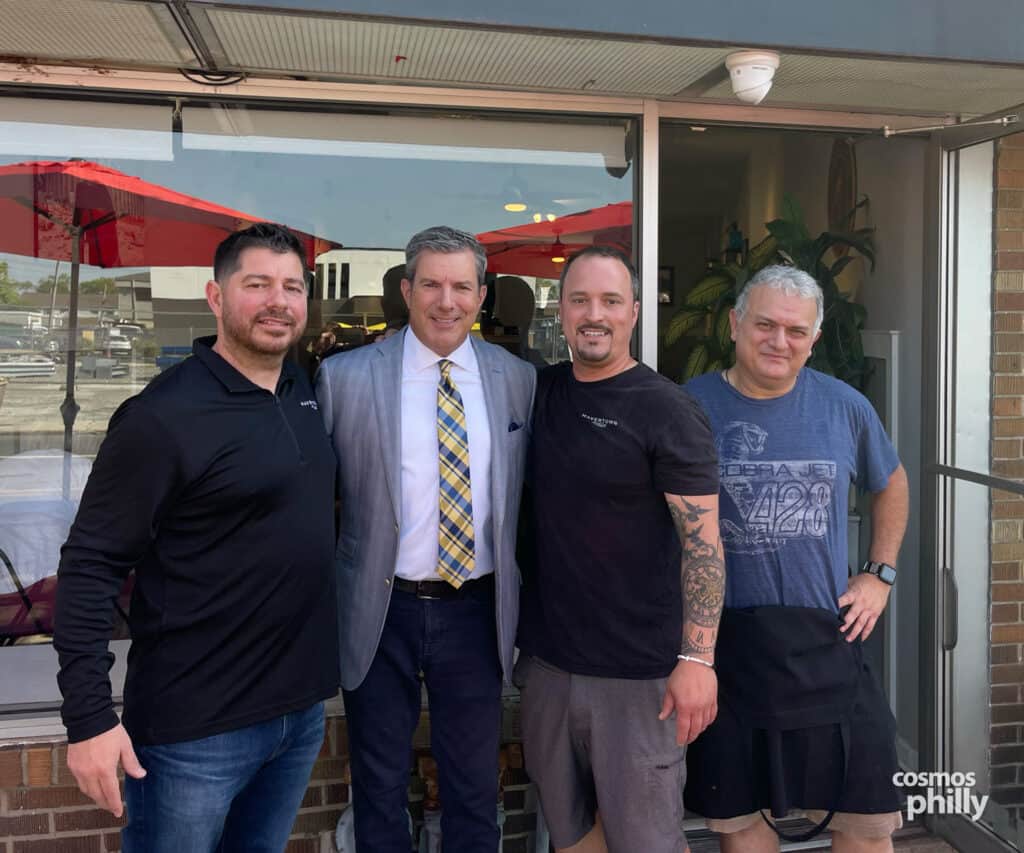
Owner Nick Haselidis has kept Havertown Grille going since 2012, building it into a steady breakfast and lunch destination for neighbors in Havertown and surrounding towns. He is a first-generation Greek American. His father is from Gastouni in the Peloponnese, with family roots in Çeşme in Asia Minor. His mother is from Kozani in northern Greece. Those different strands of Greek history sit quietly behind the counter here, decades removed from the villages but still present in the way the place runs.
“We are not a fancy place. We are not a diner. We are in between,” Haselidis said. “It is small, cozy. We cater to the community in Havertown.”
A few doors down on Darby Road, he also runs Crust Pizzeria, extending his workday from breakfast platters and sandwiches to evening takeout pies. But the Grille is the center of gravity. The room is compact. The coffee machine hums. Regulars are greeted by name. Staff members have stayed for years. Conversations overlap between booths and counter stools. The counter often doubles as a listening post for neighborhood updates.
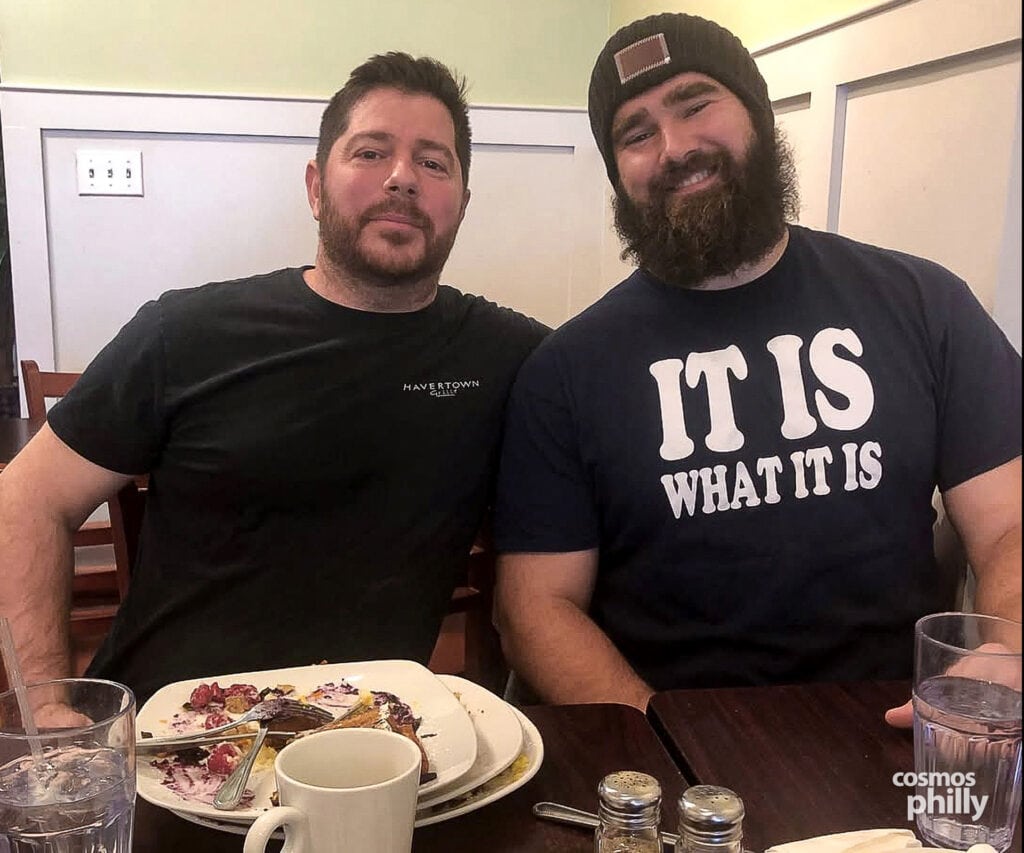
Over the years, that familiarity has drawn more than just local families. Philadelphia television personality Bob Kelly, traffic anchor and feature reporter for Good Day Philadelphia, has stopped in. Eagles center Jason Kelce has as well. Most visits end the same way they begin, with coffee and small talk. Kelce’s did not.
Filmmaker Ray Martin first connected with Havertown Grille while working on his feature Stealing a Survivor. At the time, Kelce had not yet delivered his now-famous Super Bowl parade speech. Martin admired him and hoped to cast him for a small cameo. After chasing leads without success, Martin was driving down Darby Road when he glanced through the Grille’s front window and saw Kelce sitting at the counter. A half-finished cup of coffee sat in front of him. The lunch crowd had not yet arrived.
He made a U-turn.
Martin walked in, introduced himself, and asked Kelce directly if he would appear in the film. He offered to pay him for five minutes of his time. Kelce hesitated. Martin suggested they shoot the scene right there inside Havertown Grille, somewhere Kelce clearly felt comfortable. Kelce and Nick exchanged a look. After a moment, Kelce agreed.
On the day of filming, Kelce showed up and stayed longer than planned. What was meant to be a brief cameo turned into what Martin now describes as a turning point in his career. That encounter at the counter marked the beginning of an ongoing relationship between the filmmaker and the restaurant.
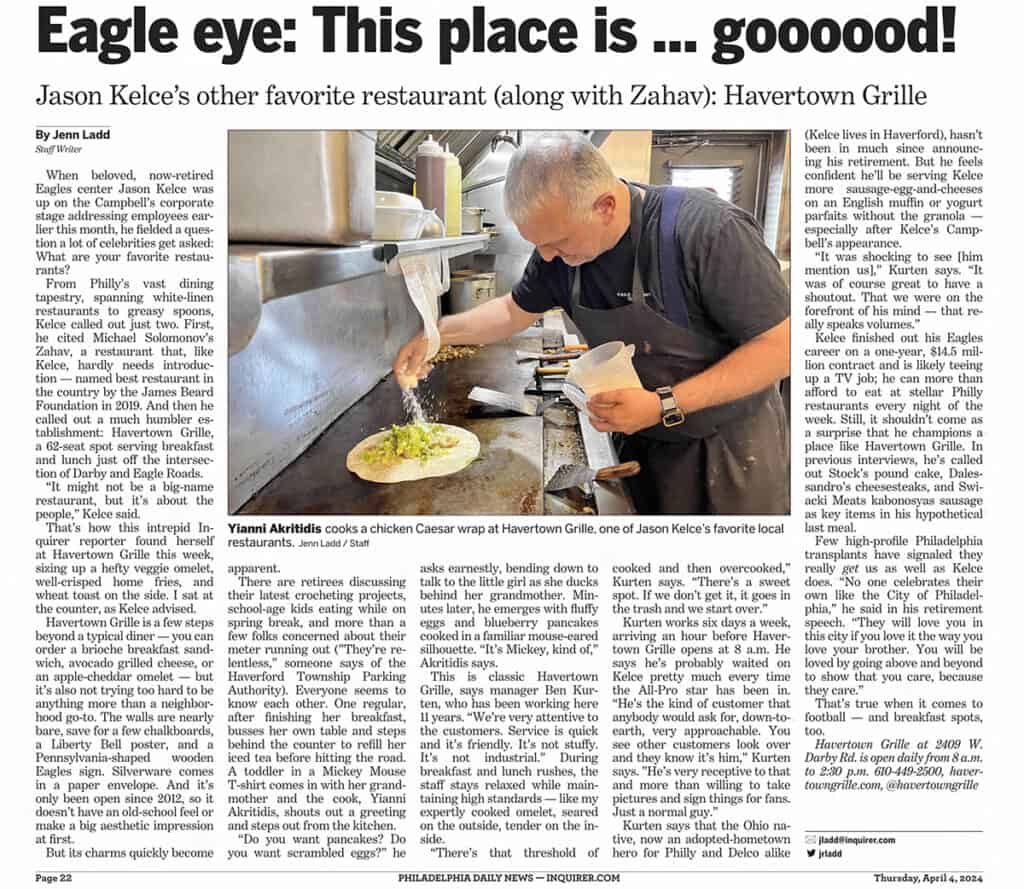
Kelce’s praise did not stay inside the room. Havertown Grille was later featured in The Philadelphia Inquirer and the Philadelphia Daily News after the former Eagles center named it among his favorite restaurants in the area. For a breakfast-and-lunch spot tucked off Darby Road, the spotlight was brief but meaningful.
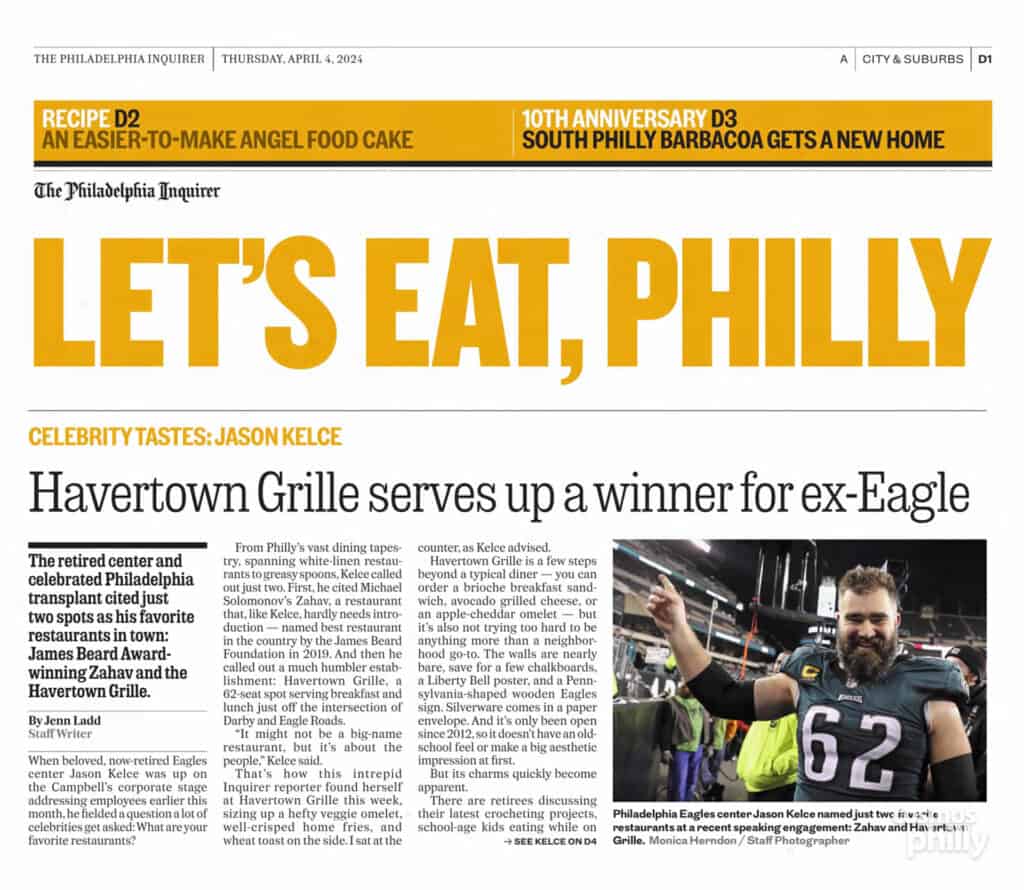
Since then, Martin has returned multiple times, choosing the Grille over constructed sets. An actor turned writer and director, he prefers real locations. He builds his stories around working-class neighborhoods and second chances. Havertown Grille offered something that cannot be staged: a room that already carries its own history.
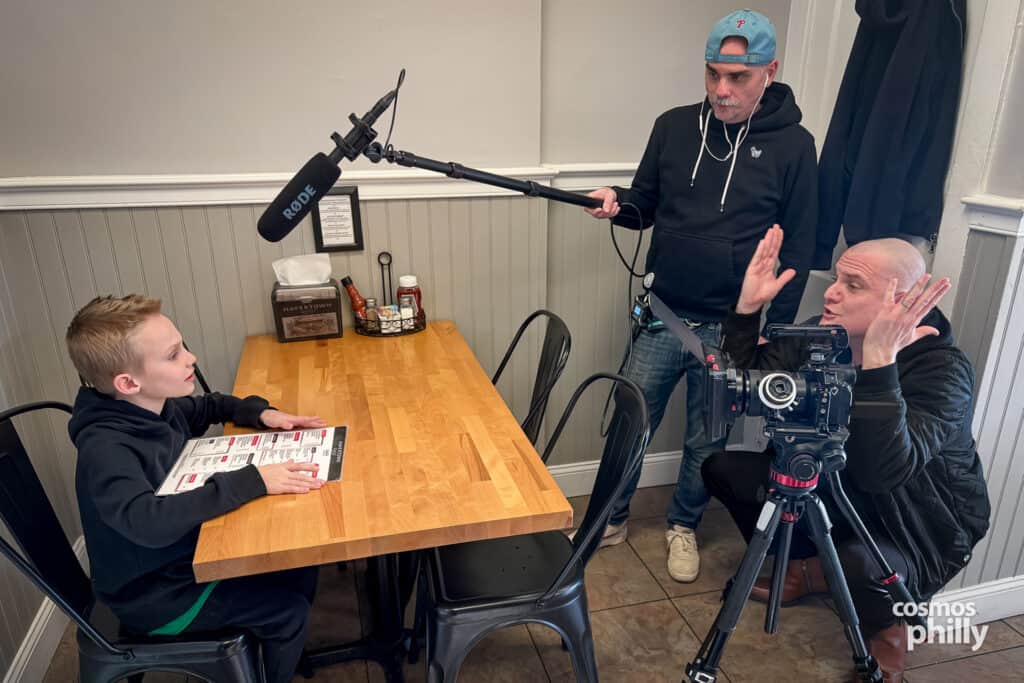
On February 12, the dining room once again shifted into production mode as Martin filmed scenes for his latest movie, Brick City Hustle. In the film, Martin plays Sonny, a man released after a 20-year prison sentence who finds himself at the wrong bar at the wrong time and must choose between returning to jail or working for the man who runs the place.
“I love that we did something here that changed my life,” Martin said about filming at the Grille. “It feels like coming back home.”
For Haselidis, the presence of a film crew between the counter and the booths hardly feels unusual anymore. “Normal,” he said, shrugging. “He comes in every year, every couple of times a year, and films something here.”
Martin calls ahead. He works around the breakfast rush. He makes sure the Grille’s sign appears in the frame. He often folds the people who run the restaurant into the scenes themselves.
This time, chef Yiannis Akritidis stepped out from behind the grill and into the shot. Akritidis grew up in Thessaloniki and is Haselidis’s brother-in-law. After years in the kitchen, the restaurant feels more like home than work, he says. The regulars share their lives with him. He shares his. When the director asked him to play a grumpy, short-tempered character behind the counter, he laughed and did exactly that.
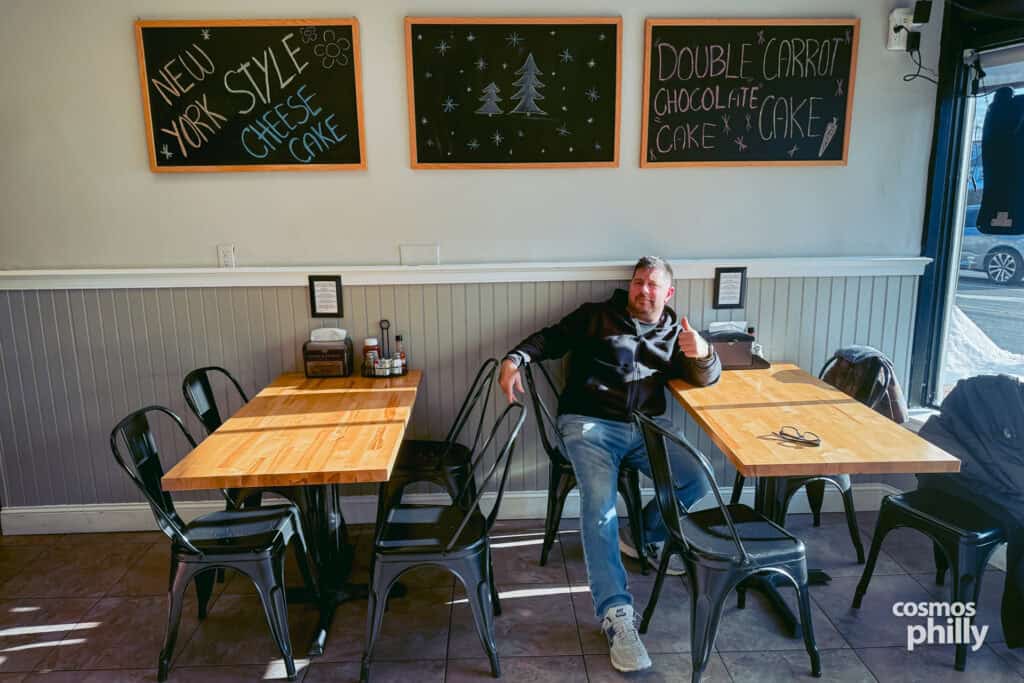
The light from the front windows cut across the tables as cameras rolled. Chalkboard desserts hung above the compact coffee station. The open kitchen remained visible in the background. Between takes, crew members adjusted cables while Nick leaned against the counter where customers normally sit.
Martin’s wife, Andrea, and their son Brody were also present, underscoring how personal the production remains. There was no red carpet atmosphere. Just a neighborhood restaurant temporarily repurposed.
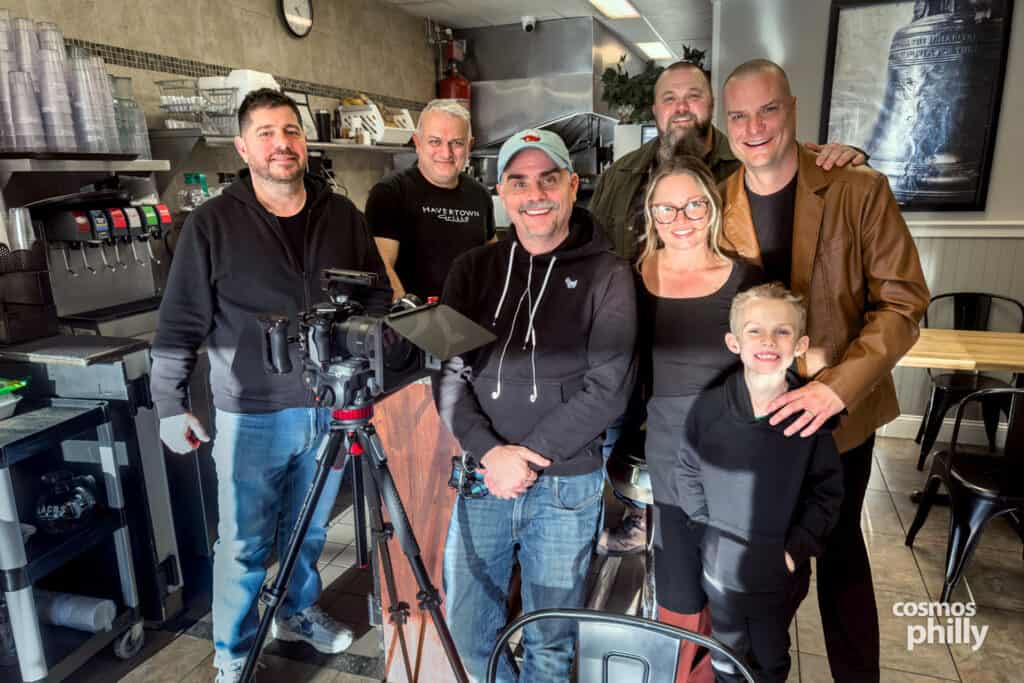
By early afternoon, the equipment was packed away. The hum of the lights disappeared. The tables were returned to their places. The doors reopened.
The next morning, the regulars came back. Coffee poured. Orders were called out. Conversations resumed. The griddle heated up again.
Havertown Grille is still what it has always been: a neighborhood breakfast and lunch spot run by a Greek family. A few times a year, it becomes something else.
For a few hours, the counter is a stage. Then it goes back to being the counter, where stories continue without cameras.