
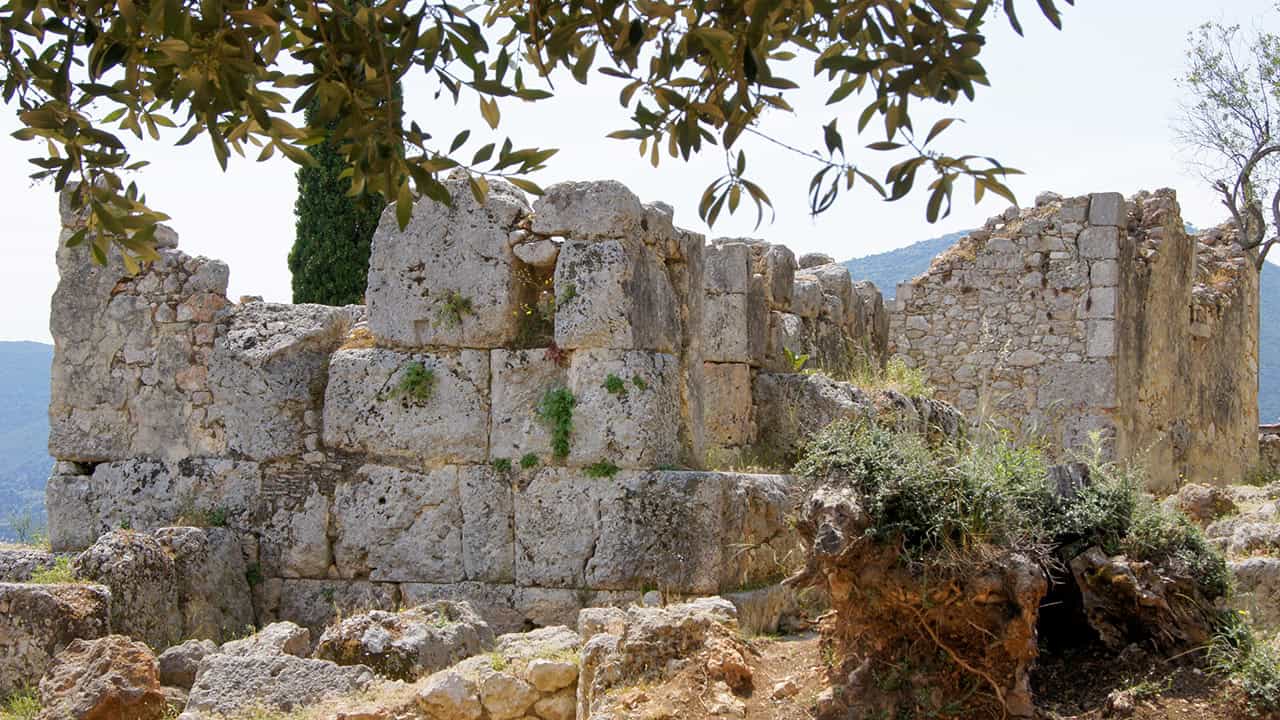
Greece’s Central Archaeological Council has unanimously supported plans to improve visitor access to an archaeological site in northern Ithaca where researchers have identified an ancient sanctuary dedicated to Odysseus.
The decision, reached on October 20, concerns Agios Athanasios, commonly known as the “School of Homer.” The hillside ruins have long been associated with searches for the palace of Odysseus.
Research announced in June 2025 provided stronger evidence of a different connection to the Homeric hero. Inscriptions bearing his name helped archaeologists identify a sanctuary where Odysseus was worshipped in antiquity, although the older palace identification remains unproven.
Improving Access to the Ruins
Agios Athanasios lies below the village of Exogi, among olive trees, natural springs, and stone terraces. Its archaeological remains extend across two levels connected by staircases cut into the rock.
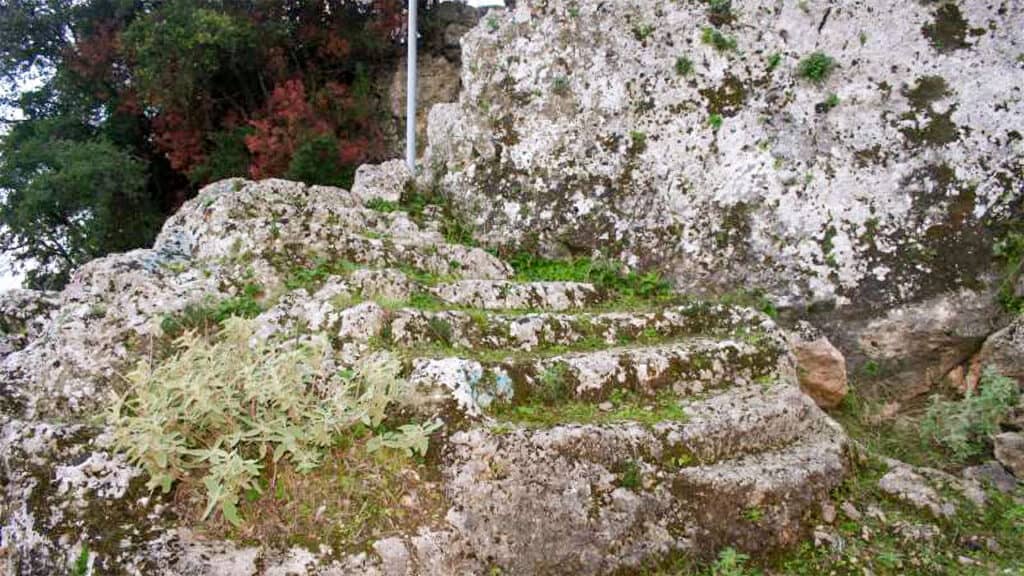
Under the revised plan supported by the council, visitors would follow natural-earth paths through the ruins. A section of the route would have a gradient suitable for people with disabilities.
The proposal includes four information signs, two benches, a small entrance guard post, and an accessible restroom. An existing parking area would receive a compacted-earth surface.
The main entrance would be positioned approximately 30 meters from an underground fountain believed to date to the Mycenaean period, rather than the six meters proposed in an earlier version of the study.
The interventions have been kept modest because much of the complex remains unexcavated.
Although visitors already explore the ruins, conditions have been difficult. In September, Kathimerini reported uneven and sometimes slippery ground, uncovered holes, overgrown vegetation, litter, and a lack of explanatory signs. The area also lacked lighting and accessible routes for people with disabilities.
The Ephorate of Antiquities of Kefalonia and Ithaca subsequently said that plans to protect and improve the site were already moving through the approval process.
From the Search for a Palace to Evidence of a Sanctuary
The name “School of Homer” has been associated with Agios Athanasios since the early nineteenth century, when European travelers began investigating Ithaca for places connected to the Odyssey.
Excavations conducted by the University of Ioannina between 1994 and 2011, under archaeologists Litsa Kontorli-Papadopoulou and Athanasios Papadopoulos, uncovered a large architectural complex.
The excavators interpreted several structures as evidence of a prehistoric fortified center. Among them was a rectangular building whose layout they compared with Mycenaean palace architecture.
In August 2010, Papadopoulos proposed that the complex could be the palace of Odysseus and Penelope. The claim attracted international attention, but archaeologists have not established that the Homeric palace stood there.
Since 2018, archaeologists Yannos Lolos and Christina Marabea have played leading roles in a University of Ioannina research program examining material recovered during the earlier excavations.
In June 2025, Greece’s Ministry of Culture announced that the team had identified inscriptions providing direct evidence of the worship of Odysseus at Agios Athanasios.
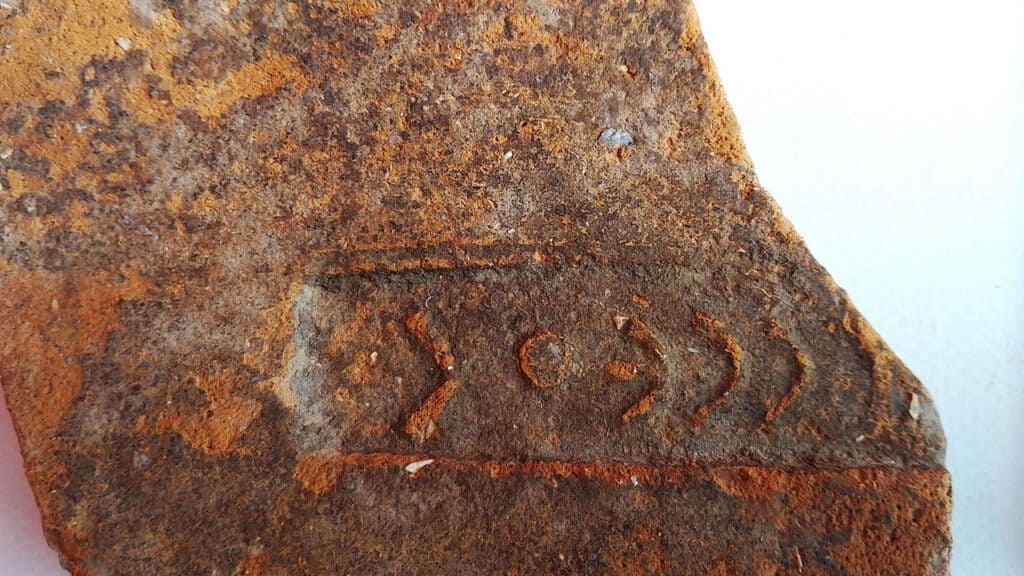
Among thousands of Hellenistic and early Roman roof-tile fragments, researchers documented 14 stamped examples bearing various Greek and Latin inscriptions.
One stamped fragment preserved part of Odysseus’ name in the possessive form. A separate fragment carried an incised dedication, apparently addressed to the hero and possibly made by a worshipper.
The team also reexamined finds from Wilhelm Vollgraff’s 1904 excavation, including a miniature bronze bust from the late Roman period whose features resemble representations of Odysseus in ancient art. Other evidence included architectural features associated with religious activity, fragments of offerings, and more than 100 ancient coins from different cities.
Taken together, the inscriptions and architectural evidence led the researchers to identify the complex as the Odysseion, a sanctuary dedicated to Odysseus.
A decree of the Ithacans dating to approximately 207 BC, found at Magnesia in Asia Minor, refers to the Odysseion and associated games held on Ithaca. The decree had long established that such a sanctuary existed on the island, but it did not identify its location. The newly studied inscriptions provided the evidence linking it to Agios Athanasios.
The findings indicate that Odysseus was honored at this location centuries after the period traditionally associated with the Trojan War. The principal surviving monumental structures date from the Hellenistic and early Roman periods, rather than the Mycenaean age.
Earlier Occupation at Agios Athanasios
Human activity at Agios Athanasios began long before the sanctuary was established.
The earliest archaeological material dates to the Final Neolithic period, in the late fifth and fourth millennia BC, and includes flint tools and pottery fragments. Mycenaean pottery from the late fourteenth and thirteenth centuries BC provides evidence of later prehistoric occupation.
One of the oldest substantial features is an underground fountain or reservoir built with large stone blocks. Its construction and pottery recovered from inside suggest that it probably dates to the Mycenaean palatial period.
The location, overlooking fertile land and maritime approaches in northern Ithaca, may also have made the settlement important for controlling nearby routes and resources.
Expanding Archaeological Protection
The October council decision follows another development in the site’s protection.
The Hellenistic tower on the upper terrace had already received archaeological protection in 1976. Other parts of the excavated complex, however, were not included within that original designation.
In an earlier statement, the Municipality of Ithaca explained that aerial mapping had been undertaken to support formal protection of the wider area.
A ministerial decision signed in October formally establishes the boundaries of the broader Agios Athanasios archaeological site, extending partly into the communities of Exogi and Platreithias.
The designated area contains remains dating from prehistory through the post-Byzantine period.
Visitors can already explore Agios Athanasios, but the planned improvements have no announced completion date. Further excavations will also be needed before the entire complex can be presented to the public.