
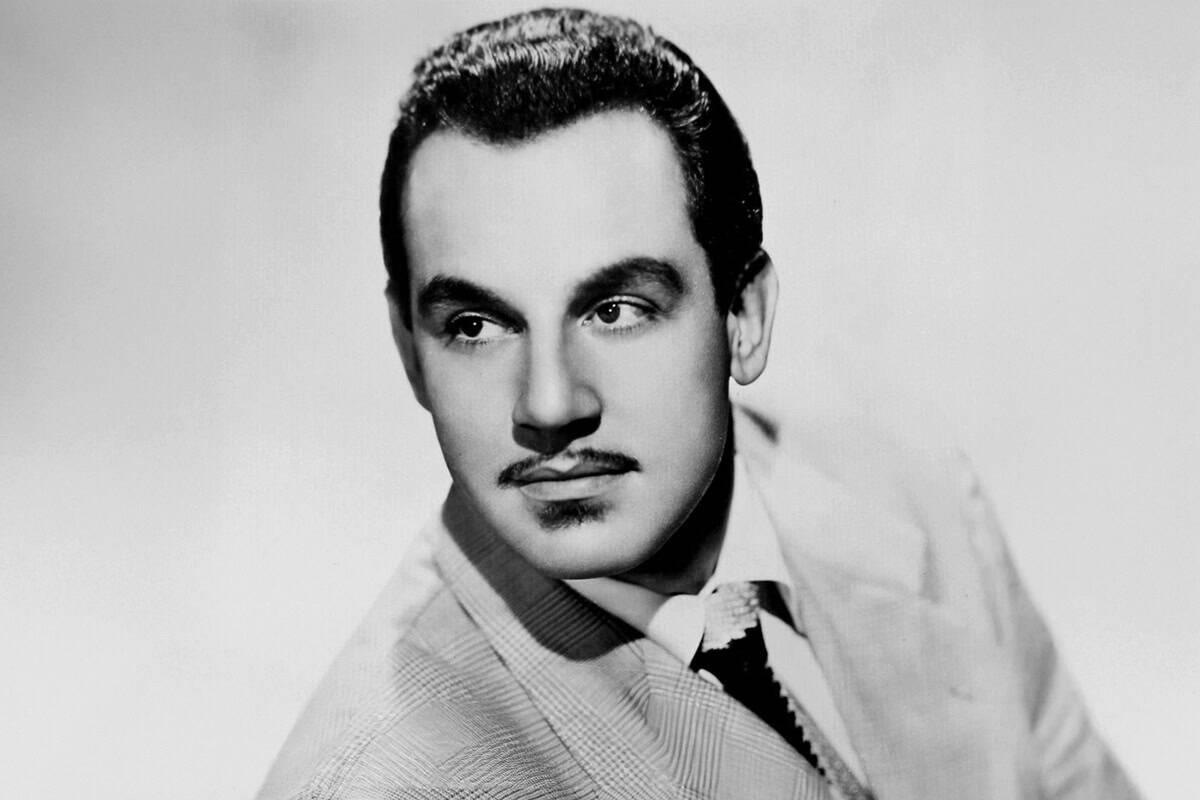
Born Greek, choosing Black community, and shaping a new American sound, Johnny Otis lived a life that resisted easy categories.
Johnny Otis used to say that as a boy, he made a decision.
He grew up in Berkeley, California, in a neighborhood where the sound of music spilled out of open windows and onto the street, where segregation shaped daily life as much as community did. Otis understood early that America insisted on categories. You were expected to be one thing or another. Black or white. Inside or outside. And so, as he later wrote, “If our society dictated that one had to be black or white, I would be black.”
It was not a metaphor. It was a life choice.
Otis was born Ioannis Alexandres Veliotes in 1921 (Greek: Ιωάννης Αλέξανδρος Βελιώτης), the son of Greek immigrants who had come to California chasing the familiar American promises of stability and belonging. His father worked as a longshoreman at Mare Island and ran a grocery store. His mother was a painter. Greek was spoken at home. Orthodoxy shaped the rhythms of family life. On paper, his path should have resembled that of countless other Greek-American sons in the early twentieth century.
Instead, Johnny Otis crossed a line that most Americans, including many immigrants, rarely crossed by choice.
A Greek Name in a Black World
Otis did not pass as Black. He did not deny his Greek heritage. He simply chose where he lived, worked, loved, and listened.
His neighborhood in Berkeley was predominantly Black. The music that surrounded him was Black. The clubs that welcomed him were Black spaces, governed by unspoken rules about trust and authenticity. Otis learned early that participation alone was not enough. Respect had to be earned.
Music became the bridge.
He started as a drummer in swing bands, absorbing the language of jazz from the inside rather than the sidelines. By his early twenties, he moved comfortably through musical worlds that were rarely open to outsiders. In 1941, at nineteen, he married Phyllis Walker, a young woman of African American and Filipino descent. Because interracial marriage was still illegal in California, they eloped to Reno. They would raise four children together, including Shuggie Otis, who would later become a musician in his own right.
Otis did not romanticize these choices later in life. He described them plainly. He understood the cost. He also understood that belonging, once chosen, had to be defended daily through actions rather than statements.
Building a Sound as America Changed
The America Otis entered as a young musician was in transition. The big band era was fading. Jazz was fragmenting. Something new was emerging in nightclubs, dance halls, and after-hours rooms, particularly in Black communities that had long been excluded from mainstream cultural credit.
Otis stood at that hinge point.
In the mid-1940s, his recording of “Harlem Nocturne” became a breakthrough, signaling a sound that leaned away from swing and toward something earthier, more rhythmic, more intimate. As the industry shifted, Otis adapted quickly. He reshaped his orchestra into smaller, sharper combos built around saxophones, blues vocals, and driving rhythm. What we now call rhythm and blues was still finding its name.
Los Angeles became his base. Central Avenue, with its dense concentration of Black-owned clubs and talent, became his laboratory.
Otis opened the Barrelhouse Club not as a vanity project but as a working space. Talent shows were not marketing gimmicks. They were auditions for the future of American music. One night, a teenage girl named Esther Phillips walked on stage. Otis recognized her immediately. She would soon become Little Esther, one of the defining voices of early R&B.
The pattern repeated itself.
The Man Behind the Names
Johnny Otis is rarely the most famous name in his own story. That may be the clearest measure of his influence.
Through his bands, labels, and productions, he helped launch or shape the careers of artists who would later define entire genres. Etta James. Big Mama Thornton. Little Willie John. Johnny Ace. Jackie Wilson. Hank Ballard. The Robins, who would later become The Coasters.
For a man born into a Greek immigrant household that prized discretion, work, and staying out of the spotlight, this role suited him.
Otis did not simply discover these artists. He worked with them. He wrote with them. He built environments where they could grow before the industry noticed them.
That role is especially clear in his work with Big Mama Thornton. In 1953, Otis produced her original recording of “Hound Dog,” a raw, commanding performance that became a major rhythm and blues hit. Two years later, Elvis Presley’s version brought the song global fame, while Thornton’s recording and Otis’s role in shaping it receded into the background. The pattern was familiar. Otis was often the architect, rarely the face.
In 1950 alone, Otis produced three of the year’s most important R&B records, including “Double Crossing Blues,” which topped the charts. He wrote “Every Beat of My Heart,” first recorded by The Royals and later immortalized by Gladys Knight and the Pips. With Etta James, he co-wrote “Roll With Me, Henry,” a song that propelled her into national recognition.
When Johnny Ace died suddenly in 1954, Otis produced “Pledging My Love,” a posthumous release that became one of the most emotionally resonant records of the era.
Otis’s genius was not domination. It was proximity. He knew when to lead and when to step back.
Trust, Not Appropriation
In later years, critics sometimes struggled with how to place Johnny Otis in the story of American music. He was not Black, yet deeply embedded in Black musical life. He was Greek-American, yet largely absent from Greek-American narratives. He did not fit neatly into categories that prefer clear ownership.
What set Otis apart was trust.
Artists worked with him because he did not treat Black music as an extraction project. He lived inside the community that produced it. He shared credit. He put his own resources behind Black performers at a time when that carried financial and personal risk.
Otis rejected the language of appropriation. He spoke instead about belonging and responsibility. His identity was not something he claimed once and benefited from indefinitely. It was something he reaffirmed through conduct.
That distinction mattered then. It still matters now.
A Legacy That Still Sits Uneasily
Johnny Otis lived long enough to see his influence widely acknowledged, though rarely foregrounded. He became a prominent radio disc jockey in Southern California, hosted music programs, and later appeared on Los Angeles television, helping bring rhythm and blues to broader audiences at a time when such exposure was still rare. He ran record labels and continued performing into his later years. His own hit, “Willie and the Hand Jive,” crossed into the mainstream charts in the late 1950s, reminding audiences that he was not only a mentor but also a musician in his own right.
Yet even today, Otis occupies an uneasy place in cultural memory.
He is not often claimed by Greek-American history, perhaps because his life complicates comfortable narratives of assimilation and success. He is not always centered in Black music histories, perhaps because his presence challenges ideas about who is allowed to belong where.
That tension is not a flaw. It is the point.
Otis’s life also leaves behind an uneasy question about who is allowed to cross cultural boundaries with trust, and who is remembered only when history finds it convenient.
For Greek-Americans especially, his story offers an unfamiliar mirror. It asks not how visibly Greek he remained, but how deliberately he lived. Not how loudly he claimed identity, but how carefully he honored the one he chose.
Otis once described himself simply as a musician who loved the music and the people who made it. History suggests that was enough to help change the sound of America.