
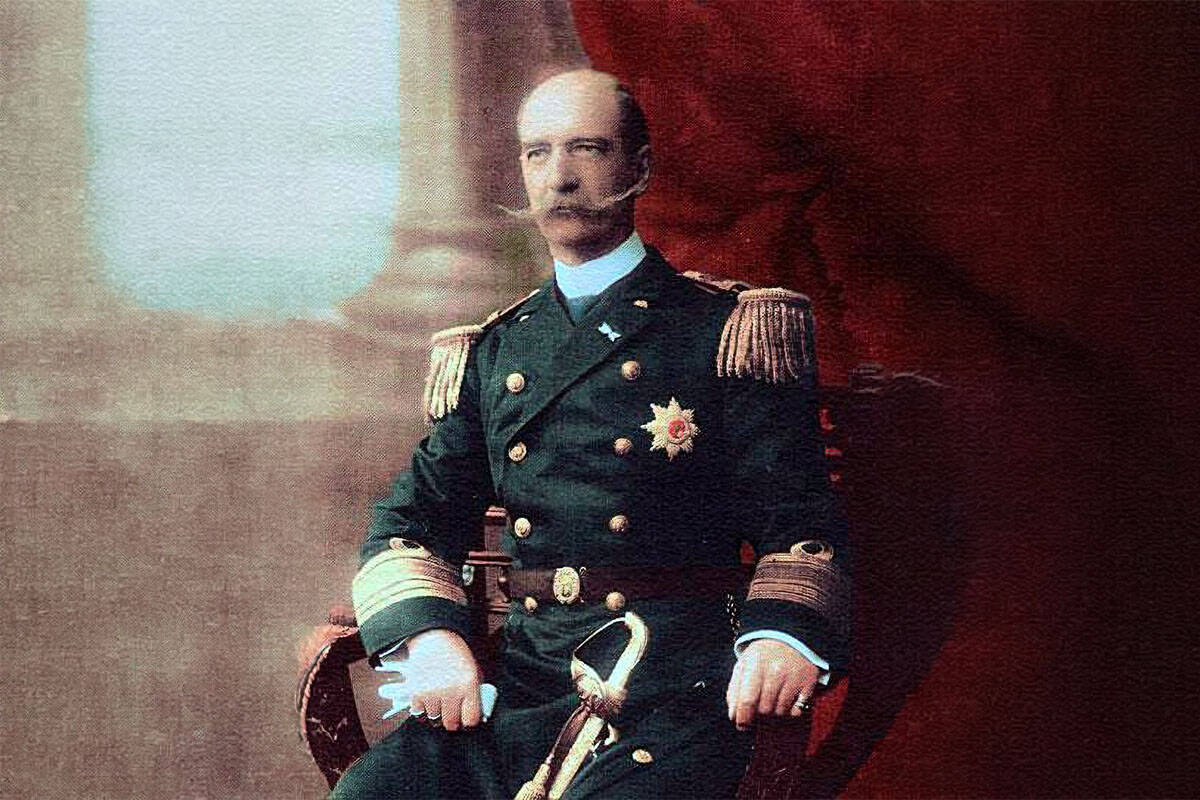
On the afternoon of March 18, 1913, King George I of Greece stepped out for his usual walk along the Thessaloniki waterfront.
Thessaloniki had been Greek for barely five months. Captured during the First Balkan War, the city had quickly become the most important prize of Greece’s recent victories.
As the king passed near the White Tower, a man approached from behind and fired a revolver at close range.
The shot struck the sixty-seven-year-old monarch in the back. Within minutes, the king who had ruled Greece for half a century was dead.
The assassination stunned Greece and reverberated far beyond its borders, including in Greek immigrant communities across the United States that followed the news with shock and grief.
A Danish prince becomes King of the Hellenes
George I was born Prince Vilhelm of Denmark in 1845, the son of King Christian IX.
After the overthrow of King Otto in 1862, the Greek National Assembly selected the seventeen-year-old Danish prince as the new monarch. He arrived in Greece in 1863 and began a reign that would last almost fifty years.
During those decades, the country changed dramatically. Greece expanded its borders, incorporating Thessaly, parts of Epirus, Macedonia, and several Aegean islands, while gradually strengthening its political institutions.
George cultivated the image of a constitutional monarch close to the people. His often-quoted motto, “The people’s love is my strength,” captured the public image he projected during his reign. While Greece’s politics were often turbulent and governments rose and fell quickly, George gradually developed a reputation among many contemporaries as a steady and pragmatic monarch who avoided direct confrontation with parliament whenever possible.
Thessaloniki: the new frontier of Greece
Thessaloniki had only recently become part of Greece.
In October 1912, during the First Balkan War, Greek forces captured the city from the Ottoman Empire just ahead of advancing Bulgarian troops. The victory secured Greece a vital port in Macedonia and marked one of the most important moments of the war.
The city remained politically tense in early 1913, with competing territorial claims in Macedonia and large military forces from several Balkan states still operating in the region.
At the time, Thessaloniki was one of the most diverse cities in the eastern Mediterranean. Its population was majority Jewish, with large Greek, Muslim, and Slavic communities living side by side in a bustling commercial center.
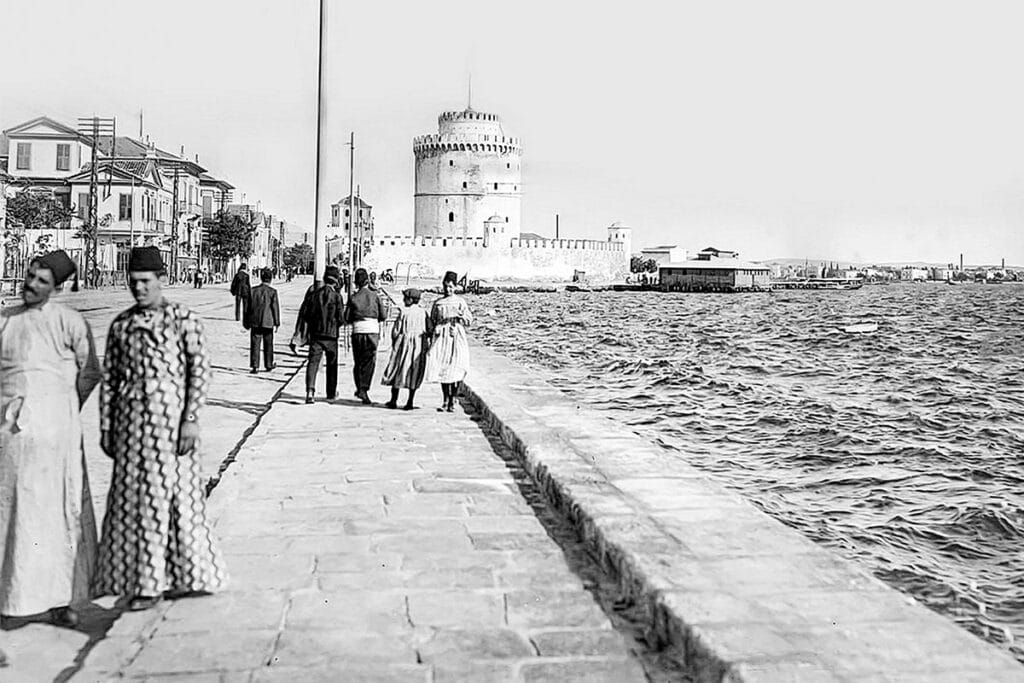
After the capture of the city, King George spent long periods there to symbolize Greek sovereignty over the newly acquired territory.
Despite the political tensions of the moment, he continued a habit he had maintained in Athens: walking through the city with very little security.
The man who fired the shot
The assassin was Alexandros Schinas, a Greek whose background remains partly unclear.
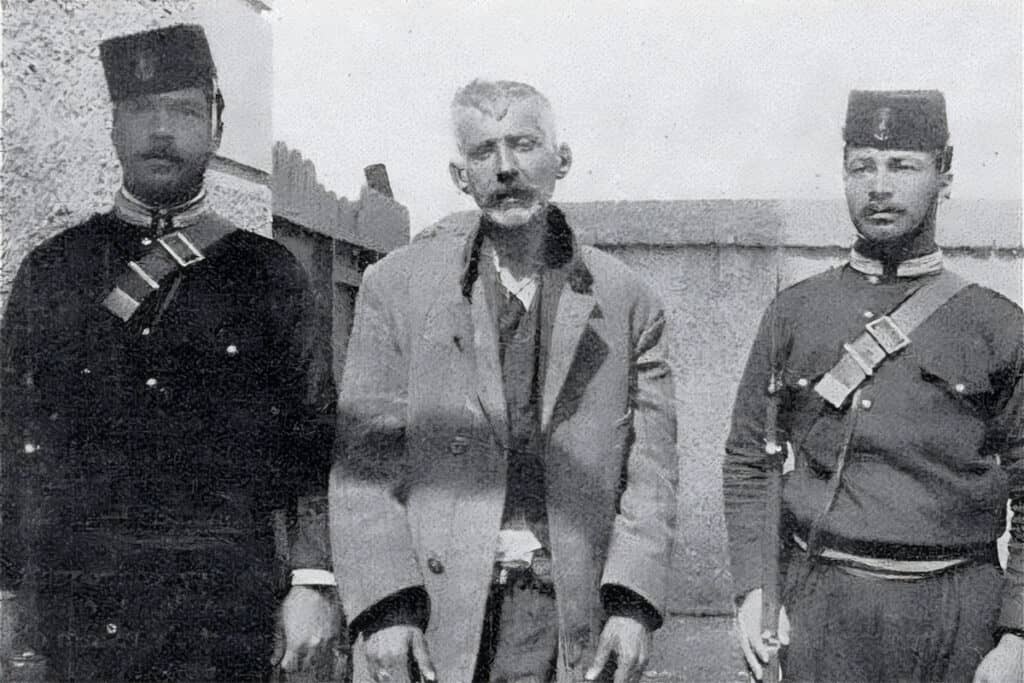
Contemporary reports described him variously as a teacher, a medical student, or a laboratory assistant. At one point, he reportedly spent time in the United States, where he worked in New York and, according to some contemporary accounts, encountered radical political circles.
Even at the time, authorities struggled to explain his motives.
Some reports described him as an anarchist hostile to all governments. Others pointed to personal grievances and financial troubles. Historians still disagree about what drove him to carry out the attack.
The assassination near the White Tower
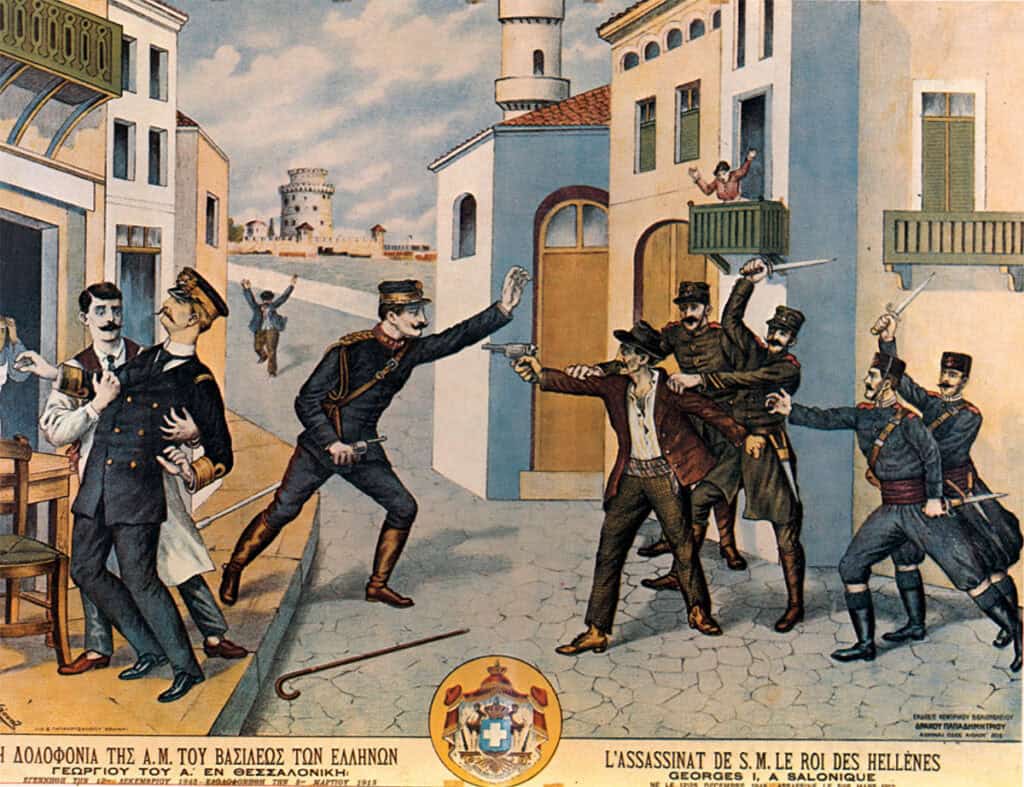
Late in the afternoon of March 18, King George left his residence for his usual walk along the waterfront with his aide-de-camp, Lieutenant Colonel Ioannis Frangoudis. Two gendarmes followed at a distance.
Around 5:15 p.m., on the coastal road near the White Tower, Schinas approached the king from behind and fired a revolver at close range.
The king collapsed immediately after being struck. Although attendants rushed him toward a nearby hospital, he died before arrival.
Schinas was arrested at the scene. Witnesses later reported that gendarmes had to protect him from an angry crowd that tried to attack the assassin.
A mystery that never fully closed
After his arrest, Schinas was interrogated by authorities in Thessaloniki as investigators tried to determine whether the assassination was part of a wider conspiracy during the volatile Balkan War period.
Less than two months later, on May 6, 1913, Schinas died in custody after falling from a window of the building where he was being held. Officials ruled it a suicide.
Because no independent investigation followed, the circumstances of his death have remained a subject of debate among historians.
Shock in Greece and across the diaspora
News of the king’s assassination spread quickly across Greece.
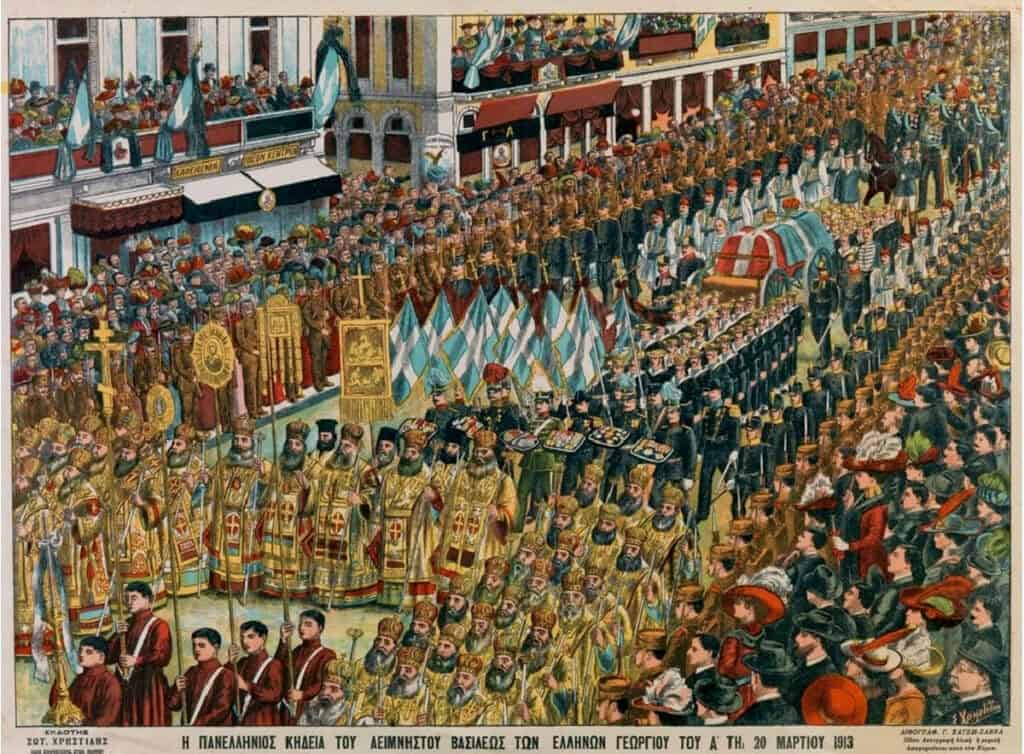
Newspapers in Athens printed special black-bordered editions announcing the death of the monarch who had ruled for nearly half a century. Public mourning followed as his body was transported to Athens and placed in state at the Metropolitan Cathedral.
The reaction was also felt across the Greek diaspora.
Greek immigrant communities throughout the United States followed developments closely through Greek-language newspapers such as Atlantis in New York.
In cities with growing Greek populations such as New York, Chicago, and Philadelphia, the news traveled quickly through coffeehouses, churches, and community societies where immigrants gathered to read the latest dispatches from Greece. For many recent arrivals, George I represented the modern Greek state that many of them had only recently left behind.
Memorial services were organized in several cities, and many Greek immigrants wore black armbands in mourning.
The rise of Constantine I
Following the assassination, Crown Prince Constantine immediately succeeded his father as King Constantine I.
At the time, he was widely admired for his military leadership during the Balkan Wars. Yet the political landscape he inherited was far more complicated than the moment of national victory suggested.
Within a few years, Greece would enter the crisis known as the National Schism, as tensions between Constantine and Prime Minister Eleftherios Venizelos divided the country over Greece’s role in World War I. The dispute split political life, the military, and even families between royalist and Venizelist camps.
Some historians have suggested that George’s long experience and cautious political style might have helped moderate those tensions. Whether or not that would have been the case, his assassination removed a monarch who had spent five decades navigating Greece through periods of instability and reform.
The end of an era
King George I ruled Greece from 1863 until his assassination in 1913.
During those fifty years, the country expanded dramatically, transforming from a small kingdom into a state that included much of modern Greek territory.
His death in Thessaloniki, a city Greece had only just secured during the Balkan Wars, carried powerful symbolism.
The king who had overseen Greece’s expansion into Macedonia died in the very city that symbolized that achievement. His funeral in Athens drew large crowds and dignitaries from across Europe, marking the end of one of the longest reigns in modern Greek history.
Within days, Constantine I was on the throne, and Greece was entering a far more uncertain political period that would soon test the unity the Balkan Wars had briefly created.